 [Photo=The White House]
U.S. political columnist Gene Cummings spoke out on the 24th regarding Trump's foreign policy.
According to Cummings, Trump’s approach to foreign policy does not involve meddling in the internal political squabbles of individual nations, but rather centers on shifting the "Grand Strategy" of the global chessboard.
The argument is that it is far more effective to directly pressure and control the primary power behind the scenes—China—than to intervene publicly in each and every internal political conflict within South Korea.
A strategy of striking the "great thicket" of China to drive out the snakes hiding within it
"The Trump administration’s Asia strategy is not about dealing with small powers in Northeast Asia one by one. It is about isolating China, their greatest supporter, financial lifeline, and strategic patron."
Cummings explains that the U.S. has chosen to tighten the economic noose around China and diminish its control over technology and supply chains to cut off its funding, thereby forcing China into a position where it must worry about its own survival. Only then will it be compelled to negotiate with the U.S.
He further diagnoses that "if China falters, the pro-China and pro-North Korea factions in South Korea that have relied on China's money and influence will inevitably weaken," adding that "this is because the financial foundations and political shields they relied upon are collapsing."
Moreover, Cummings points out, "South Korean politics does not operate solely on official political funds. Those who seize power always seek to generate funds through other channels, and they attempt to expand their political base by funneling state budgets into various projects, such as diverse support programs, overseas aid, or subsidies for civic groups."
The funds secured in this way, he notes, are used to grow organizations, support friendly factions, and influence the shaping of public opinion.
"The fastest way to take down such corrupt political factions is, ultimately, to cut off their money supply."
Cummings conveys that this is not a problem unique to South Korea; from the U.S. perspective, countries deeply entangled in China's influence exist in South America, Asia, and even Europe—and all of these nations are key security and economic allies of the United States.
He also notes that the U.S. does not view South Korea as an isolated entity, stating, "The U.S. sees problems recurring across multiple countries simultaneously and is implementing an omnidirectional strategy by pressuring China, which sits at the center of these issues."
The fate of a "kite with a cut string"
"Lee Jae-myung and the factions within the political sphere that have followed pro-North Korea and pro-China lines will soon find themselves like a 'kite with a cut string,' isolated from both the international community and the domestic political landscape."
Cummings points out that the events currently unfolding in South Korea—specifically the emergence of long-concealed suspicions of election fraud, the collapse of media trust, and the outbreak of internal political infighting—are not coincidental but rather part of a preordained trajectory.
He argues that the fact that election fraud allegations surfaced in South Korea shortly after Trump’s pressure on China intensified and visits to China took place, followed by major internal political divisions and the downfall of large media organizations, is a sign that the Chinese support and protection they have relied upon are gradually weakening.
He interpreted the current chaos as "a sign that the existing corrupt system, which once seemed ironclad, has finally begun to crack, marking a phase where long-hidden problems are being exposed all at once."
The limits of self-sufficiency
"These factions did not grow through their own independent strength. They grew by piggybacking on the expansion of China's hegemonic influence. Therefore, the weakening of China’s control is tantamount to a political death sentence for them."
Cummings analyzes that "as the U.S.-led pressure net against China strengthens, the factions in the grey zone that were caught in between have no choice but to lose their footing and be pushed out."
He continues, "Among them, many belong in prison, and many will likely end up in exile, gazing at the horizon over the distant sea and vanishing in tears of regret. Ultimately, the fate of those who plot evil is the same. Even if they appear to have reached the very peak, the end is always a path to a bottomless fall. That is the way of the world," he asserts.
He also lamented, "South Korea has experienced corrupt and wicked leaders in the past, but it has never seen a figure like Lee Jae-myung, who so blatantly mocks the public, acts like a communist dictator without a second thought, and feels absolutely no remorse despite repeated lies."
He pointed out, "Even wicked presidents of the past at least pretended to maintain minimum courtesy and dignity before the public, but Lee Jae-myung is rude even without manners, and he acts brazenly as if he has done nothing wrong, even while making the public feel humiliated." He added that the fact such a person sits in the Blue House is ultimately the responsibility of the people.
"The South Korean people must have felt it painfully this time. The fact that the lack of interest in politics, combined with the complacency of thinking 'as long as I am not harmed, it's fine' while chasing immediate self-interest, ultimately returns as a crisis for the entire nation. And they must have clearly seen that the price is always paid by the people. We must clearly realize this time: the fact that the nation is not protected by political power-holders, but by the people themselves. The fact that we must never again allow a villain like a second Lee Jae-myung to sit in the Blue House. And how long we have been deceived by the false propaganda of the media. We must remember this and never forget it."
Cummings says that whenever he informs people in Washington about the situation in South Korea, he hears the same thing: "This problem is not something happening only in South Korea; it is happening everywhere—meaning it is occurring simultaneously in many countries around the world."
Cummings emphasizes that we must look at this problem not by solving it country-by-country in the short term, but by aiming to change the entire structure.
He also mentioned receiving the sobering advice that "those who can change a country are ultimately its owners, the citizens, and the citizens must realize this themselves and initiate the change."
He stated that while this sounded very cold at first, looking back now, the U.S. was not doing nothing; it had already been conducting a massive realignment behind the scenes. What we did not know was simply the manner in which the U.S. operates.
Finally, he conveyed the following message:
"The real fight starts now. If the people endure and fight to the end, victory will ultimately stand on the side of the people. Remember that there are many people supporting, cheering for, and fighting alongside the South Korean people even from invisible places, and I hope you stay strong until the very end."
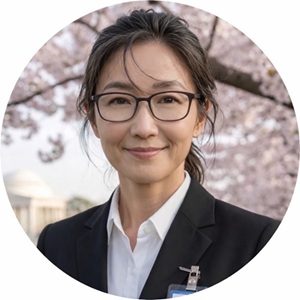
◆ Gene Cummings
U.S. political columnist. After working at Channel 13 in Baltimore, Maryland, he served as Editor-in-Chief of the 'Sunday Times' (1994~1996) and Business Director of 'The Korean Weekly' (1996~2000), after which he founded the 'Asia Post.' Currently, he works as a back-end analyst in the fields of politics, diplomacy, and security for a private company handling government contracts.

 Iranian Foreign Ministry: "Continuing Message Exchanges with the U.S. and Activities of Mediating Countries"
Esmaeil Baghaei, Spokesperson for the Iranian Ministry of Foreign Affairs [Xinhua, Yonhap News file photo]Esmaeil Baghaei, spokesperson for the Iranian Ministry of Foreign Affairs, stated on the 26th
Iranian Foreign Ministry: "Continuing Message Exchanges with the U.S. and Activities of Mediating Countries"
Esmaeil Baghaei, Spokesperson for the Iranian Ministry of Foreign Affairs [Xinhua, Yonhap News file photo]Esmaeil Baghaei, spokesperson for the Iranian Ministry of Foreign Affairs, stated on the 26th
 President Yoon: "Do You Really Think You Are Safe from a Special Counsel?"... Final Statement Video Released
President Yoon Suk Yeol rebuking the special prosecutor on the 24th. [Court Video / Subtitled GIF from @birds_justice X account] A video capturing the live footage of President Yoon Suk Yeol’s final
President Yoon: "Do You Really Think You Are Safe from a Special Counsel?"... Final Statement Video Released
President Yoon Suk Yeol rebuking the special prosecutor on the 24th. [Court Video / Subtitled GIF from @birds_justice X account] A video capturing the live footage of President Yoon Suk Yeol’s final
 President Yoon, regarding the first-instance ruling on the Public Official Election Act: “An excessive political verdict that distorts the facts… We will appeal immediately.”
The first-instance sentencing hearing for President Yoon Suk Yeol regarding violations of the Public Official Election Act is being broadcast live at Seoul Station on the 27th. [Photo=Yonhap News]Pres
President Yoon, regarding the first-instance ruling on the Public Official Election Act: “An excessive political verdict that distorts the facts… We will appeal immediately.”
The first-instance sentencing hearing for President Yoon Suk Yeol regarding violations of the Public Official Election Act is being broadcast live at Seoul Station on the 27th. [Photo=Yonhap News]Pres
 WSJ: "SK Hynix ADR Premium Is a Sign of AI Trading Overheat"
Advertisement for SK Hynix ADR listing in New York's Times Square [Reuters=Yonhap News file photo]The Wall Street Journal (WSJ) has pointed out that the price of SK Hynix’s American Depositary Recei
WSJ: "SK Hynix ADR Premium Is a Sign of AI Trading Overheat"
Advertisement for SK Hynix ADR listing in New York's Times Square [Reuters=Yonhap News file photo]The Wall Street Journal (WSJ) has pointed out that the price of SK Hynix’s American Depositary Recei
 'Godfather of Japanese Mystery Novels' Keigo Higashino Passes Away After Battle with Cancer at 68
Famous Japanese mystery novelist Keigo Higashino [AFP=Yonhap News]It has been belatedly reported that Keigo Higashino, the "godfather of Japanese mystery novels" and author of bestsellers such as "The
'Godfather of Japanese Mystery Novels' Keigo Higashino Passes Away After Battle with Cancer at 68
Famous Japanese mystery novelist Keigo Higashino [AFP=Yonhap News]It has been belatedly reported that Keigo Higashino, the "godfather of Japanese mystery novels" and author of bestsellers such as "The
 [Park Pil-kyu Security Column] To the Ignorant Trying to Clothe a Beast in Sheep's Clothing
Rep. Kim Byung-joo of the Democratic Party of Korea [Photo=Yonhap News]“The Air Force Academy doesn't teach you how to fly a plane!” “The Army, Navy, and Air Force academies are exactly the
[Park Pil-kyu Security Column] To the Ignorant Trying to Clothe a Beast in Sheep's Clothing
Rep. Kim Byung-joo of the Democratic Party of Korea [Photo=Yonhap News]“The Air Force Academy doesn't teach you how to fly a plane!” “The Army, Navy, and Air Force academies are exactly the
 [Issue Diagnosis] Two Effects of the Election Petition Review
 [Photo] Evidence of Election Fraud Flooding U.S. Media… Trump Had 2.7 Million Votes Stolen
 [Video] U.S. Semiquincentennial Air Show... 'Art in the Sky' streaks across New York
 [Editorial Cartoon] A Draconian Law That Undermines Freedom of Expression

 List
List










