 Traveling by car is a luxury… Daily life in Cuba [AFP=Yonhap News]
Average temperatures hovering around 35 degrees Celsius (95°F) with humidity levels exceeding 90%. This is the typical subtropical weather in Cuba these days, with the heat index pushing toward 38–40 degrees Celsius (100–104°F).
As the intense heat peaked in June, the living conditions for the Cuban people have spiraled into a dire state. While the Cuban government recently declared it would pursue a "Chinese-style socialist" path centered on market liberalization, the situation has worsened due to the lack of any sign that U.S. economic sanctions will be lifted, coupled with a compounding energy crisis.
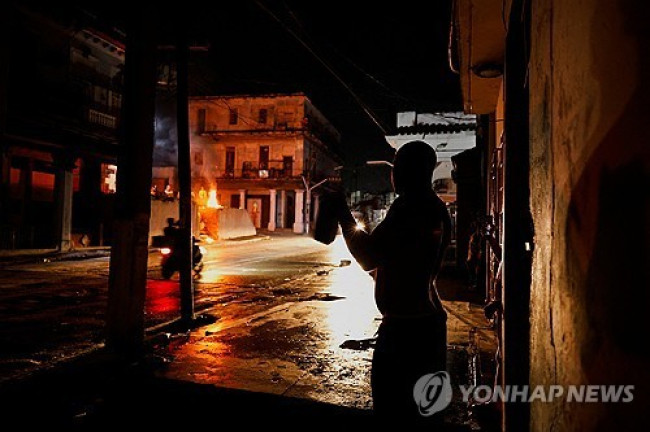
Currently, the entire country is struggling not only to run air conditioning but even to keep lights on. On the 2nd (local time), the Cuban National Electric Union announced a power shortfall of 1,980 MW, which represents approximately 62% of the total electricity demand.
 Cuban residents staging a 'Cacerolazo' protest by banging pots [Reuters=Yonhap News]
With the severe power shortage persisting, the Cuban Conflict Observatory (OCC) stated on the 3rd that the number of street protests in Cuba last month reached the highest level since records began.
According to the OCC, there were a total of 107 street protests in June. This unprecedented scale is nearly double the previous record of 54, set in March of this year.
Previously, Cuba was considered a strictly "controlled society" where secret agents and mutual surveillance networks—similar to North Korea’s "inminban" system—operated, making street protests something citizens would not even dare to contemplate.
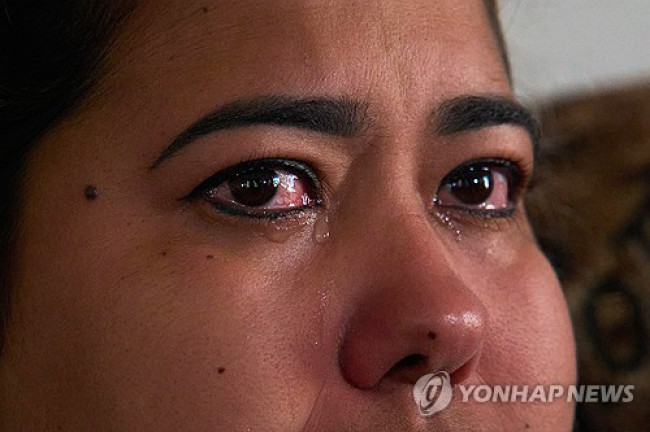 A Cuban woman weeping during an interview [AP=Yonhap News]
However, as the extreme power outages have dragged on uncontrollably, the patience of the citizens has finally run dry, and street protests have become a daily occurrence.
According to the Spanish-language media outlet Infobae, with darkness blanketing the capital of Havana for at least 24 to 48 hours—and twice as long in some provinces—Cuban citizens took to the streets almost every day throughout June.
Protesters engaged in "Cacerolazo" (pot-banging) demonstrations, built barricades by setting piles of trash on fire, and resisted by shouting slogans such as "Freedom" and "Immediate Intervention."
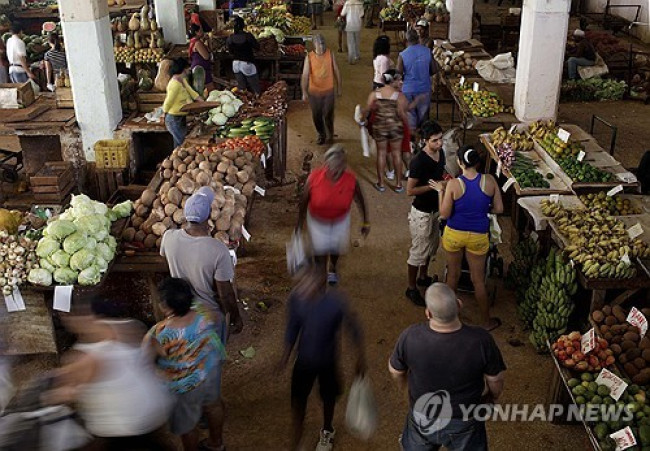 Soaring food prices [AP=Yonhap News]
Beyond the power crisis, inflation driven by shortages is also spiraling out of control. The OCC found that while a Cuban household needs at least 70,000 Cuban Pesos (CUP) per month for basic subsistence, wages fall far short. The average wage for a Cuban worker is merely 6,930 pesos, just one-tenth of the cost of living. Consequently, the observatory reported a sharp rise in the number of elderly people searching for food in trash bins and mothers in despair, unable to feed their children.
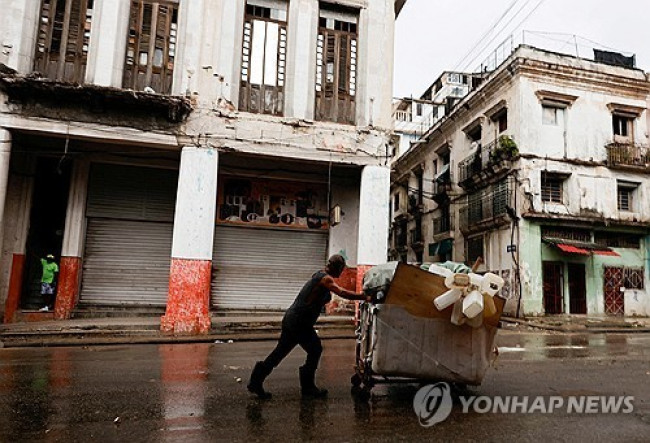 Daily life in Cuba [Reuters=Yonhap News]
By region, the capital, Havana, saw the most intense activity, with 82 out of the 107 total protests concentrated there. Eighteen protests also occurred in Santiago de Cuba, the second-largest city and birthplace of the revolution. As the situation spreads, Cuban authorities are intensifying control by deploying heavily armed special forces from the Ministry of the Interior to the streets.
According to the human rights organization Cubalex, at least 38 citizens have been arrested for participating in these protests. Recently, a well-known YouTuber, Edy Sebas, was even arrested and charged with espionage for filming a humorous video at an abandoned military base.
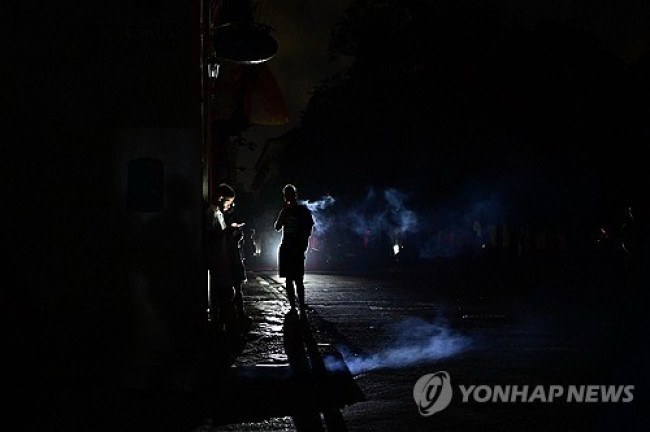 Night streets of Cuba [AFP=Yonhap News]
In addition to offline protests, online opposition is also fierce. In June alone, 1,220 instances of complaints and protests were detected on social media and in the comments sections of state-run media articles. By category, grievances regarding the national system were the most common (406 cases), followed by poor public services (227), food and inflation (146), and security concerns (142).
As the situation deteriorated, even the local religious community voiced rare criticism against the regime. Sister Nadieska Almeida, head of the Religious of the Love of the Neighbor in Cuba, stated in a social media post: "We are completely exhausted by the regime's trial-and-error approach and the biological experiments they are conducting on us," adding, "The history of totalitarianism, which has stripped us of our entire lives, must now come to an end."

 Iranian Foreign Ministry: "Continuing Message Exchanges with the U.S. and Activities of Mediating Countries"
Esmaeil Baghaei, Spokesperson for the Iranian Ministry of Foreign Affairs [Xinhua, Yonhap News file photo]Esmaeil Baghaei, spokesperson for the Iranian Ministry of Foreign Affairs, stated on the 26th
Iranian Foreign Ministry: "Continuing Message Exchanges with the U.S. and Activities of Mediating Countries"
Esmaeil Baghaei, Spokesperson for the Iranian Ministry of Foreign Affairs [Xinhua, Yonhap News file photo]Esmaeil Baghaei, spokesperson for the Iranian Ministry of Foreign Affairs, stated on the 26th
 President Yoon: "Do You Really Think You Are Safe from a Special Counsel?"... Final Statement Video Released
President Yoon Suk Yeol rebuking the special prosecutor on the 24th. [Court Video / Subtitled GIF from @birds_justice X account] A video capturing the live footage of President Yoon Suk Yeol’s final
President Yoon: "Do You Really Think You Are Safe from a Special Counsel?"... Final Statement Video Released
President Yoon Suk Yeol rebuking the special prosecutor on the 24th. [Court Video / Subtitled GIF from @birds_justice X account] A video capturing the live footage of President Yoon Suk Yeol’s final
 President Yoon, regarding the first-instance ruling on the Public Official Election Act: “An excessive political verdict that distorts the facts… We will appeal immediately.”
The first-instance sentencing hearing for President Yoon Suk Yeol regarding violations of the Public Official Election Act is being broadcast live at Seoul Station on the 27th. [Photo=Yonhap News]Pres
President Yoon, regarding the first-instance ruling on the Public Official Election Act: “An excessive political verdict that distorts the facts… We will appeal immediately.”
The first-instance sentencing hearing for President Yoon Suk Yeol regarding violations of the Public Official Election Act is being broadcast live at Seoul Station on the 27th. [Photo=Yonhap News]Pres
 WSJ: "SK Hynix ADR Premium Is a Sign of AI Trading Overheat"
Advertisement for SK Hynix ADR listing in New York's Times Square [Reuters=Yonhap News file photo]The Wall Street Journal (WSJ) has pointed out that the price of SK Hynix’s American Depositary Recei
WSJ: "SK Hynix ADR Premium Is a Sign of AI Trading Overheat"
Advertisement for SK Hynix ADR listing in New York's Times Square [Reuters=Yonhap News file photo]The Wall Street Journal (WSJ) has pointed out that the price of SK Hynix’s American Depositary Recei
 'Godfather of Japanese Mystery Novels' Keigo Higashino Passes Away After Battle with Cancer at 68
Famous Japanese mystery novelist Keigo Higashino [AFP=Yonhap News]It has been belatedly reported that Keigo Higashino, the "godfather of Japanese mystery novels" and author of bestsellers such as "The
'Godfather of Japanese Mystery Novels' Keigo Higashino Passes Away After Battle with Cancer at 68
Famous Japanese mystery novelist Keigo Higashino [AFP=Yonhap News]It has been belatedly reported that Keigo Higashino, the "godfather of Japanese mystery novels" and author of bestsellers such as "The
 [Park Pil-kyu Security Column] To the Ignorant Trying to Clothe a Beast in Sheep's Clothing
Rep. Kim Byung-joo of the Democratic Party of Korea [Photo=Yonhap News]“The Air Force Academy doesn't teach you how to fly a plane!” “The Army, Navy, and Air Force academies are exactly the
[Park Pil-kyu Security Column] To the Ignorant Trying to Clothe a Beast in Sheep's Clothing
Rep. Kim Byung-joo of the Democratic Party of Korea [Photo=Yonhap News]“The Air Force Academy doesn't teach you how to fly a plane!” “The Army, Navy, and Air Force academies are exactly the
 [Issue Diagnosis] Two Effects of the Election Petition Review
 [Photo] Evidence of Election Fraud Flooding U.S. Media… Trump Had 2.7 Million Votes Stolen
 [Video] U.S. Semiquincentennial Air Show... 'Art in the Sky' streaks across New York
 [Editorial Cartoon] A Draconian Law That Undermines Freedom of Expression

 List
List









