 On March 25, 2022, the day after North Korea test-fired its new 'Hwasong-17' intercontinental ballistic missile, Kim Jong-un (center) is seen walking with his subordinates. [KCNA=Yonhap News]
Unification Minister Kim Yung-ho declared a major shift in the Republic of Korea's North Korea policy during a press conference marking his first anniversary in office.
Effectively discarding the previous administration's principle of Complete, Verifiable, and Irreversible Denuclearization (CVID), he formalized a new policy framework based on prioritizing peace and achieving a nuclear-free Korean Peninsula.
Minister Kim emphasized that with inter-Korean dialogue frozen for seven years, sticking to denuclearization as a prerequisite for talks would prevent any progress. He urged a direct confrontation with the reality that North Korea's Yongbyon reactor and underground uranium enrichment centrifuges are currently operational.
Accordingly, he proposed a three-stage approach that calls for first halting the advancement of North Korea's nuclear and missile programs, followed by gradual arms reduction leading to denuclearization. He also announced the suspension of the National North Korean Human Rights Center and unveiled a vision for a peaceful "two-state" configuration oriented toward unification as the key pillars of the new policy.
On the surface, Minister Kim's proposal may appear to be a pragmatic method to address the harsh realities of the Northeast Asian landscape. However, when viewed through the lenses of the history of denuclearization diplomacy, negotiation structures, and constitutional values, it represents a treacherous act that sacrifices security for an illusion of peace.
Above all, dismissing the CVID principle as a mere relic of the conservative camp reflects a profound ignorance of the history of denuclearization diplomacy. Historically, it was the Kim Dae-jung administration that first established CVID as a foundational principle for dealing with North Korea through a joint statement by South Korea, the U.S., and Japan following the second nuclear crisis in 2002, triggered by the discovery of the North’s secret highly enriched uranium program.
The Roh Moo-hyun administration also officially agreed to the complete, verifiable, and irreversible dismantlement of North Korea's nuclear program during the 2003 ROK-U.S. summit. Even past progressive administrations, having experienced the duplicity of North Korea—which continued secret uranium enrichment while only committing to halt plutonium reprocessing—have treated CVID as the "minimum safety device" for security on the Korean Peninsula.
Ignoring these historical lessons and abandoning the CVID principle of one's own volition does not secure the initiative for peace. Instead, it commits the folly of endorsing North Korea's nuclear status without even the mechanism of verification.
Furthermore, the three-stage approach proposed by Minister Kim carries the risk of falling into the "backstabbing negotiation" tactics characteristic of communist forces.
Admiral Charles Turner Joy (1895–1956), who served as the chief delegate for the United Nations Command during the initial armistice negotiations of the Korean War, argued in his book, "How Communists Negotiate," that for communist forces, negotiations are not a platform for compromise, but a tool to avoid attacks, gain time, and reinforce military strength.
At a time when even nuclear arms control agreements between major powers are frequently invalidated—such as the collapse of the INF Treaty (2019), the withdrawal from the ABM Treaty (2002), and the suspension of New START (2023)—engaging in a "pre-halt" negotiation with a North Korea that frequently breaks its word, without a clear ultimate end-goal of denuclearization or rigorous on-site inspections, is likely to result only in providing the North with sanctions relief while granting them time to advance their nuclear capabilities.
Minister Kim’s expectation that the U.S.-China summit this November will lead to a resumption of U.S.-North Korea talks is likewise a pipe dream. If we retreat from our goal of denuclearization, we will only end up subordinating the security of 50 million citizens to the uncertain goodwill of North Korea.
A more fundamental concern in Minister Kim’s policy shift is its consistency with national legitimacy and constitutional values. Article 3 of the Constitution of the Republic of Korea defines the territory of the ROK as the Korean Peninsula and its adjacent islands, declaring that the North Korean region and its residents are our territory and people. Article 4 defines the pursuit of peaceful unification based on the basic order of liberal democracy as a state obligation.
In contrast, the Kim Jong-un regime in North Korea has already renounced the concepts of a single nation and unification, redefined inter-Korean relations as two hostile states, and is building barriers and tactical roads in the Demilitarized Zone. In such a situation, our government officially advocating for a "peaceful two-state" model risks providing logical justification for North Korea’s strategy to solidify division and undermining our own national objective of a free and unified Korean Peninsula.
Additionally, treating human rights issues as an obstacle to dialogue, as seen in the suspension of the National North Korean Human Rights Center, damages the moral leadership the ROK has maintained in the international community by treating universal human rights as a tool for diplomatic trade.
Seeking policy flexibility to resume stalled dialogue is a natural responsibility of the government. However, flexibility is only effective when grounded in solid security deterrence and clear principles. To this end, the government must clearly pursue three execution tasks.
First, even if U.S.-North Korea dialogue resumes following the U.S.-China summit between August and November and a phased approach is pursued, rigorous on-site inspections by the International Atomic Energy Agency (IAEA) and substantive verification procedures for the freezing of centrifuges must be guaranteed as concurrent conditions. Negotiation for a freeze without verification is merely repeating the failed appeasement policies of the past.
Second, separate from seeking dialogue, the operation of strategic assets through the Nuclear Consultative Group (NCG) and our military’s high-performance conventional response system must continue without wavering. Incentives for dialogue unsupported by deterrence only invite strategic miscalculation by the adversary.
Third, the improvement of human rights for North Korean residents and the inherent necessity of free unification mandated by the Constitution must not be relegated to a lower priority for the sake of the short-term goal of resuming inter-Korean dialogue. A value-based diplomacy rooted in principles must be restored and consistently pursued within a framework of mutual respect.
Peace is not merely a static state devoid of military conflict. It is completed in the process of thoroughly resolving the root causes of threats. A peace theory that loses the clear coordinates of denuclearization provides only temporary relief and fails to resolve the fundamental security instability on the Korean Peninsula.
Since North Korean denuclearization is a security issue directly linked to the survival of the Republic of Korea, Minister Kim must stop making self-righteous and sentimental arguments and take responsibility for the intelligence gaps that led to the cutoff of North Korean information due to security leaks. I urge the national security apparatus to realize that consistency, approached from the constitutional foundation that North Korea is part of the Republic of Korea, is the true driving force that leads to peace on the Korean Peninsula.
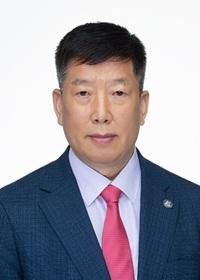
◆ Commissioner Park Pil-gyu
Editorial Writer, Hanmi Ilbo
40th Class, Korea Military Academy

 Iranian Foreign Ministry: "Continuing Message Exchanges with the U.S. and Activities of Mediating Countries"
Esmaeil Baghaei, Spokesperson for the Iranian Ministry of Foreign Affairs [Xinhua, Yonhap News file photo]Esmaeil Baghaei, spokesperson for the Iranian Ministry of Foreign Affairs, stated on the 26th
Iranian Foreign Ministry: "Continuing Message Exchanges with the U.S. and Activities of Mediating Countries"
Esmaeil Baghaei, Spokesperson for the Iranian Ministry of Foreign Affairs [Xinhua, Yonhap News file photo]Esmaeil Baghaei, spokesperson for the Iranian Ministry of Foreign Affairs, stated on the 26th
 President Yoon: "Do You Really Think You Are Safe from a Special Counsel?"... Final Statement Video Released
President Yoon Suk Yeol rebuking the special prosecutor on the 24th. [Court Video / Subtitled GIF from @birds_justice X account] A video capturing the live footage of President Yoon Suk Yeol’s final
President Yoon: "Do You Really Think You Are Safe from a Special Counsel?"... Final Statement Video Released
President Yoon Suk Yeol rebuking the special prosecutor on the 24th. [Court Video / Subtitled GIF from @birds_justice X account] A video capturing the live footage of President Yoon Suk Yeol’s final
 President Yoon, regarding the first-instance ruling on the Public Official Election Act: “An excessive political verdict that distorts the facts… We will appeal immediately.”
The first-instance sentencing hearing for President Yoon Suk Yeol regarding violations of the Public Official Election Act is being broadcast live at Seoul Station on the 27th. [Photo=Yonhap News]Pres
President Yoon, regarding the first-instance ruling on the Public Official Election Act: “An excessive political verdict that distorts the facts… We will appeal immediately.”
The first-instance sentencing hearing for President Yoon Suk Yeol regarding violations of the Public Official Election Act is being broadcast live at Seoul Station on the 27th. [Photo=Yonhap News]Pres
 WSJ: "SK Hynix ADR Premium Is a Sign of AI Trading Overheat"
Advertisement for SK Hynix ADR listing in New York's Times Square [Reuters=Yonhap News file photo]The Wall Street Journal (WSJ) has pointed out that the price of SK Hynix’s American Depositary Recei
WSJ: "SK Hynix ADR Premium Is a Sign of AI Trading Overheat"
Advertisement for SK Hynix ADR listing in New York's Times Square [Reuters=Yonhap News file photo]The Wall Street Journal (WSJ) has pointed out that the price of SK Hynix’s American Depositary Recei
 'Godfather of Japanese Mystery Novels' Keigo Higashino Passes Away After Battle with Cancer at 68
Famous Japanese mystery novelist Keigo Higashino [AFP=Yonhap News]It has been belatedly reported that Keigo Higashino, the "godfather of Japanese mystery novels" and author of bestsellers such as "The
'Godfather of Japanese Mystery Novels' Keigo Higashino Passes Away After Battle with Cancer at 68
Famous Japanese mystery novelist Keigo Higashino [AFP=Yonhap News]It has been belatedly reported that Keigo Higashino, the "godfather of Japanese mystery novels" and author of bestsellers such as "The
 [Park Pil-kyu Security Column] To the Ignorant Trying to Clothe a Beast in Sheep's Clothing
Rep. Kim Byung-joo of the Democratic Party of Korea [Photo=Yonhap News]“The Air Force Academy doesn't teach you how to fly a plane!” “The Army, Navy, and Air Force academies are exactly the
[Park Pil-kyu Security Column] To the Ignorant Trying to Clothe a Beast in Sheep's Clothing
Rep. Kim Byung-joo of the Democratic Party of Korea [Photo=Yonhap News]“The Air Force Academy doesn't teach you how to fly a plane!” “The Army, Navy, and Air Force academies are exactly the
 [Issue Diagnosis] Two Effects of the Election Petition Review
 [Photo] Evidence of Election Fraud Flooding U.S. Media… Trump Had 2.7 Million Votes Stolen
 [Video] U.S. Semiquincentennial Air Show... 'Art in the Sky' streaks across New York
 [Editorial Cartoon] A Draconian Law That Undermines Freedom of Expression

 List
List









