 In 431 BC, Pericles praised Athenian democracy in his funeral oration for the fallen. A work by Philipp von Foltz, 1842.
Freedom is the value that comes to mind first when explaining democracy. If the people are the masters of power, they must be able to express their thoughts, criticize those in power, and participate in political decision-making.
Without such freedom, it is difficult to call a system a democracy, even if elections exist. However, if freedom is understood simply as "doing whatever one wants," the essence of democracy is missed.
What does democratic freedom mean? Does it mean there are no restrictions on individual behavior? Or does it refer to the right of citizens to participate in politics as masters of their community?
In ancient Athens, freedom first meant the status of a citizen not subject to the rule of others. While slaves could not determine their own lives, free citizens could attend the assembly, serve as jurors in trials, and hold public office.
Aristotle defined a citizen not merely as someone who resides in a city, but as "someone with the right to participate in deliberation and judicial proceedings." Athenian freedom was closer to the right of citizens to participate directly in collective governance than to the right of individuals to distance themselves from the state. A citizen was not merely a subject of governance, but a participant in it.
Athenian democracy linked freedom with equality. In his "Politics," Aristotle cited freedom and equality as the principles of democracy, describing a state where neither the rich nor the poor are the masters of the other, and where citizens participate in governance as widely as possible.
Here, freedom was a political qualification to participate in public office, the assembly, and the courts. Democracy was not a system where everyone lived as they pleased behind closed doors, but a system where citizens participated equally in public decisions.
The freedom understood by Athenians is also reflected in Pericles' funeral oration as recounted by Thucydides. Pericles stated that Athens' political system operated for the benefit of the many rather than the few, and that all citizens were treated equally before the law.
He also explained that Athenians did not overly monitor their neighbors in daily life and respected each person's lifestyle. However, he immediately emphasized that this privacy did not turn citizens into lawbreakers. He meant that a free life and obedience to the law must coexist.
This passage is crucial for understanding democratic freedom. To an Athenian, freedom was not a state of lawlessness. It was a state where citizens participated in power and chose their own ways of life, yet abided by the laws set by the community. Thus, freedom and law were not opposing concepts. If the law is applied equally to all citizens, it becomes not a device that destroys freedom, but one that protects citizens so they do not infringe upon each other's freedoms.
However, Athenian freedom had significant limitations. Freedom was not the right of all humans, but the right of adult males who held citizenship. Women, slaves, and resident foreigners were excluded from the assembly and public office.
While Athens realized a high level of political participation among its citizens, it did not recognize freedom as a universal human right. By today's standards, Athenian democracy was a free society, but it was also a society that left many people outside the realm of freedom.
Furthermore, while Athenian democracy valued the freedom of political participation, it lacked institutions to sufficiently protect individual freedom from the decisions of the majority.
The case of Socrates, who was tried by a jury of citizens and executed in 399 BC on charges of impiety and corrupting the youth, illustrates this problem. The trial went through democratic procedures, but democratic processes do not always guarantee freedom of thought and speech. This is because the fact that a decision was made by a majority does not necessarily make that decision free.
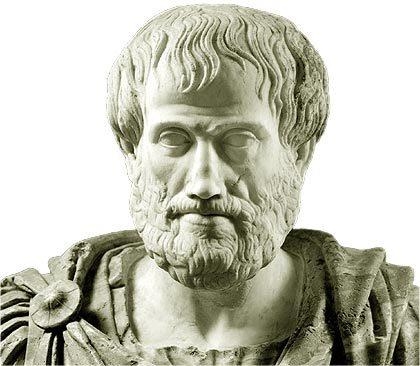 Aristotle criticized the misconception in extreme democracies that freedom meant "living as one pleases."
Aristotle also pointed out the danger that democracy might misunderstand freedom. He criticized the misconception in extreme democracies that freedom meant "living as one pleases." He believed that living according to the constitution and the law should not be viewed as a state of slavery.
This is because if the rule of law disappears, the community could cease to be a society of free citizens and instead become one ruled by those with the strongest desires or the loudest voices.
Modern liberalism sought to correct exactly this weakness. Modern freedom came to include not only the right of citizens to participate in collective governance but also the rights of the individual that the state cannot arbitrarily infringe upon.
Article 4 of the 1789 French "Declaration of the Rights of Man and of the Citizen" defined liberty as the power to do anything that does not harm others. It also declared that the limits on the exercise of each person's rights are set only by those that ensure other members of society enjoy the same rights, and that such limits must be determined by law.
From this principle emerge two conditions of modern freedom.
First, an individual is not free only within the scope permitted by the state or the majority. Humans are understood to be beings who possess freedom from before the state even existed.
Second, freedom has boundaries. My freedom cannot infringe upon the life, body, property, or reputation of others, nor upon their own equal freedom. Even when it is necessary to restrict freedom, it must be done according to pre-established laws and due process, not by the whims of those in power or the anger of the crowd.
The same principle applies to the First Amendment of the U.S. Constitution, which prohibits Congress from infringing upon the freedom of religion, speech, press, assembly, and petition. The Fourteenth Amendment dictates that state governments cannot deprive any person of life, liberty, or property without due process, nor deny them equal protection of the laws.
Democratic freedom does not end with electing rulers. It extends to establishing a sphere of freedom that even an elected power cannot infringe upon.
The Constitution of the Republic of Korea also adopts these principles. It defines fundamental rights such as freedom of person, conscience, religion, speech, press, assembly, and association, as well as freedom of academics and arts, and freedom of residence, relocation, and choice of occupation.
In particular, Article 12 of the Constitution prevents the restraint or search of a citizen's body without law and due process. It defines freedom not as a gift bestowed by the state, but as a right of the people that the state must respect and protect.
The Constitutional Court has not interpreted the liberal democratic basic order as a simple majority rule. The Court has explained it as a political order that trusts in individual autonomous reason, acknowledges the existence of various political viewpoints, excludes arbitrary rule, and respects the majority while considering the minority.
It implies that along with popular sovereignty, fundamental rights, separation of powers, and a multi-party system are essential elements of the democratic basic order. While the decision of the majority must be respected, the majority does not possess all the power of the state.
This is also the reason why the Constitutional Court ruled the Emergency Decrees No. 1 and No. 2 to be unconstitutional. Criticism of the government and demands for constitutional amendments are the core of political freedom held by the people, yet the Emergency Decrees punished such acts of opposition themselves.
The judgment was that even if such decrees followed formal legal procedures at the time, they could not conform to a liberal democratic order if they prohibited criticism of power and suppressed political expression. In democracy, freedom is tested more clearly by the right to oppose power than by the right to support it.
That said, not all actions can be protected under the name of freedom. Acts that prevent others' political participation through violence, coerce silence through threats, or infringe upon property and the body cannot be called freedom.
However, when restricting freedom, the purpose must be legitimate, and the scope of the restriction must not exceed what is necessary. National security and public order are important, but that does not mean any restriction becomes justified simply by attaching those labels to it.
The reason the Constitutional Court cautioned against the expansive application of criminal punishment even to expressions unrelated to the existence of the state is that freedom of expression and freedom of conscience are the foundations of liberal democracy.
Democratic freedom carries three meanings together. The first is the freedom of citizens to participate in politics and criticize power. The second is the freedom for each individual to choose their own life and thoughts. The third is the freedom to have one's fundamental rights protected from the decisions of the state and the majority.
Ancient Athens developed the first type of freedom. Modern liberalism supplemented the second and third. Contemporary liberal democracy is a system designed to protect all three freedoms within the framework of the Constitution.
Therefore, freedom and democracy are not the same thing. Democracy asks who decides the power, while freedom asks to what extent that power may intrude.
Even if the people are the masters of power, they cannot grant unlimited power to a majority. Even a faction that wins an election must not arbitrarily infringe upon the people's conscience, expression, body, or property. A democracy without freedom can turn into the tyranny of the majority, and freedom without democratic control can turn into the privilege of the powerful.
If so, what kind of equality does democracy promise? Is it to make everyone's ability, property, and outcomes the same? Or is it to guarantee equal qualifications for law and political participation?

◆ Songsan Jeong Gwang-je
A poet and researcher of history and philosophy. Former director of the Syngman Rhee Institute. Currently serving as a research advisor to the Korea Modern and Contemporary History Research Association and representative of the philosophy forum Lyceum. He has published four collections of poems, co-translated "Heroes of Heartbreak Ridge," and authored humanities books such as "Joseon Become Myth," "Humanities on the Tatami," and "A Liberal's Reading of Gramsci."

 Iranian Foreign Ministry: "Continuing Message Exchanges with the U.S. and Activities of Mediating Countries"
Esmaeil Baghaei, Spokesperson for the Iranian Ministry of Foreign Affairs [Xinhua, Yonhap News file photo]Esmaeil Baghaei, spokesperson for the Iranian Ministry of Foreign Affairs, stated on the 26th
Iranian Foreign Ministry: "Continuing Message Exchanges with the U.S. and Activities of Mediating Countries"
Esmaeil Baghaei, Spokesperson for the Iranian Ministry of Foreign Affairs [Xinhua, Yonhap News file photo]Esmaeil Baghaei, spokesperson for the Iranian Ministry of Foreign Affairs, stated on the 26th
 President Yoon: "Do You Really Think You Are Safe from a Special Counsel?"... Final Statement Video Released
President Yoon Suk Yeol rebuking the special prosecutor on the 24th. [Court Video / Subtitled GIF from @birds_justice X account] A video capturing the live footage of President Yoon Suk Yeol’s final
President Yoon: "Do You Really Think You Are Safe from a Special Counsel?"... Final Statement Video Released
President Yoon Suk Yeol rebuking the special prosecutor on the 24th. [Court Video / Subtitled GIF from @birds_justice X account] A video capturing the live footage of President Yoon Suk Yeol’s final
 President Yoon, regarding the first-instance ruling on the Public Official Election Act: “An excessive political verdict that distorts the facts… We will appeal immediately.”
The first-instance sentencing hearing for President Yoon Suk Yeol regarding violations of the Public Official Election Act is being broadcast live at Seoul Station on the 27th. [Photo=Yonhap News]Pres
President Yoon, regarding the first-instance ruling on the Public Official Election Act: “An excessive political verdict that distorts the facts… We will appeal immediately.”
The first-instance sentencing hearing for President Yoon Suk Yeol regarding violations of the Public Official Election Act is being broadcast live at Seoul Station on the 27th. [Photo=Yonhap News]Pres
 WSJ: "SK Hynix ADR Premium Is a Sign of AI Trading Overheat"
Advertisement for SK Hynix ADR listing in New York's Times Square [Reuters=Yonhap News file photo]The Wall Street Journal (WSJ) has pointed out that the price of SK Hynix’s American Depositary Recei
WSJ: "SK Hynix ADR Premium Is a Sign of AI Trading Overheat"
Advertisement for SK Hynix ADR listing in New York's Times Square [Reuters=Yonhap News file photo]The Wall Street Journal (WSJ) has pointed out that the price of SK Hynix’s American Depositary Recei
 'Godfather of Japanese Mystery Novels' Keigo Higashino Passes Away After Battle with Cancer at 68
Famous Japanese mystery novelist Keigo Higashino [AFP=Yonhap News]It has been belatedly reported that Keigo Higashino, the "godfather of Japanese mystery novels" and author of bestsellers such as "The
'Godfather of Japanese Mystery Novels' Keigo Higashino Passes Away After Battle with Cancer at 68
Famous Japanese mystery novelist Keigo Higashino [AFP=Yonhap News]It has been belatedly reported that Keigo Higashino, the "godfather of Japanese mystery novels" and author of bestsellers such as "The
 [Park Pil-kyu Security Column] To the Ignorant Trying to Clothe a Beast in Sheep's Clothing
Rep. Kim Byung-joo of the Democratic Party of Korea [Photo=Yonhap News]“The Air Force Academy doesn't teach you how to fly a plane!” “The Army, Navy, and Air Force academies are exactly the
[Park Pil-kyu Security Column] To the Ignorant Trying to Clothe a Beast in Sheep's Clothing
Rep. Kim Byung-joo of the Democratic Party of Korea [Photo=Yonhap News]“The Air Force Academy doesn't teach you how to fly a plane!” “The Army, Navy, and Air Force academies are exactly the
 [Issue Diagnosis] Two Effects of the Election Petition Review
 [Photo] Evidence of Election Fraud Flooding U.S. Media… Trump Had 2.7 Million Votes Stolen
 [Video] U.S. Semiquincentennial Air Show... 'Art in the Sky' streaks across New York
 [Editorial Cartoon] A Draconian Law That Undermines Freedom of Expression

 List
List









