 A massive crowd, enraged by the "rigged election," fills the area in front of the Handball Stadium at the Olympic Park in Bangi-dong, Songpa-gu, Seoul on the 7th, chanting for a "rerun election."
In a democracy, the legitimacy of a regime does not stem from power. It comes from elections. Furthermore, the legitimacy of an election is not solely determined by the number of votes. It must be backed by public trust. No matter how many votes are obtained, if the public does not trust the process, the victory will be perpetually questioned.
This is because democracy is a system of process, not just outcome. It is precisely on this point that the recent shortage of ballots is an issue that cannot be overlooked.
The Public May Not Know the Law, But They Know Common Sense
Some people say, "Can't there be a shortage of ballots?" But I would like to ask those who say this: What is the reason for the existence of a state? Why does it collect taxes, employ numerous public officials, and operate a vast administrative system? Is it not to protect the lives and property of its citizens, enforce the law, and fairly manage elections? If the state cannot even manage the most basic preparation on election day, what should the public believe?
Ballots are not an accessory to an election. They are the election itself. Just as an army cannot exist without bullets, an election cannot exist without ballots. The public went to the polling stations and there were no ballots. This happened in a nationwide election that had been prepared for months. This is too large, too symbolic, and too fatal to be dismissed as a mere mistake.
The public is not foolish. While they may not know every clause of the law, they know what is common sense and what is not. Even in an election for the residents' representative council of a local apartment complex, a shortage of ballots would cause an uproar. In a university student council election, a shortage of ballots would lead to discussions of a rerun election.
Yet, there was a shortage of ballots in a national election. A situation that caused nationwide controversy occurred. Still, someone says, "It's not a big deal." If this is truly not a big deal, then what is a big deal?
What is more serious is not the ballots themselves. It is the distrust the incident has left with the public. Democracy is a system of trust. The losing party must accept the outcome, and the winning party must have the legitimacy of the process recognized. However, after the election, people are not talking about policies. They are not talking about candidates. They are talking about the shortage of ballots. The meaning of this is clear. It means the public's attention has shifted from the outcome to the process. The very situation where the election process is discussed more than the election results is already a crisis of national trust.
Here, a common counterargument arises: "It's the Election Commission's responsibility, not the President's." Legally, that can be said. Election management is the responsibility of the Election Commission, and the President does not directly print or distribute ballots. However, politics is not a bar exam. Politics is a matter of responsibility.
The public elects the President as the highest responsible person for state operations. When the economy worsens, they say it's the President's fault. When foreign policy fails, they say it's the President's fault. When public safety is shaken, they also blame the President. Therefore, it is difficult to accept that the President is not responsible only when trust in the election is shaken.
One cannot enjoy the privileges of power while evading responsibility. The President is the face of the nation. The public does not look at the organizational chart of the Election Commission. The public looks at the nation, the government, and the President. Whether the Election Commission is an independent body might be an explanation from a political science textbook, but the direction of responsibility that the public feels is different. Ultimately, when public trust collapses, political responsibility naturally gravitates towards the highest leader.
If the government had thoroughly investigated the situation, transparently disclosed all relevant materials, strictly held those responsible accountable, and provided an explanation that the public could accept, the situation might have been different. However, if the public does not accept it, the story changes. Democracy is not maintained by bullets. It is maintained by trust. A regime that has lost trust, even if it appears sound on the outside, begins to crumble from within.
It is Trust, Not Court Rulings, That Topples Regimes
Look at history. Numerous regimes have not collapsed due to economic reasons. Nor have they collapsed due to military force. They collapsed because the public no longer believed in them. Power that has lost trust faces stronger suspicion as time goes on.
Explanations sound like excuses, clarifications sound like cover-ups, and silence sounds like a confession. Once in that state, a regime falls into an endless crisis of legitimacy. It is at this point that the discourse of resignation emerges.
The logic of resignation is as follows: The problem is not a few ballots. The problem is the fact that the state failed to properly manage even the most basic democratic procedures. The problem is that, as a result, public trust has been shaken. The problem is that no one is taking political responsibility for that collapse of trust. In politics, responsibility does not just mean criminal punishment. Resignation is also responsibility, and stepping down is also responsibility.
Bowing before the people and stepping down from one's position is also a form of responsibility. In fact, it is a method of political responsibility that democracy has long employed.
If the majority of the public does not trust the election process, questions the state system, and the government fails to resolve those questions, it is not strange for calls for the highest responsible person to step down to emerge. Power feeds on public trust. Power that has lost trust is left with only an empty shell.
Therefore, we argue this: The reason President Lee Jae-myung must step down is not for a change in regime. It is not for political advantage or disadvantage. It is to restore the legitimacy of democracy. If the state of the public being unable to trust elections continues, any policy, any reform, any state operation will struggle to secure sufficient legitimacy. In a democracy, the most important thing is not the maintenance of power, but the restoration of trust. And if that trust cannot be restored, the resignation of the highest responsible person becomes an unavoidable political choice.
Looking back at history, it was never court rulings that brought down regimes. It was the trust that first collapsed in the hearts of the people. The reason for calls for resignation ultimately lies at this point.
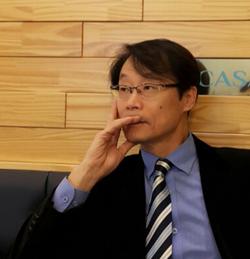
◆ Songsan
Poet and researcher of history and philosophy. Former director of the Rhee Syngman Academy. Currently serves as an advisor to the Korean Modern and Contemporary History Research Association and as the representative of the philosophical forum Lyceum. He has published four poetry collections, co-translated "Heroes of the Kokko Coast," and authored the non-fiction books "Joseon That Became a Myth," "Humanities on Tatami," and "A Liberal's Reading of Gramsci." Songsan is a pen name.

 Iranian Foreign Ministry: "Continuing Message Exchanges with the U.S. and Activities of Mediating Countries"
Esmaeil Baghaei, Spokesperson for the Iranian Ministry of Foreign Affairs [Xinhua, Yonhap News file photo]Esmaeil Baghaei, spokesperson for the Iranian Ministry of Foreign Affairs, stated on the 26th
Iranian Foreign Ministry: "Continuing Message Exchanges with the U.S. and Activities of Mediating Countries"
Esmaeil Baghaei, Spokesperson for the Iranian Ministry of Foreign Affairs [Xinhua, Yonhap News file photo]Esmaeil Baghaei, spokesperson for the Iranian Ministry of Foreign Affairs, stated on the 26th
 President Yoon: "Do You Really Think You Are Safe from a Special Counsel?"... Final Statement Video Released
President Yoon Suk Yeol rebuking the special prosecutor on the 24th. [Court Video / Subtitled GIF from @birds_justice X account] A video capturing the live footage of President Yoon Suk Yeol’s final
President Yoon: "Do You Really Think You Are Safe from a Special Counsel?"... Final Statement Video Released
President Yoon Suk Yeol rebuking the special prosecutor on the 24th. [Court Video / Subtitled GIF from @birds_justice X account] A video capturing the live footage of President Yoon Suk Yeol’s final
 President Yoon, regarding the first-instance ruling on the Public Official Election Act: “An excessive political verdict that distorts the facts… We will appeal immediately.”
The first-instance sentencing hearing for President Yoon Suk Yeol regarding violations of the Public Official Election Act is being broadcast live at Seoul Station on the 27th. [Photo=Yonhap News]Pres
President Yoon, regarding the first-instance ruling on the Public Official Election Act: “An excessive political verdict that distorts the facts… We will appeal immediately.”
The first-instance sentencing hearing for President Yoon Suk Yeol regarding violations of the Public Official Election Act is being broadcast live at Seoul Station on the 27th. [Photo=Yonhap News]Pres
 WSJ: "SK Hynix ADR Premium Is a Sign of AI Trading Overheat"
Advertisement for SK Hynix ADR listing in New York's Times Square [Reuters=Yonhap News file photo]The Wall Street Journal (WSJ) has pointed out that the price of SK Hynix’s American Depositary Recei
WSJ: "SK Hynix ADR Premium Is a Sign of AI Trading Overheat"
Advertisement for SK Hynix ADR listing in New York's Times Square [Reuters=Yonhap News file photo]The Wall Street Journal (WSJ) has pointed out that the price of SK Hynix’s American Depositary Recei
 'Godfather of Japanese Mystery Novels' Keigo Higashino Passes Away After Battle with Cancer at 68
Famous Japanese mystery novelist Keigo Higashino [AFP=Yonhap News]It has been belatedly reported that Keigo Higashino, the "godfather of Japanese mystery novels" and author of bestsellers such as "The
'Godfather of Japanese Mystery Novels' Keigo Higashino Passes Away After Battle with Cancer at 68
Famous Japanese mystery novelist Keigo Higashino [AFP=Yonhap News]It has been belatedly reported that Keigo Higashino, the "godfather of Japanese mystery novels" and author of bestsellers such as "The
 [Park Pil-kyu Security Column] To the Ignorant Trying to Clothe a Beast in Sheep's Clothing
Rep. Kim Byung-joo of the Democratic Party of Korea [Photo=Yonhap News]“The Air Force Academy doesn't teach you how to fly a plane!” “The Army, Navy, and Air Force academies are exactly the
[Park Pil-kyu Security Column] To the Ignorant Trying to Clothe a Beast in Sheep's Clothing
Rep. Kim Byung-joo of the Democratic Party of Korea [Photo=Yonhap News]“The Air Force Academy doesn't teach you how to fly a plane!” “The Army, Navy, and Air Force academies are exactly the
 [Issue Diagnosis] Two Effects of the Election Petition Review
 [Photo] Evidence of Election Fraud Flooding U.S. Media… Trump Had 2.7 Million Votes Stolen
 [Video] U.S. Semiquincentennial Air Show... 'Art in the Sky' streaks across New York
 [Editorial Cartoon] A Draconian Law That Undermines Freedom of Expression

 List
List










