 The “Great Rally for Democratization,” a protest meeting held in Gwangju, including the Jeollanam-do Provincial Office, from May 14 to 16, 1980. [Photo courtesy of the 5·18 Memorial Foundation]
The Gwangju Uprising of May 1980 remains one of the most tragic events in modern South Korean history. Many citizens and soldiers lost their lives, and the state failed to protect the lives and freedom of its people.
This is an undeniable fact and must never be denied. However, remembering a historical tragedy is an entirely different matter from turning it into the exclusive property of a specific political faction.
Beyond Commemoration: Creating a Political Sanctuary
We must distinguish between the fact that Gwangju is a vital symbol of the democratization movement and the attempt to use Gwangju to permanently secure one's own political legitimacy. Unfortunately, the South Korean progressive left has deliberately conflated the two for a long time.
Moving beyond simply mourning the victims of Gwangju, they have transformed Gwangju into a political sanctuary, creating a structure that shields them from any criticism. While I agree that we must remember Gwangju, I cannot agree with the claim that Gwangju should place a certain faction beyond the reach of criticism. A historical tragedy should serve as a starting point for reflection, not a basis for immunity.
In the 1980s, student movements and dissident forces adopted Gwangju as their political origin point. The problem is that, in the process, Gwangju was degraded from a historical event into a form of "moral certificate."
Those who claimed to inherit the spirit of Gwangju were automatically deemed righteous, and invoking the "Gwangju spirit" created an atmosphere where political arguments were exempt from verification. As a result, a culture of evaluating their own failures disappeared within the activist camp.
There was rarely any cold-headed reflection on issues such as the failure of the South Korean Workers' Party in 1948, the collapse of the revolutionary line after the 1950s, the Revolutionary Party for Reunification incident, the Mincheonghakryeon incident, and the failure of various underground revolutionary organizations.
There was a lack of fundamental questioning: why did the public not support the revolutionary path, why did socialist experiments fail, and why did the North Korean regime transform into a dictatorship that destroys human rights and freedom? Instead, Gwangju was deployed. Criticism of failed ideologies and flawed strategies was treated as if it had to remain silent before the sacrifices of Gwangju. Historical tragedy began to be used as a political shield.
A more serious problem is that Gwangju has served to paralyze self-reflection within the progressive left. Any normal political force should analyze the causes and correct its course when its strategies fail.
However, the South Korean progressive left has long rejected such a process. Whenever their claims were challenged, they relied on moral superiority rather than logic. Once they established a framing where they were the "inheritors of Gwangju" and their opponents were the "deniers of Gwangju," complex debate became unnecessary.
Whether economic policies failed, security policies collapsed, judgments on North Korea proved wrong, or even when there were errors in historical perception, the symbol of Gwangju covered all these issues. This culture weakened academic discourse and reinforced political dogmatism.
Criticism was branded as reactionism, and questioning was treated as taboo. A bizarre phenomenon emerged where those who clamored for democracy rejected democratic verification of themselves.
Why the Silence on the North Korean Dictatorship?
In fact, since the mid-to-late 1980s, the trend of positively evaluating the North Korean regime or accepting Juche ideology grew within the activist camp. Yet, they never honestly explained their ideological choices to the public. Instead, they utilized the morality of Gwangju as their political asset. While the sacrifices of Gwangju must be respected, they cannot serve as a shield to block criticism of the North Korean regime.
If the citizens of Gwangju sacrificed themselves for freedom, then the North Korean dictatorship should certainly be criticized as well. However, the progressive left has long failed to show consistency on this issue.
They were outraged by human rights abuses under military regimes while remaining silent about North Korea’s political prison camps; they denounced authoritarianism in the South while remaining lenient toward North Korea’s hereditary dictatorship. This double standard was justified in the name of Gwangju. While claiming to inherit the spirit of Gwangju, they practiced selective engagement with the universal values of freedom and human rights.
The Gwangju Uprising is a history that the Republic of Korea must remember. However, historical memory is not the monopoly of anyone. The attitude of acting as if a specific political force is the sole heir to Gwangju is not for the sake of Gwangju, but for themselves.
Honoring the victims is different from exploiting them. Revealing the truth is different from turning the truth into a political asset. The point is not to criticize Gwangju, but to criticize the moral monopoly that uses Gwangju.
South Korean democracy must develop on the principle that no force can become a sanctuary. Gwangju, too, must be a subject for study, verification, and debate within history. That is the only way to ensure Gwangju remains history, not mythology.
And one of the significant characteristics of the 80-year history of the pro-North Korean left begins right here. A political culture that prioritizes moral superiority over reflection on failed ideologies, builds sanctuaries instead of debating, and demands immunity instead of verification began to form in earnest after Gwangju.
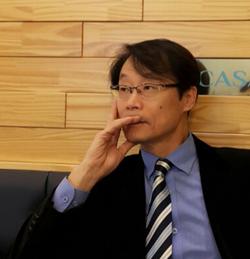
◆ Songsan (松山)
A poet and researcher of history and philosophy. A former board member of the Rhee Syngman Institute. Currently, he serves as a research advisor to the Korea Modern and Contemporary History Research Association and is the head of the philosophy forum "Lyceum." He has published four volumes of poetry, co-translated "Heroes of Hook," and authored humanities books including "Joseon, Which Became a Myth," "Humanities on the Tatami," and "A Liberal's Reading of Gramsci." Songsan is his pen name.

 Iranian Foreign Ministry: "Continuing Message Exchanges with the U.S. and Activities of Mediating Countries"
Esmaeil Baghaei, Spokesperson for the Iranian Ministry of Foreign Affairs [Xinhua, Yonhap News file photo]Esmaeil Baghaei, spokesperson for the Iranian Ministry of Foreign Affairs, stated on the 26th
Iranian Foreign Ministry: "Continuing Message Exchanges with the U.S. and Activities of Mediating Countries"
Esmaeil Baghaei, Spokesperson for the Iranian Ministry of Foreign Affairs [Xinhua, Yonhap News file photo]Esmaeil Baghaei, spokesperson for the Iranian Ministry of Foreign Affairs, stated on the 26th
 President Yoon: "Do You Think You Are Safe from the Special Counsel?"... Final Statement Video Released
President Yoon Suk Yeol rebuking the special prosecutor on the 24th. [Court video / @birds_justice X account subtitle GIF] A video of President Yoon Suk Yeol's closing statement at his trial rega
President Yoon: "Do You Think You Are Safe from the Special Counsel?"... Final Statement Video Released
President Yoon Suk Yeol rebuking the special prosecutor on the 24th. [Court video / @birds_justice X account subtitle GIF] A video of President Yoon Suk Yeol's closing statement at his trial rega
 President Yoon, regarding the first-instance ruling on the Public Official Election Act: “An excessive political verdict that distorts the facts… We will appeal immediately.”
The first-instance sentencing hearing for President Yoon Suk Yeol regarding violations of the Public Official Election Act is being broadcast live at Seoul Station on the 27th. [Photo=Yonhap News]Pres
President Yoon, regarding the first-instance ruling on the Public Official Election Act: “An excessive political verdict that distorts the facts… We will appeal immediately.”
The first-instance sentencing hearing for President Yoon Suk Yeol regarding violations of the Public Official Election Act is being broadcast live at Seoul Station on the 27th. [Photo=Yonhap News]Pres
 WSJ: "SK Hynix ADR Premium Is a Sign of AI Trading Overheat"
Advertisement for SK Hynix ADR listing in New York's Times Square [Reuters=Yonhap News file photo]The Wall Street Journal (WSJ) has pointed out that the price of SK Hynix’s American Depositary Recei
WSJ: "SK Hynix ADR Premium Is a Sign of AI Trading Overheat"
Advertisement for SK Hynix ADR listing in New York's Times Square [Reuters=Yonhap News file photo]The Wall Street Journal (WSJ) has pointed out that the price of SK Hynix’s American Depositary Recei
 'Godfather of Japanese Mystery Novels' Keigo Higashino Passes Away After Battle with Cancer at 68
Famous Japanese mystery novelist Keigo Higashino [AFP=Yonhap News]It has been belatedly reported that Keigo Higashino, the "godfather of Japanese mystery novels" and author of bestsellers such as "The
'Godfather of Japanese Mystery Novels' Keigo Higashino Passes Away After Battle with Cancer at 68
Famous Japanese mystery novelist Keigo Higashino [AFP=Yonhap News]It has been belatedly reported that Keigo Higashino, the "godfather of Japanese mystery novels" and author of bestsellers such as "The
 [Park Pil-kyu Security Column] To the Ignorant Trying to Clothe a Beast in Sheep's Clothing
Rep. Kim Byung-joo of the Democratic Party of Korea [Photo=Yonhap News]“The Air Force Academy doesn't teach you how to fly a plane!” “The Army, Navy, and Air Force academies are exactly the
[Park Pil-kyu Security Column] To the Ignorant Trying to Clothe a Beast in Sheep's Clothing
Rep. Kim Byung-joo of the Democratic Party of Korea [Photo=Yonhap News]“The Air Force Academy doesn't teach you how to fly a plane!” “The Army, Navy, and Air Force academies are exactly the
 [Issue Diagnosis] Two Effects of the Election Petition Review
 [Photo] Evidence of Election Fraud Flooding U.S. Media… Trump Had 2.7 Million Votes Stolen
 [Video] U.S. Semiquincentennial Air Show... 'Art in the Sky' streaks across New York
 [Editorial Cartoon] A Draconian Law That Undermines Freedom of Expression

 List
List










