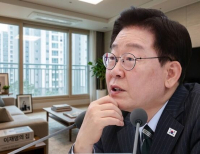
Han Byung-do, Acting Leader and Floor Leader of the Democratic Party of Korea, and Jeong Jeom-sik, Floor Leader of the People Power Party, are posing for a photo after signing an agreement on a special counsel bill regarding the ballot paper shortage incident at the National Election Commission in the office of the Chief of the National Assembly Steering Committee on July 21. From left: Kim Seung-soo, Senior Deputy Floor Leader of the People Power Party; Floor Leader Jeong; Acting Leader Han of the Democratic Party; and Cheon Jun-ho, Senior Deputy Floor Leader of the Democratic Party. 2026.7.21 [Photo=Yonhap News]The Democratic Party of Korea and the People Power Party have agreed to pass a special counsel bill for the National Election Commission (NEC) to investigate the ballot paper shortage during the 9th Nationwide Simultaneous Local Elections within the July extraordinary session of the National Assembly.
If one only looks at the fact that they have reached a consensus on introducing a special counsel, this is a result of politics in action. However, when the agreement is placed side-by-side with the parliamentary investigation plan, reasons emerge as to why it is difficult to view this as simple bipartisan cooperation.
The "infringement of citizens' suffrage" and "electoral management reform," which were central during the parliamentary investigation stage, have disappeared from the title of the special counsel bill. Instead, the incident has been defined as a "case of poor electoral management." While a stronger tool—a special counsel with mandatory investigative powers—is being introduced, the scope of what is intended to be investigated has actually been narrowed.
The six members of the "Citizen Recommendation Committee" tasked with vetting special counsel candidates will be appointed by the ruling and opposition parties, three from each side. The parties will then agree on two candidates to present to the President, who will appoint one of them.
The responsibility here does not lie solely in the administrative aspects of printing and supplying ballots. It involves political and institutional responsibility for overseeing the NEC, refining the electoral system, and preventing recurring administrative failures. The political sector, which is not free from that responsibility, is now the one defining the name and scope of the investigation and narrowing down the pool of candidates for the special counsel.
The public is asking: is this agreement truly for the sake of finding the truth, or is it a collusive effort by the political sector to downscale the investigation while dividing the rights to control the process?
From ‘Infringement of Suffrage’ to ‘Poor Management’
The official name of the Special Committee for Parliamentary Investigation formed by the National Assembly last June was the "Special Committee for Parliamentary Investigation into the Truth of the Infringement of Citizens' Suffrage, such as the Ballot Paper Shortage in the 9th Nationwide Simultaneous Local Elections, and Reform of Electoral Management."
At the time, the National Assembly defined the ballot shortage and the suspension of voting not merely as administrative mistakes, but as an issue where the constitutional right to vote was infringed upon. The objective of reforming the electoral management system and organization was also included in the title.
However, the name of the special counsel bill agreed upon by the ruling and opposition parties is the "Act on the Appointment, etc. of a Special Counsel to Investigate the Truth of the Poor Electoral Management Case, including the Ballot Paper Shortage in the 9th Nationwide Simultaneous Local Elections."
“Infringement of citizens' suffrage” has been changed to “poor electoral management,” and “electoral management reform” has been omitted. This is not a simple shortening of words.
“Infringement of suffrage” is a constitutional expression that asks whether there were citizens who were effectively unable to vote and how the suspension and delay of voting impacted the right to vote and the fairness of the election. Conversely, “poor electoral management” is an expression that views the incident through the lens of administrative incompetence, negligence, and procedural errors.
Moreover, the bill uses the term “case of poor electoral management” rather than “suspicions of poor electoral management.” This could be interpreted as having already reached the judgment that poor management occurred, tasking the special counsel only with confirming the causes and the degree of responsibility. Deliberate dereliction of duty, organized cover-ups, post-incident tampering with materials, and the impact on election results and public trust have been pushed outside the scope of the title.
The title of a bill does not determine the entire scope of an investigation. If the final provisions broadly include intent, organized nature, allegations of cover-up, and the extent of suffrage infringement, it could overcome the limitations of the title.
However, the title of a law reveals the legislative intent and the National Assembly’s fundamental perception of an incident. The ruling and opposition parties, who pushed for the investigation of constitutional rights violations and structural reforms in the parliamentary investigation, must explain why they have downgraded this to an administrative management failure at the special counsel stage. It is difficult to avoid the criticism that while the investigative tool has become stronger, the target of the investigation has become weaker.
Those Responsible Design the Gateway to the Special Counsel
Direct administrative responsibility for election management lies with the NEC, an independent constitutional body not under the direction of the President or political parties. However, this does not absolve the ruling and opposition parties of political and institutional responsibility.
The National Assembly enacts election-related laws, reviews the NEC’s budget and systems, and checks the NEC through audits and parliamentary investigations. Political parties are also direct stakeholders, as they nominate candidates and gain power through election results.
It is questionable whether it is appropriate for such parties to strike “infringement of citizens' suffrage” from the special counsel bill, negotiate the scope of the investigation, and even hold the lead in selecting the special counsel. It is essentially the political sector—those who may be the subjects of the investigation—designing the gateway to the special counsel.
A ‘Citizen Recommendation Committee’ Without Citizens
According to the agreement, the two major negotiating groups will each appoint three members to the Citizen Recommendation Committee. When the Korean Bar Association and the Korea Association of Law Schools each recommend three candidates for special counsel, the committee will select two from the six to present to the President based on bipartisan agreement.
There is no process for citizens to elect committee members or recommend candidates. While external legal organizations form the initial pool, the final gate is held by the political sector again. In practice, it is closer to a "bipartisan joint recommendation committee."
Of course, the National Assembly is the representative body of the people. If that is the case, to live up to the name of a "Citizen Recommendation Committee," it must disclose the list of members, selection criteria, candidate review criteria, the process behind any failed consensus, and the reasons for supporting or opposing each candidate.
It should be verifiable whether the committee members are acting as proxies for political parties or making independent judgments. If meeting minutes and voting results remain private and only the final candidates are announced, the public will have no way of knowing which candidates were excluded and why.
If the name "citizen" is used while the process and responsibilities are hidden, the title becomes nothing more than political packaging.
Mutual Veto or Mutual Delay?
With this agreement, both parties hold veto power to block a candidate favored by the other. In the sense that it prevents one side from monopolizing the special counsel, it could serve as a neutral safeguard.
However, if the Citizen Recommendation Committee cannot agree on the two candidates, the list to be presented to the President cannot be formed. Even if new candidates are recommended, the deadlock will simply repeat if the parties fail to reach an agreement again.
If the launch of the special counsel is delayed, who is held accountable?
The ruling party could blame the opposition for stalling, and the opposition could accuse the ruling party of obstruction. If the structure allows for the exercise of veto power without accountability for the resulting delays, the timing of the special counsel's launch will inevitably be swayed by political calculations.
The final bill must specify deadlines for completing recommendations, the number of re-recommendations allowed, and alternative procedures in case of deadlock. The list of committee members and the meeting process must also be disclosed so that the public can judge which side blocked the agreement and for what reasons.
When Does the President Enter the Line of Responsibility?
It is difficult to conclude that the President is in the direct line of administrative responsibility for the ballot paper shortage, as the NEC is an independent body. However, the moment the President selects one of the multiple candidates, they enter a new line of political responsibility.
The President is not merely issuing an appointment certificate to a designated individual; if they choose one out of two, judgment and discretion are involved. The President must take political responsibility for the independence and fairness of the special counsel they choose. Even if issues of poor investigation or bias arise, the President cannot withdraw from the line of responsibility by claiming that "the ruling and opposition parties recommended them." There is also a responsibility to explain to the public why they chose one candidate and why the other was excluded.
Conversely, if the President’s role is merely formal, the ruling and opposition parties must explain why the President is tasked with choosing between two candidates. The mere existence of precedents for special counsels does not automatically secure the legitimacy of this appointment method. Precedents can serve as a basis for procedure, but they do not exempt one from responsibility.
Putting the Cart Before the Horse: Deciding Appointment Structure Before Scope
The ruling and opposition parties have agreed on the structure of the special counsel recommendation and the principle of processing it within the July extraordinary session, but they have postponed the scope of the investigation, duration, and the size of the investigative team to follow-up negotiations.
The order is reversed. What is important to the public is not who can veto a special counsel candidate, but what will be investigated, to what extent, and whose responsibility will be questioned.
The investigation must cover the demand forecasting for ballots, the determination of print quantities, reports and instructions from the NEC leadership, the suspension of voting and the supply of additional ballots, the transport of ballot boxes, and the process of data preservation and submission. It must also verify allegations of downsizing or covering up the incident, perjury, and the destruction of evidence after the fact.
Above all, the infringement of citizens' suffrage and the electoral management reform that were to be addressed in the parliamentary investigation must be maintained in the special counsel investigation. However, the ruling and opposition parties have left the core of the investigation empty, downgraded the bill's title to "poor management," and began by dividing up veto power over candidates.
Agreement or Collusion?
Politics is negotiation, and legislation requires compromise. One cannot conclude that the Democratic Party accepting the introduction of a special counsel and the People Power Party backing down from its demand for sole opposition recommendation to create a system of mutual checks is entirely collusion.
However, for this compromise to be recognized as an agreement for the people, the final bill must answer four questions:
Why were “infringement of citizens' suffrage” and “electoral management reform” deleted from the title of the special counsel bill? Why are the ruling and opposition parties, who are not free from the responsibility of NEC oversight and reform, appointing all members of the Citizen Recommendation Committee? Who takes responsibility when the special counsel is delayed due to failed agreements? What is the reason for the President having to select the final candidate, and what is the responsibility that follows that choice?
The final bill must include the authority to investigate the infringement of suffrage broadly, provide sufficient time and personnel, and mandate data submission and evidence preservation. Principles for recommendation deadlines, alternative procedures, and the disclosure of the recommendation process must also be established.
Conversely, if the bill only confirms the structure of removing “infringement of suffrage,” leaving only “poor management,” dividing candidate veto power between parties, and giving the final choice to the President, it is difficult to avoid the criticism that this is a collusive, downsized effort designed to lower the starting line of the investigation and allow both sides to shirk responsibility for potential delays.
The owner of the special counsel is neither the ruling/opposition parties nor the President. It is the citizens who may have had their right to vote infringed upon. If it is to be a recommendation committee in the name of the people, the process and responsibilities must be disclosed to the people.
If the parties delay the agreement, they must reveal who blocked which candidate and why; if the President selects the final candidate, they must be held accountable for the reasons and results. Even if the political sector holds the handle to the door of the special counsel, the public must be able to verify for whom that door is being opened.

 [Statement by the Seo-beokka Korea Military Academy Save-the-Nation Comrades Association] ㉖ Suppressing a Just Struggle for Sovereignty is a Violation of the Constitution and a Grave Crime Equivalent to Insurrection
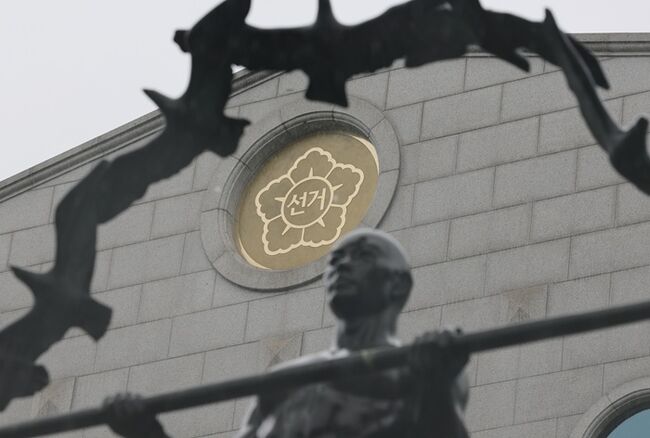
National Election Commission. [Photo=Yonhap News]The ‘ballot paper shortage’ during the June 3 local elections was an act of constitutional destruction that shook the foundations of South Korean d
[Statement by the Seo-beokka Korea Military Academy Save-the-Nation Comrades Association] ㉖ Suppressing a Just Struggle for Sovereignty is a Violation of the Constitution and a Grave Crime Equivalent to Insurrection
National Election Commission. [Photo=Yonhap News]The ‘ballot paper shortage’ during the June 3 local elections was an act of constitutional destruction that shook the foundations of South Korean d
 Japan's Ministry of Defense: "China and Russia conduct live-fire naval exercises in Japan's EEZ... China also fires machine guns"
Japan’s Ministry of Defense announced on the 21st that Chinese and Russian naval forces conducted live-fire exercises within Japan's Exclusive Economic Zone (EEZ) on the 19th, including machine gun
Japan's Ministry of Defense: "China and Russia conduct live-fire naval exercises in Japan's EEZ... China also fires machine guns"
Japan’s Ministry of Defense announced on the 21st that Chinese and Russian naval forces conducted live-fire exercises within Japan's Exclusive Economic Zone (EEZ) on the 19th, including machine gun
 Blue House: "We will respect any conclusion on the right to request supplementary investigations... A prompt decision is needed to minimize confusion."
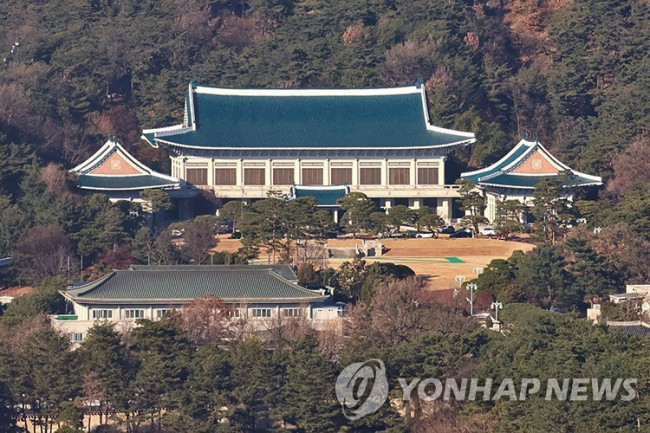
The Blue House [Photo by Lee Jung-hoon] 2025.12.8Regarding the issue of the prosecution's supplementary investigative authority, the Blue House stated on the 21st, "The decision on whether to abolish
Blue House: "We will respect any conclusion on the right to request supplementary investigations... A prompt decision is needed to minimize confusion."
The Blue House [Photo by Lee Jung-hoon] 2025.12.8Regarding the issue of the prosecution's supplementary investigative authority, the Blue House stated on the 21st, "The decision on whether to abolish
 'Oldarc' who blocked access to Jamsil counting station faces arrest warrant hearing… 4 Olympic Park protesters also under review
A woman in her 30s, accused of obstructing business by blocking sports organization staff from entering the indoor office at the Olympic Park Handball Gymnasium—which served as a vote counting
'Oldarc' who blocked access to Jamsil counting station faces arrest warrant hearing… 4 Olympic Park protesters also under review
A woman in her 30s, accused of obstructing business by blocking sports organization staff from entering the indoor office at the Olympic Park Handball Gymnasium—which served as a vote counting
 SpaceX overtakes Meta, pushing it down to 8th place in U.S. market capitalization
SpaceX Starship launch delayed [Reuters=Yonhap News]SpaceX has seen its market capitalization evaporate by over $1 trillion (1,489 trillion won) since peaking about a month ago, causing it to fall to
SpaceX overtakes Meta, pushing it down to 8th place in U.S. market capitalization
SpaceX Starship launch delayed [Reuters=Yonhap News]SpaceX has seen its market capitalization evaporate by over $1 trillion (1,489 trillion won) since peaking about a month ago, causing it to fall to
 The Summer of 2026 in Jeju, documented by me… Kirin Villa Resort, August Summer Event
Kylin Villa Resort is launching its collaborative summer event, the "Kylin Summer Passport," which will run for one month starting August 1st.Kylin Villa Resort is launching its collaborative summer e
The Summer of 2026 in Jeju, documented by me… Kirin Villa Resort, August Summer Event
Kylin Villa Resort is launching its collaborative summer event, the "Kylin Summer Passport," which will run for one month starting August 1st.Kylin Villa Resort is launching its collaborative summer e
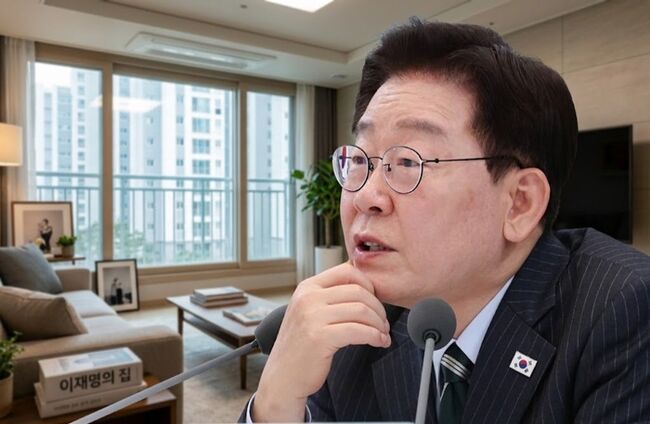 [Column by Park Joo-hyun] Shouldn't we put a price tag on the rise of my home value...?
[This image was created with the help of AI]Since you managed to sell your house well while defending your asking price, there is a point I have been wanting to make that I must address now. A sp
[Column by Park Joo-hyun] Shouldn't we put a price tag on the rise of my home value...?
[This image was created with the help of AI]Since you managed to sell your house well while defending your asking price, there is a point I have been wanting to make that I must address now. A sp
 [Photo] Evidence of Election Fraud Flooding U.S. Media… Trump Had 2.7 Million Votes Stolen
 [Video] U.S. Semiquincentennial Air Show... 'Art in the Sky' streaks across New York
 [Editorial Cartoon] A Draconian Law That Undermines Freedom of Expression

 List
List