With the agreement on special performance bonuses between Samsung Electronics' labor and management, the issue of the attribution of operating profit has emerged as a top-priority concern in academia. [Photo: Yonhap News]Professor Kim Byung-joon’s article, "Whose Operating Profit is Samsung Electronics'?", analyzes the attribution of operating profits in the context of the recent labor-management agreement at Samsung Electronics through the lenses of financial economics, commercial law, corporate governance, and labor relations.
The core critical question of the article is quite clear: essentially, whose share is a corporation's operating profit, and can workers hold an ex-ante claim to these profits? The entire piece proceeds from the perspective that emphasizes the primacy of residual claimancy for shareholders and suggests that the expansion of profit-sharing with workers could potentially undermine the capitalist order.
However, when viewing this issue through the lens of Hayek, a legal and financial argument that "shareholder rights take precedence" is not, by itself, sufficient. This is because Hayek’s primary concern was always less about "who is more morally justified" and more about "what kind of system can maintain a spontaneous order in the long term."
Samsung Electronics' profits are formed spontaneously through the market. From this perspective, Samsung’s operating profit is neither solely the result of "labor" nor purely that of "shareholders." It is a product of a complex order involving a multitude of factors, such as consumer demand, technological innovation, global supply chains, long-term capital investment, research and development, management decisions, international interest rates, exchange rates, and geopolitical risks.
Professor Kim’s article tends to reduce the market order too heavily to a "shareholder-centered legal rights system." While Hayek greatly valued private property, he did so not to protect the interests of a specific class. Rather, he viewed private property as a civilizational device that allows dispersed individuals to judge and experiment independently. In other words, private property is a rule that enables spontaneous order, not a moral privilege for a specific interest group.
In that sense, while the part of Professor Kim's article that repeatedly states "workers do not bear risk" is partially valid, it is simultaneously overly simplistic. In reality, workers at modern large corporations also bear significant risks.
Risks of restructuring due to technological shifts, the potential for layoffs due to economic downturns, and human capital investments in specific technical skills are real risks that individual workers assume. Of course, this is not the same type of risk as that borne by shareholders, but it is also not accurate to reduce the contributions of workers to a simple "fixed contract."
An even more important issue is that Hayek never viewed the interior of a firm as a completely planned order. While a firm is internally a planned organization (taxis), in the long term, it is an order that must constantly adapt within the context of market competition.
Therefore, it is excessive to conclude that demands for profit-sharing by workers will necessarily lead to socialist control. Considering that even major U.S. tech companies widely utilize performance-based compensation schemes like RSUs (Restricted Stock Units—a stock-based compensation system where company shares are granted to employees free of charge upon meeting conditions such as tenure or performance goals), it is clear that the market has evolved various compensation systems on its own. Hayek, in fact, understood such institutional experimentation as a process of spontaneous market evolution.
In particular, Professor Kim’s article treats stakeholder capitalism, which is formed through free contracts within a corporate organization, almost entirely as a form of socialist control. However, Hayek did not equate all social coordination with state planning. His primary target of criticism was "constructivist rationalism"—the attempt to centrally design the entire economy for specific purposes, such as, for example, the "Yellow Envelope Act."
Therefore, viewing even voluntary cooperation and performance-sharing through contracts as anti-market is closer to a hard-line market fundamentalism than to Hayek’s position. A more Hayekian question would be: Does Samsung Electronics’ recent bonus agreement strengthen a productive order in the long run, or does it proliferate a politicized struggle over distribution?
It is precisely here that Professor Kim’s article carries significant persuasive power. As he points out, once profit-sharing based on operating profit begins to be institutionalized by force, various groups—such as subcontractors, other corporate unions, political forces, and civic groups—will begin to demand their share based on the same logic.
In fact, this is a phenomenon similar to the "expansion of inter-group distributive politics" that Hayek warned about in *The Road to Serfdom* and *The Constitution of Liberty*. Hayek believed that when democracy turns into a competition for economic claims by specific groups, the free order itself collapses, rather than democracy being undermined by its own nature.
In particular, once a "certain percentage of operating profit" begins to be distributed politically, the market risks transforming from a spontaneously generated price order into a bargaining order between interest groups. To Hayek, this is a highly dangerous sign because prices are a signaling system that reflects dispersed information, and political distribution distorts this system. In the long run, this weakens investment incentives, reduces the predictability of capital accumulation, and eventually leads to lower productivity.
Furthermore, the "labor-labor conflict" mentioned in Professor Kim’s article also has significant implications from a Hayekian perspective. Hayek was skeptical of the concept of social justice itself because, in a complex market order, it is impossible to objectively calculate anyone's degree of contribution.
Indeed, in the case of Samsung Electronics, it is impossible to calculate the absolute contributions between the DS and DX divisions, memory and non-memory units, or deficit-ridden and profitable business units. Nevertheless, when an attempt is made to reach a "fair distribution" based on political and moral criteria, endless conflict ensues. This is the "mirage of social justice" that Hayek spoke of.
Ultimately, the most significant Hayekian implication of Professor Kim's article is that it shows how modern large corporations are transforming beyond mere businesses into spaces for political distribution. When labor unions, minority shareholders, civic groups, subcontractors, and political powers all begin to assert their "just share" of a company’s operating profit, the corporation ceases to be a production unit of the market order and becomes a political space for balancing interests. Hayek viewed precisely this phenomenon as a long-term threat to the liberal order.
At the same time, however, Hayek did not simply advocate for "shareholder absolutism." What was important to him was not the victory of a specific group, but whether the market order could be sustained under predictable general rules—that is, under the rule of law. Therefore, the key is not to deny worker performance compensation itself, but to ensure that it is formed spontaneously through free contracts and market competition, rather than through political coercion.
In that sense, Samsung Electronics' RSU method is a relatively interesting institutional experiment from a Hayekian perspective, as it is an attempt to connect workers to long-term corporate value rather than viewing them merely as subjects of a wage contract. Of course, such systems must also be validated within market competition and should not become a general model mandated by state power.
In conclusion, Professor Kim’s article offers considerable insight from a Hayekian perspective. In particular, his concerns regarding the politicization of operating profit, distribution competition among interest groups, and the potential for weakened investment incentives are quite persuasive. However, there is also a tendency to overly underestimate the contribution of labor and institutional evolution, and to reduce shareholder rights to an almost absolute standard.
Hayek saw the question "What rules can maintain a free market order in the long term?" as far more important than the question "Whose share is it?"
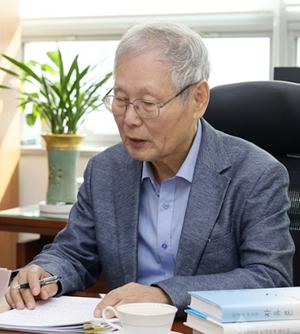 Min Kyung-kook, Professor Emeritus, Department of Economics, Kangwon National University

 Iranian Foreign Ministry: "Continuing Message Exchanges with the U.S. and Activities of Mediating Countries"
Esmaeil Baghaei, Spokesperson for the Iranian Ministry of Foreign Affairs [Xinhua, Yonhap News file photo]Esmaeil Baghaei, spokesperson for the Iranian Ministry of Foreign Affairs, stated on the 26th
Iranian Foreign Ministry: "Continuing Message Exchanges with the U.S. and Activities of Mediating Countries"
Esmaeil Baghaei, Spokesperson for the Iranian Ministry of Foreign Affairs [Xinhua, Yonhap News file photo]Esmaeil Baghaei, spokesperson for the Iranian Ministry of Foreign Affairs, stated on the 26th
 President Yoon: "Do You Think You Are Safe from the Special Counsel?"... Final Statement Video Released
President Yoon Suk Yeol rebuking the special prosecutor on the 24th. [Court video / @birds_justice X account subtitle GIF] A video of President Yoon Suk Yeol's closing statement at his trial rega
President Yoon: "Do You Think You Are Safe from the Special Counsel?"... Final Statement Video Released
President Yoon Suk Yeol rebuking the special prosecutor on the 24th. [Court video / @birds_justice X account subtitle GIF] A video of President Yoon Suk Yeol's closing statement at his trial rega
 President Yoon, regarding the first-instance ruling on the Public Official Election Act: “An excessive political verdict that distorts the facts… We will appeal immediately.”
The first-instance sentencing hearing for President Yoon Suk Yeol regarding violations of the Public Official Election Act is being broadcast live at Seoul Station on the 27th. [Photo=Yonhap News]Pres
President Yoon, regarding the first-instance ruling on the Public Official Election Act: “An excessive political verdict that distorts the facts… We will appeal immediately.”
The first-instance sentencing hearing for President Yoon Suk Yeol regarding violations of the Public Official Election Act is being broadcast live at Seoul Station on the 27th. [Photo=Yonhap News]Pres
 WSJ: "SK Hynix ADR Premium Is a Sign of AI Trading Overheat"
Advertisement for SK Hynix ADR listing in New York's Times Square [Reuters=Yonhap News file photo]The Wall Street Journal (WSJ) has pointed out that the price of SK Hynix’s American Depositary Recei
WSJ: "SK Hynix ADR Premium Is a Sign of AI Trading Overheat"
Advertisement for SK Hynix ADR listing in New York's Times Square [Reuters=Yonhap News file photo]The Wall Street Journal (WSJ) has pointed out that the price of SK Hynix’s American Depositary Recei
 'Godfather of Japanese Mystery Novels' Keigo Higashino Passes Away After Battle with Cancer at 68
Famous Japanese mystery novelist Keigo Higashino [AFP=Yonhap News]It has been belatedly reported that Keigo Higashino, the "godfather of Japanese mystery novels" and author of bestsellers such as "The
'Godfather of Japanese Mystery Novels' Keigo Higashino Passes Away After Battle with Cancer at 68
Famous Japanese mystery novelist Keigo Higashino [AFP=Yonhap News]It has been belatedly reported that Keigo Higashino, the "godfather of Japanese mystery novels" and author of bestsellers such as "The
 [Park Pil-kyu Security Column] To the Ignorant Trying to Clothe a Beast in Sheep's Clothing
Rep. Kim Byung-joo of the Democratic Party of Korea [Photo=Yonhap News]“The Air Force Academy doesn't teach you how to fly a plane!” “The Army, Navy, and Air Force academies are exactly the
[Park Pil-kyu Security Column] To the Ignorant Trying to Clothe a Beast in Sheep's Clothing
Rep. Kim Byung-joo of the Democratic Party of Korea [Photo=Yonhap News]“The Air Force Academy doesn't teach you how to fly a plane!” “The Army, Navy, and Air Force academies are exactly the
 [Issue Diagnosis] Two Effects of the Election Petition Review
 [Photo] Evidence of Election Fraud Flooding U.S. Media… Trump Had 2.7 Million Votes Stolen
 [Video] U.S. Semiquincentennial Air Show... 'Art in the Sky' streaks across New York
 [Editorial Cartoon] A Draconian Law That Undermines Freedom of Expression

 List
List