 Regarding the December 3rd emergency martial law declaration, 30 active-duty military personnel were investigated, 17 of whom were of general rank. [Photo=Yonhap News]
"Civilian control," the principle that the military must exist under democratic oversight, is fundamentally the cornerstone of national security and liberal democracy.
However, recent policies critical to the nation's security—such as the hasty transfer of wartime operational control, the ill-conceived integration of military academies, and the premature implementation of a selective volunteer military system—have been pushed forward by the government in a unilateral and arbitrary manner, going against national survival and the national interest without seeking professional military opinion or consultation. As the military remains silent, both sides are heading down a path toward mutual destruction.
To maintain a peace that renders war unnecessary, the military must become many times stronger than it is now.
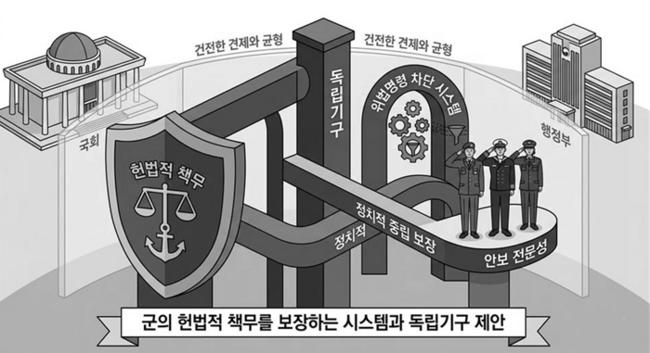
Samuel Huntington, an American security expert and political scientist, emphasized in "The Soldier and the State" the importance of "objective civilian control," which recognizes military professionalism and separates the military from the political sphere, arguing that the essence of civilian control lies in "sound checks and balances."
The military and political power must respect each other's areas of expertise; politics should not cross the "anti-military line" that restricts or threatens the military's fundamental mission. It is difficult to avoid the criticism that the current government's civilian control has instead turned the military into a political tool, undermining the organization and weakening the military’s combat capabilities and war-deterrence posture.
True civilian control means creating a structure that helps the military focus on the specialized domain of national security without being swayed by political strife.
In other words, the core lies in establishing an institutional environment where the military respects constitutional values and performs its duties with political neutrality when faced with illegal or security-threatening political orders and pressures.
However, the civilian government, as the authority in control of the military, has a duty to guarantee and protect the military so it can remain free from political pressure and focus on its inherent duties, yet it instead treats the military recklessly.
1. The Instrumentalization of the Military by Political Power and the Destruction of 'Sound Checks and Balances'
If "civilian control" means that the military must unconditionally obey when elected officials use the name of the people to instrumentalize the military, then that is a gross misunderstanding and abuse of the concept. The political neutrality of soldiers is the minimum safety mechanism to prevent the military from being sacrificed to and divided by partisan strife.
However, when political power uses personnel appointments to build a command structure that suits its tastes, or labels an entire military leadership as potential criminals simply for allegedly aligning with the previous administration—culminating in the replacement of all seven four-star generals—it is an act of "taming" the military, an act of security destruction that dismantles military neutrality and discipline.
The Korean Peninsula is currently in a state of fog similar to the eve of the Korean War, with the deepening alliance between North Korea, China, and Russia, the Chinese Communist Party attempting to enter the East Sea via the Tumen River, and a security leadership lacking a conceptual grasp of security. Yet, the government continues to repeat the destruction of security under the guise of peace.
The dismantling of the Defense Security Support Command and the abolition of anti-communist investigation powers constitute security destruction that blinds and deafens the nation; the reduction of joint exercises and the push for the transfer of wartime operational control destroy the foundation of the alliance; and the restoration of the 9.19 Military Agreement, the negligence regarding North Korean incursions near the Military Demarcation Line, and the loss of the "main enemy" concept all constitute security destruction that erodes national identity.
This is an anti-state behavior that has abandoned the protection of a free Republic of Korea. If we were to write a white paper on the destruction of national security, it would be too voluminous to be contained in a single book.
The dragnet-style "comprehensive accountability" regarding the December 3rd martial law paralyzes the judgment of military officers. When the military transforms into an organization that prioritizes "avoiding legal risk" over "national defense," the first thing to weaken is war deterrence.
Demanding unconditional legal liability in the absence of independent advisory bodies and personnel verification systems to protect the military from political pressure is an "anti-military" act that makes the military a political scapegoat.
2. Why We Cannot Unilaterally Blame the 'Reeds That Bow Before the Wind'
Even as elected officials destroy national security to a degree that makes one doubt their identity, the military leadership remains silent. This "cowardly compliance"—where leaders ignore the reason for the military's existence, being unable to offer any advice or proposals while reading the faces of the power holders who control military appointments—is not the stature of the military that "civilian control" intends.
When those in power ignore the sentiments of the people and the military, and destroy military organizations and national security, it is "no-people control" (devoid of the public will) and "no-military control" (where politics shreds the fundamental mission and constitutional duties of the military).
The essence of civilian control is not the absolute obedience of the military to government directives. It should be an institutional fence that helps the military remain free from political winds and uphold constitutional values. Yet, there is no system or independent tool anywhere to protect the military's political neutrality and constitutional duties.
There is not even a mature consensus for the military and politics to coordinate their interests through communication. It is an era of political excess—politics by, for, and of politics. A military that is conscious of power and subservient falls into becoming a party's military, not a national one.
A military that has devolved into a political tool loses its self-esteem and ultimately loses the deterrent power necessary to sustain the survival of the nation and its people. For the nation and its people to survive, we must not have politics that tames the military, but rather establish safety devices that respect military expertise and filter out illegal instructions.
This is the only way for a "democratic military" and "security expertise" to restore balance and safeguard the survival of the nation.
3. Proposals for a Rational Balance and Healthy Civilian Control
Healthy civilian control does not weaken or subjugate the military. We must improve the attitudes of politicians toward the military and devise institutional safeguards so that the military can move beyond the framework of partisan strife, maintain transparency, exercise jointness, and uphold constitutional values.
From the perspective of a reservist who has experienced everything from the bottom rungs of military life to policy-making, and who is watching the current security policies that go in the opposite direction, I suggest three alternatives for the fulfillment of the military's inherent mission.
First, the Institutionalization of a System to Block Illegal Orders
When a commander receives an illegal order from the government or a superior, there must be a "legal protection manual" that allows for verification and the official raising of issues. Decisions based solely on the individual conviction of a soldier are impossible in a military of strict command and obedience.
The system must be able to verify the legality of political orders in real-time to prevent the military from becoming a political scapegoat. If a "legal protection manual" had existed, the proposal for military academy integration would have been scrapped immediately.
Second, the Establishment of an Independent Body to Guarantee the Military's Political Neutrality
Reservists should cease the hollow reprimands urging active-duty personnel to speak out against the government's unjust security policies. We must reflect on the absolute obedience we ourselves showed during our time in the military.
An independent body, such as a "National Security Special Committee," should be operated to block arbitrary political intervention in military personnel and command systems.
This would fundamentally block politics from instrumentalizing the military, guarantee the conditions for the military to focus solely on the specialized field of national security, and serve as a shield protecting the military from political power.
Third, Establishing Rational Standards for Accountability
Indiscriminate judicial processing that does not distinguish between the planners of illegal orders and those who simply executed them will cause the military organization to collapse. Once the Republic of Korea is normalized, all personnel who suffered judicial disadvantages regarding the December 3rd martial law must be reinstated.
By clearly distinguishing between the decision-making process and its accountability, we must create a legal and institutional environment where military officers can focus on their inherent duty of "national defense" rather than "avoiding legal risk."
The vitality and legitimacy of the military exist when it fulfills its constitutional duties in accordance with the "Constitution and the Law." Politics taming the military as a tool of politics is national ruin and security self-destruction.
Security organizations and the National Assembly must step forward to refine the right systems and institutions so that the military can exist as the guardian of the Constitution. This is the only way to strengthen the military's morale and combat power, prevent war, and protect the free Republic of Korea.
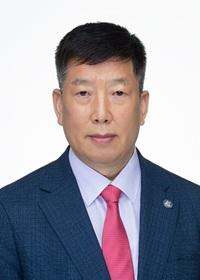
◆ Commissioner Park Pil-gyu
Editorial Writer, Han-Mi Ilbo
Korea Military Academy, 40th Class

 Iranian Foreign Ministry: "Continuing Message Exchanges with the U.S. and Activities of Mediating Countries"
Esmaeil Baghaei, Spokesperson for the Iranian Ministry of Foreign Affairs [Xinhua, Yonhap News file photo]Esmaeil Baghaei, spokesperson for the Iranian Ministry of Foreign Affairs, stated on the 26th
Iranian Foreign Ministry: "Continuing Message Exchanges with the U.S. and Activities of Mediating Countries"
Esmaeil Baghaei, Spokesperson for the Iranian Ministry of Foreign Affairs [Xinhua, Yonhap News file photo]Esmaeil Baghaei, spokesperson for the Iranian Ministry of Foreign Affairs, stated on the 26th
 President Yoon: "Do You Think You Are Safe from the Special Counsel?"... Final Statement Video Released
President Yoon Suk Yeol rebuking the special prosecutor on the 24th. [Court video / @birds_justice X account subtitle GIF] A video of President Yoon Suk Yeol's closing statement at his trial rega
President Yoon: "Do You Think You Are Safe from the Special Counsel?"... Final Statement Video Released
President Yoon Suk Yeol rebuking the special prosecutor on the 24th. [Court video / @birds_justice X account subtitle GIF] A video of President Yoon Suk Yeol's closing statement at his trial rega
 President Yoon, regarding the first-instance ruling on the Public Official Election Act: “An excessive political verdict that distorts the facts… We will appeal immediately.”
The first-instance sentencing hearing for President Yoon Suk Yeol regarding violations of the Public Official Election Act is being broadcast live at Seoul Station on the 27th. [Photo=Yonhap News]Pres
President Yoon, regarding the first-instance ruling on the Public Official Election Act: “An excessive political verdict that distorts the facts… We will appeal immediately.”
The first-instance sentencing hearing for President Yoon Suk Yeol regarding violations of the Public Official Election Act is being broadcast live at Seoul Station on the 27th. [Photo=Yonhap News]Pres
 WSJ: "SK Hynix ADR Premium Is a Sign of AI Trading Overheat"
Advertisement for SK Hynix ADR listing in New York's Times Square [Reuters=Yonhap News file photo]The Wall Street Journal (WSJ) has pointed out that the price of SK Hynix’s American Depositary Recei
WSJ: "SK Hynix ADR Premium Is a Sign of AI Trading Overheat"
Advertisement for SK Hynix ADR listing in New York's Times Square [Reuters=Yonhap News file photo]The Wall Street Journal (WSJ) has pointed out that the price of SK Hynix’s American Depositary Recei
 'Godfather of Japanese Mystery Novels' Keigo Higashino Passes Away After Battle with Cancer at 68
Famous Japanese mystery novelist Keigo Higashino [AFP=Yonhap News]It has been belatedly reported that Keigo Higashino, the "godfather of Japanese mystery novels" and author of bestsellers such as "The
'Godfather of Japanese Mystery Novels' Keigo Higashino Passes Away After Battle with Cancer at 68
Famous Japanese mystery novelist Keigo Higashino [AFP=Yonhap News]It has been belatedly reported that Keigo Higashino, the "godfather of Japanese mystery novels" and author of bestsellers such as "The
 [Park Pil-kyu Security Column] To the Ignorant Trying to Clothe a Beast in Sheep's Clothing
Rep. Kim Byung-joo of the Democratic Party of Korea [Photo=Yonhap News]“The Air Force Academy doesn't teach you how to fly a plane!” “The Army, Navy, and Air Force academies are exactly the
[Park Pil-kyu Security Column] To the Ignorant Trying to Clothe a Beast in Sheep's Clothing
Rep. Kim Byung-joo of the Democratic Party of Korea [Photo=Yonhap News]“The Air Force Academy doesn't teach you how to fly a plane!” “The Army, Navy, and Air Force academies are exactly the
 [Issue Diagnosis] Two Effects of the Election Petition Review
 [Photo] Evidence of Election Fraud Flooding U.S. Media… Trump Had 2.7 Million Votes Stolen
 [Video] U.S. Semiquincentennial Air Show... 'Art in the Sky' streaks across New York
 [Editorial Cartoon] A Draconian Law That Undermines Freedom of Expression

 List
List










