 Aleksandr Solzhenitsyn (1918–2008), the Russian Nobel Prize-winning author who survived a forced labor camp during the Stalin era. He was exiled after publishing "The Gulag Archipelago," a work that exposed the reality of Soviet forced labor camps.
Many people think of literature as an art form that deals with human life. Indeed, for a long time, literature has told stories of love and family, war and death, faith and betrayal, and freedom and destiny.
Outstanding literary works do not command their readers on "how to live." Instead, they show just how complex a human being can be.
This is why the works of William Shakespeare, Miguel de Cervantes, and Fyodor Dostoevsky are still read hundreds of years later. Even as political systems change, human nature remains largely the same.
However, as the 20th century progressed, certain political ideologies began to view literature differently. In particular, socialist and communist movements that pursued revolution viewed literature not as an art of understanding humanity, but as a tool for social transformation. The idea that literature should contribute to the revolution, rather than merely focusing on beautiful prose, became widespread. Some even argued that a writer must be a revolutionary before being an artist.
This idea did not remain just a theory; it became actual state policy.
A prime example is the First Congress of Soviet Writers held in the Soviet Union in 1934, where "Socialist Realism" was adopted as the official party line.
While the name suggests a literary style that depicts reality factually, its true meaning was different. It was a principle that dictated reality should not be depicted as it is, but rather framed in a way that guaranteed the inevitable success of the socialist revolution.
For instance, if an accident occurred in a factory and a worker suffered, one could not criticize the system’s failings. If peasants were starving, it was nearly impossible to truthfully depict the failure of collective farms.
Instead, the required narrative was one where the worker trusts the Party and grows, the factory thrives, and socialism inevitably triumphs. Every work had to end on a note of hope, and that hope was always the future promised by the Communist Party.
In such an atmosphere, many writers were suppressed. Mikhail Bulgakov’s work was heavily restricted, and Anna Akhmatova faced long periods where her literary activities were stifled.
Aleksandr Solzhenitsyn was later exiled after exposing the reality of Soviet forced labor camps in "The Gulag Archipelago." The state would not tolerate literature the moment it criticized those in power.
Similar events occurred in China. In 1942, Mao Zedong declared in his "Talks at the Yan'an Forum on Literature and Art" that literature and art must serve the workers, peasants, and soldiers. This speech became the cornerstone of modern Chinese literary and arts policy. Writers were no longer people who freely explored humanity, but rather messengers of the revolutionary line.
As a result, more extreme phenomena emerged during the Cultural Revolution. Works praising the revolution were encouraged, while those dealing with individual love or human agony were often criticized as "bourgeois literature." Instead of a diverse literary landscape, a structure was created where only politically correct works could survive.
North Korea adopted these principles even more thoroughly. In North Korean novels, films, poetry, and songs, the Party and the Leader appear almost without exception. Individual happiness is explained as something only possible through the revolution, and characters are cast in roles that demonstrate loyalty to the regime rather than human conflict. This is a classic example of literature becoming a part of state propaganda rather than an art for understanding humanity.
Such examples were not limited to the communist bloc. In Western Europe and the United States, literary movements that actively supported revolution or class struggle also emerged in the 20th century. However, in liberal democratic societies, diverse literary trends coexisted, and the state could not force a single type of literature upon the public. This was a crucial difference between totalitarian states and free societies.
Here, one must clearly distinguish between the two: literature that critiques society and literature used as political propaganda are not the same thing.
George Orwell strongly criticized totalitarianism, but his works, "Animal Farm" and "1984," are not propaganda for any specific party. They are works that literarily explore human freedom and the dangers of power. Conversely, Socialist Realist works often began with a preordained conclusion, directing the reader to arrive at a specific realization.
Good literature leaves the reader with the freedom to think. Bad propaganda forces the reader to reach the same predetermined conclusion. While literature is an art that poses questions, propaganda is a technique that demands the memorization of answers.
Literature can certainly contain specific philosophies, as all writers reflect their values in their work. However, there must be a clear distinction between whether the purpose of a work is to understand humanity or to lead the reader toward a specific political ideology. The moment literature begins to explain ideology before it explains humanity, the reader ceases to engage with a work of art and starts consuming political messages. That is the greatest problem with the ideologization of literature.
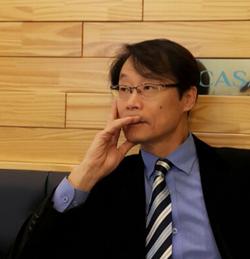
◆ Songsan (松山)
A poet and researcher of history and philosophy. A former board member of the Rhee Syngman Academy. He currently serves as a research advisor to the Korean Society for Modern and Contemporary History and represents the philosophy forum "Lyceum." He has published four collections of poetry, co-translated "Heroes of Hook Hill," and authored humanities books including "Joseon Turned into Myth," "Humanities on the Tatami," and "A Liberal Reading of Gramsci." "Songsan" is his pen name.

 Iranian Foreign Ministry: "Continuing Message Exchanges with the U.S. and Activities of Mediating Countries"
Esmaeil Baghaei, Spokesperson for the Iranian Ministry of Foreign Affairs [Xinhua, Yonhap News file photo]Esmaeil Baghaei, spokesperson for the Iranian Ministry of Foreign Affairs, stated on the 26th
Iranian Foreign Ministry: "Continuing Message Exchanges with the U.S. and Activities of Mediating Countries"
Esmaeil Baghaei, Spokesperson for the Iranian Ministry of Foreign Affairs [Xinhua, Yonhap News file photo]Esmaeil Baghaei, spokesperson for the Iranian Ministry of Foreign Affairs, stated on the 26th
 President Yoon: "Do You Think You Are Safe from the Special Counsel?"... Final Statement Video Released
President Yoon Suk Yeol rebuking the special prosecutor on the 24th. [Court video / @birds_justice X account subtitle GIF] A video of President Yoon Suk Yeol's closing statement at his trial rega
President Yoon: "Do You Think You Are Safe from the Special Counsel?"... Final Statement Video Released
President Yoon Suk Yeol rebuking the special prosecutor on the 24th. [Court video / @birds_justice X account subtitle GIF] A video of President Yoon Suk Yeol's closing statement at his trial rega
 President Yoon, regarding the first-instance ruling on the Public Official Election Act: “An excessive political verdict that distorts the facts… We will appeal immediately.”
The first-instance sentencing hearing for President Yoon Suk Yeol regarding violations of the Public Official Election Act is being broadcast live at Seoul Station on the 27th. [Photo=Yonhap News]Pres
President Yoon, regarding the first-instance ruling on the Public Official Election Act: “An excessive political verdict that distorts the facts… We will appeal immediately.”
The first-instance sentencing hearing for President Yoon Suk Yeol regarding violations of the Public Official Election Act is being broadcast live at Seoul Station on the 27th. [Photo=Yonhap News]Pres
 WSJ: "SK Hynix ADR Premium Is a Sign of AI Trading Overheat"
Advertisement for SK Hynix ADR listing in New York's Times Square [Reuters=Yonhap News file photo]The Wall Street Journal (WSJ) has pointed out that the price of SK Hynix’s American Depositary Recei
WSJ: "SK Hynix ADR Premium Is a Sign of AI Trading Overheat"
Advertisement for SK Hynix ADR listing in New York's Times Square [Reuters=Yonhap News file photo]The Wall Street Journal (WSJ) has pointed out that the price of SK Hynix’s American Depositary Recei
 'Godfather of Japanese Mystery Novels' Keigo Higashino Passes Away After Battle with Cancer at 68
Famous Japanese mystery novelist Keigo Higashino [AFP=Yonhap News]It has been belatedly reported that Keigo Higashino, the "godfather of Japanese mystery novels" and author of bestsellers such as "The
'Godfather of Japanese Mystery Novels' Keigo Higashino Passes Away After Battle with Cancer at 68
Famous Japanese mystery novelist Keigo Higashino [AFP=Yonhap News]It has been belatedly reported that Keigo Higashino, the "godfather of Japanese mystery novels" and author of bestsellers such as "The
 [Park Pil-kyu Security Column] To the Ignorant Trying to Clothe a Beast in Sheep's Clothing
Rep. Kim Byung-joo of the Democratic Party of Korea [Photo=Yonhap News]“The Air Force Academy doesn't teach you how to fly a plane!” “The Army, Navy, and Air Force academies are exactly the
[Park Pil-kyu Security Column] To the Ignorant Trying to Clothe a Beast in Sheep's Clothing
Rep. Kim Byung-joo of the Democratic Party of Korea [Photo=Yonhap News]“The Air Force Academy doesn't teach you how to fly a plane!” “The Army, Navy, and Air Force academies are exactly the
 [Issue Diagnosis] Two Effects of the Election Petition Review
 [Photo] Evidence of Election Fraud Flooding U.S. Media… Trump Had 2.7 Million Votes Stolen
 [Video] U.S. Semiquincentennial Air Show... 'Art in the Sky' streaks across New York
 [Editorial Cartoon] A Draconian Law That Undermines Freedom of Expression

 List
List









