 Recently, a series of incidents have occurred in South Korea, such as the Coupang and Starbucks controversies and the exit ban on Ambassador Mostan, which have ruffled feathers in the United States.
With the conclusion of the war against Iran—a major conflict in the Middle East—the center of gravity for U.S. foreign and security strategy is shifting rapidly toward Northeast Asia.
Washington’s political and Pentagon leadership now has its sights firmly set on China, with the geopolitical link connecting "China-South Korea-North Korea" at the center of their focus.
The U.S. no longer views the situation on the Korean Peninsula as an isolated, local phenomenon. Amidst the grand scale of the U.S.-China hegemonic rivalry, Washington is monitoring shifts in the Korean Peninsula's political landscape in real time and is unleashing unprecedented, comprehensive pressure measures.
This shift in currents is being detected simultaneously across U.S. media, the administration, Congress, and the United States Forces Korea (USFK) command. Since the signing of the Mutual Defense Treaty in 1953, the ROK-U.S. alliance has been the driving force behind South Korea’s freedom and prosperity; however, due to recent events, the alliance is facing an unprecedented test.
U.S. Media Warning: "South Korea Is Shifting Toward a Hard-Left Anti-American Path"
The Wall Street Journal (WSJ), a leading conservative media outlet that shapes opinion in the U.S., recently published a column offering unusually intense criticism of the current South Korean government’s political orientation and foreign policy.
The WSJ characterized the actions of the current ruling bloc and administration as a "Hard-Left" trajectory, warning that they are undermining the values of the traditional ROK-U.S. alliance and openly fostering pro-China and pro-North Korea leanings.
The Presidential Office (Office of the Secretary to the President for Overseas Press) issued an official statement strongly refuting these claims, calling them a "serious distortion."
The deep distrust held by Washington’s think tanks and political establishment underlies the harsh rhetoric used by U.S. media to describe South Korean politics.
The U.S. establishment believes that the policies unfolding in South Korea are not merely for domestic consumption, but are signs of a departure from the U.S. that threatens American strategic interests in Northeast Asia.
This negative media climate is acting as a catalyst for spreading fundamental skepticism among U.S. voters and politicians: "Is South Korea still a reliable ally?"
The Coupang and Starbucks Controversies, and the Information and Communications Network Act (Platform Act)
The South Korean government's decision to impose astronomical fines on "Coupang," an innovative company with significant U.S. capital investment, using judicial and regulatory measures, has provoked the Office of the United States Trade Representative (USTR).
The U.S. perceives this not as legitimate market regulation, but as intentional and discriminatory "economic coercion" targeting an American company.
In fact, major U.S. investment firms have filed petitions with the USTR requesting the invocation of Section 301 of the Trade Act (Super 301), and the U.S. government is currently considering comprehensive trade retaliation measures, including high tariffs, against South Korea.
Furthermore, circumstances indicating that several government ministries led or pressured a boycott against "Starbucks," a symbol of American culture and capital, have also provoked the U.S. Washington views this as an anti-American movement that should not be taken by an ally.
The U.S. State Department has officially expressed concerns regarding the major provisions of the recently passed amendments to the Information and Communications Network Act in South Korea, citing "censorship and infringement on freedom of expression."
Fox News, citing an economic analysis model from the "Competere Foundation" think tank, reported that if Korea’s regulatory bill is implemented as is, it could result in a total economic loss of $525 billion (over 700 trillion KRW) across the U.S. over the next decade.
The Exit Ban on Former Ambassador Mostan
The incident in which former U.S. Ambassador for Global Criminal Justice, Mostan, was placed under an exit ban by South Korean authorities has further strained bilateral relations. He had entered the country to monitor the June 3rd local elections alongside election expert Douglas Frank.
Through rallies in South Korea regarding alleged election fraud, he argued for the dissolution of the National Election Commission and called for the resignation of the National Assembly, asserting that politicians must be held accountable.
Bipartisan Criticism in U.S. Congress and the National Defense Authorization Act
The actions of the U.S. Congress are significant in that they transcend media criticism and are leading to tangible legislation and budgetary control.
On April 28 (local time), the U.S. House Committee on Human Rights held a hearing to formally assess and condemn the democratic backsliding, human rights situation, and anti-American policy trends within South Korea.
Even more noteworthy is the legal binding force in the security domain. Through the next National Defense Authorization Act (2027 NDAA), the U.S. House and Senate Armed Services Committees have defined the "expansion of the Chinese Communist Party's malicious influence" on the Korean Peninsula as a core security threat to the United States.
Consequently, the U.S. Secretary of War is now obligated to conduct a precise inspection of the infiltration routes and security threats posed by the Chinese Communist Party in South Korea and report the findings to the House (by Dec 1, 2026) and the Senate (by May 1, 2027), respectively.
This bill goes beyond mere reporting, as it includes powerful accompanying measures. First, in terms of budget reflection and control, a special security budget will be separately allocated and monitored to check pro-China and anti-American currents in South Korea.
Regarding the conditions for the transition of Wartime Operational Control (OPCON), the bill amends the conditions previously requested by the South Korean government to be extremely stringent, effectively creating a legal mechanism that could indefinitely postpone the transfer of OPCON.
The U.S. Senate has confirmed the appointment of Michelle Steel Park (Eunjoo Park), a Korean-American politician known for her hardline stance on North Korea and China, as the next U.S. Ambassador to South Korea. She is expected to take office soon, signaling Washington's will to firmly control the South Korean government's appeasement policy toward North Korea from the ground.
A Paradigm Shift in Military Strategy: The "Unsinkable Aircraft Carrier" Concept and New Defense Paradigms
The Pentagon command, including the Commander of the USFK, is fundamentally revising its military maneuver strategy regarding the Korean Peninsula. While the role of USFK was once limited to a "tripwire" to prevent a North Korean invasion,
the dominant logic now is that it must transition into a massive "unsinkable aircraft carrier" to contain China.
The "Kill Web" Initiative
USFK officials point out that the existing South Korean "Three-Axis System" or "Kill Chain" strategy is an outdated concept that only accounted for the singular threat of North Korea. Accordingly, they are proposing a "New Western Pacific Defense Concept" capable of responding to the possibility of a Chinese invasion of Taiwan and its military expansion in the West Sea.
The plan is to utilize South Korea as a key link in the anti-China containment network connecting Seoul, Tokyo, and Manila. While the existing Kill Chain followed a vertical and linear "detect-decide-strike" sequence, the "Kill Web" is a simultaneous, non-linear system connected like a spiderweb. Unlike the single chain of the Kill Chain, the Kill Web is an organic neural network where if one path is severed, strikes can immediately be launched via other routes.
This implies that U.S. advanced assets and military forces stationed on the Korean Peninsula could maneuver toward China regardless of the South Korean government’s consent, serving as a strategic ploy to utilize South Korea as the front-line base for a U.S.-China military conflict.
Is a Great Storm Approaching?
The end of the war against Iran is not a blessing for South Korean diplomacy but a harbinger of a great storm. The U.S. is currently building its case through the media, shaking the economy with trade retaliation (Super 301) and judicial pressure, and attempting to seize military control through the National Defense Authorization Act (NDAA). Washington's will, targeting South Korea as the "weak link" in the China-Korea-North Korea chain, appears bipartisan and firm.
The South Korean government must not dismiss these warning signals as mere domestic politics or respond with emotional anti-American sentiment.
This is the time to rebuild a sophisticated and realistic "survival diplomacy strategy" that minimizes the coming economic and security shocks by leveraging South Korea’s value as a strategic U.S. hub, while engaging in proactive communication to restore trust in the ROK-U.S. alliance.
If South Korea can prove its value as an outpost against China and a key ally, it could present an opportunity to solidify the combined defense system and achieve a second economic leap.
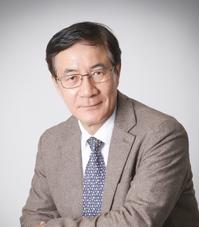
◆ Dr. Shin Dong-chun
Doctor of Public Administration, Representative of the Liberty Unification National Union. Following his success in the 21st Higher Civil Service Examination and a career in public service, he has been active as a corporate CEO, university professor, media contributor, author, and President of the Global Aerospace Industry Society.

 Iranian Foreign Ministry: "Continuing Message Exchanges with the U.S. and Activities of Mediating Countries"
Esmaeil Baghaei, Spokesperson for the Iranian Ministry of Foreign Affairs [Xinhua, Yonhap News file photo]Esmaeil Baghaei, spokesperson for the Iranian Ministry of Foreign Affairs, stated on the 26th
Iranian Foreign Ministry: "Continuing Message Exchanges with the U.S. and Activities of Mediating Countries"
Esmaeil Baghaei, Spokesperson for the Iranian Ministry of Foreign Affairs [Xinhua, Yonhap News file photo]Esmaeil Baghaei, spokesperson for the Iranian Ministry of Foreign Affairs, stated on the 26th
 President Yoon: "Do You Think You Are Safe from the Special Counsel?"... Final Statement Video Released
President Yoon Suk Yeol rebuking the special prosecutor on the 24th. [Court video / @birds_justice X account subtitle GIF] A video of President Yoon Suk Yeol's closing statement at his trial rega
President Yoon: "Do You Think You Are Safe from the Special Counsel?"... Final Statement Video Released
President Yoon Suk Yeol rebuking the special prosecutor on the 24th. [Court video / @birds_justice X account subtitle GIF] A video of President Yoon Suk Yeol's closing statement at his trial rega
 President Yoon, regarding the first-instance ruling on the Public Official Election Act: “An excessive political verdict that distorts the facts… We will appeal immediately.”
The first-instance sentencing hearing for President Yoon Suk Yeol regarding violations of the Public Official Election Act is being broadcast live at Seoul Station on the 27th. [Photo=Yonhap News]Pres
President Yoon, regarding the first-instance ruling on the Public Official Election Act: “An excessive political verdict that distorts the facts… We will appeal immediately.”
The first-instance sentencing hearing for President Yoon Suk Yeol regarding violations of the Public Official Election Act is being broadcast live at Seoul Station on the 27th. [Photo=Yonhap News]Pres
 WSJ: "SK Hynix ADR Premium Is a Sign of AI Trading Overheat"
Advertisement for SK Hynix ADR listing in New York's Times Square [Reuters=Yonhap News file photo]The Wall Street Journal (WSJ) has pointed out that the price of SK Hynix’s American Depositary Recei
WSJ: "SK Hynix ADR Premium Is a Sign of AI Trading Overheat"
Advertisement for SK Hynix ADR listing in New York's Times Square [Reuters=Yonhap News file photo]The Wall Street Journal (WSJ) has pointed out that the price of SK Hynix’s American Depositary Recei
 'Godfather of Japanese Mystery Novels' Keigo Higashino Passes Away After Battle with Cancer at 68
Famous Japanese mystery novelist Keigo Higashino [AFP=Yonhap News]It has been belatedly reported that Keigo Higashino, the "godfather of Japanese mystery novels" and author of bestsellers such as "The
'Godfather of Japanese Mystery Novels' Keigo Higashino Passes Away After Battle with Cancer at 68
Famous Japanese mystery novelist Keigo Higashino [AFP=Yonhap News]It has been belatedly reported that Keigo Higashino, the "godfather of Japanese mystery novels" and author of bestsellers such as "The
 [Park Pil-kyu Security Column] To the Ignorant Trying to Clothe a Beast in Sheep's Clothing
Rep. Kim Byung-joo of the Democratic Party of Korea [Photo=Yonhap News]“The Air Force Academy doesn't teach you how to fly a plane!” “The Army, Navy, and Air Force academies are exactly the
[Park Pil-kyu Security Column] To the Ignorant Trying to Clothe a Beast in Sheep's Clothing
Rep. Kim Byung-joo of the Democratic Party of Korea [Photo=Yonhap News]“The Air Force Academy doesn't teach you how to fly a plane!” “The Army, Navy, and Air Force academies are exactly the
 [Issue Diagnosis] Two Effects of the Election Petition Review
 [Photo] Evidence of Election Fraud Flooding U.S. Media… Trump Had 2.7 Million Votes Stolen
 [Video] U.S. Semiquincentennial Air Show... 'Art in the Sky' streaks across New York
 [Editorial Cartoon] A Draconian Law That Undermines Freedom of Expression

 List
List









