
A "ddongchim" is an act of joining both index fingers together and poking someone in the anus. Being on the receiving end of such an attack brings an indescribable pain—a pain that shoots straight from the anus to the top of one's head.
It is so painful that your heels reflexively straighten and you start jumping up and down. Just thinking about it makes one's knees weak. It is said to be an act so startling that it would wake a person from a deep sleep.
I currently want to give U.S. President Donald Trump a "ddongchim." There are over a hundred reasons why, but the most significant is that he is standing idly by, pretending to be unaware of the election fraud situation in South Korea. Furthermore, it is despicable that he remains silent even while knowing full well about the Chinese Communist Party, which engineered this fraudulent election.
Trump is a quintessential opportunist who makes us realize the saying, "Do not be deceived by the Soviet Union, and do not trust America." He is a low-class American who cares only about his own interests. He is a person who cannot be trusted at all. By ignoring the crisis in South Korea, he is unworthy of a Nobel Peace Prize. He is a man who deserves nothing less than a "ddongchim."
Trump is currently failing to judge the crisis of liberal democracy facing South Korea from the perspective of an ally. He is a thorough merchant who seeks to calculate South Korea's crisis in terms of money. When money is involved, he shows no sense of loyalty or alliance. Given his low character, he is also a criminal whose trials have currently been suspended due to various personal offenses.
The reality is that South Korea has had its political power, media, and judiciary seized by leftists supported by North Korea and China, and as a result, freedom of expression and liberal democracy are collapsing. China has even infiltrated our police and military sectors. Yet, Trump merely watches from the sidelines.
That is why I want to deliver a "ddongchim" to Trump’s backside. This article, which speaks of delivering a "ddongchim," is an urgent demand for him to take action and a warning that we, too, are capable of expressing our outrage. That is how desperate the situation in South Korea has become.
If we miss this moment, we will lose the opportunity to defend liberal democracy forever. We will undoubtedly lose our freedom of expression, fall under Chinese rule, and degenerate into a tributary state of China.
There are countless examples of using extreme measures to urge a hesitant ally into action. One such example is Tokugawa Ieyasu, who ended Japan’s Warring States period and brought about 250 years of peace. His final battle was the "Battle of Sekigahara." In this battle, Ieyasu faced a dire, life-or-death crisis—and he solved that crisis with a single cannon shot.
It was the 15th day of the 9th lunar month in 1600, two years after the end of the Imjin War (Japanese invasions of Korea). In the fog-covered Sekigahara Plain of Mino Province, the two largest armies in Japanese history were facing off. There was the Eastern Army of 75,000 led by Tokugawa Ieyasu, who marched from the east, and the Western Army of 84,000 led by Ishida Mitsunari from the west. A massive force approaching 160,000 was packed into a narrow basin measuring only 4km east-to-west and 2km north-to-south.
And just six hours later, the battle was over. Ieyasu was victorious, and the curtain rose on the "Edo Shogunate," which would last for over 250 years. What decided Japan’s fate in such a short time?
To understand the Battle of Sekigahara, one must first understand the choice of the battlefield. This battle did not happen there by chance. Sekigahara was a natural fortress surrounded by Mt. Ibuki to the north, the Suzuka Mountains to the south, Mt. Nangu to the east, and Mt. Imasu to the west.
The Nakasendo road that crossed this area was a strategic transportation hub, connecting to the Kiso region in the east and Osaka in the west, while also meeting the Hokkoku Kaido to the north and the Ise Kaido to the south. Mitsunari’s choice of this location was a result of strategic insight.
The Western Army was able to occupy three high points first and arrange themselves in a semi-encirclement of the Eastern Army. They had the advantage in both numbers and terrain. At least until the battle began, the victory of the Western Army was expected.
However, the real turning point of this battle was not on the battlefield, but beforehand. After Toyotomi Hideyoshi died in 1598, the Imjin War ended, and Japan entered a power vacuum. Ieyasu saw this vacuum as an opportunity to become the ruler of the realm. But the vassals left behind by Hideyoshi were a problem. Hideyoshi had left numerous vassals and the impregnable Osaka Castle to his son, Hideyori.
Ishida Mitsunari was Hideyoshi’s most loyal vassal. A talented administrator, he handled the practical affairs of the Hideyoshi regime. However, Mitsunari had a fatal weakness: he lacked popularity among the warlords.
In particular, the generals who fought for their lives during the Imjin War did not forget the attitude he displayed during the war. As Mitsunari led the peace negotiations and encouraged the withdrawal of isolated units from the front lines, warlords like Kato Kiyomasa and Kuroda Nagamasa perceived this as an attempt to belittle their military achievements and report negatively to Hideyoshi.
After Hideyoshi’s death, they attempted to attack Mitsunari, and paradoxically, Mitsunari was forced to ask Ieyasu for help.
Ieyasu did not miss this opportunity. While protecting Mitsunari, he simultaneously used him as bait. In June 1600, Ieyasu set out to suppress Uesugi Kagekatsu of Aizu under the pretext of his suspicious movements. This was a meticulously calculated provocation.
Ieyasu knew Mitsunari would inevitably rise in revolt, and that was the exact scenario he wanted. If Mitsunari struck first, Ieyasu could position himself as a loyal subject protecting the Toyotomi family. It was a perfect script that gained both justification and practical benefit.
Mitsunari acted as expected. He appointed Mori Terumoto as commander-in-chief and formed the Western Army. However, the structural problems of the Western Army were revealed here. Mori Terumoto was a nominal commander-in-chief who could not exercise actual command. On the day of the Battle of Sekigahara, he stayed at Osaka Castle, not joining the battle under the excuse that he had to feed his soldiers lunch.
Although Mitsunari held actual command, he lacked the authority to control the daimyo. While the Western Army was ostensibly united by loyalty to Toyotomi Hideyori, internally, it was fractured by conflicting interests.
The most decisive problem was Kobayakawa Hideaki. As the nephew of Hideyoshi’s wife, Kita no Mandokoro, and once considered Hideyoshi’s successor, he led a massive force of 15,000 and occupied the strategic Mt. Matsuo. Neither side knew which way he would choose.
Ieyasu promised him the two provinces of Bizen and Mimasaka, while Mitsunari offered him the position of Chancellor (Kanpaku) until Hideyori came of age, along with two provinces in the Kinki region. Hideaki could not decide which side to take until just before the battle.
He had reasons to weigh both sides. On one hand, he had the favor received from Hideyoshi, but on the other hand, he owed a debt to Ieyasu, who had mediated when he was once punished by Hideyoshi and had his territory reduced.
At 8:00 AM on the 15th day of the 9th lunar month in 1600, the battle began. The Eastern Army struck the first blow, but it happened in a strange way. When Fukushima Masanori, the vanguard of the Eastern Army, hesitated to attack, Ieyasu’s senior vassals, Ii Naomasa and Honda Tadakatsu, led a musketeer unit and advanced to the front of the Western Army’s main camp, led by Ukita Hideie.
They fired a volley of musket fire into the fog and quickly retreated. This was a provocation, and the Western Army was forced to return fire. The full-scale clash between the two armies began.
Until noon, the battle flowed in favor of the Western Army. The Ukita Hideie unit pushed back the Fukushima Masanori unit, and the Otani Yoshitsugu unit was defeating the Todo Takatora unit. Ieyasu was so anxious he could not remain in his main camp.
His gaze kept turning toward the Kobayakawa camp on Mt. Matsuo. Hideaki still did not move. The more the tide turned in favor of the Western Army, the deeper Hideaki’s hesitation became. Perhaps he was waiting until the winner was clear.
Ieyasu decided he could wait no longer. He ordered his musketeers to fire warning shots toward Hideaki’s camp. The cannonballs flew toward Mt. Matsuo.
There is debate over whether this was truly the decisive factor that moved Hideaki. Some historical records suggest that Hideaki had already decided to join the Eastern Army and was merely waiting for the appropriate moment.
Another interpretation is that the warning shots hastened his decision. Whatever the truth, the result was clear. Hideaki led his 15,000-strong army and attacked the flank of the Western Army.
His first target was Otani Yoshitsugu. Yoshitsugu had anticipated Hideaki’s betrayal. Although he suffered from leprosy and had to be carried on a palanquin, his tactical insight was excellent. As Hideaki’s attack began, Yoshitsugu’s unit immediately counterattacked.
Surprisingly, the 15,000-strong force was momentarily pushed back. However, numerical superiority eventually took effect, and Yoshitsugu’s unit was gradually overwhelmed. A bigger problem was that Hideaki’s betrayal caused a chain reaction. Other Western Army generals who were already secretly communicating with the Eastern Army, such as Wakisaka Yasuharu and Kikkawa Hiroie, either abandoned the front lines or stopped their attacks. The Western Army’s formation collapsed in an instant.
Mitsunari fought to the end, but the tide of the battle was irreversible. By around 2:00 PM, the battle had effectively ended. The Eastern Army lost 5% of its troops, while half of the Western Army was killed or wounded. Mitsunari escaped the battlefield but was captured shortly thereafter.
He remained silent before Ieyasu and was beheaded at Rokujogawara in Kyoto. Other key figures of the Western Army were stripped of their lands or executed. In contrast, the generals who joined the Eastern Army saw their lands significantly increased. Kobayakawa Hideaki became a great daimyo of 500,000 koku in Bizen, Bitchu, and Mimasaka as promised. (Quoted from "The Battle of Sekigahara")
This Kobayakawa Hideaki is exactly like the current U.S. President, Trump. At 80 years old, with the afterlife drawing near, Trump is an annoyingly calculating figure. He is watching from the sidelines regarding the rise and fall of South Korea.
There is no way he is unaware of the massive fraudulent election cases revealed in South Korea’s 6.3 local elections. And there is no way he does not know about the existence of China standing behind this election fraud. He cannot possibly be unaware of the influence the Chinese Communist Party is exerting on South Korea’s current politics and economy.
During the impeachment of President Yoon Suk-yeol, Trump remained consistently silent even regarding the uproar caused by the anti-constitutional Democratic Party and Lee Jae-myung’s faction over a situation where martial law could not possibly be considered an insurrection. If Trump had stepped forward even once for South Korea, the situation would not have reached this point.
I repeat, if we miss this moment, we will lose the chance to recover liberal democracy forever. From now on, if we criticize China, we will be arrested; if we discuss election fraud, we will face 10 years in prison. We will live in a "gag-law world" where even speaking the truth about 5.18 is punishable.
Ieyasu faced a life-or-death situation on the battlefield. And without waiting any longer, he fired cannons at Kobayakawa Hideaki. We, too, must give a "ddongchim" to Trump without further delay.
We owe no debt to Trump, at the very least. We have a blood debt to America and the American people for overcoming the Korean War, and we have received the infinite grace of being gifted a liberal democratic system, but Trump is neither an enemy nor an ally, and certainly not a creditor. Only Ambassador Morse Tan and attorney Gordon Chang, who are fighting desperately, are pitiable.
If Trump’s opportunism continues, and as a result, our efforts toward liberal democracy are thwarted, then the United States must step down from its position of great dignity. And it must face the wrath of the Korean people.
South Korea has a president who did not serve in the military and a Minister of National Defense who came from the homeland defense reserve forces. In particular, the Minister of National Defense is not a military expert who has spent decades in the service. Ignorant and uneducated people are managing the 450,000-strong national armed forces. As a result, South Korea’s national defense is being dismantled piece by piece.
If the situation develops to the point where the U.S. is expelled from the Korean Peninsula, know that it is all because of Trump. If a situation arises where the U.S. loses operational control and the UN Command is dissolved by the ignorant, it will be brought about by Trump’s America. The tragedy began with Trump’s bystander approach.
There is no time left. Trump must quickly make a decision in his heart regarding the issue of trust and betrayal toward South Korea. Nine out of ten South Koreans love America. 90% are pro-American. We cannot wait any longer.
What we must keep in mind is that we are not a people who will look to America forever. Even without that "ddongchim," with a single punch of mine, I can blow away most Americans. Do not look down on us. I, too, am a South Korean who has practiced Taekwondo since childhood.
Postscript: To the patriots gathered in Jamsil, I say this: You must not trust America. We must solve our own problems ourselves. An election is a matter of fairness that determines our tomorrow. If we do not resolve the election fraud, we will lose our tomorrow. We must not leave the pro-China, pro-North Korean forces—the main culprits of the election fraud—alone.
※ Columns by external contributors may not reflect the editorial direction of this publication.
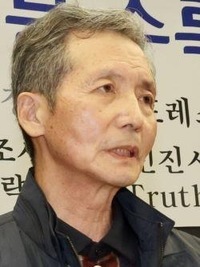
◆ Poet Jung Jae-hak
Poet, Person of National Merit, Columnist, Publicity Committee Member for President Park Chung-hee, 36 years of teaching experience in Jeolla-do

 Iranian Foreign Ministry: "Continuing Message Exchanges with the U.S. and Activities of Mediating Countries"
Esmaeil Baghaei, Spokesperson for the Iranian Ministry of Foreign Affairs [Xinhua, Yonhap News file photo]Esmaeil Baghaei, spokesperson for the Iranian Ministry of Foreign Affairs, stated on the 26th
Iranian Foreign Ministry: "Continuing Message Exchanges with the U.S. and Activities of Mediating Countries"
Esmaeil Baghaei, Spokesperson for the Iranian Ministry of Foreign Affairs [Xinhua, Yonhap News file photo]Esmaeil Baghaei, spokesperson for the Iranian Ministry of Foreign Affairs, stated on the 26th
 President Yoon: "Do You Think You Are Safe from the Special Counsel?"... Final Statement Video Released
President Yoon Suk Yeol rebuking the special prosecutor on the 24th. [Court video / @birds_justice X account subtitle GIF] A video of President Yoon Suk Yeol's closing statement at his trial rega
President Yoon: "Do You Think You Are Safe from the Special Counsel?"... Final Statement Video Released
President Yoon Suk Yeol rebuking the special prosecutor on the 24th. [Court video / @birds_justice X account subtitle GIF] A video of President Yoon Suk Yeol's closing statement at his trial rega
 President Yoon, regarding the first-instance ruling on the Public Official Election Act: “An excessive political verdict that distorts the facts… We will appeal immediately.”
The first-instance sentencing hearing for President Yoon Suk Yeol regarding violations of the Public Official Election Act is being broadcast live at Seoul Station on the 27th. [Photo=Yonhap News]Pres
President Yoon, regarding the first-instance ruling on the Public Official Election Act: “An excessive political verdict that distorts the facts… We will appeal immediately.”
The first-instance sentencing hearing for President Yoon Suk Yeol regarding violations of the Public Official Election Act is being broadcast live at Seoul Station on the 27th. [Photo=Yonhap News]Pres
 WSJ: "SK Hynix ADR Premium Is a Sign of AI Trading Overheat"
Advertisement for SK Hynix ADR listing in New York's Times Square [Reuters=Yonhap News file photo]The Wall Street Journal (WSJ) has pointed out that the price of SK Hynix’s American Depositary Recei
WSJ: "SK Hynix ADR Premium Is a Sign of AI Trading Overheat"
Advertisement for SK Hynix ADR listing in New York's Times Square [Reuters=Yonhap News file photo]The Wall Street Journal (WSJ) has pointed out that the price of SK Hynix’s American Depositary Recei
 'Godfather of Japanese Mystery Novels' Keigo Higashino Passes Away After Battle with Cancer at 68
Famous Japanese mystery novelist Keigo Higashino [AFP=Yonhap News]It has been belatedly reported that Keigo Higashino, the "godfather of Japanese mystery novels" and author of bestsellers such as "The
'Godfather of Japanese Mystery Novels' Keigo Higashino Passes Away After Battle with Cancer at 68
Famous Japanese mystery novelist Keigo Higashino [AFP=Yonhap News]It has been belatedly reported that Keigo Higashino, the "godfather of Japanese mystery novels" and author of bestsellers such as "The
 [Park Pil-kyu Security Column] To the Ignorant Trying to Clothe a Beast in Sheep's Clothing
Rep. Kim Byung-joo of the Democratic Party of Korea [Photo=Yonhap News]“The Air Force Academy doesn't teach you how to fly a plane!” “The Army, Navy, and Air Force academies are exactly the
[Park Pil-kyu Security Column] To the Ignorant Trying to Clothe a Beast in Sheep's Clothing
Rep. Kim Byung-joo of the Democratic Party of Korea [Photo=Yonhap News]“The Air Force Academy doesn't teach you how to fly a plane!” “The Army, Navy, and Air Force academies are exactly the
 [Issue Diagnosis] Two Effects of the Election Petition Review
 [Photo] Evidence of Election Fraud Flooding U.S. Media… Trump Had 2.7 Million Votes Stolen
 [Video] U.S. Semiquincentennial Air Show... 'Art in the Sky' streaks across New York
 [Editorial Cartoon] A Draconian Law That Undermines Freedom of Expression

 List
List










