 Noh Tae-ak, former Chairperson of the National Election Commission (NEC), drinks water during the third plenary session of the 'Special Committee on the Fact-Finding of Infringement of People's Suffrage, such as the Ballot Shortage during the 9th Nationwide Simultaneous Local Elections, and Electoral Management Reform' held at the National Assembly on the 1st. [Photo=Yonhap News]During the second institutional report of the National Assembly's Special Committee on the Fact-Finding of Disenfranchisement, which addresses the ballot shortage during the June 3 local elections, the NEC’s claim of "non-existent records" emerged as the biggest point of contention.
The NEC responded that it "did not manage or receive" details regarding the protest calls and complaints filed with the situation room on election day, and that initial response reports by key region during the ballot shortage also "do not exist as records because it was not recognized as an incident or accident."
Added to this is the controversy over the disposal of ballot storage boxes from the Jamsil 7-dong 2nd polling station, leading to growing criticism that a parliamentary investigation alone has limitations in uncovering the truth. Among the opposition bloc and parts of civil society that have been demanding a fact-finding investigation, there is an expanding consensus that the prompt introduction of an independent counsel (special prosecutor) and the impeachment of acting NEC Chairperson Wi Chul-hwan have become inevitable.
"Non-existent Verification Records": More Serious Than the Election Incident Itself
The core issue of the second special committee meeting was not just the personal status of acting Chairperson Wi Chul-hwan. The more fundamental problem was the absence of verification records.
While the shortage of ballots is a grave issue in itself, the response that there are no documents available to verify when, where, and to whom the situation was reported, or what instructions and countermeasures were issued, strikes at the very foundation of trust in the electoral management system.
Even more dangerous than the election incident is the fact that there are no records to verify it. If there was a ballot shortage, there should be a situation log. If protest calls were pouring in, there should be a record of complaints received. If reports and actions were taken on-site, there should be a remaining system of instruction and reporting.
However, the NEC provided answers for core materials stating they "did not manage the intake" or that "the records do not exist." This is not merely a case of poor document submission; it is a "void of evidence" that effectively neutralizes the verification process of the parliamentary investigation itself.
NEC’s Data Submission Criticized by Both Ruling and Opposition Parties
Rep. Yoon Kun-young, the Democratic Party’s ranking member, criticized the NEC in a procedural statement on the 1st, noting that the NEC was passive in having witnesses attend the first institutional report and failed to submit proper documentation. He specifically took issue with the fact that the NEC claimed it could not submit details on protest calls and complaints received by the situation room on election day, citing a lack of management records.
On election day, voter protests and complaints are not just simple grievances. They are primary records showing whether obstacles to exercising the right to vote occurred. The claim that these were not managed raises questions about whether the NEC failed to properly recognize the gravity of the situation on the ground, or whether it recognized it but failed to keep official records.
Rep. Suh Bum-soo, the People Power Party’s ranking member, also strongly criticized the NEC’s attitude toward data submission. He pointed out that data for the second institutional report was submitted only after business hours on the day before the meeting, and that calls to the NEC to verify this were met only with automated responses. The parliamentary investigation is a process conducted by the National Assembly on behalf of the people. Submitting documents immediately before the meeting, at a time when they are difficult to verify, is merely a formal gesture and can hardly be seen as genuine cooperation.
Rep. Joo Jin-woo of the People Power Party raised the issue of submitting records of overseas business trips by former and incumbent NEC chairpersons. Regarding the controversy over former Chairperson Noh Tae-ak’s spouse accompanying him on trips, the NEC responded that it only keeps records for the past five years.
While this issue is not direct evidence of the ballot shortage, it was pointed out as a case illustrating the NEC's overall attitude toward record-keeping and its perception of data submission.
Rep. Shin Dong-wook of the People Power Party raised a more direct issue. He revealed that he requested initial response reports for key regions on the day of the ballot shortage, but the NEC replied that "records do not exist because it was not recognized as an incident or accident." This response most clearly exposes the essence of the second special committee.
If ballots were insufficient, causing voters to be unable to vote or leading to the suspension of voting, it is one of the most serious incidents or accidents that could occur on election day. The fact that the NEC did not recognize this as an incident or accident means that the NEC’s crisis awareness has collapsed.
Chairperson of the Special Committee Yoon Sang-hyun elevated the refusal to submit documents to a matter of legal responsibility. He warned that under the Act on the Inspection and Investigation of State Administration, the National Assembly has the right to demand document submission, and refusal without justifiable cause can be subject to criminal punishment. He also urged the NEC to take responsibility for convincing the public, noting that the NEC is both the entity that created the suspicion and the entity that must resolve it.
An Entity for Truth-Finding or an Object of Investigation?
The problem lies in whether the NEC can truly be the entity to uncover the truth. The NEC is the management authority that caused the ballot shortage. At the same time, before the special committee, it is also the entity responsible for submitting data and explaining the facts.
However, if the NEC repeats answers like "we did not manage it," "there are no records," or "we did not recognize it as an incident," it is difficult to see the NEC as an agency capable of uncovering the truth on its own. It is no longer the subject of the investigation, but rather the object of it.
Adding to this is the concern over the destruction of evidence. The ballot storage boxes at the Jamsil 7-dong 2nd polling station were identified as key material evidence linked to the court’s evidence preservation procedures. However, when the court arrived for an on-site inspection, the boxes were already gone. The controversy grew after it was revealed that the Songpa-gu Election Commission had handed the storage boxes over to a waste disposal company around noon on June 9, before the court’s preservation order.
The NEC explained that because the boxes were for ballot storage and not actual ballot boxes, there was no legal obligation to preserve them. They also stated that the waste company had collected them before the list of objects for evidence preservation was received.
However, regardless of the legal obligation to preserve them, the fact that material evidence used at the heart of the ballot shortage scene has disappeared cannot be taken lightly. In particular, the boxes had been cited as evidence that could show the discrepancy between the number of ballots printed and the actual number of voters.
Concerns Over Evidence Destruction Reveal Limitations of Parliamentary Investigation
With no verification records and suspicions that key material evidence has been destroyed, the limitations of a parliamentary investigation alone are clear. While a parliamentary investigation is a process to confirm facts through requests for data and witness testimonies, it has limitations in executing search and seizure warrants, digital forensics, securing communication records, and summoning relevant persons for investigation.
It is difficult to determine through parliamentary inquiries alone whether the data the NEC claims "does not exist" truly never existed, exists but was withheld, or was omitted or destroyed after the fact.
Therefore, a compulsory investigation by an independent counsel is not just necessary, but urgent. As time passes, the possibility of records from the election day situation room, regional reporting systems, decisions on additional ballot dispatch, on-site response instructions, computer records, and communication details being damaged, omitted, or destroyed increases. The memories of those involved will also fade over time, and the lines of responsibility will become even more scattered.
What is needed now is not further explanations from the NEC, but the independent investigative authority securing evidence through compulsory means.
The Independent Counsel Has Become a Common Exit Strategy for Ruling and Opposition Parties
The push for an independent counsel is no longer the demand of just one party. The Democratic Party announced on June 29 that it would push for an independent counsel for the NEC as a party platform to uncover the truth about the ballot shortage and punish those responsible. The People Power Party has also expressed a welcoming stance toward the push for an independent counsel, while demanding the appointment of an independent counsel recommended by the opposition party.
If even the ruling party has recognized the need for an independent counsel, the remaining issue is not whether to proceed, but how quickly, how independently, and how forcefully the investigation should be conducted.
The institutional improvement measures belatedly presented by the NEC are unlikely to silence the calls for accountability. The NEC reported to the special committee that it would henceforth calculate ballot printing volume at 100% of the number of voters, and that any reductions would require a decision by the Central Committee. They also presented plans for additional printing in case of emergencies, procedures for additional ballot distribution, and the construction of an integrated election management system.
However, these are seen as both improvement measures and an admission of flaws in the existing system. If a 100% printing principle was necessary, why was a sufficient volume not secured for the June 3 local elections? If a real-time management system for remaining ballots and on-site conditions was needed, what was used to grasp the situation during this incident?
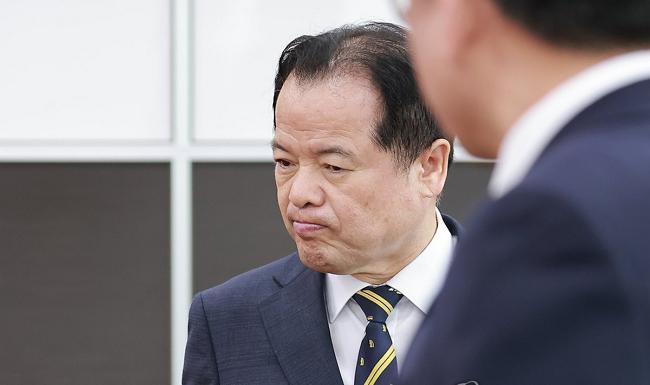 Wi Chul-hwan, Standing Commissioner and acting Chairperson of the National Election Commission, attends as a witness at the third plenary session of the 'Special Committee on the Fact-Finding of Infringement of People's Suffrage, such as the Ballot Shortage during the 9th Nationwide Simultaneous Local Elections, and Electoral Management Reform' held at the National Assembly on the 1st. [Photo=Yonhap News]Refusal of Resignation by Wi Chul-hwan, Impeachment Talk Amplifies
Ultimately, the final point of contention is the responsibility of acting Chairperson Wi Chul-hwan. With no verification records, suspicions of evidence destruction raised, and even the ruling party accepting an independent counsel as a party platform, the idea of the Wi Chul-hwan regime continuing to oversee the NEC’s management and fact-finding is unconvincing.
In the previous institutional report, the acting Chairperson effectively refused demands for his resignation, citing administrative voids within the NEC. However, the current problem is not merely a matter of his personal position. It is a question of what responsibility the top leader of a constitutional institution will take in the face of the collapse of the agency’s credibility.
Under the Constitution, members of the National Election Commission can be subject to impeachment by the National Assembly if they violate the Constitution or laws in the performance of their duties. The independence of the NEC cannot be a shield for evading responsibility. Independence is an authority for fair election management, not a privilege to hold onto power in the face of disenfranchisement, poor record-keeping, and concerns over evidence destruction.
Resignation is not a panacea. However, the moment a refusal to resign is interpreted as an evasion of responsibility, the NEC's explanations can no longer convince the public. This is especially true when suspicions of missing records and vanished material evidence are raised, and even the submission of data for the parliamentary investigation is lackluster. For the Wi Chul-hwan regime to claim it will conduct its own fact-finding is no different from the subject of the investigation claiming they will be the investigators.
The responsibility the National Assembly must demand should not stop at a mere call for resignation. If the acting Chairperson does not step down on his own, the National Assembly must demonstrate that the NEC’s accountability system is still alive through impeachment.
Restarting from Records and Responsibility
The conclusion left by the second special committee is clear: verification records were said to be non-existent, suspicions have been raised that key material evidence has vanished, the need for an independent counsel has become urgent, and calls for the impeachment of Wi Chul-hwan are spreading.
What the NEC must present to the public is not more explanations, but records and accountability. If there are no records, they must explain why; if key material evidence has vanished, they must clarify the circumstances and responsibility; if data exists but was not submitted, they must reveal who obstructed the parliamentary investigation.
What is needed now is not the NEC’s promises of self-improvement. It is a swift, compulsory investigation via an independent counsel and the National Assembly’s review of impeachment. Trust in electoral management is not restored through words. It must start again from securing records, preserving evidence, and holding those responsible accountable.

 Iranian Foreign Ministry: "Continuing Message Exchanges with the U.S. and Activities of Mediating Countries"
Esmaeil Baghaei, Spokesperson for the Iranian Ministry of Foreign Affairs [Xinhua, Yonhap News file photo]Esmaeil Baghaei, spokesperson for the Iranian Ministry of Foreign Affairs, stated on the 26th
Iranian Foreign Ministry: "Continuing Message Exchanges with the U.S. and Activities of Mediating Countries"
Esmaeil Baghaei, Spokesperson for the Iranian Ministry of Foreign Affairs [Xinhua, Yonhap News file photo]Esmaeil Baghaei, spokesperson for the Iranian Ministry of Foreign Affairs, stated on the 26th
 President Yoon: "Do You Think You Are Safe from the Special Counsel?"... Final Statement Video Released
President Yoon Suk Yeol rebuking the special prosecutor on the 24th. [Court video / @birds_justice X account subtitle GIF] A video of President Yoon Suk Yeol's closing statement at his trial rega
President Yoon: "Do You Think You Are Safe from the Special Counsel?"... Final Statement Video Released
President Yoon Suk Yeol rebuking the special prosecutor on the 24th. [Court video / @birds_justice X account subtitle GIF] A video of President Yoon Suk Yeol's closing statement at his trial rega
 President Yoon, regarding the first-instance ruling on the Public Official Election Act: “An excessive political verdict that distorts the facts… We will appeal immediately.”
The first-instance sentencing hearing for President Yoon Suk Yeol regarding violations of the Public Official Election Act is being broadcast live at Seoul Station on the 27th. [Photo=Yonhap News]Pres
President Yoon, regarding the first-instance ruling on the Public Official Election Act: “An excessive political verdict that distorts the facts… We will appeal immediately.”
The first-instance sentencing hearing for President Yoon Suk Yeol regarding violations of the Public Official Election Act is being broadcast live at Seoul Station on the 27th. [Photo=Yonhap News]Pres
 WSJ: "SK Hynix ADR Premium Is a Sign of AI Trading Overheat"
Advertisement for SK Hynix ADR listing in New York's Times Square [Reuters=Yonhap News file photo]The Wall Street Journal (WSJ) has pointed out that the price of SK Hynix’s American Depositary Recei
WSJ: "SK Hynix ADR Premium Is a Sign of AI Trading Overheat"
Advertisement for SK Hynix ADR listing in New York's Times Square [Reuters=Yonhap News file photo]The Wall Street Journal (WSJ) has pointed out that the price of SK Hynix’s American Depositary Recei
 'Godfather of Japanese Mystery Novels' Keigo Higashino Passes Away After Battle with Cancer at 68
Famous Japanese mystery novelist Keigo Higashino [AFP=Yonhap News]It has been belatedly reported that Keigo Higashino, the "godfather of Japanese mystery novels" and author of bestsellers such as "The
'Godfather of Japanese Mystery Novels' Keigo Higashino Passes Away After Battle with Cancer at 68
Famous Japanese mystery novelist Keigo Higashino [AFP=Yonhap News]It has been belatedly reported that Keigo Higashino, the "godfather of Japanese mystery novels" and author of bestsellers such as "The
 [Park Pil-kyu Security Column] To the Ignorant Trying to Clothe a Beast in Sheep's Clothing
Rep. Kim Byung-joo of the Democratic Party of Korea [Photo=Yonhap News]“The Air Force Academy doesn't teach you how to fly a plane!” “The Army, Navy, and Air Force academies are exactly the
[Park Pil-kyu Security Column] To the Ignorant Trying to Clothe a Beast in Sheep's Clothing
Rep. Kim Byung-joo of the Democratic Party of Korea [Photo=Yonhap News]“The Air Force Academy doesn't teach you how to fly a plane!” “The Army, Navy, and Air Force academies are exactly the
 [Issue Diagnosis] Two Effects of the Election Petition Review
 [Photo] Evidence of Election Fraud Flooding U.S. Media… Trump Had 2.7 Million Votes Stolen
 [Video] U.S. Semiquincentennial Air Show... 'Art in the Sky' streaks across New York
 [Editorial Cartoon] A Draconian Law That Undermines Freedom of Expression

 List
List









