 On March 19, 1993, Ri In-mo, who had served a long-term prison sentence as an unconverted North Korean spy, is repatriated to the North and reunited with his family. [Photo=KCNA]
Looking at the Republic of Korea in danger, this is no time to be writing such articles. However, I am writing a few words because my heart goes out to the unconverted long-term prisoners who, like me, consider North Korea their hometown.
Until now, the Lee Jae-myung administration has tried everything, even groveling, to initiate dialogue with North Korea, but Kim Jong-un has offered no response other than hurling profanities.
The Lee Jae-myung administration then attempted to open the door to dialogue by using the repatriation of the few remaining unconverted long-term prisoners as bait. Even so, North Korea remains unresponsive.
What is even more ridiculous is that the foolish Minister of Unification, Chung Dong-young, is reportedly pushing for a plan to issue passports to these elderly long-term prisoners and send them to China, from where they would be moved to North Korea.
That is not how North Korea works; they will not accept them. These elderly prisoners will only have to return to South Korea in tears. Even if they are unconverted long-term prisoners who devoted their entire lives to the Kim dynasty, North Korea will only view them as useless, troublesome nuisances.
As a North Korean defector who still has a hometown in the North, what I want to say to these unconverted long-term prisoners is this: no matter how much you miss your home, please do not make the foolish mistake of returning to the embrace of the communists.
Let me tell you the story of Ri In-mo, who was repatriated to the North a long time ago.
When Ri In-mo, the first unconverted long-term prisoner to be repatriated in March 1993, arrived in North Korea, the regime’s interest and care for him were immense. He was awarded a high-end detached house, the Order of Kim Il-sung, and the title of "Hero." They called him an "incarnation of faith and will" and even made him the protagonist of an art film as a living example of loyalty to the leader.
His elementary school in Pabal-ri, Ryanggang Province, was renamed "Ri In-mo Elementary School," and he was treated at the "Bonghwa Clinic"—which is reserved for the Kim family—and even sent to the United States for medical treatment.
In return for Kim Il-sung's favor, Ri In-mo wrote a series of articles encouraging loyalty and idolizing the party and the leader. His writings were frequently featured prominently in the Rodong Sinmun.
His loyalty, maintained steadfastly in the enemy's prisons for over 40 years, was extraordinary. Officials and the public across the country held campaigns to "learn from Ri In-mo."
Then one day, Ri In-mo asked to see one of North Korea's "re-education camps" for himself. Perhaps acting on Kim Jong-il's directive to "give Comrade Ri In-mo whatever he asks for," officials took him to the Sariwon "International Re-education Camp."
The Sariwon International Re-education Camp is a facility reserved for imprisoned foreigners, families of anti-Japanese fighters, and families of high-ranking officials. It is relatively well-equipped and offers better treatment than regular prisons, which is why the regime does not hesitate to show it to international human rights organizations.
In his wheelchair, Ri said nothing as he toured the facility. The officials, assuming that Ri, who had spent so long in the prisons of the "South Korea where people cannot live," must have been deeply moved, asked him after the tour, "Comrade Ri In-mo! What are your impressions of the visit?"
After a long silence, Ri In-mo dropped a terrifying bombshell: "If it had been a place like this, I wouldn't have been able to endure three years, let alone 34."
The officials present could say nothing and only stared at his face. Ri left the place without even saying goodbye.
Within 30 minutes, the content of his remarks at the camp was reported directly to Kim Jong-il through three separate channels: the Workers' Party, the Ministry of State Security, and the Ministry of People's Security.
Enraged, Kim Jong-il slammed his fist on the table and said, "Those who have tasted freedom are indeed untrustworthy."
From then on, Ri In-mo was treated as a "useless piece of meat that betrayed the trust of the Party and the Leader," until he died a lonely death in June 2007, forgotten by everyone.
This was the bleak end that awaited a communist who abandoned the free Republic of Korea—which had spared his life despite him being a spy—and chose the path of loyalty to the North.
Since then, propaganda about Ri In-mo has completely disappeared. The Kim family only placed his silent body in the Patriotic Martyrs' Cemetery to use it for propaganda purposes.
There is nothing that unconverted long-term prisoners can do for their families upon entering North Korea. Instead, they will only turn their families into subjects of intensive surveillance.
I have never been to prison. I still do not understand why the difference between the prisons of the South and North was so great that it shocked Ri In-mo to such an extent.
Just as an awl in a sack cannot be hidden, those who have once tasted freedom cannot survive in the dictatorial society of North Korea, where there is no freedom of the press. We must keep in mind that this truth was proven by Ri In-mo, who has already passed away.
I did not write this to hurt the feelings of the unconverted long-term prisoners. I am merely sharing the truth about North Korea as someone who has lived under both the North and South systems.
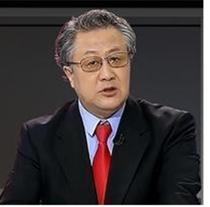
◆ Advisor Kim Tae-san
Advisor to the Hanmi Ilbo and former representative of a North Korean trading company in the Czech Republic. In South Korea, he serves as the Vice President of the Institute for North Korean Social Research, providing deep insights and expertise on inter-Korean relations and North Korean affairs.

 Iranian Foreign Ministry: "Continuing Message Exchanges with the U.S. and Activities of Mediating Countries"
Esmaeil Baghaei, Spokesperson for the Iranian Ministry of Foreign Affairs [Xinhua, Yonhap News file photo]Esmaeil Baghaei, spokesperson for the Iranian Ministry of Foreign Affairs, stated on the 26th
Iranian Foreign Ministry: "Continuing Message Exchanges with the U.S. and Activities of Mediating Countries"
Esmaeil Baghaei, Spokesperson for the Iranian Ministry of Foreign Affairs [Xinhua, Yonhap News file photo]Esmaeil Baghaei, spokesperson for the Iranian Ministry of Foreign Affairs, stated on the 26th
 President Yoon: "Do You Think You Are Safe from the Special Counsel?"... Final Statement Video Released
President Yoon Suk Yeol rebuking the special prosecutor on the 24th. [Court video / @birds_justice X account subtitle GIF] A video of President Yoon Suk Yeol's closing statement at his trial rega
President Yoon: "Do You Think You Are Safe from the Special Counsel?"... Final Statement Video Released
President Yoon Suk Yeol rebuking the special prosecutor on the 24th. [Court video / @birds_justice X account subtitle GIF] A video of President Yoon Suk Yeol's closing statement at his trial rega
 President Yoon, regarding the first-instance ruling on the Public Official Election Act: “An excessive political verdict that distorts the facts… We will appeal immediately.”
The first-instance sentencing hearing for President Yoon Suk Yeol regarding violations of the Public Official Election Act is being broadcast live at Seoul Station on the 27th. [Photo=Yonhap News]Pres
President Yoon, regarding the first-instance ruling on the Public Official Election Act: “An excessive political verdict that distorts the facts… We will appeal immediately.”
The first-instance sentencing hearing for President Yoon Suk Yeol regarding violations of the Public Official Election Act is being broadcast live at Seoul Station on the 27th. [Photo=Yonhap News]Pres
 WSJ: "SK Hynix ADR Premium Is a Sign of AI Trading Overheat"
Advertisement for SK Hynix ADR listing in New York's Times Square [Reuters=Yonhap News file photo]The Wall Street Journal (WSJ) has pointed out that the price of SK Hynix’s American Depositary Recei
WSJ: "SK Hynix ADR Premium Is a Sign of AI Trading Overheat"
Advertisement for SK Hynix ADR listing in New York's Times Square [Reuters=Yonhap News file photo]The Wall Street Journal (WSJ) has pointed out that the price of SK Hynix’s American Depositary Recei
 'Godfather of Japanese Mystery Novels' Keigo Higashino Passes Away After Battle with Cancer at 68
Famous Japanese mystery novelist Keigo Higashino [AFP=Yonhap News]It has been belatedly reported that Keigo Higashino, the "godfather of Japanese mystery novels" and author of bestsellers such as "The
'Godfather of Japanese Mystery Novels' Keigo Higashino Passes Away After Battle with Cancer at 68
Famous Japanese mystery novelist Keigo Higashino [AFP=Yonhap News]It has been belatedly reported that Keigo Higashino, the "godfather of Japanese mystery novels" and author of bestsellers such as "The
 [Park Pil-kyu Security Column] To the Ignorant Trying to Clothe a Beast in Sheep's Clothing
Rep. Kim Byung-joo of the Democratic Party of Korea [Photo=Yonhap News]“The Air Force Academy doesn't teach you how to fly a plane!” “The Army, Navy, and Air Force academies are exactly the
[Park Pil-kyu Security Column] To the Ignorant Trying to Clothe a Beast in Sheep's Clothing
Rep. Kim Byung-joo of the Democratic Party of Korea [Photo=Yonhap News]“The Air Force Academy doesn't teach you how to fly a plane!” “The Army, Navy, and Air Force academies are exactly the
 [Issue Diagnosis] Two Effects of the Election Petition Review
 [Photo] Evidence of Election Fraud Flooding U.S. Media… Trump Had 2.7 Million Votes Stolen
 [Video] U.S. Semiquincentennial Air Show... 'Art in the Sky' streaks across New York
 [Editorial Cartoon] A Draconian Law That Undermines Freedom of Expression

 List
List









