 The Konkuk University incident on October 28, 1986. This was an event where students from the NL (National Liberation) faction held a sit-in at Konkuk University, calling for the three major slogans of "anti-foreign interference and self-reliance," "anti-dictatorship and democratization," and "national unification."
The student movement of the 1980s is difficult to explain as a single unified trend. After the Gwangju Democratization Movement in May 1980, university campuses began to be influenced by much more radical ideologies than before.
The interest of the student movement went beyond simple opposition to the authoritarian regime. Important debates emerged regarding how to perceive the South Korean social system, how to interpret the relationship between South Korea and the United States, and whether to prioritize the working class or the national question.
Academic circles and private reading groups at major universities such as Seoul National University, Korea University, Yonsei University, Sungkyunkwan University, and Sogang University focused on reading materials regarding △Marxism, △Dependency Theory, △People’s Theory (Minjung theory), △Third World Revolution Theory, and △Socialist Revolution Theory. The student movement evolved beyond organizing street protests into a systematic ideological education framework.
This flow led to the "Social Formation Debate" around 1986. The point of contention was the nature of South Korean society. Depending on whether one viewed South Korea as a society where capitalism had already highly developed, or as a colonial society dependent on the United States, the movement's strategy changed entirely.
From the former perspective, socialist transformation centered on the working class became the core task, while from the latter perspective, national liberation—prioritizing anti-Americanism, self-reliance, and unification—became the top priority. These provided the theoretical foundations for the two factions that would later be known as NL and PD (People's Democratic).
The NL, or National Liberation faction, viewed the core contradiction of South Korean society as a national (ethnic) one. They identified the division system, the presence of U.S. forces in Korea, and American influence as the most significant issues. Consequently, anti-Americanism, self-reliance, and unification became the central slogans of their movement.
On the other hand, the PD, or People's Democratic faction, perceived South Korean society as a capitalist one and saw class contradiction as the core problem. For them, what mattered was the organization of the working class and socialist transformation. Labor unions, industrial workplaces, industrial democracy, and class struggle were the main areas of interest for the PD faction.
The two factions clashed fiercely. Competition occurred everywhere, from university student council elections and academic circle operations to protest routes, pamphlet wording, and methods of entering industrial workplaces.
The NL criticized the PD as an "abstract class-theorist" group unable to see the reality of the national problem, while the PD attacked the NL as an "unscientific faction" buried in nationalism. In the late 1980s, university campuses were not just spaces for anti-government movements, but test beds for competition between internal leftist factions.
However, when it came to the issue of North Korea, the differences between the two sides blurred significantly. The NL either viewed North Korea as a pillar of the national liberation movement or at least refrained from publicly criticizing it. Issues such as the Kim Il-sung cult of personality, the hereditary succession structure, political prison camps, resident control, and ideological censorship in North Korea did not become core agenda items within the movement. While the PD did not fully accept North Korea's Juche ideology, it did not squarely criticize the North Korean regime from the standards of liberal democracy and human rights either. Their focus remained primarily on the state power of South Korea, capitalism, the *chaebol* (conglomerate) structure, and the problem of labor exploitation.
1987 was the year this trend spread to the public. On January 14, Seoul National University student Park Jong-cheol died after police torture, and on June 9, Yonsei University student Lee Han-yeol fell into a critical condition after being hit by a tear-gas canister during a protest, eventually passing away on July 5.
These incidents triggered nationwide protests, and the government announced the June 29 Declaration, which accepted the direct presidential election system. Subsequently, the Great Labor Struggle took place from July to September. Even by government statistics, labor disputes exceeded 3,000 cases during this period, and numerous new labor unions were formed. Activists from the student movement entered industrial workplaces, and the ideological debates of the campuses spread to labor and civic movements.
The launch of the National Council of Student Representatives (Jeondaehyeop) in 1987 was also a significant event. Jeondaehyeop became the representative organization for campus activists, and it is assessed as having been strongly influenced by the NL faction.
During this period, the "Steel Letter" (*Gangcheol Seosin*), known to have been written by Kim Young-hwan under the pseudonym "Steel," had a major impact on the spread of the NL faction. This document systematically explained the anti-American, self-reliance, and national liberation line and was read as private study material at various universities. Although Kim Young-hwan later criticized the North Korean regime and participated in the North Korean human rights movement, the impact this document left on the activist circle in the 1980s was profound.
Lim Su-kyung's visit to Pyongyang in 1989 spread the debate over North Korea nationwide. Lim visited Pyongyang without government approval to attend the 13th World Festival of Youth and Students and was punished for violating the National Security Act upon her return.
This incident made the relationship between the student movement and North Korea an issue for all of South Korean society. However, it is difficult to say that it served as an opportunity to genuinely verify the reality of the North Korean regime within the activist circle. Rather, many activists interpreted it as an issue of oppression by "anti-unification forces."
The collapse of the Berlin Wall in 1989 and the dissolution of the Soviet Union in 1991 dealt a massive blow to the PD faction. The fact that "existing socialism" had collapsed forced a total re-examination of the theory of socialist revolution. Some moved toward social democracy or progressive party politics, while others remained in the labor movement. The NL was also influenced by changes in the international situation, but its core line centered on anti-Americanism, self-reliance, and unification was maintained for quite some time.
The divergence of the NL and PD in the 1980s was not merely an organizational split; it was an event that created the long-term genealogy of the South Korean leftist movement. One prioritized the nation, while the other prioritized class. However, neither faction made the democracy, human rights, or hereditary issues of the North Korean regime a core agenda item.
Ultimately, the rivalry between the activist factions at the time was not a choice between liberal democracy and communism, but a competition between different leftist revolutionary lines. This is precisely the limitation that must be addressed when evaluating the student movement of the 1980s.
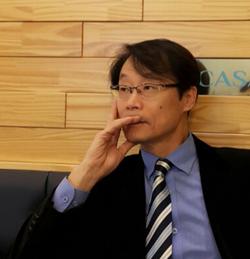
◆ Songsan Jeong Gwang-je
A poet and researcher of history and philosophy. Former board member of the Rhee Syngman Institute. He is currently a research advisor at the Korea Modern and Contemporary History Research Association and the representative of the philosophy forum "Lyceum." He has published four volumes of poetry, co-translated "Heroes of Hook Hill," and authored humanities books including "Joseon Turned into Myth," "Humanities on the Tatami," and "A Liberal’s Reading of Gramsci." Songsan is his pen name.

 Iranian Foreign Ministry: "Continuing Message Exchanges with the U.S. and Activities of Mediating Countries"
Esmaeil Baghaei, Spokesperson for the Iranian Ministry of Foreign Affairs [Xinhua, Yonhap News file photo]Esmaeil Baghaei, spokesperson for the Iranian Ministry of Foreign Affairs, stated on the 26th
Iranian Foreign Ministry: "Continuing Message Exchanges with the U.S. and Activities of Mediating Countries"
Esmaeil Baghaei, Spokesperson for the Iranian Ministry of Foreign Affairs [Xinhua, Yonhap News file photo]Esmaeil Baghaei, spokesperson for the Iranian Ministry of Foreign Affairs, stated on the 26th
 President Yoon: "Do You Think You Are Safe from the Special Counsel?"... Final Statement Video Released
President Yoon Suk Yeol rebuking the special prosecutor on the 24th. [Court video / @birds_justice X account subtitle GIF] A video of President Yoon Suk Yeol's closing statement at his trial rega
President Yoon: "Do You Think You Are Safe from the Special Counsel?"... Final Statement Video Released
President Yoon Suk Yeol rebuking the special prosecutor on the 24th. [Court video / @birds_justice X account subtitle GIF] A video of President Yoon Suk Yeol's closing statement at his trial rega
 President Yoon, regarding the first-instance ruling on the Public Official Election Act: “An excessive political verdict that distorts the facts… We will appeal immediately.”
The first-instance sentencing hearing for President Yoon Suk Yeol regarding violations of the Public Official Election Act is being broadcast live at Seoul Station on the 27th. [Photo=Yonhap News]Pres
President Yoon, regarding the first-instance ruling on the Public Official Election Act: “An excessive political verdict that distorts the facts… We will appeal immediately.”
The first-instance sentencing hearing for President Yoon Suk Yeol regarding violations of the Public Official Election Act is being broadcast live at Seoul Station on the 27th. [Photo=Yonhap News]Pres
 WSJ: "SK Hynix ADR Premium Is a Sign of AI Trading Overheat"
Advertisement for SK Hynix ADR listing in New York's Times Square [Reuters=Yonhap News file photo]The Wall Street Journal (WSJ) has pointed out that the price of SK Hynix’s American Depositary Recei
WSJ: "SK Hynix ADR Premium Is a Sign of AI Trading Overheat"
Advertisement for SK Hynix ADR listing in New York's Times Square [Reuters=Yonhap News file photo]The Wall Street Journal (WSJ) has pointed out that the price of SK Hynix’s American Depositary Recei
 'Godfather of Japanese Mystery Novels' Keigo Higashino Passes Away After Battle with Cancer at 68
Famous Japanese mystery novelist Keigo Higashino [AFP=Yonhap News]It has been belatedly reported that Keigo Higashino, the "godfather of Japanese mystery novels" and author of bestsellers such as "The
'Godfather of Japanese Mystery Novels' Keigo Higashino Passes Away After Battle with Cancer at 68
Famous Japanese mystery novelist Keigo Higashino [AFP=Yonhap News]It has been belatedly reported that Keigo Higashino, the "godfather of Japanese mystery novels" and author of bestsellers such as "The
 [Park Pil-kyu Security Column] To the Ignorant Trying to Clothe a Beast in Sheep's Clothing
Rep. Kim Byung-joo of the Democratic Party of Korea [Photo=Yonhap News]“The Air Force Academy doesn't teach you how to fly a plane!” “The Army, Navy, and Air Force academies are exactly the
[Park Pil-kyu Security Column] To the Ignorant Trying to Clothe a Beast in Sheep's Clothing
Rep. Kim Byung-joo of the Democratic Party of Korea [Photo=Yonhap News]“The Air Force Academy doesn't teach you how to fly a plane!” “The Army, Navy, and Air Force academies are exactly the
 [Issue Diagnosis] Two Effects of the Election Petition Review
 [Photo] Evidence of Election Fraud Flooding U.S. Media… Trump Had 2.7 Million Votes Stolen
 [Video] U.S. Semiquincentennial Air Show... 'Art in the Sky' streaks across New York
 [Editorial Cartoon] A Draconian Law That Undermines Freedom of Expression

 List
List









