 Statue of Syngman Rhee erected in front of the Paiaehaktang History Museum in Jung-gu, Seoul. [Photo = Paiaehaktang History Museum]
Paiaehaktang, founded by missionary Henry Appenzeller, was a school built upon Christian principles. Perhaps for this reason, the school’s atmosphere was deeply permeated with Christian values and a spirit of freedom.
Interestingly, the school song of Paiaehaktang is quite simple. This is because it was created by Appenzeller’s son, who served as the fourth principal following in his father's footsteps, by setting lyrics to the fight song of his own alma mater, Princeton University.
Syngman Rhee: Student and Teacher at Paiaehaktang
Let us sing for our Paiaehaktang, Paiaehaktang / Let us sing and sing and sing again / Forever and ever / Rah rah rah rah sis boom bah, Paiaehaktang sis boom bah
In 1896, 21-year-old Syngman Rhee enrolled at Paiaehaktang. He demonstrated exceptional talent in the English language and modern studies he learned there, and before long, he began serving as an English teacher. Since then, Paiaehaktang underwent several reorganizations during the Japanese colonial period, and in 1937, it was renamed Paiai Middle School. After liberation, it was divided into what are now Paiai Middle School and Paiai High School.
I, too, am a graduate of the 100th class of Paiai Middle School. One of the events I looked forward to most during my time there was the "Bae-Yang Match" against Yangjung Middle and High School. Students would spend hours practicing cheers, and on the day of the game, we would cheer for our school until our voices went hoarse.
Although there was a strong sense of rivalry, it remained strictly within the realm of sports and school culture. While there were cheers aimed at each other, they rarely ever escalated into social issues.
However, the cheer that recently sparked controversy was a modification of the familiar chant, "Let’s go, let’s go, hit a home run and let's go," with students inserting the terms "Starbucks" and "Tank Day."
“Let’s go, let’s go, let’s go to Starbucks. Tank Day.”
Some media outlets harshly criticized this cheer, and eventually, the relevant Fair Education Committee imposed a six-month suspension on Paiai High School from participating in national tournaments.
Many have raised questions about whether such a punishment was excessive. Furthermore, some have argued that the social atmosphere surrounding expressions or symbols related to the May 18th Democratic Uprising has become overly rigid, and that disallowing criticism or satire may conflict with the freedom of expression.
The Starbucks Incident is Awakening the Public
Looking at this incident, I am led to ask not merely a question about school cheering culture, but a question about how far our society should permit history and freedom of expression to coexist.
The controversy did not end there. Some media outlets even brought up the statue of Dr. Syngman Rhee on the Paiai High School campus, criticizing the school's history and identity. Witnessing this, I felt that beyond a simple debate over a cheer, a clash of interpretations regarding South Korea’s founding history and its significance is ongoing.
Paiaehaktang was founded on the faith and educational philosophy of missionary Appenzeller, and Syngman Rhee was influenced by liberty and modern education there. I believe that these Christian values and the principles of liberal democracy remain a vital foundation that sustains South Korea today.
Some may think their historical perspective is gaining ground. On the other hand, however, this controversy is actually serving as a catalyst to awaken those who place great importance on the values of freedom and the founding of the nation.
History does not end just because a single interpretation is forcibly imposed. Rather, a healthy society is built when deeper discussion and reflection occur amidst a diversity of perspectives.
And in that sense, I believe that the power to protect the Republic of Korea comes not from specific slogans, but from the conscience and convictions of citizens who cherish freedom.
The public is awakening because of "Tank Day" and "Starbucks." Christians are awakening, too. Among the 33 national representatives who signed the "Proclamation of Korean Independence" during the March 1st Movement of 1919, 16 were Christians. Furthermore, citizens who love liberal democracy and do not forget the spirit of President Syngman Rhee are awakening.
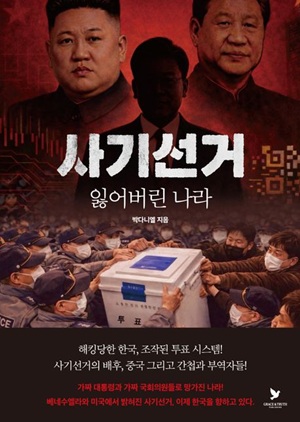
◆ Author Daniel Park
“This book was not written to attack any specific political party or figure. Rather than standing on the side of ideology, I wanted to stand on the side of facts. Are these truly the president and parliament we elected?” - From the author's note

 Iranian Foreign Ministry: "Continuing Message Exchanges with the U.S. and Activities of Mediating Countries"
Esmaeil Baghaei, Spokesperson for the Iranian Ministry of Foreign Affairs [Xinhua, Yonhap News file photo]Esmaeil Baghaei, spokesperson for the Iranian Ministry of Foreign Affairs, stated on the 26th
Iranian Foreign Ministry: "Continuing Message Exchanges with the U.S. and Activities of Mediating Countries"
Esmaeil Baghaei, Spokesperson for the Iranian Ministry of Foreign Affairs [Xinhua, Yonhap News file photo]Esmaeil Baghaei, spokesperson for the Iranian Ministry of Foreign Affairs, stated on the 26th
 President Yoon: "Do You Think You Are Safe from the Special Counsel?"... Final Statement Video Released
President Yoon Suk Yeol rebuking the special prosecutor on the 24th. [Court video / @birds_justice X account subtitle GIF] A video of President Yoon Suk Yeol's closing statement at his trial rega
President Yoon: "Do You Think You Are Safe from the Special Counsel?"... Final Statement Video Released
President Yoon Suk Yeol rebuking the special prosecutor on the 24th. [Court video / @birds_justice X account subtitle GIF] A video of President Yoon Suk Yeol's closing statement at his trial rega
 President Yoon, regarding the first-instance ruling on the Public Official Election Act: “An excessive political verdict that distorts the facts… We will appeal immediately.”
The first-instance sentencing hearing for President Yoon Suk Yeol regarding violations of the Public Official Election Act is being broadcast live at Seoul Station on the 27th. [Photo=Yonhap News]Pres
President Yoon, regarding the first-instance ruling on the Public Official Election Act: “An excessive political verdict that distorts the facts… We will appeal immediately.”
The first-instance sentencing hearing for President Yoon Suk Yeol regarding violations of the Public Official Election Act is being broadcast live at Seoul Station on the 27th. [Photo=Yonhap News]Pres
 WSJ: "SK Hynix ADR Premium Is a Sign of AI Trading Overheat"
Advertisement for SK Hynix ADR listing in New York's Times Square [Reuters=Yonhap News file photo]The Wall Street Journal (WSJ) has pointed out that the price of SK Hynix’s American Depositary Recei
WSJ: "SK Hynix ADR Premium Is a Sign of AI Trading Overheat"
Advertisement for SK Hynix ADR listing in New York's Times Square [Reuters=Yonhap News file photo]The Wall Street Journal (WSJ) has pointed out that the price of SK Hynix’s American Depositary Recei
 'Godfather of Japanese Mystery Novels' Keigo Higashino Passes Away After Battle with Cancer at 68
Famous Japanese mystery novelist Keigo Higashino [AFP=Yonhap News]It has been belatedly reported that Keigo Higashino, the "godfather of Japanese mystery novels" and author of bestsellers such as "The
'Godfather of Japanese Mystery Novels' Keigo Higashino Passes Away After Battle with Cancer at 68
Famous Japanese mystery novelist Keigo Higashino [AFP=Yonhap News]It has been belatedly reported that Keigo Higashino, the "godfather of Japanese mystery novels" and author of bestsellers such as "The
 [Park Pil-kyu Security Column] To the Ignorant Trying to Clothe a Beast in Sheep's Clothing
Rep. Kim Byung-joo of the Democratic Party of Korea [Photo=Yonhap News]“The Air Force Academy doesn't teach you how to fly a plane!” “The Army, Navy, and Air Force academies are exactly the
[Park Pil-kyu Security Column] To the Ignorant Trying to Clothe a Beast in Sheep's Clothing
Rep. Kim Byung-joo of the Democratic Party of Korea [Photo=Yonhap News]“The Air Force Academy doesn't teach you how to fly a plane!” “The Army, Navy, and Air Force academies are exactly the
 [Issue Diagnosis] Two Effects of the Election Petition Review
 [Photo] Evidence of Election Fraud Flooding U.S. Media… Trump Had 2.7 Million Votes Stolen
 [Video] U.S. Semiquincentennial Air Show... 'Art in the Sky' streaks across New York
 [Editorial Cartoon] A Draconian Law That Undermines Freedom of Expression

 List
List









