 U.S. President Trump’s “over” remark is interpreted as a declaration that the MOU-based management system with Iran has ended, serving as a political signal that justified the first strike and paved the way for the second. [Photo = Yonhap News]
U.S. President Donald Trump’s “over” remark forces a re-examination of the nature of the U.S.-Iran conflict. On the surface, the statement sounds like a declaration that the Memorandum of Understanding (MOU) management system with Iran has come to an end.
However, looking at the timeline of the remark, its significance is not singular. The comment was made after the first U.S. strike but before the second wave of strikes was officially launched. Therefore, “over” should be read both as a declaration of the end of the MOU and as a political signal greenlighting further military action.
Interpretation through the timing of the “over” remark
First, the superficial meaning is a declaration of diplomatic termination. Reuters reported that when asked on July 8, ahead of the NATO summit in Turkey, whether the MOU with Iran was over, Trump replied, “I think it’s over. I don’t want to deal with them.”
This signaled that the movement to develop the June 17 MOU into a permanent peace agreement had effectively stalled. Reuters also reported that this conflict dealt a blow to expectations of transitioning that MOU into a permanent accord.
However, the nature of “over” becomes clearer within the timeline. Trump’s remark did not come before the first U.S. strike, but after the first and before the second was formalized.
U.S. Central Command (CENTCOM) initiated strikes against Iran on July 7 and announced the next day that it had hit over 80 targets. The U.S. explained that this offensive was a response to the attack on three merchant vessels transiting the Strait of Hormuz.
Trump’s “over” remark followed this sequence.
Reuters reported that the U.S. began additional strikes on Iran a few hours after Trump’s remark. CENTCOM stated that the purpose of the second wave of strikes was to “further degrade Iran’s ability to threaten freedom of navigation in the Strait of Hormuz.”
Therefore, “over” was not merely an ex post facto explanation. It should be read as a political justification for the first strike and a signal that authorized the scale of the second.
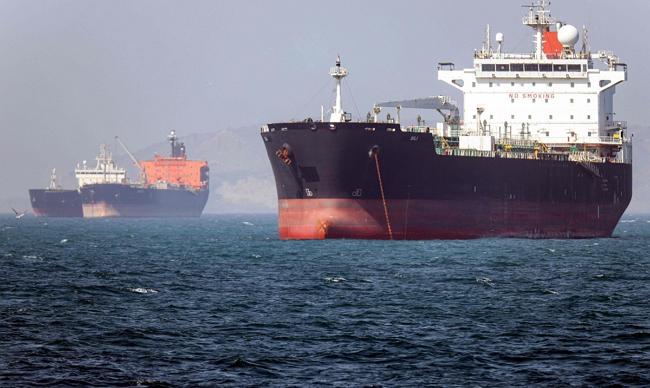 The U.S. first and second strikes were focused on degrading the maritime and missile capabilities of the Revolutionary Guards that threaten freedom of navigation in the Strait of Hormuz, rather than the entire Iranian regime. [Photo = Yonhap News]
The meaning behind the U.S. military targets
The targets of the first strike were relatively specific. The U.S. aimed at military capabilities around the Strait of Hormuz, including Iran’s air defense networks, command and control facilities, coastal radar, anti-ship missile capabilities, and small craft belonging to the Revolutionary Guards.
Rather than a total war-style attack aimed at the entire Iranian leadership or the command center in the capital, this was closer to a limited punitive operation aimed at removing the capacity for Hormuz provocations that could threaten international commerce.
The significance of the second strike should also be viewed in this context. While the specific list of targets was not as fully disclosed as the first, the direction of the operation was clear.
Foreign media reported that the second strike shook several cities on Iran’s southern coast and caused power outages in some areas. Explosions and damage were reported in regions with southern coastal, port, and military facilities, such as Bandar Abbas, Konarak, Chabahar, and Iranshahr.
This should be seen as an extension of the operational line to further weaken Iran's maritime control, anti-ship missile, and port operation capabilities surrounding the Strait of Hormuz, rather than an operation to topple the entire Iranian regime.
Thus, Trump’s “over” is closer to a signal that “we will no longer manage Iran’s Hormuz provocations through the existing MOU method” rather than “all contact with Iran is terminated.” Diplomatically, it was a declaration of the end of the MOU management system; militarily, it was a warning aimed at the Revolutionary Guards’ ability to provoke in Hormuz.
Iran’s limited response
It is difficult to conclude that Iran’s response is a signal for the resumption of all-out war. The Iranian Revolutionary Guards stated that they targeted U.S.-related facilities in Bahrain and Kuwait following the U.S. airstrikes.
However, there is a significant discrepancy between Iran’s claims and the scale verified locally.
While reporting that Iran claimed to have attacked U.S. facilities in Bahrain and Kuwait, Reuters framed this as an announcement from the Iranian side. A separate analytical report summarized that although the Revolutionary Guards claimed to have targeted 85 military facilities in Bahrain and Kuwait, the impact of the attacks appeared limited.
This distinction is crucial. Iran’s “attack on 85 sites” should be viewed as an announcement of a target list or claimed results rather than confirmed hits and damage. Conversely, what has been confirmed by authorities in Kuwait and Bahrain is merely the activation of air defense systems and the interception of some projectiles. To date, the U.S. has not officially confirmed large-scale damage to U.S. bases or U.S. casualties.
In effect, Iran saved face regarding retaliation domestically and internationally, while local Gulf authorities confirmed only a limited scale of air defense engagement.
More importantly, it matters who Iran chose as the target for retaliation.
The U.S. struck the Revolutionary Guards’ maritime and missile capabilities using the attack on merchant ships in the Strait of Hormuz as justification. If Iran had responded by attacking oil tankers passing through Hormuz or civilian merchant vessels, it would have been a signal of escalation against the entire international energy market.
Instead, Iran’s response remained at the level of claiming to have targeted U.S.-related facilities in the Persian Gulf. This is interpreted as showing a willingness to retaliate against the U.S. while avoiding total-war options like closing the Strait of Hormuz or conducting further attacks on civilian shipping networks.
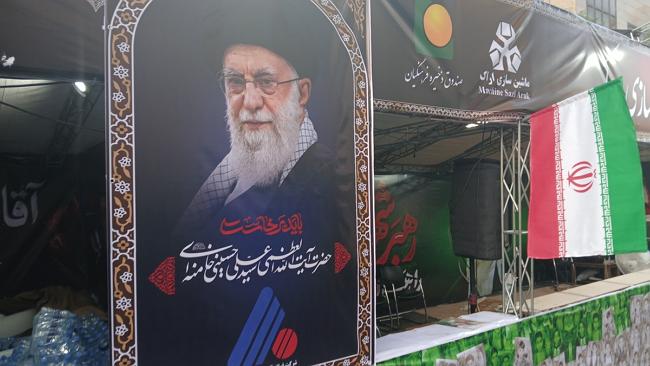 The funeral of Khamenei and the uncertainty regarding the succession are interpreted as variables that increase the likelihood that Iran will choose controlled retaliation and crisis management over all-out war. [Photo = Yonhap News] Khamenei’s funeral and succession uncertainty
The internal situation in Iran is another basis for viewing the possibility of all-out war as low. Foreign media including Reuters reported that the funeral proceedings for Khamenei and the uncertainty regarding the succession are key variables in this situation.
The analysis suggests that in a situation where the transfer of power has not been fully resolved, the new leadership is more likely to try to manage the crisis while saving face through retaliation, rather than risking an all-out war immediately.
In fact, the U.S. strikes may have paradoxically provided political space for the Iranian leadership.
Because the U.S. airstrikes were focused on the strongholds and maritime power of the Revolutionary Guards—who are suspected of being the main culprits behind the attack on the oil tankers in Hormuz—the Iranian leadership can publicly declare they have “retaliated against American aggression” to promote regime cohesion, while internally securing a rationale to rein in the independent actions of the Revolutionary Guards that stoked tensions in Hormuz.
In essence, the U.S. strikes pressured the Iranian leadership while simultaneously creating political space for the new leadership to act as crisis managers.
Ultimately, Trump’s “over” was a declaration of the end of the MOU management system and a political signal that justified the first strike and opened the door for the second.
However, the military targets were concentrated on the Revolutionary Guards’ capacity to provoke in Hormuz, not on Iran as a whole. Iran’s retaliation also did not escalate into further attacks on civilian oil tankers.
Considering the funeral of Khamenei and the succession uncertainty, both sides have reached the threshold of escalation but have not yet crossed the door into all-out war.

 Iranian Foreign Ministry: "Continuing Message Exchanges with the U.S. and Activities of Mediating Countries"
Esmaeil Baghaei, Spokesperson for the Iranian Ministry of Foreign Affairs [Xinhua, Yonhap News file photo]Esmaeil Baghaei, spokesperson for the Iranian Ministry of Foreign Affairs, stated on the 26th
Iranian Foreign Ministry: "Continuing Message Exchanges with the U.S. and Activities of Mediating Countries"
Esmaeil Baghaei, Spokesperson for the Iranian Ministry of Foreign Affairs [Xinhua, Yonhap News file photo]Esmaeil Baghaei, spokesperson for the Iranian Ministry of Foreign Affairs, stated on the 26th
 President Yoon: "Do You Think You Are Safe from the Special Counsel?"... Final Statement Video Released
President Yoon Suk Yeol rebuking the special prosecutor on the 24th. [Court video / @birds_justice X account subtitle GIF] A video of President Yoon Suk Yeol's closing statement at his trial rega
President Yoon: "Do You Think You Are Safe from the Special Counsel?"... Final Statement Video Released
President Yoon Suk Yeol rebuking the special prosecutor on the 24th. [Court video / @birds_justice X account subtitle GIF] A video of President Yoon Suk Yeol's closing statement at his trial rega
 President Yoon, regarding the first-instance ruling on the Public Official Election Act: “An excessive political verdict that distorts the facts… We will appeal immediately.”
The first-instance sentencing hearing for President Yoon Suk Yeol regarding violations of the Public Official Election Act is being broadcast live at Seoul Station on the 27th. [Photo=Yonhap News]Pres
President Yoon, regarding the first-instance ruling on the Public Official Election Act: “An excessive political verdict that distorts the facts… We will appeal immediately.”
The first-instance sentencing hearing for President Yoon Suk Yeol regarding violations of the Public Official Election Act is being broadcast live at Seoul Station on the 27th. [Photo=Yonhap News]Pres
 WSJ: "SK Hynix ADR Premium Is a Sign of AI Trading Overheat"
Advertisement for SK Hynix ADR listing in New York's Times Square [Reuters=Yonhap News file photo]The Wall Street Journal (WSJ) has pointed out that the price of SK Hynix’s American Depositary Recei
WSJ: "SK Hynix ADR Premium Is a Sign of AI Trading Overheat"
Advertisement for SK Hynix ADR listing in New York's Times Square [Reuters=Yonhap News file photo]The Wall Street Journal (WSJ) has pointed out that the price of SK Hynix’s American Depositary Recei
 'Godfather of Japanese Mystery Novels' Keigo Higashino Passes Away After Battle with Cancer at 68
Famous Japanese mystery novelist Keigo Higashino [AFP=Yonhap News]It has been belatedly reported that Keigo Higashino, the "godfather of Japanese mystery novels" and author of bestsellers such as "The
'Godfather of Japanese Mystery Novels' Keigo Higashino Passes Away After Battle with Cancer at 68
Famous Japanese mystery novelist Keigo Higashino [AFP=Yonhap News]It has been belatedly reported that Keigo Higashino, the "godfather of Japanese mystery novels" and author of bestsellers such as "The
 [Park Pil-kyu Security Column] To the Ignorant Trying to Clothe a Beast in Sheep's Clothing
Rep. Kim Byung-joo of the Democratic Party of Korea [Photo=Yonhap News]“The Air Force Academy doesn't teach you how to fly a plane!” “The Army, Navy, and Air Force academies are exactly the
[Park Pil-kyu Security Column] To the Ignorant Trying to Clothe a Beast in Sheep's Clothing
Rep. Kim Byung-joo of the Democratic Party of Korea [Photo=Yonhap News]“The Air Force Academy doesn't teach you how to fly a plane!” “The Army, Navy, and Air Force academies are exactly the
 [Issue Diagnosis] Two Effects of the Election Petition Review
 [Photo] Evidence of Election Fraud Flooding U.S. Media… Trump Had 2.7 Million Votes Stolen
 [Video] U.S. Semiquincentennial Air Show... 'Art in the Sky' streaks across New York
 [Editorial Cartoon] A Draconian Law That Undermines Freedom of Expression

 List
List









