 Choi Young-jin, Professor at Chung-Ang University and Chair of the Military Academy Reform Committee. [Photo = Hankook Ilbo]
Recently, a rally was held by retired military associations to oppose the Ministry of National Defense's proposal to establish a "Korea Armed Forces Military University (tentative name)" and merge the three separate service academies.
In response, Professor Choi Young-jin of Chung-Ang University, who chairs the Military Academy Reform Committee, diagnosed the current separate operating system of the three service academies as suffering from serious problems, including aging facilities, difficulties in securing faculty, and declining educational satisfaction. He argued that integration is essential for "economies of scale," noting that "military academy integration" had been discussed under past administrations, including those of Syngman Rhee and Chun Doo-hwan.
However, many citizens from the free-market conservative camp have realized that such calls for integration represent hasty administrative action that overlooks the unique characteristics of the military organization and the distinct traditions cultivated by the three service academies. Consequently, we raise the following counterarguments to prevent the adverse effects that the academy integration plan would bring.
1. We must face the reality of past discussions on "integration"
The past discussions on integration mentioned by Professor Choi differ from the facts. While it is said that General Mark Clark, Commander of the U.S. Eighth Army, recommended the integration of military academies during the Syngman Rhee administration, the U.S. at that time was focused on the armistice and improving the capabilities of the South Korean military in the post-war period, not on proposing or pushing for the integration of military academies. Discussions on integration arose in the context of pursuing a "unified military" throughout the administrations of Park Chung-hee, Chun Doo-hwan, and Roh Tae-woo.
The Park Chung-hee administration sought to reorganize the military academy system, favoring the German model, while the Chun and Roh administrations discussed educational integration while pushing for a unified military structure for efficiency. However, as the plan for a unified military ultimately fell through, the discussions on integrating military academies were also scrapped.
In other words, past discussions were reviewed only in connection with the higher-level system of a "unified military." Because the unified military concept lacked feasibility and was not adopted, the proposal for academy integration was buried along with it.
2. The public believes the integration plan is a political scheme to "dismantle military identity by destroying the KMA"
If "economies of scale" were the true reason for the integration, it would be rational to build the "Korea Armed Forces Military University" on the current site of the Korea Military Academy (KMA). However, this proposal exposes an intent to relocate the "Seoul-based KMA" to a provincial area. Relocating the school while damaging well-established military facilities and an 80-year history serves neither economic efficiency nor the establishment of identity. Talking about the economy while wasting national budget is a form of self-contradiction.
I cannot shake the conviction that this is a political retaliation against the KMA. Attempting to punish even KMA cadets through political guilt-by-association is an act that invites divine retribution.
The KMA is the "cradle of the Republic of Korea's Armed Forces," not the exclusive property of any political faction. Graduates of the KMA are not objects to be reorganized to satisfy the tastes of a specific regime. It is petty and dangerous for a government with a five-year term to shake the traditions and existence of military academies without sufficient social consensus.
3. "Economies of scale" cannot replace the essential educational purpose of military academies
Proponents of integration cite facility investment and faculty recruitment as justifications, but these problems can be sufficiently solved through bold budget support for each academy without merging them.
If the relocation costs were invested directly into the schools, we could turn them into institutions that the brightest talent aspires to join. Destroying the educational systems that embody the 80-year traditions of the three service academies, each with its own location and distinct mission, will only lead to chaos and conflict comparable to moving the capital.
Cadet education requires "intensive education for a select few," which is on a different scale from the administrative management of general universities. Simply increasing the number of cadets and merging facilities will not improve the quality of officers.
On the contrary, an integrated education that excludes the military's unique traditions and the specialized nature of each service will only create identity confusion among officers and hinder the specialized command capabilities needed for future battlefields. Investing in cadet education is an investment in the future of the military and the safety of the public.
4. The logic of "integration" does not align with the current logic of the Korean military
A unified military is a system chosen by communist nations where the party controls the military. If the team pushing for the transfer of wartime operational control also discusses a transition to a unified military, there is a serious risk that the Korea-U.S. Combined Defense System—the core axis of our national security—will be shaken. Discussing a unified military, as it is a higher-level concept of military organization, touches upon the very foundation of security.
The logic of "implement a unified military before merging the academies" to oppose the merger is also dangerous. It is like guarding one’s wrist in kendo only to get struck in the head. We must be suspicious that pro-North Korean, Juche-following elements might be pushing for academy integration first to eventually transition to a unified military system, like in China or North Korea. Because they habitually undermine national security, security-minded individuals cannot help but be alarmed by these signs.
A unified military would immediately provoke resistance from the Navy and Air Force and could invite unnecessary strategic misunderstandings. We possess strong, sufficient counter-arguments based on the traditions and educational substance within our own military, without needing to borrow from the unified military models or the cases of other countries.
True defense reform is not about superficial integration. We must invest in groundbreaking educational resources to dominate future battlefields, improve educational substance, and boost the morale of junior officers through welfare budgets.
The public and the military demand a full halt to these hasty integration discussions and the immediate abandonment of any political schemes that shake the foundation of national security.
Only when the Army, Navy, and Air Force maintain their respective identities and enhance their professionalism can true joint operations be achieved. I hope the Ministry of National Defense will hold open public hearings for the advancement of the academies and devise measures to block anti-state forces that waste and disperse our military's energy while the international landscape changes by the day.
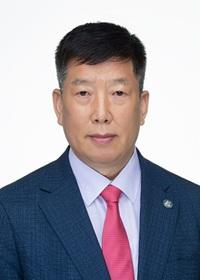
◆ Commissioner Park Pil-gyu
Editorial Board Member, Korea-U.S. Daily
Korea Military Academy, 40th Graduating Class

 Iranian Foreign Ministry: "Continuing Message Exchanges with the U.S. and Activities of Mediating Countries"
Esmaeil Baghaei, Spokesperson for the Iranian Ministry of Foreign Affairs [Xinhua, Yonhap News file photo]Esmaeil Baghaei, spokesperson for the Iranian Ministry of Foreign Affairs, stated on the 26th
Iranian Foreign Ministry: "Continuing Message Exchanges with the U.S. and Activities of Mediating Countries"
Esmaeil Baghaei, Spokesperson for the Iranian Ministry of Foreign Affairs [Xinhua, Yonhap News file photo]Esmaeil Baghaei, spokesperson for the Iranian Ministry of Foreign Affairs, stated on the 26th
 President Yoon: "Do You Think You Are Safe from the Special Counsel?"... Final Statement Video Released
President Yoon Suk Yeol rebuking the special prosecutor on the 24th. [Court video / @birds_justice X account subtitle GIF] A video of President Yoon Suk Yeol's closing statement at his trial rega
President Yoon: "Do You Think You Are Safe from the Special Counsel?"... Final Statement Video Released
President Yoon Suk Yeol rebuking the special prosecutor on the 24th. [Court video / @birds_justice X account subtitle GIF] A video of President Yoon Suk Yeol's closing statement at his trial rega
 President Yoon, regarding the first-instance ruling on the Public Official Election Act: “An excessive political verdict that distorts the facts… We will appeal immediately.”
The first-instance sentencing hearing for President Yoon Suk Yeol regarding violations of the Public Official Election Act is being broadcast live at Seoul Station on the 27th. [Photo=Yonhap News]Pres
President Yoon, regarding the first-instance ruling on the Public Official Election Act: “An excessive political verdict that distorts the facts… We will appeal immediately.”
The first-instance sentencing hearing for President Yoon Suk Yeol regarding violations of the Public Official Election Act is being broadcast live at Seoul Station on the 27th. [Photo=Yonhap News]Pres
 WSJ: "SK Hynix ADR Premium Is a Sign of AI Trading Overheat"
Advertisement for SK Hynix ADR listing in New York's Times Square [Reuters=Yonhap News file photo]The Wall Street Journal (WSJ) has pointed out that the price of SK Hynix’s American Depositary Recei
WSJ: "SK Hynix ADR Premium Is a Sign of AI Trading Overheat"
Advertisement for SK Hynix ADR listing in New York's Times Square [Reuters=Yonhap News file photo]The Wall Street Journal (WSJ) has pointed out that the price of SK Hynix’s American Depositary Recei
 'Godfather of Japanese Mystery Novels' Keigo Higashino Passes Away After Battle with Cancer at 68
Famous Japanese mystery novelist Keigo Higashino [AFP=Yonhap News]It has been belatedly reported that Keigo Higashino, the "godfather of Japanese mystery novels" and author of bestsellers such as "The
'Godfather of Japanese Mystery Novels' Keigo Higashino Passes Away After Battle with Cancer at 68
Famous Japanese mystery novelist Keigo Higashino [AFP=Yonhap News]It has been belatedly reported that Keigo Higashino, the "godfather of Japanese mystery novels" and author of bestsellers such as "The
 [Park Pil-kyu Security Column] To the Ignorant Trying to Clothe a Beast in Sheep's Clothing
Rep. Kim Byung-joo of the Democratic Party of Korea [Photo=Yonhap News]“The Air Force Academy doesn't teach you how to fly a plane!” “The Army, Navy, and Air Force academies are exactly the
[Park Pil-kyu Security Column] To the Ignorant Trying to Clothe a Beast in Sheep's Clothing
Rep. Kim Byung-joo of the Democratic Party of Korea [Photo=Yonhap News]“The Air Force Academy doesn't teach you how to fly a plane!” “The Army, Navy, and Air Force academies are exactly the
 [Issue Diagnosis] Two Effects of the Election Petition Review
 [Photo] Evidence of Election Fraud Flooding U.S. Media… Trump Had 2.7 Million Votes Stolen
 [Video] U.S. Semiquincentennial Air Show... 'Art in the Sky' streaks across New York
 [Editorial Cartoon] A Draconian Law That Undermines Freedom of Expression

 List
List









