 A still from a video of Kim Dae-jung’s speech in Jeongeup, Jeonbuk, on May 11, 1980
Jung Chung-rae, a former Supreme Council member of the Democratic Party of Korea currently preparing to run for party leadership, visited the birthplace of former President Kim Dae-jung on Haui-do Island, Sinan-gun, Jeollanam-do, on the 4th. In a Facebook post following his visit, he stated, "President Kim Dae-jung’s spirit will continue to nurture democracy in this land and inspire even greater dreams," adding, "I will think like Kim Dae-jung and act like Kim Dae-jung. I will become a conscience in action." The "Kim Dae-jung spirit" is a repertoire treated as a sacred dogma not only by Jung Chung-rae but by all figures within the Democratic Party.
However, Kim Dae-jung was an unrepentant communist who had been a key operative of the South Korean Workers' Party (Namnodang) since immediately after liberation in 1945. He served as a member of the Central Inspection Committee of the Namnodang and, long before he was sentenced to death for insurrection related to the May 18 Gwangju Democratization Movement, there were allegations that he received operational funds and support from North Korean agents as early as the start of his political career. According to Son Chung-moo’s "Kim Dae-jung X-File" and the book "Kim Il-sung’s Dream Was to Make Kim Dae-jung the President of South Korea," membership documents for the Namnodang written by Kim Dae-jung immediately after the 1945 liberation remain in Japanese public security records. It is also alleged that during the 1967 general election, he received massive operational funds and support from North Korean agents to be elected as a National Assembly member in Mokpo.
Kim Hyung-wook, who served as Director of the Korea Central Intelligence Agency (KCIA) and was suspected of amassing tens of millions of dollars in illicit funds in foreign banks in Switzerland and Japan, revealed the full story of the "Imjado Spy Ring Incident" related to Kim Dae-jung in his memoirs published in 1985 after defecting to the United States. When a North Korean spy ship arrived at Imjado, the KCIA and police obtained intelligence, captured the ship, and arrested 118 members of the spy ring operating in South Korea. Kim Dae-jung and three operatives who had helped him during the general election were also arrested.
Kim Hyung-wook, the investigation chief at the time, was himself in trouble over suspicions of illicit wealth accumulation. After the high-profile opposition politician Kim Dae-jung knelt before him and pledged loyalty, Kim Hyung-wook released him following a political deal and did not report Kim Dae-jung’s arrest to Park Chung-hee. Several others arrested in connection with the spy ring were sentenced to death after trial, and their sentences were carried out.
Kim Dae-jung was sentenced to death in 1981 on charges of insurrection related to the May 18 movement but was later pardoned by the Chun Doo-hwan administration. After being elected president in 1997, he provided billions of dollars in slush funds to North Korea under the guise of the "Sunshine Policy," aiding the regime's development of nuclear weapons and missiles. He was also at the center of ongoing allegations of election fraud in South Korea, such as the introduction of electronic counting machines, and faced accusations of suppressing the press and receiving astronomical amounts of illegal political funds from corporations.
Kim Dae-jung disparaged Park Chung-hee’s arduous industrialization efforts aimed at creating something from nothing. Adhering to a shallow leftist "popular economic theory" based on Latin American dependency theory, he opposed Park’s focus on heavy and chemical industries after the Yushin Reforms, advocating instead for a consumption-oriented industrial structure driven by light industry for domestic use. He argued against foreign capital and the export-driven economy dominated by conglomerates, favoring small and medium-sized enterprises for import substitution and self-sufficient local industries. He remained a regressive, defeatist thinker who believed that highways, steel mills, and shipyards were unnecessary and unfeasible, and that an export-oriented open economy would eventually fail in international competition and become dependent on developed nations. Had Kim Dae-jung’s policies been followed, South Korea’s industrialization today would not exist.
Former KCIA Director Kim Hyung-wook’s 1972 book "Communist Activities and Reality" lists Kim Dae-jung as a "Central Committee Member of the Democratic National Front," a front organization for the Namnodang, while Lee Tae-ho’s book "The Last Hero, Kim Dae-jung" introduces him as the Vice Chairman of the Mokpo region for the "Democratic Youth League," a Namnodang front. The first volume of the Namnodang’s official publication "Liberation Front," published in 1947, lists Kim Dae-jung as a member of the Namnodang Central Committee, and Kim Nam-sik, a researcher at Kim Dae-jung’s Asia Pacific Peace Foundation, recorded him as a Namnodang Inspection Committee member in "A Study of the Namnodang, Vol. 1."
According to Son Chung-moo’s "Kim Dae-jung X-File," Kim Dae-jung traded with Kim Il-sung for a long time through the pro-North Korean Japanese politician Tokuma Utsunomiya, and Kim Il-sung supported him. When Kim Dae-jung was selected as the Democratic Party’s presidential candidate in 1971, Kim Byong-sik, the international director of the General Association of Korean Residents in Japan (Chongryon), delivered $200,000 in operational funds to Kim Dae-jung at the Tokyo Plaza Hotel. In 1971, $200,000 was equivalent to $20 million today. After Kim Dae-jung was arrested by the Martial Law Command in 1980 for the May 18 insurrection, the Joint Investigation Headquarters discovered that Chongryon had delivered 6.1 billion yen in North Korean funds to Kim Dae-jung. Just before the 2000 inter-Korean summit, Kim Dae-jung withdrew the 6.1 billion yen—which had been deposited in a Japanese bank under his name—along with 30 years of accrued interest, totaling 10 billion yen, and delivered it to Kim Jong-il. In 2007, the Tokyo Metropolitan Police raided the Chongryon headquarters and seized classified ledgers that revealed the funds provided to Kim Dae-jung and the Korea Democratic Unification Union (Hanmintong), but the issue was not raised because Kim Dae-jung had handed over Dokdo’s golden fishing grounds to Japan during his presidency.
According to Son Chung-moo, at a 1974 meeting in Pyongyang where Kim Il-sung invited pro-North Korean politicians from Japan’s Socialist and Liberal Democratic parties, Kim Il-sung remarked that he trusted Kim Dae-jung the most among South Korean politicians and that Kim Dae-jung had never betrayed North Korea. Hwang Jang-yop, who defected to South Korea in 1997, testified that there were 50,000 North Korean spies in the South, that Kim Dae-jung was at the top of the list, that the North Korean leadership was fully aware that Kim Il-sung had provided operational funds to Kim Dae-jung for a long time, and that the North believed unification through a Koryo Confederal Republic would be achieved once Kim Dae-jung became president. After his election in 1997, Kim Dae-jung repaid years of support from Kim Il-sung and Kim Jong-il by delivering $800 million to Kim Jong-il before holding a summit in Pyongyang. Over the next decade, the Kim Dae-jung and Roh Moo-hyun administrations transferred nearly $10 billion to Kim Jong-il, aiding North Korea’s development of nuclear weapons and missiles.
In 2003, as the Roh Moo-hyun administration took office and a special prosecutor began investigating Kim Dae-jung’s secret remittances to North Korea, Hyundai Group Chairman Chung Mong-hun jumped to his death from the 12th floor of the Hyundai Group building in Gye-dong, Jongno-gu, Seoul. At the time, Chung had been drinking with a friend in Gangnam; after dropping the friend off at the Hyatt Hotel and heading toward his home in Seongbuk-gu, he told his driver to go to the Hyundai headquarters. Upon arrival, he told the driver he would be out in 20 or 30 minutes, entered his 12th-floor office, and was found dead on the first-floor flowerbed the next morning. While the investigation concluded it was a suicide, doubts remain regarding the possibility of murder—specifically that he was thrown out of the window—given his instructions to the driver, the narrow window dimensions that would have made jumping difficult, and other circumstances. With the death of Chung Mong-hun, who held the key to the Kim Dae-jung administration’s North Korean remittances, the special prosecutor’s investigation could not progress further, and the case was closed after confirming $450 million in transfers. Apart from the $450 million provided to Kim Jong-il by Kim Dae-jung and Chung Mong-hun, Kim Dae-jung enabled Hyundai Group to start the Mount Kumgang tourism project to bypass UN and North Korean sanctions, through which North Korea secured $4 billion in foreign currency.
After Kim Dae-jung’s election, Kim Jong-il publicly criticized him through North Korean media to pressure him for more support. The January 2001 issue of "Bungeishunju" reported that it had obtained three "instructions" from Kim Jong-il issued in 1999, in which Kim Jong-il explained his collusive relationship with Kim Dae-jung and criticized him for betraying Kim Il-sung’s grace despite becoming president. The North Korean broadcast "Voice of National Salvation" ran a propaganda campaign in 1999 exposing Kim Dae-jung’s corruption, claiming he began handling illicit money as an accountant for a Japanese shipping company before liberation, pocketed illegal political funds from the ruling party and conglomerates as an opposition politician, sold party nominations, and after becoming president, embezzled $1 billion—the remainder of illegal slush funds received from dozens of large corporations—into foreign banks in Switzerland and Singapore. North Korea produced and distributed newspapers containing the same information worldwide to pressure Kim Dae-jung into handing over large sums of money to Pyongyang. The "Minjon" newspaper also reported that Kim Dae-jung received $310,000 from Chun Doo-hwan and 30 billion won from Roh Tae-woo to found the Peace and Democracy Party, and 80 billion won from conglomerates.
The book "The Day of Kim Jong-il’s Ruin," published in Japan in December 2004 by Hiromichi Mido, cited US intelligence sources reporting that during the 2000 inter-Korean summit, Kim Jong-il showed Kim Dae-jung his Namnodang membership documents and data on funds provided by Kim Il-sung since 1967 to pressure him. The report alleged that Kim Dae-jung secretly agreed to a North-South peace treaty, the abolition of the National Security Act, the withdrawal of US forces from Korea, and the North-South federal system. After Kim Dae-jung’s visit to Pyongyang in 2000, he pushed for Kim Jong-il to visit Seoul in May 2001. A secret document regarding a North-South peace declaration in which Kim Dae-jung and Kim Jong-il would announce peace and the withdrawal of US forces was leaked, causing the US to intervene and the plan for Kim Jong-il’s visit to be scrapped.
Inheriting the IMF economic crisis at the end of the Kim Young-sam administration, Kim Dae-jung was criticized for "leaking national wealth" by selling off many companies at bargain prices—including profitable ones with solid financial structures and others experiencing temporary liquidity issues—under the pretext of overcoming the crisis. There were also suspicions that Kim Dae-jung and his aides pocketed massive slush funds and business interests during the opaque corporate restructuring and public fund injection process. Choi Soon-young, chairman of Shindong-A Group, testified that his group was dismantled for refusing to provide as much election funding to Kim Dae-jung in the 1997 election as he had provided to Kim Young-sam in 1992, stating, "They (the powers that be in the DJ regime) swarmed like starving wolves and tore apart a 20 trillion won company." Choi Won-suk, chairman of Dong-A Group, claimed that his profitable company was included in restructuring targets without any analysis or investigation by experts, and that the sale process was opaque and coercive, including clauses prohibiting the disclosure of contract details.
Unlike Choi Won-suk and Choi Soon-young who refused to provide election funds, Kim Woo-choong, chairman of Daewoo Group, had provided massive amounts of political funds to Kim Dae-jung for many years. However, after the Kim Dae-jung administration took office, Kim Woo-choong was driven into exile and Daewoo Group was dismantled. According to Kim Woo-choong, Kim Dae-jung had told him that if he stayed abroad for a while, he would be able to take over Daewoo Motors again. However, once Kim Woo-choong left the country, the Kim Dae-jung administration turned him into a fugitive and dissolved the Daewoo Group. In his 2007 memoir, then-US Federal Reserve Chairman Alan Greenspan stated that during the 1997 Asian financial crisis, he decided to provide South Korea with a debt moratorium and $55 billion in IMF bailout funds after consulting with President Bill Clinton and Treasury Secretary Robert Rubin to prevent global financial market risks caused by a potential Korean default. However, Greenspan pointed out that Kim Dae-jung made a mistake by selling off Korean companies at bargain prices, leading to the outflow of national wealth.
Under the Kim Dae-jung administration, US companies acquired Korean corporations and financial institutions like Daewoo and Korea Exchange Bank at bargain prices. Lone Star, which acquired Korea Exchange Bank, withdrew after a few years with a profit of 5 trillion won—five times its investment—and most US companies that acquired Korean firms, including GM which bought Daewoo Motors, soon posted profits and saw their company values multiply. The logic that Daewoo collapsed due to excessive debt was that of the Kim Dae-jung administration and the IMF; there is no US corporation that operates without debt. In his autobiography, Trump noted that he succeeded in his early career by acquiring distressed real estate using mostly bank loans. The concept of growing a company with bank debt is the same in capitalist market economies in both Korea and the US; the only issue is whether one can manage a company well, like Trump or Kim Woo-choong. The difference is that Daewoo did not have the support of Wall Street or the IMF, whereas the US companies did. Even small self-employed business owners have bank loans, and if they are pressured to repay them, they will collapse.
When the 2008 global financial crisis hit, sparked by the decline in US real estate prices and the bankruptcy of Wall Street financial institutions, the US government—despite criticism that it contradicted capitalist and market economic principles—provided trillions of dollars in astronomical bailout funds to save American financial institutions and companies like GM. This was the exact opposite of the US stance during the Asian financial crisis ten years prior, when it disparaged Asia, citing a lack of transparency, moral hazard, and "outdated Asian values." The US printed unlimited dollars to fund the bailouts and implemented a zero-interest-rate policy to stimulate the economy. It was the same IMF and US that had demanded 30% interest rates, restructuring, and the opening of foreign exchange and corporate markets as conditions for liquidity support to Korea during the IMF crisis.
In a 2009 press conference, IMF Managing Director Dominique Strauss-Kahn acknowledged that the IMF had failed to predict either the Asian financial crisis or the New York-originated financial crisis, that its economic growth forecasts were inaccurate, and that the excessive regulatory measures imposed on countries like Korea during the Asian financial crisis had caused many problems. He admitted that countries with strong economic fundamentals but suffering from liquidity issues should be provided with funds without conditions. This highlights the double standard of the US and IMF policies and the image of Kim Dae-jung, who was mocked for playing along with them, leaking national wealth, and "selling off the country" that Kim Young-sam had already ruined.
There are suspicions that Kim Dae-jung created a team to secure a Nobel Peace Prize immediately after taking office. Kim Ki-sam, a former National Intelligence Service (NIS) employee living in exile in the US, testified that Kim Dae-jung formed a "Nobel Prize Team" in the Blue House and the NIS, inviting Nobel laureates, as well as politicians, religious leaders, and journalists from Norway, Finland, Sweden, and Denmark, to promotional events for his Sunshine Policy and to inter-Korean family reunion sites to exert direct or indirect influence on the Nobel Committee. According to a report in the December 2000 issue of the Japanese monthly "Gendai," Kim Dae-jung’s aides lobbied the Nobel Committee to have Kim Dae-jung receive the prize jointly with Kim Jong-il. However, Kim Jong-il was excluded due to North Korean human rights issues and the US designation of North Korea as a state sponsor of terrorism. Kim Dae-jung announced that he would use the $1 million Nobel Peace Prize money for welfare projects. However, the April 2002 issue of "Shindonga" reported that Kim Dae-jung had donated the prize money to the Asia Pacific Peace Foundation, and the foundation had hidden it in a separate account.
Kim Dae-jung was sentenced to death in 1981 for insurrection related to the May 18 movement but was pardoned and reinstated by the Chun Doo-hwan administration. The original Supreme Court ruling was that the May 18 event was an armed riot and insurrection instigated by Kim Dae-jung with North Korean support. However, after Kim Young-sam took office in 1993, he and Kim Dae-jung manipulated the narrative, rebranding the May 18 movement from an insurrection to a "democratization movement." Immediately after the Kim Young-sam administration launched, the prosecution dismissed the investigation into the 12.12 incident on the logic that a "successful coup" could not be punished. However, when the 400 billion won slush fund scandal involving Roh Tae-woo emerged in 1995, Kim Young-sam ordered the prosecution to reinvestigate Chun Doo-hwan and Roh Tae-woo. The resulting investigation and trial changed the historical record: 12.12 was classified as a rebellion during a legitimate investigation by the Defense Security Command, and May 18 was changed from a Gwangju riot to a democratization movement. Chun Doo-hwan and Roh Tae-woo were sentenced to prison and ordered to pay 220 billion won and 260 billion won respectively in penalties for illegal political funds; even after being pardoned, these penalties were pursued until their deaths.
When the Roh Tae-woo slush fund case broke, Kim Young-sam collaborated with Kim Dae-jung to create the May 18 Special Act to cover up the 300 billion won in illegal political funds he himself had received from Roh, punish Chun and Roh for the 12.12 insurrection and violation of the Political Funds Act, and bury his own and Kim Dae-jung’s illegal funding. In his memoirs, Roh Tae-woo stated that he delivered 300 billion won in election funds to Kim Young-sam, the Democratic Liberal Party candidate, in the 1992 presidential election. The April 16, 1998 issue of "Weekly Donga" stated that the illegal campaign funds used by Kim Young-sam totaled 303.4 billion won. When the scandal broke, Kim Dae-jung admitted to receiving 2 billion won in political funds from Roh Tae-woo during the 1992 election. Unlike Roh, however, Kim Dae-jung immediately launched a counterattack, stating that since he, an opposition candidate, had received 2 billion won, the ruling party candidate Kim Young-sam should reveal how much he had received.
The Democratic Liberal Party raised the "2 billion won + alpha" theory and demanded the full disclosure of Kim Dae-jung’s political funds. Ahead of the 1997 presidential election, the New Korea Party, the successor to the Democratic Liberal Party, filed a complaint with the Supreme Prosecutors' Office accusing opposition candidate Kim Dae-jung of managing 37.8 billion won in slush funds. Kim Young-sam summoned Prosecutor General Kim Tae-jung and ordered the investigation to stop. Lee Hoi-chang, the New Korea Party candidate who lost the 1997 election to Kim Dae-jung due to Kim Young-sam’s betrayal, wrote in his memoir that Kim Young-sam’s decision was motivated by fears that the investigation into Kim Dae-jung’s slush funds would spread to his own 1992 campaign funds. Kim Tae-jung, who halted the investigation, became Minister of Justice after Kim Dae-jung took office, and the investigation into Kim Dae-jung’s bribery was buried.
Even after the May 18 Special Act created by Kim Young-sam and Kim Dae-jung, May 18 remains a highly divisive issue between the left and right, with unconstitutional lawsuits continuously filed with the Constitutional Court. The leftist regime did not hesitate to enact unconstitutional legislation to punish those who criticize the event. However, testimonies and evidence of North Korean military intervention in May 1980 continue to emerge from prosecution records and witness accounts. Kwon Young-hae, Director of the Agency for National Security Planning (ANSP) under the Kim Young-sam administration, testified that during his tenure, he confirmed the existence of a cemetery for North Korean "heroes" who died during the May 18 infiltration in Chongjin, and that this was recorded in North Korean textbooks.
Selection of "May 18 people of merit" is handled by the merit recipients' own organization, not the state, while funding is provided by the government. Through the state budget, not only the individuals but even their descendants receive all sorts of compensation and special treatment. The fact-finding committee, dominated by the May 18 merit group, excludes any testimony or evidence related to armed riots or North Korean military intervention. The list of merit recipients and the reasons for their selection are not disclosed. In a media interview, Hwang Jang-yop was asked about North Korean involvement in May 18; he replied that the truth would naturally be revealed after reunification. As a careful statement made after the inauguration of the Lee Myung-bak administration—which allowed him a chance to speak openly after 10 years of being under house arrest during the Kim Dae-jung and Roh Moo-hyun administrations—it was a cautious remark. He felt burdened to speak properly under the Lee Myung-bak administration, whose ideological identity was ambiguous. Hwang actually restrained his fellow defector, Kim Duk-hong, when he tried to speak more directly, leading Kim to protest, "Why won't you let me speak?"
The controversy over disparaging May 18, sparked by the Starbucks "Tank Day" event and the "Let's Go to Starbucks" cheer song by Baejae High School baseball students, is a result of the pro-North Korean left’s lack of confidence, as they are restless and anxious, knowing they cannot hide the sky with their palms.
The constitutional controversy surrounding the May 18 Special Act created by Kim Young-sam and Kim Dae-jung, and the May 18 Defamation Prevention Act created by Moon Jae-in’s Democratic Party, exposes the fragile foundation of the Special Act. It suggests the possibility of the Constitutional Court declaring the law unconstitutional or the Supreme Court overturning the May 18 verdict through retrials even before the unification mentioned by Hwang Jang-yop.
The pinnacle of North Korea’s operation to communize the South is the suspicion of election fraud. Election fraud is a shortcut to communizing South Korea without the difficult armed struggle seen in May 18 or the Korean War. And the figure at the center of the South Korean election fraud allegations is Kim Dae-jung. Arriving at Pyongyang Sunan Airport for the June 15, 2000, inter-Korean summit, Kim Dae-jung violated security protocols, entered Kim Jong-il’s private vehicle without his security detail, and held a 45-minute private conversation. According to media reports on the content of the conversation obtained by US intelligence, Kim Jong-il instructed Kim Dae-jung to make Roh Moo-hyun the next Democratic Party presidential candidate. When Kim Dae-jung noted that Roh’s recognition was lower than that of Chung Dong-young or Han Hwa-kap, Kim Jong-il cited the fact that Roh’s father was from the Honam region and that his father-in-law was a partisan, stating that public opinion and awareness could be overcome through propaganda and agitation, and said, "Let us do much research on the election issue."
As a result of the talks, electronic counting machines were introduced for the first time in 2002, and Roh Moo-hyun surpassed his competitors to be elected president that December. The electronic counting system introduced in 2002 was managed by companies including Kwanwoo Information & Telecommunications, Hantul System, and SK C&C, and officials from these companies were indicted for bribery regarding the National Election Commission. During the trial, there was a confession from a representative of the manufacturing company that Kim Dae-jung, Lee Hae-chan, and Park Jie-won had ordered the production of rigged electronic counting machines, but the prosecution did not investigate. Since then, during the Kim Dae-jung and Roh Moo-hyun administrations, allegations have emerged regarding inter-Korean communication network projects, the leftist regime’s ties to the Dasan Group and Korea Electronic Voting Co., and suspected manipulation of the National Election Commission network via Huawei backdoors.
Elon Musk, CEO of SpaceX and Tesla, stated that as a computer expert, he knows that computer programs are too easy to hack and that electronic voting systems should all be abolished. Following the advice of his son, an IT businessman in the US, Son Chung-moo sent a letter to opposition presidential candidate Lee Hoi-chang during the 2002 election: "My eldest son William, an IT expert, advised that electronic counting machines should not be used because they are susceptible to manipulation. He said they are machines that can be easily rigged if just two or three people look the other way. After several experiments in the US, it was confirmed that they are easily manipulated, and more states are stopping their use. The Philippine Supreme Court ruled against using electronic counting machines imported from Korea. Nevertheless, the clueless Grand National Party and Lee Hoi-chang’s aides used them and lost to Roh Moo-hyun." (Son Chung-moo, "Slush Funds: The Final Conspiracy of Kim Dae-jung and Kim Jong-il")
In 2001, Kim Dae-jung said regarding North Korea’s nuclear development suspicions: "The North has never developed nuclear weapons, and it has no ability to do so. The claim that aid to the North is being misused for nuclear development is ridiculous rumor-mongering. If the North develops nuclear weapons, I will take responsibility." In 2010, the Lee Myung-bak administration revealed that the money and goods Kim Dae-jung provided to North Korea amounted to $6.9 billion, and that there were circumstances indicating it was used for nuclear weapons development. Immediately after his visit to Pyongyang, Kim Dae-jung ordered the removal of landmines and anti-tank obstacles on the Kaesong-Munsan axis, a route for North Korean invasion, under the pretext of restoring the Gyeongui Line. After taking power in 1998, he fired 581 NIS counter-espionage agents, specially hired about 500 lawyers from the pro-North leftist Minbyun, and ousted thousands of counter-espionage police officers, military security command agents, and public security prosecutors. In the 1989 Dong-eui University incident, where students protesting entrance exam irregularities held 5 riot police officers hostage and burned 7 policemen to death during a rescue operation, the ringleaders were sentenced to life imprisonment; however, the Kim Dae-jung administration’s Compensation Committee designated 46 of the involved students as "democratization activists" in 2002 and paid 600 million won in compensation to the ringleader.
After taking office, Kim Dae-jung conducted an unprecedented tax investigation into media companies, imposing a staggering 505.6 billion won in fines. The fines imposed on the Chosun, JoongAng, and Dong-A Ilbo, which were critical of his administration, accounted for more than half of the total. Amid criticism that he was muzzling conservative media under the guise of tax audits, Kim Dae-jung arrested the owners of these papers—Bang Sang-hoon, Hong Seok-hyun, and Kim Byung-kwan—on tax evasion charges. As their relatives, families, and friends were also subjected to tax investigations and summoned by the prosecution, Kim Byung-kwan’s wife jumped from her apartment to her death. These conservative media outlets subsequently recruited many journalists from the Honam region and shifted rapidly to the left to restore relations with the Kim Dae-jung regime. It is a typical communist tactic to use democracy to destroy democracy.
In June 1999, during the First Battle of Yeonpyeong, North Korean ships violated the Northern Limit Line in the West Sea. Our Navy, which had been fighting only with encirclement maneuvering and hull-collision tactics under guidelines to "never fire first," immediately counterattacked when the North opened fire, achieving a total victory. However, Commander Park Jeong-seong of the Second Fleet, who led the great victory, was demoted instead of receiving a medal. Bound by Kim Dae-jung’s ban on preemptive fire, our Navy’s Chamsuri patrol boat was unilaterally fired upon by North Korean ships during the Second Battle of Yeonpyeong on June 29, 2002, resulting in 6 deaths and 18 injuries. Leaving behind national grief and anger, Kim Dae-jung went to Japan the next day for the World Cup closing ceremony, watching the Brazil-Germany final match with a wide smile and waving happily. This is the reality of the "Kim Dae-jung spirit" held by Jung Chung-rae and the Democratic Party, and the result of thinking and acting like Kim Dae-jung.
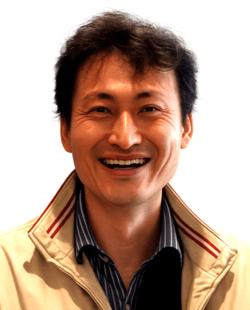
◆ Hwang Doo-hyung
Former Washington Correspondent for Yonhap News
Former Deputy Managing Editor of Yonhap News

 Iranian Foreign Ministry: "Continuing Message Exchanges with the U.S. and Activities of Mediating Countries"
Esmaeil Baghaei, Spokesperson for the Iranian Ministry of Foreign Affairs [Xinhua, Yonhap News file photo]Esmaeil Baghaei, spokesperson for the Iranian Ministry of Foreign Affairs, stated on the 26th
Iranian Foreign Ministry: "Continuing Message Exchanges with the U.S. and Activities of Mediating Countries"
Esmaeil Baghaei, Spokesperson for the Iranian Ministry of Foreign Affairs [Xinhua, Yonhap News file photo]Esmaeil Baghaei, spokesperson for the Iranian Ministry of Foreign Affairs, stated on the 26th
 Yoon “Do you think you’ll be safe from a special prosecutor?”... Final statement video released
President Yoon Suk Yeol rebuking the special prosecutor on the 24th. [Court Video / Subtitled GIF from @birds_justice X account] A video of President Yoon Suk Yeol’s final statement during his trial
Yoon “Do you think you’ll be safe from a special prosecutor?”... Final statement video released
President Yoon Suk Yeol rebuking the special prosecutor on the 24th. [Court Video / Subtitled GIF from @birds_justice X account] A video of President Yoon Suk Yeol’s final statement during his trial
 President Yoon, regarding the first-instance ruling on the Public Official Election Act: “An excessive political verdict that distorts the facts… We will appeal immediately.”
The first-instance sentencing hearing for President Yoon Suk Yeol regarding violations of the Public Official Election Act is being broadcast live at Seoul Station on the 27th. [Photo=Yonhap News]Pres
President Yoon, regarding the first-instance ruling on the Public Official Election Act: “An excessive political verdict that distorts the facts… We will appeal immediately.”
The first-instance sentencing hearing for President Yoon Suk Yeol regarding violations of the Public Official Election Act is being broadcast live at Seoul Station on the 27th. [Photo=Yonhap News]Pres
 WSJ: "SK Hynix ADR Premium Is a Sign of AI Trading Overheat"
Advertisement for SK Hynix ADR listing in New York's Times Square [Reuters=Yonhap News file photo]The Wall Street Journal (WSJ) has pointed out that the price of SK Hynix’s American Depositary Recei
WSJ: "SK Hynix ADR Premium Is a Sign of AI Trading Overheat"
Advertisement for SK Hynix ADR listing in New York's Times Square [Reuters=Yonhap News file photo]The Wall Street Journal (WSJ) has pointed out that the price of SK Hynix’s American Depositary Recei
 'Godfather of Japanese Mystery Novels' Keigo Higashino Passes Away After Battle with Cancer at 68
Famous Japanese mystery novelist Keigo Higashino [AFP=Yonhap News]It has been belatedly reported that Keigo Higashino, the "godfather of Japanese mystery novels" and author of bestsellers such as "The
'Godfather of Japanese Mystery Novels' Keigo Higashino Passes Away After Battle with Cancer at 68
Famous Japanese mystery novelist Keigo Higashino [AFP=Yonhap News]It has been belatedly reported that Keigo Higashino, the "godfather of Japanese mystery novels" and author of bestsellers such as "The
 [Park Pil-kyu Security Column] To the Ignorant Trying to Clothe a Beast in Sheep's Clothing
Rep. Kim Byung-joo of the Democratic Party of Korea [Photo=Yonhap News]“The Air Force Academy doesn't teach you how to fly a plane!” “The Army, Navy, and Air Force academies are exactly the
[Park Pil-kyu Security Column] To the Ignorant Trying to Clothe a Beast in Sheep's Clothing
Rep. Kim Byung-joo of the Democratic Party of Korea [Photo=Yonhap News]“The Air Force Academy doesn't teach you how to fly a plane!” “The Army, Navy, and Air Force academies are exactly the
 [Issue Diagnosis] Two Effects of the Election Petition Review
 [Photo] Evidence of Election Fraud Flooding U.S. Media… Trump Had 2.7 Million Votes Stolen
 [Video] U.S. Semiquincentennial Air Show... 'Art in the Sky' streaks across New York
 [Editorial Cartoon] A Draconian Law That Undermines Freedom of Expression

 List
List









