 A scene from the movie Rambo.
“Rat-tat-tat, rat-tat-tat, rat-tat, rat-tat, rat-tat-tat.”
After seizing an M60 machine gun from the police armory, Rambo wreaks havoc on the gas station and police station in a small town in Washington state.
The gas station erupts in flames, and the police station is shattered along with all its equipment. The half-dozen police officers who had belittled him, handcuffed him, and tortured him scramble out screaming, engulfed in fire. Rambo breaks their noses and crushes their faces as they run out.
I first watched this movie when I was in my late 30s, and even now, approaching my late 70s, it still gives me a sense of profound catharsis.
It has already been over ten years since I canceled my subscription to the Chosun Ilbo. A few days ago, hoping that perhaps they might have turned over a new leaf, I browsed their articles online. I saw a piece by the senile Kim Dae-joong, arguing that People Power Party representative Jang Dong-hyeok should face a vote of confidence from party members and resign if he fails to secure at least 50% support. I cursed to myself and shut down my computer.
Still feeling restless, I turned on TV Chosun. On the 9:00 news, even the anchor seemed to step beyond the role of a moderator, acting as if they were advocating for representative Jang Dong-hyeok's resignation.
I could not shake the impression that the newspapers and broadcasters—the same ones that led the drive for Shinto shrine worship alongside Yi Gwang-su during the late colonial period, believing Japan would last for a hundred years—had become fervent supporters of Han Dong-hoon.
I changed the channel. That falls under my own discretion. Sometimes, doing so brings a strange sense of pleasure.
The young, muscular, and dependable Sylvester Stallone appeared. A 1982 film. This is the story of how, exactly 44 years later, I came to revisit my role model: Rambo.
While the structure of public authority varies by state, the movie’s town sheriff wields absolute power, controlling not only the police but even the National Guard, and dares to hurl insults even at Colonel Trautman, Rambo’s former commanding officer.
Rambo, a Vietnam War hero and former U.S. Army Green Beret, visits a comrade-in-arms only to find he has already passed away due to the aftereffects of Agent Orange.
Wandering alone, Rambo enters a small town, but the sheriff drives him out for no reason. With nowhere else to go, Rambo returns, only to be arrested, locked in a cell, and subjected to abuse and humiliation. When they force him to shave, the memory of being captured and tortured as a prisoner of war in Vietnam resurfaces. He neutralizes the officers, escapes, and disappears into the mountains.
Sheriff Teasle mobilizes a massive police force and even the National Guard to hunt Rambo down, but the human weapon that is Rambo chooses to incapacitate rather than kill, warning them, “Don’t push it.”
The chase continues, but Teasle, who had intended to kill Rambo, ends up beaten and trampled by him, only to be carted off in an ambulance. The film implies he won’t last long.
Finally, Colonel Trautman appears to reason with Rambo. Overwhelmed, Rambo finally breaks down in sobs.
He screams about how, after handling millions of dollars worth of equipment on the battlefield, he returned home only to be abandoned by society, unable to even land a job as a parking attendant. Remembering his fallen comrades, he finally lays down his weapon and surrenders.
Just as I was about to rise from the sofa, the screen displayed the text: ‘NEXT, Rambo 2.’ It was a jackpot. I would be able to watch Rambo 2 as well.
During the commercials, I couldn’t help but link the sheriffs in American movies to the reality of the South Korean police, who hold immense power, including the authority of the prosecution.
I thought of the helplessness felt by the husband and daughter of Lee Jin-sook as they watched her being forcibly handcuffed, and the humiliation likely felt by People Power Party representative Jang Dong-hyeok and the five assembly members who visited the Gwangju Police Station—the very station that systematically protected Jang Yoon-gi, who had raped and murdered a 17-year-old high school girl in Gwangju.
If they treat members of the National Assembly like transparent beings with such utter contempt, it’s no wonder they would think nothing of thousands of police officers dragging away a 70-year-old man, old enough to be their own father, at Olympic Park.
After the events of the first film, Rambo, who had been imprisoned, is released under a secret mission proposed by his former commander, Colonel Trautman: to confirm the status of American POWs who might still be alive in Vietnam.
While high-ranking Ministry of Defense officials instruct him only to take photographs, Rambo cannot bring himself to leave the prisoners behind once he discovers them, and proceeds to rescue them. However, his superiors are more interested in political optics than the rescue, eventually detaining even Colonel Trautman for trying to support Rambo.
With the help of a Vietnamese woman, Rambo rescues the prisoners, though she loses her life to enemy fire. Enraged, Rambo fights off the Vietnamese army and Soviet military advisors alone and returns with the POWs.
Upon his return, Rambo plunges his combat knife into the table right next to the head of his superior, who makes excuses that he was only following orders. The knife sticks into the table, inches from his face. Rambo shouts:
“I want what you want! And every other guy who came over here and spilled his guts and gave everything he had, wants! For our country to love us as much as we love it!”
Refusing to return, Rambo leaves, saying he will “live day by day.”
Even after I went to bed, the final image of Rambo walking away aimlessly stayed with me.
At the same time, I was reminded of South Korean Minister of National Defense Ahn Gyu-baek. Much “dirtier” than any U.S. Secretary of Defense, he stayed mute like a deaf-mute when told to “sue if he’s not a deserter,” only to have his female spokesperson claim that he would step down after his term to disclose the records, fearing greater misunderstanding.
What exactly is his scheme? Considering the backing of Lee Jae-myung—who, as alleged by Ambassador Mostan, grew up in a juvenile detention center after collectively raping and murdering a sixth-grade elementary school girl at Andong Dam—I wondered if he thinks desertion is such a big deal. Or perhaps he feels emboldened by instructions to firmly dismantle the Defense Counterintelligence Command and consolidate military academies.
I believe a thorough investigation and a responsible explanation regarding the various controversies and suspicions surrounding the military and national security are necessary. Only when the facts are clearly established so that the public can understand can these unnecessary suspicions be dispelled.
In the midst of this chaos, what can the Right do now?
Our hope lies in the fact that the slogans shouted by young people at Olympic Park—“Re-election due to fraudulent voting, manual counting of ballots on election day”—will not be extinguished by any threats, intimidation, or maneuvers to sow division.
That is the path to returning the police—who have become the lapdogs of power—back to being the staff of the people, and that is precisely the role of the ‘Rambo’ we are waiting for today.
Young people, you are the Rambo.
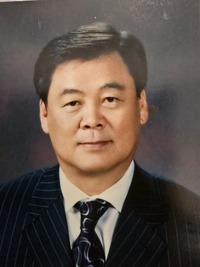
◆ Jeong Seong-hong
Chairman, Han-Mi Ilbo
Former Executive, National Intelligence Service

 Iranian Foreign Ministry: "Continuing Message Exchanges with the U.S. and Activities of Mediating Countries"
Esmaeil Baghaei, Spokesperson for the Iranian Ministry of Foreign Affairs [Xinhua, Yonhap News file photo]Esmaeil Baghaei, spokesperson for the Iranian Ministry of Foreign Affairs, stated on the 26th
Iranian Foreign Ministry: "Continuing Message Exchanges with the U.S. and Activities of Mediating Countries"
Esmaeil Baghaei, Spokesperson for the Iranian Ministry of Foreign Affairs [Xinhua, Yonhap News file photo]Esmaeil Baghaei, spokesperson for the Iranian Ministry of Foreign Affairs, stated on the 26th
 President Yoon: "Do You Think You Are Safe from the Special Counsel?"... Final Statement Video Released
President Yoon Suk Yeol rebuking the special prosecutor on the 24th. [Court video / @birds_justice X account subtitle GIF] A video of President Yoon Suk Yeol's closing statement at his trial rega
President Yoon: "Do You Think You Are Safe from the Special Counsel?"... Final Statement Video Released
President Yoon Suk Yeol rebuking the special prosecutor on the 24th. [Court video / @birds_justice X account subtitle GIF] A video of President Yoon Suk Yeol's closing statement at his trial rega
 President Yoon, regarding the first-instance ruling on the Public Official Election Act: “An excessive political verdict that distorts the facts… We will appeal immediately.”
The first-instance sentencing hearing for President Yoon Suk Yeol regarding violations of the Public Official Election Act is being broadcast live at Seoul Station on the 27th. [Photo=Yonhap News]Pres
President Yoon, regarding the first-instance ruling on the Public Official Election Act: “An excessive political verdict that distorts the facts… We will appeal immediately.”
The first-instance sentencing hearing for President Yoon Suk Yeol regarding violations of the Public Official Election Act is being broadcast live at Seoul Station on the 27th. [Photo=Yonhap News]Pres
 WSJ: "SK Hynix ADR Premium Is a Sign of AI Trading Overheat"
Advertisement for SK Hynix ADR listing in New York's Times Square [Reuters=Yonhap News file photo]The Wall Street Journal (WSJ) has pointed out that the price of SK Hynix’s American Depositary Recei
WSJ: "SK Hynix ADR Premium Is a Sign of AI Trading Overheat"
Advertisement for SK Hynix ADR listing in New York's Times Square [Reuters=Yonhap News file photo]The Wall Street Journal (WSJ) has pointed out that the price of SK Hynix’s American Depositary Recei
 'Godfather of Japanese Mystery Novels' Keigo Higashino Passes Away After Battle with Cancer at 68
Famous Japanese mystery novelist Keigo Higashino [AFP=Yonhap News]It has been belatedly reported that Keigo Higashino, the "godfather of Japanese mystery novels" and author of bestsellers such as "The
'Godfather of Japanese Mystery Novels' Keigo Higashino Passes Away After Battle with Cancer at 68
Famous Japanese mystery novelist Keigo Higashino [AFP=Yonhap News]It has been belatedly reported that Keigo Higashino, the "godfather of Japanese mystery novels" and author of bestsellers such as "The
 [Park Pil-kyu Security Column] To the Ignorant Trying to Clothe a Beast in Sheep's Clothing
Rep. Kim Byung-joo of the Democratic Party of Korea [Photo=Yonhap News]“The Air Force Academy doesn't teach you how to fly a plane!” “The Army, Navy, and Air Force academies are exactly the
[Park Pil-kyu Security Column] To the Ignorant Trying to Clothe a Beast in Sheep's Clothing
Rep. Kim Byung-joo of the Democratic Party of Korea [Photo=Yonhap News]“The Air Force Academy doesn't teach you how to fly a plane!” “The Army, Navy, and Air Force academies are exactly the
 [Issue Diagnosis] Two Effects of the Election Petition Review
 [Photo] Evidence of Election Fraud Flooding U.S. Media… Trump Had 2.7 Million Votes Stolen
 [Video] U.S. Semiquincentennial Air Show... 'Art in the Sky' streaks across New York
 [Editorial Cartoon] A Draconian Law That Undermines Freedom of Expression

 List
List










