 Samsung Electronics Chairman Lee Jae-yong (right) and SK Group Chairman Chey Tae-won (left) hold hands with Lee Jae-myung after announcing corporate investment plans at the National Report Meeting for the Three Mega-Projects held at the Blue House on June 29. [Photo: Yonhap News]
All the conflicts and tragedies in the world stem from the obsession of defining oneself as a victim and branding others as victimizers to be punished. In Buddhism, this is called "eopjang" (karmic obstacles), and in sociology, it is known as the Collective Victimhood Syndrome.
This long-standing karmic obstacle, which remains bound to the memories of the past, ruining the present and obstructing the future, is currently tearing the Republic of Korea—particularly the Honam and Yeongnam regions—to pieces.
It has reached a point where, inside and outside political circles, one hears the ruinous lament that we might as well divide the country by granting independence to a "Republic of Honam." This is truly a sign of national ruin that makes one beat their chest in sorrow, and it is the darkest self-portrait of our time.
For Whom Is the Semiconductor Project Intended?
As a practitioner, my heart is filled with nothing but profound sorrow when I look at the so-called "800 Trillion Won Honam Semiconductor Project" recently proposed by political circles. Who is this unreasonable plan for, which seeks to twist the arms of SK Hynix and Samsung Electronics to pour astronomical sums of money into Honam?
Is it a "political card" for a key pro-Lee Jae-myung figure to run for party leader, or is it a "political transaction" to solidify the foundation of the current regime? President Lee Jae-myung insisted that this is "a historical and national compensation for Honam, which has endured the sorrow of discrimination."
This is a truly arrogant and dangerous way of thinking. Behind the grand rhetoric of balanced national development, it is nothing more than an admission that political power has wielded its sword to ruthlessly trample upon the autonomous judgment of corporations.
Is this statist old-fashioned practice of the government tightening the noose around private corporations and interfering with management not a remnant of the military dictatorship of Park Chung-hee and Chun Doo-hwan, which Honam once risked its life to resist? How ironic and tragic it is that the very regime that champions Honam is now repeating the evil habits of that dictatorship.
The Fiction of "Honam Neglect" and the Reality of Internal Crisis
Is the long-standing belief that "Honam is neglected" still a valid truth at this moment? It is an undeniable historical fact that during the military regimes of the past, when national resources were concentrated on the Gyeongbu (Seoul-Busan) axis, Honam suffered from discrimination.
However, the claim that Honam has been strategically neglected since democratization, especially since the Kim Dae-jung administration, is a fiction completely divorced from today’s reality. On the contrary, Honam is the greatest beneficiary of the balanced development budget. Its per capita road and railway length is among the highest in the country, and the per capita Gross Regional Domestic Product (GRDP) of Gwangju surpasses that of Daegu and Busan, while South Jeolla Province outperforms the Gyeongsang provinces.
As of 2022, South Jeolla Province’s per capita GRDP ranked 4th out of the 17 cities and provinces nationwide (51.42 million won). The claim that Honam is still languishing in the swamp of poverty and discrimination is merely an emotional agitation that carries no weight against the data.
In fact, Honam’s true crisis does not lie outside, but within. The empty highways built with tax dollars and the "airports for drying chili peppers" have long been white elephants. The Asia Culture Center in Gwangju, into which 1.4 trillion won of national funds were poured, has become a massive ghostly structure recording tens of billions of won in losses every year. A dependent governance model, obsessed with past victimhood compensation and focused solely on securing central government budgets, is ruining the region.
Even more painful is the anti-corporate sentiment that drives businesses away. Since the plan for a Shinsegae complex shopping mall was scuttled in 2015 due to opposition from local civic groups and the Democratic Party, Gwangju has remained the only metropolitan city without a five-star hotel or a warehouse-style discount store.
Because superintendents from the Korean Teachers and Education Workers Union (KTU) demonized excellence-focused education and abolished autonomous private high schools and foreign language high schools, it is impossible for talent to come to a city where there are no good schools or cultural life to enjoy. It is only logical that businesses would shun the region if there is no talent. Honam's stagnation is not due to national discrimination, but due to internal factors and a "political-ideological cartel" that has created an environment hostile to business.
Honam as the New Power: A Monopoly of Personnel Bias
Among the six presidents who have governed South Korea over the past 30 years, as many as four (Kim Dae-jung, Roh Moo-hyun, Moon Jae-in, and Lee Jae-myung) were "sons of Honam" elected with the overwhelming support of the region. Honam voters have achieved power through blind and strategic voting of over 90%.
Currently, 12 out of the 18 initial ministerial candidates of the Lee Jae-myung administration are from Honam, and among the three ministerial-level chiefs in the Blue House, both the National Security Office Chief (Wi Sung-lac) and the Policy Chief (Kim Yong-beom) are from the Jeonnam/Gwangju region.
Is that all? If one were to conduct a full investigation into the approximately 7,000 public offices and executive positions in public institutions that the President of South Korea can appoint directly or indirectly, the bias toward Honam figures would become even more apparent. Since every important post is occupied by people from Honam, the current administration could well be called a "Honam Government" based on its personnel composition alone.
Honam has long since become the most powerful vested interest in South Korea. Nevertheless, they continue to insist that they are being discriminated against and insulted, constantly demanding apologies and threatening the government to cough up 800 trillion won in historical compensation. How could citizens from other regions, especially the younger generation, not feel a sense of alienation and relative deprivation when witnessing such behavior?
How long will they wear the scars of the 5·18 Gwangju Uprising like a badge of honor and hold the entire nation hostage? The Buddha said, "Do not dwell in the past, and do not dream of the future; concentrate the mind on the present moment. The past is already gone, and the future has not yet come." Artificial prosperity gained by pouring tens of trillions of won in taxes and twisting the arms of large corporations cannot last long. It is a poison that kills the region's self-sustainability and a karmic obstacle that sows seeds of hatred in the hearts of citizens in other regions.
The ruinous conflict between Yeongnam and Honam has reached a catastrophic breaking point where there is no room to retreat. It is time to set down the death-stick of long-standing resentment—a resentment filled with antagonism and victimhood—and open a new chapter of true reconciliation (haewon).
I pray that the sincere vows of Buddhists, like the lamp on a Buddha altar, will shine brightly to dispel the darkness of this land and fill it with great harmony.
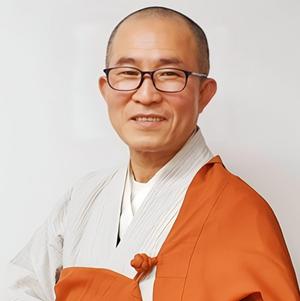
◆ Ven. Eungcheon
General Secretary, Jogye Order of Korean Buddhism for National Protection
First Commander of the National Protection Monk Corps

 Iranian Foreign Ministry: "Continuing Message Exchanges with the U.S. and Activities of Mediating Countries"
Esmaeil Baghaei, Spokesperson for the Iranian Ministry of Foreign Affairs [Xinhua, Yonhap News file photo]Esmaeil Baghaei, spokesperson for the Iranian Ministry of Foreign Affairs, stated on the 26th
Iranian Foreign Ministry: "Continuing Message Exchanges with the U.S. and Activities of Mediating Countries"
Esmaeil Baghaei, Spokesperson for the Iranian Ministry of Foreign Affairs [Xinhua, Yonhap News file photo]Esmaeil Baghaei, spokesperson for the Iranian Ministry of Foreign Affairs, stated on the 26th
 President Yoon: "Do You Think You Are Safe from the Special Counsel?"... Final Statement Video Released
President Yoon Suk Yeol rebuking the special prosecutor on the 24th. [Court video / @birds_justice X account subtitle GIF] A video of President Yoon Suk Yeol's closing statement at his trial rega
President Yoon: "Do You Think You Are Safe from the Special Counsel?"... Final Statement Video Released
President Yoon Suk Yeol rebuking the special prosecutor on the 24th. [Court video / @birds_justice X account subtitle GIF] A video of President Yoon Suk Yeol's closing statement at his trial rega
 President Yoon, regarding the first-instance ruling on the Public Official Election Act: “An excessive political verdict that distorts the facts… We will appeal immediately.”
The first-instance sentencing hearing for President Yoon Suk Yeol regarding violations of the Public Official Election Act is being broadcast live at Seoul Station on the 27th. [Photo=Yonhap News]Pres
President Yoon, regarding the first-instance ruling on the Public Official Election Act: “An excessive political verdict that distorts the facts… We will appeal immediately.”
The first-instance sentencing hearing for President Yoon Suk Yeol regarding violations of the Public Official Election Act is being broadcast live at Seoul Station on the 27th. [Photo=Yonhap News]Pres
 WSJ: "SK Hynix ADR Premium Is a Sign of AI Trading Overheat"
Advertisement for SK Hynix ADR listing in New York's Times Square [Reuters=Yonhap News file photo]The Wall Street Journal (WSJ) has pointed out that the price of SK Hynix’s American Depositary Recei
WSJ: "SK Hynix ADR Premium Is a Sign of AI Trading Overheat"
Advertisement for SK Hynix ADR listing in New York's Times Square [Reuters=Yonhap News file photo]The Wall Street Journal (WSJ) has pointed out that the price of SK Hynix’s American Depositary Recei
 'Godfather of Japanese Mystery Novels' Keigo Higashino Passes Away After Battle with Cancer at 68
Famous Japanese mystery novelist Keigo Higashino [AFP=Yonhap News]It has been belatedly reported that Keigo Higashino, the "godfather of Japanese mystery novels" and author of bestsellers such as "The
'Godfather of Japanese Mystery Novels' Keigo Higashino Passes Away After Battle with Cancer at 68
Famous Japanese mystery novelist Keigo Higashino [AFP=Yonhap News]It has been belatedly reported that Keigo Higashino, the "godfather of Japanese mystery novels" and author of bestsellers such as "The
 [Park Pil-kyu Security Column] To the Ignorant Trying to Clothe a Beast in Sheep's Clothing
Rep. Kim Byung-joo of the Democratic Party of Korea [Photo=Yonhap News]“The Air Force Academy doesn't teach you how to fly a plane!” “The Army, Navy, and Air Force academies are exactly the
[Park Pil-kyu Security Column] To the Ignorant Trying to Clothe a Beast in Sheep's Clothing
Rep. Kim Byung-joo of the Democratic Party of Korea [Photo=Yonhap News]“The Air Force Academy doesn't teach you how to fly a plane!” “The Army, Navy, and Air Force academies are exactly the
 [Issue Diagnosis] Two Effects of the Election Petition Review
 [Photo] Evidence of Election Fraud Flooding U.S. Media… Trump Had 2.7 Million Votes Stolen
 [Video] U.S. Semiquincentennial Air Show... 'Art in the Sky' streaks across New York
 [Editorial Cartoon] A Draconian Law That Undermines Freedom of Expression

 List
List









