 Jung Yi-han, the former Busan mayoral candidate for the Reform Party accused of staging a "beverage terror" incident, is walking toward the courtroom at the Busan District Court on the 8th to attend a pre-arrest suspect interrogation. The court issued an arrest warrant for the former candidate that day, citing concerns over the destruction of evidence. [Photo: Yonhap News]As criticism mounted regarding the investigation into the "beverage terror" hoax involving former Reform Party Busan mayoral candidate Jung Yi-han, the Busan Metropolitan Police Agency released a detailed investigation timeline to the media—information that had not been previously disclosed. The police stated on the 13th that they were exceptionally releasing details of the investigation to correct misinformation and speculative reports.
According to the police, the Geumjeong Police Station applied for a search and seizure warrant two days after first hearing testimony regarding the hoax. However, the warrant was not issued until the night before the election, 13 days after the initial application, due to at least four requests for supplementary investigation from the presiding prosecutor.
However, among these 13 days, the specific time spent by the police conducting supplementary investigations and the time taken by the prosecutor to review the supplementary materials were not disclosed. It is not yet possible to conclude that the prosecutor's requests for supplementation were unjust or intended to delay the investigation.
Nevertheless, the timeline released by the police weakened the suspicion that "the police intentionally delayed the search warrant application until after the election despite being aware of the hoax," while simultaneously raising a new issue: why the prosecutor requested supplementary information at least four times.
※ Editor's Note = This article is based on the "Reference Material on the Election Violence Hoax Case" released by the Busan Metropolitan Police Agency, as well as investigative inquiries by Hanmi Ilbo to the investigation chief of the Geumjeong Police Station and the public information officer at the Busan District Prosecutors' Office. It does not conclude that the prosecutor's requests for supplementary investigation were unjust, but rather analyzes the unexplained gaps identified in the released timeline.
Police shift to disclosure following growing criticism
The Busan Metropolitan Police Agency stated that it was exceptionally disclosing details of the investigation in accordance with public information regulations to rectify factual errors or speculative reports regarding the investigation into the former candidate, Jung.
Until now, the police had not disclosed specific details of testimonies or the timing of warrant applications, citing the ongoing nature of the investigation. However, following widespread criticism that the police remained silent even after Jung admitted to the hoax 15 days before the election, only conducting search and seizure operations the day after the election, the police released a chronological progress report.
The police explained that the disclosure was intended to correct misinformation. However, given that they presented a timeline that was previously kept confidential only after the controversy escalated, it is interpreted as a shift from a defensive stance to active clarification.
According to the Busan Metropolitan Police Agency, before questioning fitness trainer 'A' on May 18, the Geumjeong Police Station summoned former candidate Jung, who was the victim of the "obstruction of election freedom" case at the time. Jung visited the police station briefly during his campaign, and the police first heard testimonies regarding the hoax from both individuals on that day.
The Geumjeong Police Station booked Jung as a suspect the next day, the 19th, and applied for a search and seizure warrant on the 20th. It took one day to book him after learning of the hoax circumstances, and two days to apply for the warrant.
On May 22, the police requested Jung to appear for suspect questioning. Through his legal counsel, the candidate responded that he would appear around June 8, after the election, and the first suspect questioning was indeed conducted on June 8.
In a follow-up verification call with Hanmi Ilbo, the investigation chief of the Geumjeong Police Station confirmed that his account aligns with the explanation provided by the Busan Metropolitan Police Agency.
If this timeline is accurate, the suspicion that the police delayed applying for a search warrant until after the election despite having acquired testimony about the hoax loses its credibility.
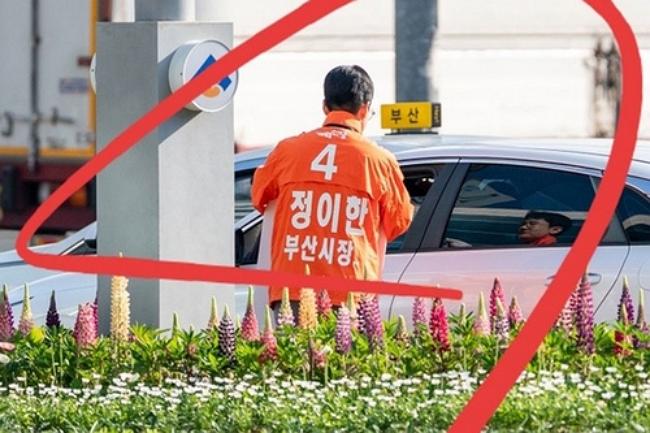 Then-Reform Party Busan mayoral candidate Jung Yi-han campaigning with a neck brace on April 29 in Gupo Market, Busan. The police stated that they first heard testimony regarding the hoax from Jung and the person who threw the drink on May 18, and applied for a search and seizure warrant two days later. [Photo: Yonhap News]"Related testimony" rather than "Confession"... exact content remains undisclosed
However, exactly what Jung and 'A' stated on May 18 has not been made public.
The Busan Metropolitan Police Agency described the situation at the time as "first hearing testimonies related to the suspicion of a hoax." They did not specify that Jung had admitted to the full scope of the crime or pre-planned conspiracy, or that he had "confessed" to staging the hoax.
The police explained that during the process of consulting with the prosecutor on the warrant application, 'A' even recanted his testimony. This suggests that the details of the pre-conspiracy between Jung and 'A', their specific division of roles, and the motive behind the crime may not have been clearly established by the initial testimony alone.
However, this is the police's version of events. The suspect interrogation records and investigation reports remain private, and it is impossible for outside parties to verify the extent to which Jung admitted to his involvement.
Therefore, based on the currently available information, it is impossible to determine whether the expression "confessed 15 days before the election" is accurate, or whether the police downplayed it as "related testimony." This discrepancy is linked to the reason why the prosecutor repeatedly requested supplementary investigations.
At least 3 supplementary requests from prosecution after first warrant application
The core period of the controversy regarding the delayed investigation lies between May 20, when the Geumjeong Police Station first applied for the search and seizure warrant, and June 2, when the court issued it.
The police stated that the prosecutor requested supplementary investigations several times, and each time, they promptly complied before reapplying for the warrant. The investigation chief of the Geumjeong Police Station confirmed to Hanmi Ilbo that there were at least three requests from the prosecutor.
This means that throughout the 13 days from the first application to the issuance, at least four rounds of supplementary requests and re-applications were repeated.
The warrant was issued around 9:40 PM on June 2, the day before the election. The police conducted search and seizure operations on Jung, 'A', and the election office on the morning of the 4th, the day after the election.
Considering that the warrant was issued late on the night before the election and preparations for execution at multiple locations were required, it is difficult to view this as a long-term withholding of the warrant by the police after it was issued.
Ultimately, the remaining question is why the prosecutor requested at least four supplementary investigations for the search warrant applied for on May 20, and why that process continued until the night before the election.
It is standard procedure for a prosecutor to review the degree of evidence for criminal charges, the relevance of the target and location, and the necessity of a compulsory investigation. If 'A' had recanted his testimony and the conspiracy with Jung had not been sufficiently substantiated, there may have been grounds to request further supplementation.
However, the authority to request supplementation and whether all four requests were necessary and handled promptly in this specific case are separate issues.
Testimony and communication records secured at first application... CCTV checked after seizure
According to the Geumjeong Police Station investigation chief, the police had already secured testimonies from Jung and 'A', as well as communication records between the two, at the time of the first warrant application on May 20.
On the other hand, the CCTV footage from the gym, which the police identified as evidence of pre-planning, was secured only after the search and seizure on June 4. The police stated that during the analysis of the seized items, they confirmed scenes appearing to show the two pre-planning the crime at the gym the day before it occurred.
Therefore, the appropriateness of the prosecutor's at least four supplementary requests should be judged based on the testimonies and communication data submitted by the police on May 20, not the CCTV footage secured after the search.
A search and seizure is not a procedure conducted only after the entire scope of a crime is proven. It is an investigative tool permitted to secure evidence once the circumstances suggesting a crime, the relevance of the targets, and the necessity of a compulsory investigation have been established.
It has not been disclosed to what extent the conspiracy and the need for a search were substantiated solely by the testimonies and communication data submitted by the police. If the prosecutor repeatedly demanded proof nearing the full scope of the crime at the search and seizure stage, criticism that they did not sufficiently consider the urgency of an election crime is valid.
Conversely, if the initial testimony was ambiguous or recanted and it was difficult to establish the conspiracy and the necessity of the search based on communication records alone, the prosecutor's requests for supplementation should be evaluated as a legitimate procedure for controlling the police's warrant application.
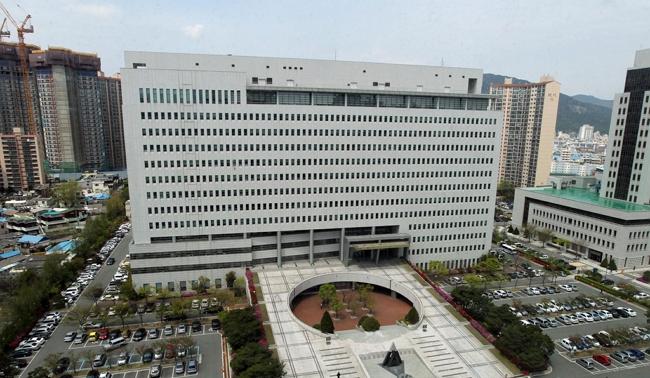 View of the Busan District Prosecutors' Office. 2010. [Photo = Yonhap News]What was supplemented more than three times?
In its official materials, the Busan Metropolitan Police Agency only stated that the prosecutor requested "several" supplementary investigations. The number confirmed through Hanmi Ilbo's investigation is at least four times.
When was the first request made? What were the requests intended to strengthen among the conspiracy, the substantiation of criminal charges, and the relevance of the targets and locations? At what stage did 'A' recant his testimony, and how did it affect subsequent warrant reviews?
It is also necessary to distinguish between the time it took for the police to resubmit materials after receiving a request and the time it took for the prosecutor to review the supplementary materials and make a judgment. Only then can it be determined whether the 13 days were spent in the police's supplementary investigation process or delayed during the prosecutor's repeated re-evaluations.
Hanmi Ilbo inquired with the Busan District Prosecutors' Office public information officer regarding the exact number and reasons for the supplementary requests, the processing time per stage, and whether the urgency of the ongoing Busan mayoral election was considered.
The public information officer replied, "As this is an ongoing investigation, there is nothing I can answer."
While it is acknowledged that specific evidence and suspect testimonies are difficult to disclose during an ongoing investigation, whether procedural facts such as the number of requests, dates, and processing time per stage can be withheld is a separate matter.
Police-released timeline reveals the prosecution's 13 days
The Busan Metropolitan Police Agency exceptionally released the previously private investigation timeline as criticism of a "slow investigation" spread. The timeline the police released to defend themselves ended up highlighting the 13 days taken by the prosecution.
Based on facts confirmed so far, it cannot be concluded that the prosecutor intentionally delayed the investigation or that the requests for supplementation were unjust. There may have been legal or evidentiary reasons that the police did not disclose.
However, the hoax suspicion in the attack on a candidate was being investigated while the Busan mayoral election was underway. It was a matter that could significantly influence voters' choices depending on the investigation's results.
Both the police and prosecution should have considered not only due process but also the urgency of investigating election crimes.
The core of the controversy over the delay in the Jung Yi-han investigation is no longer why the police applied for the warrant late. It is why the prosecutor requested at least four supplementary investigations regarding the search warrant the police applied for on May 20, and why that process continued until the night before the election.
The police released an investigation timeline as criticism spread. The prosecution withheld specific explanations on the grounds that the case is under investigation. The record of the 13 days during which at least four requests for supplementation were exchanged is the key point that requires further clarification in this case.

 Iranian Foreign Ministry: "Continuing Message Exchanges with the U.S. and Activities of Mediating Countries"
Esmaeil Baghaei, Spokesperson for the Iranian Ministry of Foreign Affairs [Xinhua, Yonhap News file photo]Esmaeil Baghaei, spokesperson for the Iranian Ministry of Foreign Affairs, stated on the 26th
Iranian Foreign Ministry: "Continuing Message Exchanges with the U.S. and Activities of Mediating Countries"
Esmaeil Baghaei, Spokesperson for the Iranian Ministry of Foreign Affairs [Xinhua, Yonhap News file photo]Esmaeil Baghaei, spokesperson for the Iranian Ministry of Foreign Affairs, stated on the 26th
 President Yoon: "Do You Think You Are Safe from the Special Counsel?"... Final Statement Video Released
President Yoon Suk Yeol rebuking the special prosecutor on the 24th. [Court video / @birds_justice X account subtitle GIF] A video of President Yoon Suk Yeol's closing statement at his trial rega
President Yoon: "Do You Think You Are Safe from the Special Counsel?"... Final Statement Video Released
President Yoon Suk Yeol rebuking the special prosecutor on the 24th. [Court video / @birds_justice X account subtitle GIF] A video of President Yoon Suk Yeol's closing statement at his trial rega
 President Yoon, regarding the first-instance ruling on the Public Official Election Act: “An excessive political verdict that distorts the facts… We will appeal immediately.”
The first-instance sentencing hearing for President Yoon Suk Yeol regarding violations of the Public Official Election Act is being broadcast live at Seoul Station on the 27th. [Photo=Yonhap News]Pres
President Yoon, regarding the first-instance ruling on the Public Official Election Act: “An excessive political verdict that distorts the facts… We will appeal immediately.”
The first-instance sentencing hearing for President Yoon Suk Yeol regarding violations of the Public Official Election Act is being broadcast live at Seoul Station on the 27th. [Photo=Yonhap News]Pres
 WSJ: "SK Hynix ADR Premium Is a Sign of AI Trading Overheat"
Advertisement for SK Hynix ADR listing in New York's Times Square [Reuters=Yonhap News file photo]The Wall Street Journal (WSJ) has pointed out that the price of SK Hynix’s American Depositary Recei
WSJ: "SK Hynix ADR Premium Is a Sign of AI Trading Overheat"
Advertisement for SK Hynix ADR listing in New York's Times Square [Reuters=Yonhap News file photo]The Wall Street Journal (WSJ) has pointed out that the price of SK Hynix’s American Depositary Recei
 'Godfather of Japanese Mystery Novels' Keigo Higashino Passes Away After Battle with Cancer at 68
Famous Japanese mystery novelist Keigo Higashino [AFP=Yonhap News]It has been belatedly reported that Keigo Higashino, the "godfather of Japanese mystery novels" and author of bestsellers such as "The
'Godfather of Japanese Mystery Novels' Keigo Higashino Passes Away After Battle with Cancer at 68
Famous Japanese mystery novelist Keigo Higashino [AFP=Yonhap News]It has been belatedly reported that Keigo Higashino, the "godfather of Japanese mystery novels" and author of bestsellers such as "The
 [Park Pil-kyu Security Column] To the Ignorant Trying to Clothe a Beast in Sheep's Clothing
Rep. Kim Byung-joo of the Democratic Party of Korea [Photo=Yonhap News]“The Air Force Academy doesn't teach you how to fly a plane!” “The Army, Navy, and Air Force academies are exactly the
[Park Pil-kyu Security Column] To the Ignorant Trying to Clothe a Beast in Sheep's Clothing
Rep. Kim Byung-joo of the Democratic Party of Korea [Photo=Yonhap News]“The Air Force Academy doesn't teach you how to fly a plane!” “The Army, Navy, and Air Force academies are exactly the
 [Issue Diagnosis] Two Effects of the Election Petition Review
 [Photo] Evidence of Election Fraud Flooding U.S. Media… Trump Had 2.7 Million Votes Stolen
 [Video] U.S. Semiquincentennial Air Show... 'Art in the Sky' streaks across New York
 [Editorial Cartoon] A Draconian Law That Undermines Freedom of Expression

 List
List









