 Founding President Syngman Rhee (left) and President Park Chung-hee.
For over 70 years since its founding, the modern history of the Republic of Korea has been a subject of intense debate. Unlike issues such as economic or welfare policies, where evaluations shift with the times, the assessment of the leaders who founded and defended the nation remains sharply polarized.
Some honor Syngman Rhee as the founding father who established the liberal democratic Republic of Korea, and remember Park Chung-hee as the leader who achieved industrialization and built today's Korea. Conversely, others define both men as dictators who undermined democracy.
It is even common for people who attended the same schools and studied the same textbooks to hold diametrically opposed views of history. Few countries, like South Korea, exhibit such sharp divisions in the evaluation of the leaders behind their nation's founding and industrialization.
This extreme polarization is not merely due to political leanings or generational gaps. It stems from the fact that the very criteria used to interpret history differ from one another.
Throughout our school years, we were consistently taught the values of democracy while learning modern history. We repeatedly studied national sovereignty, freedom, equality, human rights, elections, the separation of powers, the dangers of power abuse, and the evils of dictatorship. Such education is a basic requirement for any citizen of a democratic state.
Democracy is a fundamental principle of the Republic of Korea and a value that must never be treated lightly. However, this raises a question: Article 1 of the Constitution defines the Republic of Korea as a democratic republic, yet while we learn extensively about democracy, we have learned almost nothing about republicanism.
Although we memorized the term "democratic republic," few of us remember being taught what a republic is or what kind of political philosophy republicanism entails. As a result, the standard for understanding Korea naturally converged solely onto democracy, and it became taken for granted that leaders of our modern history should be evaluated only through the lens of democracy.
When evaluating leaders, democracy prioritizes standards such as the extent to which citizens' freedoms were guaranteed, the fairness of elections, the distribution of power, and the respect for fundamental civil rights. Consequently, long-term rule or the restriction of political freedoms become subjects of harsh criticism.
Viewed through these criteria, Syngman Rhee and Park Chung-hee face significant criticism. However, the questions posed by republicanism are somewhat different.
Did the nation survive? Did the community endure? Was the nation protected from foreign aggression? Was the rule of law maintained? Did the people live safer and more prosperous lives than before? Was the public good expanded?
Republicanism prioritizes the survival and prosperity of the entire community. Therefore, rather than being conflicting philosophies, democracy and republicanism are political philosophies that evaluate the state from different perspectives. This is why the evaluation of the same history changes depending on which criteria are applied first.
The history of the Republic of Korea was a series of situations where the nation's very survival was threatened. Immediately after its founding in 1948, the government had to operate without a properly established administrative structure. Just two years later, it faced a war that saw most of the Korean Peninsula occupied following a northern invasion.
Even after the war, the reality was that it remained one of the poorest countries in the world. Per capita income was extremely low, and there was virtually no industrial base. In just a few decades, this country achieved industrialization and democratization, rising to the ranks of advanced nations in terms of economic scale and cultural influence.
This process cannot be explained by the merit of any single individual, nor can it be explained by any single era. Today's Republic of Korea exists because the founding, the defense of the nation, industrialization, and democratization took place in succession. Yet, we often attempt to evaluate this long history based on a single event or a single value. As a result, the links of history disappear, leaving behind only debates for or against specific figures.
This series intends to move beyond such an approach. First, we will examine historical facts chronologically, exploring why the Republic of Korea had to be founded, how the nation was defended, and how industrialization was achieved and democratization completed.
Next, we will look at democracy and republicanism as distinct, independent political philosophies. Rather than learning democracy first and treating republicanism as an add-on, we will aim to understand both ideas in their entirety before applying them to modern Korean history at the end.
Only then can we logically explain why different evaluations arise regarding the same historical facts. Separating historical facts from evaluation criteria is the first step toward understanding modern history.
The purpose of this series is not to unconditionally turn certain figures into heroes or label them as dictators. Readers are invited to look at the history of the Republic of Korea as it is, fully understand the two political philosophies of democracy and republicanism, and then reach their own conclusions.
The Republic of Korea is a democratic republic. It cannot be explained by democracy alone, nor by republicanism alone. Both pillars together support the Republic of Korea. Until now, we have been accustomed to looking at only one pillar.
This series is an attempt to re-read Korea by building up the other pillar. Through this process, we aim to calmly examine—through the dual lenses of history and political philosophy—why some remember Syngman Rhee and Park Chung-hee as dictators, while others evaluate them as heroes of the Republic of Korea.
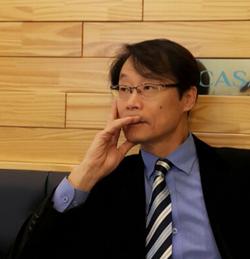
◆ Songsan Jung Kwang-je
A poet and researcher of history and philosophy. Former director of the Syngman Rhee Institute. Currently serves as a research advisor to the Korean Society for Modern and Contemporary History and representative of the philosophy forum Lyceum. He has published four volumes of poetry, co-translated "The Heroes of Hook Hill," and authored humanities books such as "Joseon Turned into Myth," "Humanities on the Tatami," and "A Liberal's Reading of Gramsci."

 Iranian Foreign Ministry: "Continuing Message Exchanges with the U.S. and Activities of Mediating Countries"
Esmaeil Baghaei, Spokesperson for the Iranian Ministry of Foreign Affairs [Xinhua, Yonhap News file photo]Esmaeil Baghaei, spokesperson for the Iranian Ministry of Foreign Affairs, stated on the 26th
Iranian Foreign Ministry: "Continuing Message Exchanges with the U.S. and Activities of Mediating Countries"
Esmaeil Baghaei, Spokesperson for the Iranian Ministry of Foreign Affairs [Xinhua, Yonhap News file photo]Esmaeil Baghaei, spokesperson for the Iranian Ministry of Foreign Affairs, stated on the 26th
 President Yoon: "Do You Think You Are Safe from the Special Counsel?"... Final Statement Video Released
President Yoon Suk Yeol rebuking the special prosecutor on the 24th. [Court video / @birds_justice X account subtitle GIF] A video of President Yoon Suk Yeol's closing statement at his trial rega
President Yoon: "Do You Think You Are Safe from the Special Counsel?"... Final Statement Video Released
President Yoon Suk Yeol rebuking the special prosecutor on the 24th. [Court video / @birds_justice X account subtitle GIF] A video of President Yoon Suk Yeol's closing statement at his trial rega
 President Yoon, regarding the first-instance ruling on the Public Official Election Act: “An excessive political verdict that distorts the facts… We will appeal immediately.”
The first-instance sentencing hearing for President Yoon Suk Yeol regarding violations of the Public Official Election Act is being broadcast live at Seoul Station on the 27th. [Photo=Yonhap News]Pres
President Yoon, regarding the first-instance ruling on the Public Official Election Act: “An excessive political verdict that distorts the facts… We will appeal immediately.”
The first-instance sentencing hearing for President Yoon Suk Yeol regarding violations of the Public Official Election Act is being broadcast live at Seoul Station on the 27th. [Photo=Yonhap News]Pres
 WSJ: "SK Hynix ADR Premium Is a Sign of AI Trading Overheat"
Advertisement for SK Hynix ADR listing in New York's Times Square [Reuters=Yonhap News file photo]The Wall Street Journal (WSJ) has pointed out that the price of SK Hynix’s American Depositary Recei
WSJ: "SK Hynix ADR Premium Is a Sign of AI Trading Overheat"
Advertisement for SK Hynix ADR listing in New York's Times Square [Reuters=Yonhap News file photo]The Wall Street Journal (WSJ) has pointed out that the price of SK Hynix’s American Depositary Recei
 'Godfather of Japanese Mystery Novels' Keigo Higashino Passes Away After Battle with Cancer at 68
Famous Japanese mystery novelist Keigo Higashino [AFP=Yonhap News]It has been belatedly reported that Keigo Higashino, the "godfather of Japanese mystery novels" and author of bestsellers such as "The
'Godfather of Japanese Mystery Novels' Keigo Higashino Passes Away After Battle with Cancer at 68
Famous Japanese mystery novelist Keigo Higashino [AFP=Yonhap News]It has been belatedly reported that Keigo Higashino, the "godfather of Japanese mystery novels" and author of bestsellers such as "The
 [Park Pil-kyu Security Column] To the Ignorant Trying to Clothe a Beast in Sheep's Clothing
Rep. Kim Byung-joo of the Democratic Party of Korea [Photo=Yonhap News]“The Air Force Academy doesn't teach you how to fly a plane!” “The Army, Navy, and Air Force academies are exactly the
[Park Pil-kyu Security Column] To the Ignorant Trying to Clothe a Beast in Sheep's Clothing
Rep. Kim Byung-joo of the Democratic Party of Korea [Photo=Yonhap News]“The Air Force Academy doesn't teach you how to fly a plane!” “The Army, Navy, and Air Force academies are exactly the
 [Issue Diagnosis] Two Effects of the Election Petition Review
 [Photo] Evidence of Election Fraud Flooding U.S. Media… Trump Had 2.7 Million Votes Stolen
 [Video] U.S. Semiquincentennial Air Show... 'Art in the Sky' streaks across New York
 [Editorial Cartoon] A Draconian Law That Undermines Freedom of Expression

 List
List









