 Bank of Korea Governor Shin Hyun-song speaks at the press conference on the Monetary Policy Decision of the Monetary Policy Committee held at the Bank of Korea in Jung-gu, Seoul, on the 16th. The Bank of Korea’s Monetary Policy Committee raised the base interest rate from 2.50% to 2.75% per annum on this day. July 16, 2026. [Photo = Joint Press Corps/Yonhap News] The Bank of Korea’s Monetary Policy Committee raised the base interest rate by 0.25 percentage points from 2.50% to 2.75% per annum on the 16th. The Bank of Korea explained that growth is strengthening, driven by exports and investment, inflation is expected to remain above the target level for a considerable period, and risks to financial stability, such as rising home prices in the metropolitan area and household debt, have increased. All seven members of the Monetary Policy Committee voted in favor of the hike.
It is not as if there are no domestic indicators supporting the interest rate hike. However, there is a separate core question surrounding this decision. It is how much the actual exogenous variables that led to the central bank's cautious monetary policy emphasized by Governor Shin Hyun-song at the time of his inauguration, and the decision to freeze rates at the May Monetary Policy Committee meeting, have changed by July.
The semiconductor boom was not a fact that emerged newly in July. Conversely, military tensions in the Middle East have risen again, and trade pressure from the U.S. has not been resolved. If so, one must examine whether the policy shift from a freeze to a hike was due to a change in the economic environment itself, or because the weight the Bank of Korea assigns to the same variables has shifted.
**Editor's Note = This article does not conclude that there is no economic basis for this interest rate hike. It examines whether the judgment criteria presented by the Bank of Korea at the time of the inauguration and the May freeze were applied consistently to the July hike.**
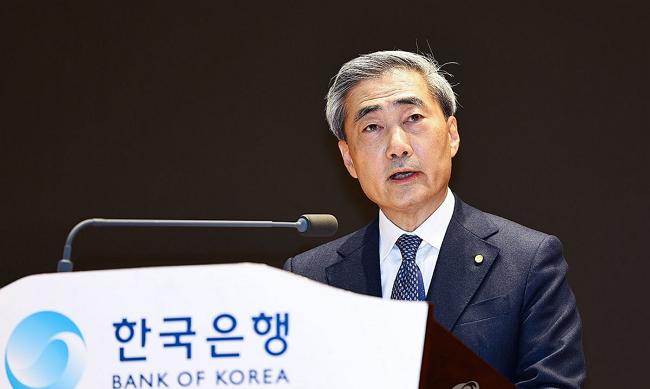 Bank of Korea Governor Shin Hyun-song. At the May Monetary Policy Committee meeting, the first presided over by Governor Shin, the central bank froze the base rate, citing uncertainty regarding the Middle East crisis, while simultaneously reflecting the semiconductor boom in its growth outlook. [Photo = Yonhap News]
The basis for caution at the time of inauguration was uncertainty stemming from the Middle East
In his inaugural address on April 21, Governor Shin diagnosed that uncertainties regarding inflation and growth paths had increased significantly due to supply shocks from the Middle East war. He stated that since upward pressure on inflation and downward pressure on the economy had expanded simultaneously due to rising international oil prices, he would pursue price and financial stability through a “cautious and flexible monetary policy.” He also unveiled a plan to cooperate with the government in necessary areas.
This criterion was also applied to the May 28 Monetary Policy Committee meeting, the first presided over by Governor Shin. At that time, the Bank of Korea had already confirmed the semiconductor boom, the expansion of exports and investment, and improvements in consumption. The growth outlook for this year was significantly raised from 2.0% in February to 2.6%. Governor Shin estimated that while the Middle East war would lower the growth rate by about 0.4 percentage points, the stronger-than-expected semiconductor boom and IT exports would boost it by about 0.7 percentage points. The effects of the stock market boom on consumption and investment were also reflected.
Nevertheless, the interest rate was frozen. The reason given was that the progression and ripple effects of the Middle East crisis remained uncertain, and that the extent and duration of the semiconductor boom needed further verification. At the time, members Jang Yong-sung and Yoo Sang-dae issued a minority opinion that the rate should be raised to 2.75% immediately, but the majority of members placed more weight on the uncertainty. The Bank of Korea explained, “It is more desirable to monitor the Middle East situation and the pace of the semiconductor industry’s expansion rather than raising rates immediately.”
Therefore, the legitimacy of the July hike cannot be completed simply by explaining that semiconductor performance and inflation have improved. It must be shown what was newly confirmed that was not known in May, and whether that was significant enough to offset external risks.
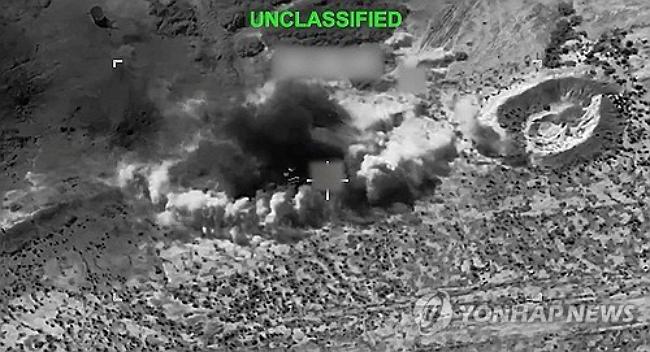 A scene of Iranian airstrikes released by the U.S. Central Command. The U.S. military continued airstrikes against Iran for five consecutive days on the 15th, hitting coastal defense systems and cruise missile facilities on Iran's Greater Tunb Island. [Photo = Reuters/Yonhap News]
Middle East risk: Not easing, but re-escalating in the short term
Based on official announcements from the U.S. Central Command (CENTCOM), it is difficult to see the Middle East situation as more stable right before the interest rate hike than it was in May.
CENTCOM released separate operation announcements regarding attacks on Iran on June 9, 10, 26, and 27. That makes four announcements of attacks on Iran throughout the month of June. Conversely, in July, it announced five rounds or waves of attacks within a single week, including on the 7th, 8th, 11th, 12th, and 13th. On the 13th, it formalized the resumption of a naval blockade targeting Iranian ports, and on the 15th, it even proceeded with military measures against vessels that did not comply with the blockade.
Here, the figure of four or five does not refer to the number of aircraft sorties or missile launches. These are the number of press releases that CENTCOM announced as separate operational units. Based on that criterion alone, the attack announcements, which occurred four times over 19 days in June, were concentrated into five times within a single week in July.
The Bank of Korea also acknowledged in its July decision statement that “uncertainty regarding the Middle East situation continues.” It specified that the implementation of the U.S.-Iran ceasefire agreement and the development of the Middle East crisis are major variables that will influence the global economy and the domestic growth path. There is no assessment anywhere in the statement that external risks have disappeared or have been sufficiently lowered.
In fact, looking only at the frequency of military operations, the risk from the Middle East was in a phase of re-escalation right before the interest rate hike. The Middle East shock stimulates inflation by raising oil and transportation costs, while simultaneously lowering the growth rate by worsening consumption and corporate profits. If the policy decision was reserved in May due to this trade-off, it must be explained what became certain enough in July to overcome this uncertainty.
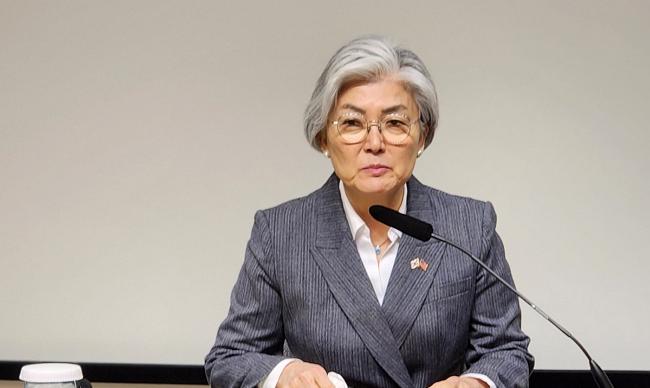 South Korean Ambassador to the U.S. Cho Tae-yul. At the instruction of the Minister of Foreign Affairs, Ambassador Cho returned home temporarily for five days starting on the 15th to meet with officials from the Blue House and relevant ministries to discuss pending Korea-U.S. trade, investment, and security issues. [Yonhap News File Photo] Difficult to see U.S. trade pressure as having eased
It is also difficult to assess that U.S.-led trade risks have lessened compared to May.
On March 11, the Office of the United States Trade Representative (USTR) initiated a Section 301 investigation under the Trade Act, citing structural overproduction and production capacity in manufacturing as issues. South Korea was explicitly included in the investigation, and examples of industries to be reviewed for potential overproduction included semiconductors, electronic products, automobiles, batteries, and shipbuilding. The countermeasures the U.S. could consider include additional tariffs and import restrictions.
This investigation was a risk that existed in May as well, so it cannot be called a variable that newly occurred in July. However, there has been no official announcement that South Korea has been excluded from the investigation or that the risks regarding semiconductors have been resolved. In that the timeline for investigation results and follow-up measures is approaching as time passes, it is difficult to assume that trade risks have at least diminished.
The matter related to Coupang should also be viewed separately. A Section 301 **petition** regarding the South Korean government’s actions related to Coupang is posted separately on the USTR website. While it is not yet at the stage of being expressed the same as the initiation of a formal investigation, it is a fact that a procedure is underway to challenge the South Korean government's measures and demand a response from the U.S. government.
The semiconductor boom driving South Korea’s economic growth is not a variable separated from U.S. trade policy. Even if semiconductor prices and demand are high, if the U.S. changes production regions and volumes through tariffs, import restrictions, local investment requirements, or supply chain policies, the effects on domestic exports and facility investment can change.
Today’s high semiconductor prices do not automatically guarantee tomorrow’s high export volumes and domestic production.
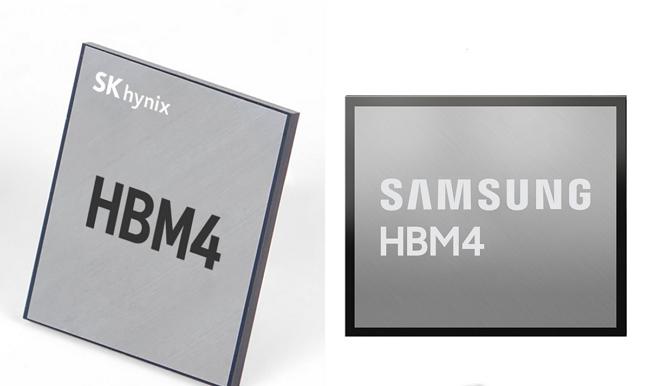 High Bandwidth Memory HBM4 unveiled by SK Hynix and Samsung Electronics. In its May economic outlook, the Bank of Korea had already reflected the growth effects of the stronger-than-expected semiconductor cycle and information technology exports. [Provided by SK Hynix/Samsung Electronics] The semiconductor boom was already reflected in the May outlook
It is more accurate to view what the Bank of Korea confirmed in July as the degree of a boom stronger than expected rather than the mere existence of a semiconductor boom.
In May, the Bank of Korea already reflected the expansion of semiconductor exports and investment in its official growth outlook. The assessment that stock prices had risen sharply due to expectations of improved corporate performance was also included in the decision statement at that time. The rise in metropolitan home prices, the exchange rate around 1,500 won, and upward pressure on inflation had also already been confirmed.
In July, exports and investment continued to show high growth led by semiconductors, and consumption was also solid. The consumer price inflation rate in June rose to 3.2%, and the core inflation rate rose to 2.5%. The growth in household loans and the rise in metropolitan home prices also expanded. The Bank of Korea determined that this year’s growth rate would “significantly exceed” the May forecast of 2.6%. This change is clearly a domestic reason leaning toward an interest rate hike.
However, the Bank of Korea did not present a new growth rate forecast figure in July. It is difficult to calculate from the published decision statement alone how much the semiconductor cycle exceeded the May outlook and to what extent that excess offsets the Middle East and U.S. trade risks.
In particular, the Bank of Korea **forecasted** that consumption recovery and demand-side price pressure would expand due to improved income conditions. This must be distinguished from the definitive fact that the increase in semiconductor company profits has already sufficiently spread to wages, employment, and overall consumption. The number of employed persons in major industries, such as manufacturing, continued to decline even at the time of the July decision.
In summary, the semiconductor boom is a favorable factor that was already known but has become stronger than expected. On the other hand, the Middle East risk, which was the basis for the May freeze, has expanded again, and U.S. trade pressure has not been resolved. It is more natural to view this as the Bank of Korea significantly increasing the weight it assigns to semiconductors, inflation, and home prices, rather than the external environment improving.
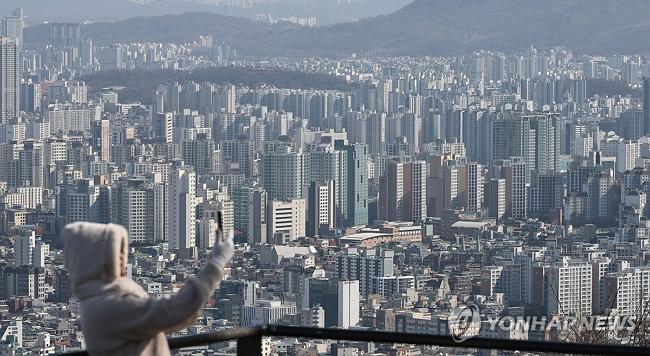 An apartment complex in Seoul. The Bank of Korea presented the rise in metropolitan home prices and the increase in household loans as key reasons for the interest rate hike, but Governor Shin Hyun-song stated that there are limitations to curbing home prices through monetary policy alone. [Yonhap News File Photo] Real estate as a basis for the hike, but drawing a line on responsibility for solutions
A scene that fuels suspicions of a political decision is Governor Shin’s explanation regarding real estate immediately after the hike.
The Bank of Korea presented the rise in metropolitan home prices and the expansion of household loans as key reasons for the interest rate hike. However, at the press conference, Governor Shin drew a line on the limitations of solving real estate problems with interest rates alone, saying, “It is unreasonable to directly adjust housing prices or curb home prices through monetary policy.”
Economically, this is a valid explanation. This is because the base interest rate is a tool that affects the entire economy without distinguishing between regions, classes, and industries. For real estate, loan regulations, tax systems, and supply policies must be mobilized together.
However, it has taken on the appearance of citing home prices and household debt as the justification when raising interest rates, while emphasizing the limitations of monetary policy when asked about effects and responsibility. This is why questions arise about whether the Bank of Korea has effectively taken on the role of managing the total risk of inflation, exchange rates, and asset prices while the government pushes for active fiscal policy and investment in strategic industries such as semiconductors and artificial intelligence (AI).
There is no direct evidence to conclude that such a division of roles exists. However, the fact that Governor Shin emphasized policy cooperation with the government at the time of his inauguration, and the timing of returning to an interest rate hike in a situation where external risks have not improved aligns with the current government’s burden of real estate and exchange rates, is a situation that requires explanation.
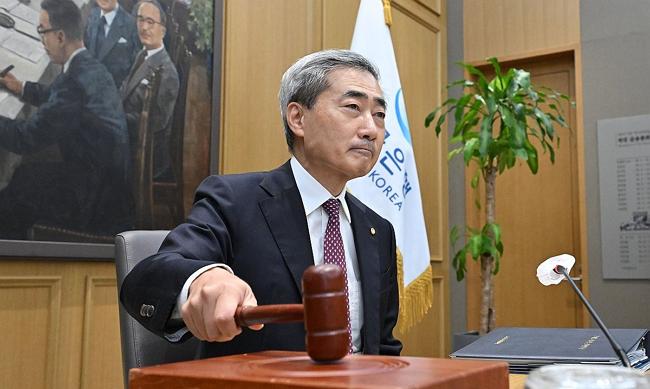 Bank of Korea Governor Shin Hyun-song bangs the gavel at the plenary session of the Monetary Policy Committee held at the Bank of Korea in Jung-gu, Seoul, on the 16th. All seven members of the Monetary Policy Committee voted in favor of the base interest rate hike on this day. July 16, 2026. [Photo Joint Press Corps/Yonhap News]
No evidence of political instructions… The basis for the change in judgment must be disclosed
Based on currently disclosed data alone, it cannot be concluded that the government instructed the Bank of Korea to raise interest rates.
In May, two members also argued for an immediate hike, and Governor Shin had warned from that time that there was a need to raise interest rates at an appropriate time. In July, inflation, core inflation, home prices, and household loans all rose, and all seven members of the Monetary Policy Committee voted in favor of the hike. Defining a decision that does not have entirely no economic basis as a political interest rate hike is excessive.
However, whether a decision is political or not is not judged solely by whether there were secret instructions. If the weight of the same economic variables was changed to fit the political and policy needs faced by the government, the boundary between the central bank’s independent judgment and policy cooperation must be examined.
For the Bank of Korea to resolve the suspicions, it must explain three things: how much higher the semiconductor outlook is compared to May, how it re-evaluated the probability of occurrence and the scale of impact of Middle East and U.S. trade risks, and what the reason was for having to raise interest rates first in July without a new formal growth outlook.
The Monetary Policy Committee, which had a majority for a freeze in May, turned to a unanimous vote for a hike in July. The semiconductor boom was already predicted, external risks did not decrease, and the military risk in the Middle East actually increased in the short term.
Yet, the policy changed.
Was this decision an independent monetary policy in response to a stronger-than-expected domestic economy? Or was it a political choice that changed policy weights to supplement the government’s real estate and exchange rate burdens and expansionary policy?
As long as the Bank of Korea cannot explain the basis for that change in judgment with figures, the question of “was it politics or policy?” is bound to remain.

 Iranian Foreign Ministry: "Continuing Message Exchanges with the U.S. and Activities of Mediating Countries"
Esmaeil Baghaei, Spokesperson for the Iranian Ministry of Foreign Affairs [Xinhua, Yonhap News file photo]Esmaeil Baghaei, spokesperson for the Iranian Ministry of Foreign Affairs, stated on the 26th
Iranian Foreign Ministry: "Continuing Message Exchanges with the U.S. and Activities of Mediating Countries"
Esmaeil Baghaei, Spokesperson for the Iranian Ministry of Foreign Affairs [Xinhua, Yonhap News file photo]Esmaeil Baghaei, spokesperson for the Iranian Ministry of Foreign Affairs, stated on the 26th
 President Yoon: "Do You Think You Are Safe from the Special Counsel?"... Final Statement Video Released
President Yoon Suk Yeol rebuking the special prosecutor on the 24th. [Court video / @birds_justice X account subtitle GIF] A video of President Yoon Suk Yeol's closing statement at his trial rega
President Yoon: "Do You Think You Are Safe from the Special Counsel?"... Final Statement Video Released
President Yoon Suk Yeol rebuking the special prosecutor on the 24th. [Court video / @birds_justice X account subtitle GIF] A video of President Yoon Suk Yeol's closing statement at his trial rega
 President Yoon, regarding the first-instance ruling on the Public Official Election Act: “An excessive political verdict that distorts the facts… We will appeal immediately.”
The first-instance sentencing hearing for President Yoon Suk Yeol regarding violations of the Public Official Election Act is being broadcast live at Seoul Station on the 27th. [Photo=Yonhap News]Pres
President Yoon, regarding the first-instance ruling on the Public Official Election Act: “An excessive political verdict that distorts the facts… We will appeal immediately.”
The first-instance sentencing hearing for President Yoon Suk Yeol regarding violations of the Public Official Election Act is being broadcast live at Seoul Station on the 27th. [Photo=Yonhap News]Pres
 WSJ: "SK Hynix ADR Premium Is a Sign of AI Trading Overheat"
Advertisement for SK Hynix ADR listing in New York's Times Square [Reuters=Yonhap News file photo]The Wall Street Journal (WSJ) has pointed out that the price of SK Hynix’s American Depositary Recei
WSJ: "SK Hynix ADR Premium Is a Sign of AI Trading Overheat"
Advertisement for SK Hynix ADR listing in New York's Times Square [Reuters=Yonhap News file photo]The Wall Street Journal (WSJ) has pointed out that the price of SK Hynix’s American Depositary Recei
 'Godfather of Japanese Mystery Novels' Keigo Higashino Passes Away After Battle with Cancer at 68
Famous Japanese mystery novelist Keigo Higashino [AFP=Yonhap News]It has been belatedly reported that Keigo Higashino, the "godfather of Japanese mystery novels" and author of bestsellers such as "The
'Godfather of Japanese Mystery Novels' Keigo Higashino Passes Away After Battle with Cancer at 68
Famous Japanese mystery novelist Keigo Higashino [AFP=Yonhap News]It has been belatedly reported that Keigo Higashino, the "godfather of Japanese mystery novels" and author of bestsellers such as "The
 [Park Pil-kyu Security Column] To the Ignorant Trying to Clothe a Beast in Sheep's Clothing
Rep. Kim Byung-joo of the Democratic Party of Korea [Photo=Yonhap News]“The Air Force Academy doesn't teach you how to fly a plane!” “The Army, Navy, and Air Force academies are exactly the
[Park Pil-kyu Security Column] To the Ignorant Trying to Clothe a Beast in Sheep's Clothing
Rep. Kim Byung-joo of the Democratic Party of Korea [Photo=Yonhap News]“The Air Force Academy doesn't teach you how to fly a plane!” “The Army, Navy, and Air Force academies are exactly the
 [Issue Diagnosis] Two Effects of the Election Petition Review
 [Photo] Evidence of Election Fraud Flooding U.S. Media… Trump Had 2.7 Million Votes Stolen
 [Video] U.S. Semiquincentennial Air Show... 'Art in the Sky' streaks across New York
 [Editorial Cartoon] A Draconian Law That Undermines Freedom of Expression

 List
List









