 U.S. President Donald Trump gives a national address at the White House on the 16th (local time) regarding election security and declassified documents. Trump disclosed the capabilities of hostile nations to compromise election infrastructure and evidence of China obtaining U.S. voter information. [Photo: Yonhap News] The classified election-related documents released by U.S. President Donald Trump on the 16th reveal that modern elections are no longer confined to the voting booth.
Hostile forces can attack election computer networks to tamper with the counting process of ballots already cast. On the other hand, they can combine personal information leaked from finance, telecommunications, and platform services into big data to analyze voters' political tendencies and vulnerabilities, manipulating public judgment through tailored misinformation and propaganda before a single vote is cast.
This is an "election hybrid war" that combines cyber infiltration and personal data theft with voter analysis and psychological operations to sway public opinion.
NATO defines hybrid warfare as an attack that blurs the lines between war and peace, utilizing both military and non-military, public and covert means to sow doubt among the target nation's populace and destabilize its society and institutions. Cyberattacks and disinformation are its core tools.
The significance of the Trump documents can also be distilled into two points: the "possibility of electronic manipulation" and the "weaponization of voter data as a security asset." While computer networks target votes already cast, big data targets the thoughts and actions of the citizens who cast them.
The documents released by the U.S. do not constitute definitive proof that the 2020 U.S. presidential election or any specific election in South Korea was actually manipulated. Nor does it confirm that individual hacking incidents, data breaches, or election management failures within South Korea were part of a single foreign hybrid operation. This article analyzes the election security risks that could arise when the vulnerabilities of election computer networks, the lack of domestic verification, and massive personal data leaks are combined. [Editor’s Note]
□ The Venezuelan Digital Vote-Switching Scheme… The Myth of "Impossible Manipulation" Collapses
The White House released intelligence assessments stating that Russia, China, Iran, North Korea, and non-state actors possess the capability to compromise U.S. election infrastructure. The report highlights that systems where data is concentrated—such as voter registration databases, electronic poll books, and official election websites—are the most vulnerable, and that attackers with authorized access could disrupt the election process.
One point that draws particular attention is the data regarding Venezuela.
The White House revealed that the U.S. Central Intelligence Agency (CIA) obtained intelligence on the Nicolas Maduro regime’s specific plans for election manipulation. The regime reportedly developed methods to digitally alter vote counts in the 2020 election while ensuring the manipulation would not be detected during audits.
This is not merely a matter of hacking a single standard voting machine. It poses a technical risk where manipulation values could be generated in a separate virtual or parallel environment that mimics or bypasses the normal system, and then injected into the central counting network as if they were results sent by legitimate equipment.
Whether this method was actually operational is a subject for separate verification. However, the claim that digital manipulation is technically "impossible" can no longer be sustained. It is not enough to examine only standard equipment and central servers; the entire flow must be verified, including backup servers, virtual environments, intermediary storage, data transmission networks, administrator accounts, and security certificates.
In South Korea, the National Intelligence Service (NIS), during a joint inspection with the National Election Commission (NEC) and the Korea Internet & Security Agency (KISA) in 2023, confirmed vulnerabilities in the integrated voter register, counting systems, and ballot sorters. Simulated hacking revealed the possibility of changing vote statuses, registering ghost voters, and altering counting results and ballot sorting values. Out of roughly 6,400 pieces of equipment, only 317 were inspected.
Claims of "manipulation" must be proven with evidence. However, the NEC’s defensive line that "manipulation is impossible" has already collapsed.
□ Deleted Leased Backup Servers… It is Difficult to Confirm Either Manipulation or Lack Thereof
Once the possibility of electronic manipulation is admitted, the issue shifts from "Is it possible?" to "Can it be verified?"
The NEC explained that it has used leased servers to handle traffic surges and system failures in election information systems, and that after the election, it wipes data completely to prevent leaks before returning the hardware.
While deleting data from leased equipment may be a standard security measure, the problem lies in whether complete server images, access/modification/transmission logs, virtual environments, and backups were preserved separately before deletion.
Based on current publicly available information, it is difficult to confirm whether the leased backup servers used in past elections were subjected to forensic verification by an independent body before being wiped and returned, or if original server data and full logs still exist. The 2023 NIS inspection tested vulnerabilities in some systems currently in operation; it was not a forensic investigation reconstructing the actual operational history of leased equipment used in past elections and subsequently wiped.
There is no evidence that leased servers were used for manipulation. However, if no originals or logs remain, it is impossible to prove after the fact that they were *not* used. This is a "verification gap" where neither manipulation nor the lack thereof can be confirmed.
On the other side of the computer system lies the physical paper ballot. If only the digital tally has been changed, a manual recount should reveal a discrepancy.
However, for a recount to be meaningful, it must first be proven that the ballots being counted are identical to the originals from the day of the election. This requires an unbroken chain of custody: sealing, transport, handover, storage, access records, and continuous CCTV coverage.
If digital records disappear and the chain of custody for physical ballots is opaque, both independent axes of verification—the digital and the physical—are weakened. Election trust must be built not on declarations by management agencies, but on the alignment of independent originals and records.
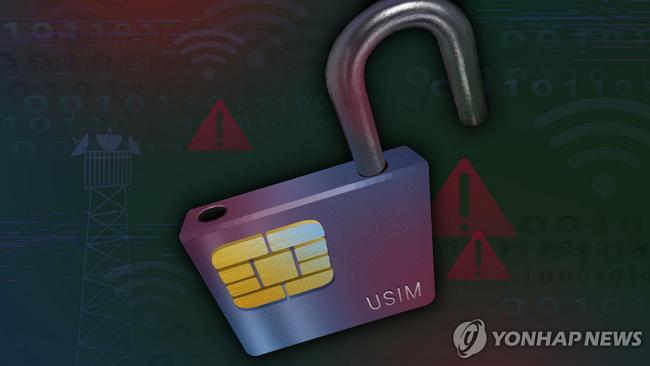 Personal information leaked from financial, telecommunications, and platform services can be linked using phone numbers, addresses, and device information. When combined with election statistics, location, consumption, and online activity data, this can turn into big data that infers the political tendencies of individuals and groups. [Yonhap News graphic]□ Scattered Personal Data… Becomes a Weapon of Hybrid Warfare
The second warning in the Trump documents concerns voter data.
The White House alleged that China had illegally obtained 220 million U.S. voter files since the 2020 election cycle, including names, addresses, phone numbers, and party affiliations. They also disclosed that China had established a dedicated organization to analyze this data.
The fact that voter data was obtained does not necessarily mean that the voting or counting results were changed. In 2021, the U.S. Intelligence Community assessed that they found no signs that foreign powers altered the technical aspects of the 2020 presidential election, such as registration, voting, counting, or tallying.
However, the military and intelligence value of voter information goes beyond directly changing vote counts.
South Korea has repeatedly suffered massive personal data breaches across almost all areas of public life, including finance, credit cards, banking, telecommunications, e-commerce, and instant messaging. In 2025, 25 types of information, including the mobile phone numbers, subscriber identification numbers, and USIM authentication keys of 23,244,649 SK Telecom users, were leaked. Hackers had first infiltrated the internal network in 2021 and remained there for an extended period.
As victims overlap, these numbers cannot be simply added up. However, given that almost every citizen uses telecommunications, finance, shopping, and messaging services, national security policy must be established on the worst-case assumption that the personal information of most South Koreans is already included in one or more external databases.
Names, phone numbers, emails, addresses, dates of birth, and device identifiers serve as links to unify different databases around the same individual. Even if data cannot identify an individual on its own, the Personal Information Protection Act defines it as personal information if it can be easily combined with other information to identify someone.
If this is combined with regional election results, opinion polls, location, search, consumption, and social media activity, one can infer political tendencies, economic frustrations, voter turnout likelihood, and even which messages might provoke anger or influence opinions.
This means that even without obtaining the official voter register, voters can be segmented by region, generation, occupation, income, and interests, and influence operations can be conducted tailored to the vulnerabilities of each group.
□ You Can Shake an Election Without Changing a Single Vote
Big data combined in this way becomes a weapon of election hybrid warfare.
Specific groups can be exposed to information that stimulates anger and fear, while apathy and the pointlessness of voting can be spread among the opposition's base. By sending contradictory messages to different groups, attackers can exacerbate social conflict and prevent citizens from sharing even a common set of facts.
NATO explains that hostile information activities do not necessarily aim to make people believe a specific lie. Rather, by flooding the space with conflicting information that makes it impossible to distinguish fact from fiction, the attackers can achieve their goals simply by causing citizens to disengage from the political process.
If computer manipulation targets votes already cast, big data cognitive warfare targets the judgment of the citizens before they vote. The moment these two means are combined, the election is no longer a one-day event, but a battlefield for a hybrid war over national sovereignty.
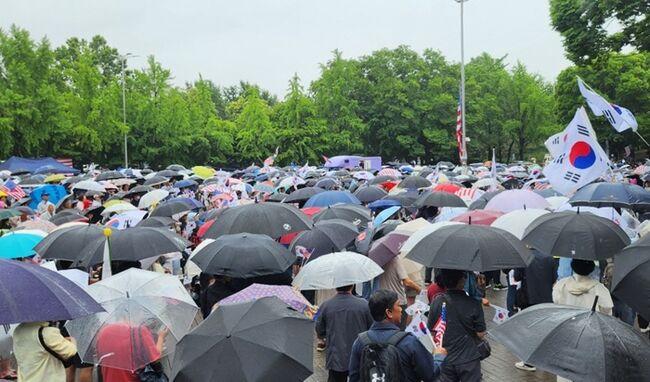 Patriotic citizens calling for “fair elections, re-elections, and manual counting on election day” in the rain. [Photo: Hanmi Ilbo]□ The Choice of Citizens Who Experienced Disenfranchisement
Before preparing for external election hybrid warfare, South Korea failed to even fully guarantee the fundamental right to vote.
In the June 3rd local elections, 7,194 ballots were missing across 91 polling stations nationwide, and voting was temporarily suspended in 26 locations. Some voters left polling stations after waiting for ballots that never arrived.
While the computer network and leased servers lack transparent post-election verification, and controversy continues regarding the continuity of physical ballot storage, the authorities failed to provide ballots to citizens who actually showed up at the polls.
The solution proposed by citizens who have experienced this disenfranchisement is simple:
"Fair re-elections, and manual counting on election day."
Counting on election day shortens the long period of transporting and storing ballots from the start of early voting to the final count. Manual counting ensures that the results classified by machines and tallied by networks are verified directly by human eyes and hands.
This is not a demand to abandon technology. It is a demand to return technology to its role as a supplementary tool for verifying the people's choices, rather than a mechanism that replaces them.
The goal of hybrid warfare is not necessarily just to change the vote count. Making citizens distrust the election and undermining democratic legitimacy is also a successful outcome for the attacker.
The final line of defense against such an attack is not the declaration by election management agencies that it is "impossible."
It is a simple and transparent election that citizens can verify for themselves.

 Iranian Foreign Ministry: "Continuing Message Exchanges with the U.S. and Activities of Mediating Countries"
Esmaeil Baghaei, Spokesperson for the Iranian Ministry of Foreign Affairs [Xinhua, Yonhap News file photo]Esmaeil Baghaei, spokesperson for the Iranian Ministry of Foreign Affairs, stated on the 26th
Iranian Foreign Ministry: "Continuing Message Exchanges with the U.S. and Activities of Mediating Countries"
Esmaeil Baghaei, Spokesperson for the Iranian Ministry of Foreign Affairs [Xinhua, Yonhap News file photo]Esmaeil Baghaei, spokesperson for the Iranian Ministry of Foreign Affairs, stated on the 26th
 President Yoon: "Do You Think You Are Safe from the Special Counsel?"... Final Statement Video Released
President Yoon Suk Yeol rebuking the special prosecutor on the 24th. [Court video / @birds_justice X account subtitle GIF] A video of President Yoon Suk Yeol's closing statement at his trial rega
President Yoon: "Do You Think You Are Safe from the Special Counsel?"... Final Statement Video Released
President Yoon Suk Yeol rebuking the special prosecutor on the 24th. [Court video / @birds_justice X account subtitle GIF] A video of President Yoon Suk Yeol's closing statement at his trial rega
 President Yoon, regarding the first-instance ruling on the Public Official Election Act: “An excessive political verdict that distorts the facts… We will appeal immediately.”
The first-instance sentencing hearing for President Yoon Suk Yeol regarding violations of the Public Official Election Act is being broadcast live at Seoul Station on the 27th. [Photo=Yonhap News]Pres
President Yoon, regarding the first-instance ruling on the Public Official Election Act: “An excessive political verdict that distorts the facts… We will appeal immediately.”
The first-instance sentencing hearing for President Yoon Suk Yeol regarding violations of the Public Official Election Act is being broadcast live at Seoul Station on the 27th. [Photo=Yonhap News]Pres
 WSJ: "SK Hynix ADR Premium Is a Sign of AI Trading Overheat"
Advertisement for SK Hynix ADR listing in New York's Times Square [Reuters=Yonhap News file photo]The Wall Street Journal (WSJ) has pointed out that the price of SK Hynix’s American Depositary Recei
WSJ: "SK Hynix ADR Premium Is a Sign of AI Trading Overheat"
Advertisement for SK Hynix ADR listing in New York's Times Square [Reuters=Yonhap News file photo]The Wall Street Journal (WSJ) has pointed out that the price of SK Hynix’s American Depositary Recei
 'Godfather of Japanese Mystery Novels' Keigo Higashino Passes Away After Battle with Cancer at 68
Famous Japanese mystery novelist Keigo Higashino [AFP=Yonhap News]It has been belatedly reported that Keigo Higashino, the "godfather of Japanese mystery novels" and author of bestsellers such as "The
'Godfather of Japanese Mystery Novels' Keigo Higashino Passes Away After Battle with Cancer at 68
Famous Japanese mystery novelist Keigo Higashino [AFP=Yonhap News]It has been belatedly reported that Keigo Higashino, the "godfather of Japanese mystery novels" and author of bestsellers such as "The
 [Park Pil-kyu Security Column] To the Ignorant Trying to Clothe a Beast in Sheep's Clothing
Rep. Kim Byung-joo of the Democratic Party of Korea [Photo=Yonhap News]“The Air Force Academy doesn't teach you how to fly a plane!” “The Army, Navy, and Air Force academies are exactly the
[Park Pil-kyu Security Column] To the Ignorant Trying to Clothe a Beast in Sheep's Clothing
Rep. Kim Byung-joo of the Democratic Party of Korea [Photo=Yonhap News]“The Air Force Academy doesn't teach you how to fly a plane!” “The Army, Navy, and Air Force academies are exactly the
 [Issue Diagnosis] Two Effects of the Election Petition Review
 [Photo] Evidence of Election Fraud Flooding U.S. Media… Trump Had 2.7 Million Votes Stolen
 [Video] U.S. Semiquincentennial Air Show... 'Art in the Sky' streaks across New York
 [Editorial Cartoon] A Draconian Law That Undermines Freedom of Expression

 List
List









