 In a video released by U.S. Central Command on the 16th, U.S. forces are seen conducting precision strikes on military targets within Iran. U.S. Central Command stated that they attacked coastal surveillance facilities, air defense networks, and military logistics support facilities. The specific locations and targets of the strikes in the video have not been disclosed. [Photo: U.S. Central Command video capture]
Report ⎟ The Impact of Trump's Choices on the Three East Asian Nations
※Editor's Note= In a consecutive series in March, the Korea-US-Japan Daily analyzed the neutralization of Iran’s strait-control capabilities as 'Act 2' and the direct pressure on power grids and energy infrastructure as 'Act 3.' This article tracks whether the conflict has transitioned between these stages by comparing those earlier projections with the current battlefield situation as of July 17.
|
The war between the United States and Iran has reached the boundary separating limited conflict from attacks on national infrastructure.
For the sixth consecutive day, U.S. forces have continued airstrikes targeting coastal surveillance facilities, air defense networks, military logistics facilities, and naval assets in southern Iran. Iranian media reported that five bridges, as well as railway stations and airports, had also been attacked.
However, these two sets of facts should not be treated with the same level of credibility. The targets officially confirmed by U.S. Central Command remain military installations. Reports of attacks on bridges, railway stations, and airports come from Iranian media, and Reuters stated it could not independently verify them. Attacks on power plants and power grids also remain officially unconfirmed.
Therefore, it is premature to conclude that the Iran war has fully entered 'Act 3,' which would paralyze the functions of the state. Nevertheless, with reports emerging of strikes on transportation infrastructure outside of military facilities, the boundary that once separated Act 2 from Act 3 has narrowed significantly.
U.S. President Donald Trump has repeatedly warned that if Iran does not return to negotiations, he could order attacks on power plants and bridges. The deployment of limited ground forces to seize Kharg Island—the hub of Iran's crude oil exports—and strikes on underground nuclear-related facilities have also been discussed as potential options. However, final approval for these actions has not been announced. On the 15th, Trump stated that Iran would know the situation, without setting an official deadline.
The current deadline is less of a diplomatic ultimatum ending on a specific date, and more of a political and military timeline during which the purpose and scope of the war must be decided.
Will the U.S. stop at further weakening Iran's ability to control the strait? Or will it strike the power, transportation, and energy systems to pressure the very functionality of the state? Time is running out for Trump to make his choice.
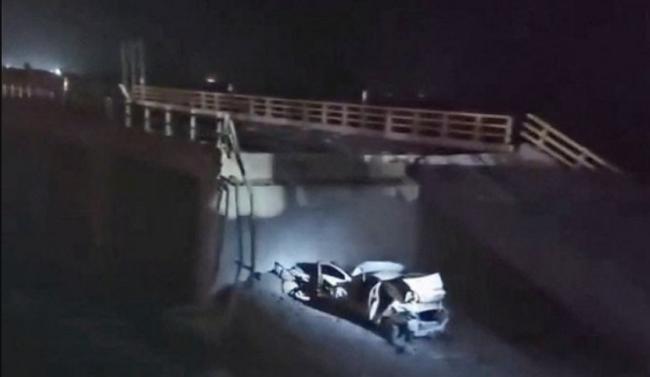 A bridge in Bandar Khamir, Hormozgan Province, Iran, lies collapsed after a U.S. airstrike, with a damaged vehicle visible. Iranian media reported that at least 7 people were killed in the bridge attack early on the 17th. [Photo: Reuters/Yonhap News] Between Official Announcements and Reports of 'Bridge Strikes'
U.S. Central Command stated that from the night of the 16th to the early hours of the 17th, it struck dozens of military targets in Iran using fighter jets, drones, and warships.
The attacked areas included Qeshm Island in the Strait of Hormuz and the vicinity of Bandar Abbas, Iran's largest port and a hub for facilities of the Navy and the Islamic Revolutionary Guard Corps (IRGC). The targets disclosed by the U.S. were coastal surveillance facilities, air defense networks, military logistics infrastructure, and naval assets. The official objective of the operation is focused on further weakening Iran's military capabilities and its control over the strait.
Conversely, Iranian media reported that U.S. airstrikes hit five bridges in the southern region, as well as the Bandar Khamir railway station and the Iranshahr airport. The state-run IRNA news agency reported that seven people were killed in the attack on the Bandar Khamir bridge.
If the attacks on bridges, railways, and airports are confirmed to be true, it would mean that U.S. targets have expanded beyond coastal defense facilities to include transportation networks that connect the interior to the ports and facilitate the movement of troops and supplies.
However, U.S. Central Command did not officially announce bridges, railway stations, or airports as separate targets. Reuters was also unable to immediately verify the Iranian reports. At this juncture, the most accurate assessment is not that "Act 3 has officially begun," but that "reports of strikes on transportation infrastructure have emerged while the battlefield is being prepared to transition into Act 3."
Once 'Conditions are Set,' Only the Power Grid Remains as an Option
Three U.S. officials explained to Reuters that recent airstrikes could be "shaping operations" designed to eliminate Iran's air defenses, coastal radars, and missile/drone assets in advance of larger military actions.
This is not an official U.S. military operation name, but an assessment provided by anonymous officials. However, coupled with the talk of escalation options such as power plants, bridges, Kharg Island, and underground nuclear facilities, it suggests that the current airstrikes carry a significance beyond mere retaliation.
A full-scale attack on nuclear facilities carries high risks of radiation spread and international condemnation. Large-scale ground troop deployment and long-term occupation, similar to the Iraq War, are also too costly in both political and military terms.
The option in between is "compellence without occupation"—destabilizing power grids, oil refineries, energy facilities, communications, and command structures to make the cost of continuing the war unbearable for the Iranian leadership.
If the power grid is attacked, it disrupts not just one military unit, but industry, communications, finance, transportation, administration, healthcare, and daily urban life all at once.
The moment Trump authorizes attacks on power plants and transmission lines, the war's objective shifts from weakening Iran's military power to pressuring the state's very ability to function. From that point on, Act 3 of the Iran war ceases to be a forecast and becomes reality.
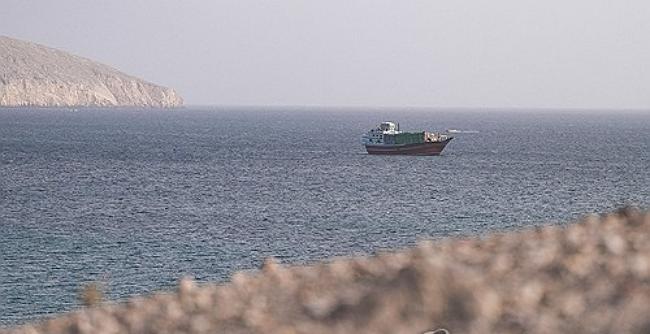 The Strait of Hormuz viewed from Musandam, Oman, on the 16th. Shipping through the strait has plummeted following the resumption of the U.S. blockade of Iranian ports and the armed conflict between the two nations. [Photo: Reuters/Yonhap News] Three Ships in Hormuz… Energy Transport Frozen Again
At sea, the impact of the war is already appearing in the numbers.
According to vessel tracking data, only three raw material carriers passed through the Strait of Hormuz on the 16th. This is the lowest daily volume since last May. The day before, on the 15th, only 11 ships passed through—a mere fraction compared to the pre-war daily average of 125.
No Very Large Crude Carriers (VLCCs) or Liquefied Natural Gas (LNG) carriers have passed through the strait for two consecutive days. While some small vessels escaped using Iranian routes, they stopped in front of the U.S. blockade line in the Gulf of Oman, and a tanker loaded with Iraqi fuel oil turned back.
Hormuz is not physically closed entirely. However, the transport of large-scale crude oil and LNG, which is critical to the global energy market, has effectively ground to a halt again.
The Iranian Revolutionary Guard Corps stated that it would not permit crude oil and gas exports through Hormuz as long as U.S. attacks continue. The U.S. has reimposed a blockade on Iranian ports and is demanding that ships use the southern route off the coast of Oman.
The conflict between the two sides has now moved beyond the question of whether to open or close the strait.
The U.S. and Iran are clashing physically over who gets to designate the sea lanes of Hormuz, which ships are allowed to pass, and who sets the rules of transit.
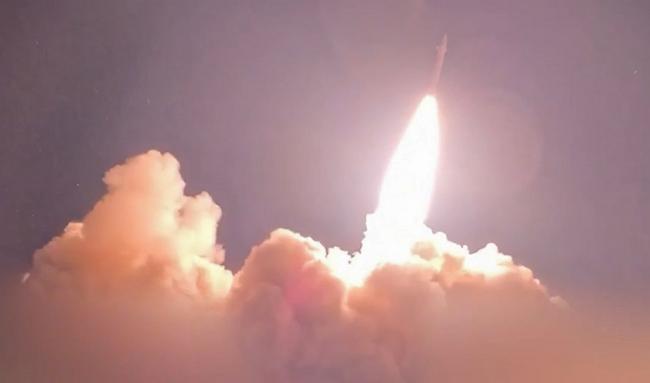 A scene of a missile launch by the Islamic Revolutionary Guard Corps (IRGC), released by local Iranian media. Iran claimed to have attacked U.S. facilities in Bahrain, Kuwait, and Syria in response to the U.S. airstrikes. [Photo: AFP/Yonhap News] Retaliation Spreads to Syria… Red Sea Threatened if Power Grids Attacked
The front lines are also expanding.
On the 17th, Iran claimed it had attacked U.S. facilities in Bahrain and Kuwait. It also announced that it had attacked a U.S. special operations command facility in Al-Tanf, Syria; if true, this would be the first time Iran has directly attacked U.S. facilities within Syria.
In Doha, Qatar, the Qatari Ministry of Interior reported that one child was injured by debris from missile interception. However, the scale of damage to individual U.S. facilities claimed by Iran has not been independently verified.
If the U.S. attacks Iran's power grid, the front could expand as far as the Red Sea.
Reuters reported, citing multiple sources, that the Iranian leadership has requested the Houthi rebels in Yemen to prepare for a blockade of the Bab el-Mandeb Strait if the U.S. attacks Iranian power infrastructure. While there has been no official announcement that the Houthis have received an actual order to attack, there are claims that they are preparing to deploy missiles and drones.
The path of danger is clear.
If a U.S. attack on Iran's power grid leads to Houthi attacks on ships in the Red Sea, the Middle East's eastern energy transport route (Hormuz) and its western route (Bab el-Mandeb) would be destabilized simultaneously.
In that scenario, the issue is not just a reduction in crude oil supply. A simultaneous rise in tanker shortages, freight rates, war insurance premiums, and Suez Canal detour costs could alter the cost structure of global logistics and manufacturing.
Two Military and Energy Deadlines… The Bill Goes to Korea, China, and Japan
While military conflict is intensifying, diplomatic channels have not been completely severed.
While the White House defined Iran's attacks on ships as a violation of last month's interim agreement, Trump has stated he remains open to diplomacy. Pakistan, Qatar, and Egypt are also continuing mediation efforts to bring the U.S. and Iran back to the negotiating table.
Both sides have not officially withdrawn from the interim agreement signed last month. However, the 60-day negotiation process to reach a final deal is effectively at a standstill. The core issues remain not only the nuclear program but also the management rights of the Hormuz sea lanes and the principle of free navigation.
The current state of the war is a dual structure where military preparations for escalation and back-channel negotiations are operating simultaneously.
The U.S. is attempting to narrow Iran's options through military pressure, but experts warn that expanding airstrikes may strengthen Iranian resistance rather than extract concessions. Iran, too, is delaying a final decision to fully abandon the interim agreement while continuing to show off its ability to control the strait.
A new economic deadline has also emerged for the war.
Fatih Birol, Executive Director of the International Energy Agency (IEA), warned that if the situation in Hormuz does not improve within a few weeks, there is reason to be concerned about global energy security.
While China has stockpiled over 1 billion barrels of crude oil before the war, IEA member countries have released up to 400 million barrels from strategic reserves, and increased U.S. production is helping to cap prices, such buffers cannot last forever.
Executive Director Birol pointed out that 80-90% of energy passing through Hormuz is headed to Asia, noting that Japan, South Korea, India, Pakistan, and Bangladesh are in the direct line of impact.
On the 17th, international oil prices stood at around $84.30 per barrel for Brent crude and $79.11 for West Texas Intermediate (WTI). Both benchmarks have risen about 12% this week. The market has begun to price in a "double blockade risk" where the Red Sea could also be blocked in addition to the disruptions in Hormuz.
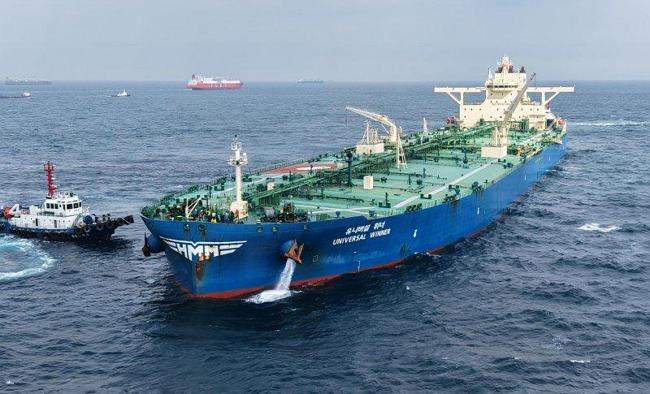 HMM's VLCC 'Universal Winner', which had been trapped in the Strait of Hormuz by the Middle East war, approaches an offshore crude oil unloading facility off the coast of Ulsan on the 10th of last month to unload oil. If disruptions in transport from Hormuz are prolonged, the manufacturing sectors and prices in Korea, China, and Japan—which are highly dependent on Middle Eastern energy—will be directly affected. [Photo: Yonhap News] The Form of the Shock Varies for Each of the Three East Asian Nations
For Japan, the combination of dependence on Middle Eastern crude oil and a weak yen increases the burden on import prices, electricity, and transportation costs. For China, large strategic reserves can serve as a short-term buffer, but if rising import oil prices coincide with weakening consumption in the U.S. and Europe, its manufacturing and export sectors will be pressured.
South Korea is structured in a way that is hit all at once by high oil prices, a weak won, and a global manufacturing demand slump. For Korea, which imports energy to export semiconductors, automobiles, and petrochemical products, rising raw material costs and falling final demand deliver a simultaneous shock.
If high oil prices persist for weeks, the resulting resurgence in U.S. inflation and slowing consumption could restrict interest rate cuts and corporate investment. Even if Big Tech companies do not cancel artificial intelligence (AI) data center investments, if they delay groundbreaking and server installation, the growth rate of orders for graphics processing units (GPUs), high-bandwidth memory (HBM), and server memory could decline.
However, this is a risk path that only manifests if high oil prices are prolonged and the U.S. economy actually slows down. One should not conclude that AI investments are being cut or that a semiconductor down-cycle has begun solely based on adjustments in semiconductor stocks. What must be checked are the capital expenditure forecasts of Big Tech, construction schedules for data centers, and changes in orders and inventory at memory clients.
Two deadlines are currently at work in the Iran war.
One is the military deadline for Trump to decide whether to attack power plants, transmission lines, and energy facilities. The other is the economic deadline, as the buffer provided by strategic reserves and alternative supplies weakens if energy flows in Hormuz are not restored within weeks.
If the attacks on bridges, railways, and airports are officially confirmed, the war has already taken a step outside military facilities. If attacks on power grids begin, a war aimed at weakening Iran's military power will transform into a war that directly pressures the functions of the state and the lives of its citizens.
The choice lies with Trump.
However, the bill for that decision will not only be sent to the United States. It could arrive at factories in China, power plants in Japan, and semiconductor production lines and stock markets in South Korea.

 Iranian Foreign Ministry: "Continuing Message Exchanges with the U.S. and Activities of Mediating Countries"
Esmaeil Baghaei, Spokesperson for the Iranian Ministry of Foreign Affairs [Xinhua, Yonhap News file photo]Esmaeil Baghaei, spokesperson for the Iranian Ministry of Foreign Affairs, stated on the 26th
Iranian Foreign Ministry: "Continuing Message Exchanges with the U.S. and Activities of Mediating Countries"
Esmaeil Baghaei, Spokesperson for the Iranian Ministry of Foreign Affairs [Xinhua, Yonhap News file photo]Esmaeil Baghaei, spokesperson for the Iranian Ministry of Foreign Affairs, stated on the 26th
 President Yoon: "Do You Think You Are Safe from the Special Counsel?"... Final Statement Video Released
President Yoon Suk Yeol rebuking the special prosecutor on the 24th. [Court video / @birds_justice X account subtitle GIF] A video of President Yoon Suk Yeol's closing statement at his trial rega
President Yoon: "Do You Think You Are Safe from the Special Counsel?"... Final Statement Video Released
President Yoon Suk Yeol rebuking the special prosecutor on the 24th. [Court video / @birds_justice X account subtitle GIF] A video of President Yoon Suk Yeol's closing statement at his trial rega
 President Yoon, regarding the first-instance ruling on the Public Official Election Act: “An excessive political verdict that distorts the facts… We will appeal immediately.”
The first-instance sentencing hearing for President Yoon Suk Yeol regarding violations of the Public Official Election Act is being broadcast live at Seoul Station on the 27th. [Photo=Yonhap News]Pres
President Yoon, regarding the first-instance ruling on the Public Official Election Act: “An excessive political verdict that distorts the facts… We will appeal immediately.”
The first-instance sentencing hearing for President Yoon Suk Yeol regarding violations of the Public Official Election Act is being broadcast live at Seoul Station on the 27th. [Photo=Yonhap News]Pres
 WSJ: "SK Hynix ADR Premium Is a Sign of AI Trading Overheat"
Advertisement for SK Hynix ADR listing in New York's Times Square [Reuters=Yonhap News file photo]The Wall Street Journal (WSJ) has pointed out that the price of SK Hynix’s American Depositary Recei
WSJ: "SK Hynix ADR Premium Is a Sign of AI Trading Overheat"
Advertisement for SK Hynix ADR listing in New York's Times Square [Reuters=Yonhap News file photo]The Wall Street Journal (WSJ) has pointed out that the price of SK Hynix’s American Depositary Recei
 'Godfather of Japanese Mystery Novels' Keigo Higashino Passes Away After Battle with Cancer at 68
Famous Japanese mystery novelist Keigo Higashino [AFP=Yonhap News]It has been belatedly reported that Keigo Higashino, the "godfather of Japanese mystery novels" and author of bestsellers such as "The
'Godfather of Japanese Mystery Novels' Keigo Higashino Passes Away After Battle with Cancer at 68
Famous Japanese mystery novelist Keigo Higashino [AFP=Yonhap News]It has been belatedly reported that Keigo Higashino, the "godfather of Japanese mystery novels" and author of bestsellers such as "The
 [Park Pil-kyu Security Column] To the Ignorant Trying to Clothe a Beast in Sheep's Clothing
Rep. Kim Byung-joo of the Democratic Party of Korea [Photo=Yonhap News]“The Air Force Academy doesn't teach you how to fly a plane!” “The Army, Navy, and Air Force academies are exactly the
[Park Pil-kyu Security Column] To the Ignorant Trying to Clothe a Beast in Sheep's Clothing
Rep. Kim Byung-joo of the Democratic Party of Korea [Photo=Yonhap News]“The Air Force Academy doesn't teach you how to fly a plane!” “The Army, Navy, and Air Force academies are exactly the
 [Issue Diagnosis] Two Effects of the Election Petition Review
 [Photo] Evidence of Election Fraud Flooding U.S. Media… Trump Had 2.7 Million Votes Stolen
 [Video] U.S. Semiquincentennial Air Show... 'Art in the Sky' streaks across New York
 [Editorial Cartoon] A Draconian Law That Undermines Freedom of Expression

 List
List









