 Symbols of South Korea's economic leap that propelled the nation into a global economic powerhouse: POSCO (left) and Samsung Electronics. [Photo=Reporter Lim Yo-hee, Yonhap News]
In April 1969, three months before being discharged as an Air Force lieutenant, I was scouted at the request of the Blue House to join KIST (Korea Institute of Science and Technology). Immediately upon arrival, I joined Dr. Kim Jae-kwan's team, the group in charge of the Pohang Integrated Steel Mill construction project, and took on the practical responsibilities of conducting the feasibility study.
At the time, the KISA international lending consortium had determined that providing loans for the construction of the Pohang Steel Mill was difficult due to the small scale of Korea's domestic market. It was because of the Blue House's urgent instructions to KIST to re-examine the project that I was unexpectedly scouted.
Proving the Feasibility of POSCO Through Natural Law
From the perspective of "Can the domestic market deficit truly be covered by exports?", I derived a Steel Export Quantitative Model based on the law of gravity—a natural order—to prove the project's feasibility. Construction of the Pohang Steel Mill, with an annual production capacity of 1.03 million tons, began in 1970, and POSCO began producing steel products in 1973.
In 1971, while the Pohang plant construction was in full swing, I was appointed as the head of the feasibility study for the Gwangyang Steel Mill. I used mixed integer linear programming to prove the feasibility of the project, which started with a 3-million-ton capacity and aimed for a final scale of 12 million tons.
Following this, the government launched the second state-owned steel company in 1972, led by former Prime Minister and President Tae Wan-son. However, the project was postponed due to the first oil shock in 1973 and was later absorbed into POSCO.
As Chairman Park Tae-joon drove the steel industry forward by leveraging President Park Chung-hee’s industrialization will, most heavy and chemical industries centered on steel-intensive sectors were able to enter the mainstream by the early 1980s.
As the heavy and chemical industries were cruising, one of the most urgent socio-economic issues was quickly resolving the massive backlog of demand for telephone services.
Based on KIST’s experience in independently developing a private exchange system, the decision was made to introduce an advanced ITT switching system from Belgium to address the backlog. In 1977, the Electronics and Telecommunications Research Institute (ETRI) was launched as the entity responsible for absorbing and improving the introduced technology.
At that time, as a founding member of ETRI, I served as the Director of Planning and the Director of Telecommunications Economics, simultaneously handling the absorption and improvement of the imported technology while establishing a long-term development strategy for the nation's electronic communications.
Once the blueprint for the development of Korea's telecommunications was prepared, and with the understanding and cooperation of the Economic Planning Board (EPB) Enterprise Budget Division (led by Division Chief Kang Bong-kyun, who later served as Deputy Prime Minister for Economy), ETRI secured the research budget it required and rapidly entered its main development phase.
Protesting Lee O-young's Cultural Centricity
The Chun Doo-hwan administration, which launched in 1980, sought to resolve the telephone backlog and modernize telecommunications infrastructure amid the digital revolution. In 1984, it separated the policy functions of the Ministry of Communications from its business operation functions, launching the Korea Telecommunication Authority (KTA, the predecessor to KT) as a public corporation, with Lee Hae-wook, former Planning Director of the Ministry of Communications, serving as its first president.
KTA then commissioned a research project for the "KTA Development Strategy" to transform its electrical communication system into an electronic one to me, as I was heading the Hanyang University Industrial Management Research Institute at the time in 1987.
The research team for the KTA development strategy project was divided into three sectors: corporate culture led by Professor Lee O-young of Ewha Womans University, management organization by Professor Kwak Soo-il of Seoul National University, and management strategy by myself, a professor at Hanyang University.
I am not sure if there was any special intent, but the standard sequence for such a project is to determine management strategy first and then address the management organization and corporate culture needed to execute it. In this case, it was strange that the order was reversed to corporate culture-management organization-management strategy.
After a certain period, there was an opportunity to present the research results, and I would like to briefly peek into the atmosphere of the presentation at that time.
The presentation was held under the chairmanship of President Lee Hae-wook, with KTA executives and prominent professors from the telecommunications industry and academia in attendance. Professor Lee O-young, in charge of corporate culture, was explaining his research on "We will listen even to the smallest voices" in such a long-winded manner that President Lee Hae-wook was visibly uncomfortable.
Furthermore, Professor Kwak Soo-il from the management organization team did not show up, and only his team members attended, so I judged it was inevitable for me to step in.
I asked Professor Lee O-young, in a questioning format hoping he would finish his speech: "Professor Lee, you emphasize 'listening even to the smallest voices,' but do you know what kind of forum this is and why KTA organized it?"
A cold, awkward silence followed my question, as if a bucket of cold water had been poured over the hall. I continued.
“I will now say a few words. The global telecommunications industry is facing a massive technological revolution as it shifts from analog to digital, and we are also anticipating the collapse of the U.S.-Soviet bipolar system.
These waves of rapid transformation will deal a massive shock to global telecommunications and the Korean communication system, and they will act as either an opportunity or a threat to KTA.
I understand that the purpose of today's meeting is to find a brilliant strategy for KTA to become a successful first-mover in adapting to environmental changes, or at the very least, to find a way to catch up with the advanced ranks.”
Most of the attendees nodded in agreement with my remarks.
Presenting KTA's Management Strategy
Next, I presented the KTA management strategy (proposal) with strategic implications: the ATTACK (Advanced Total Telecom Advantage Creating KTA) strategy.
The strategy slogan was, "Let us become a KTA that creates competitive advantage through cutting-edge wired and wireless electronic communication systems using advanced telecommunication innovation technologies!" KTA held a company-wide strategy proclamation ceremony and began to drive this initiative.
President Lee Hae-wook expressed his belief that for KTA to develop into a global "Mega Player," research results from a world-class consulting firm were essential. He entrusted the research project to Monitor, the consulting firm led by Professor Michael Porter’s team at Harvard Business School in 1988, and asked me to attend the presentation of the results and share my opinions.
A few months later, I sharply pointed out that their final research results contained no consideration for the development trends of electronic communication technology or the impact of the collapse of the U.S.-Soviet bipolar system on global telecommunications. The head of Monitor’s London branch was left speechless, his face turning bright red, before quietly disappearing—a true mishap.
However, the poor research results from Michael Porter’s team inspired me to build the "Dynamic Management" theory. This theory is based on the premise that business performance is determined by how well an organization achieves "good adaptation" through "needs-focused innovation" on the supply side in response to "needs evolution" on the demand side.
Dynamic Management Theory Comes to Light
At that time, even without my request, the Samsung Group’s Strategic Planning Headquarters provided significant financial support, telling me to conduct my research without any burden. This allowed me to immerse myself in industrial research, and in the early 1990s, I published two books through the Korea Economic Daily: The Principles of Global Industrial Dominance Shift and Where Does Firm Power Come From?
At the time, The Principles of Global Industrial Dominance Shift was selected as the only domestic book among the 10 must-read books for "Samsung Men," and Where Does Firm Power Come From? won the 1995 Publishing Culture Award (hosted by the Federation of Korean Industries).
From the perspective of Providential Management (meaning the universe operates solely according to the Creator's will), power in physics is 'Power = (Volume x Density) x (Acceleration x Velocity).' In other words, 'Power = Force x Velocity,' 'Force = Mass x Acceleration (F=ma, Newton’s second law of motion),' and 'Mass = Volume x Density.'
I defined the concept of 'Firm Power' as 'the efficiency of a firm’s power in pursuing profit.' By applying and inferring from the four factors that constitute power in physics—(Volume x Density) x (Acceleration x Velocity)—I established the 'Firm Power Theory,' which approaches the concept as [Firm Power = Firm Size x (Solution Suitability, Process Suitability) x Innovation x Growth Vector].
In 1995, eager to internationally verify the theoretical robustness and practicality of my Firm Power Theory, I met with Professor Christopher Freeman of the University of Sussex in the UK, a leader in evolutionary economics who studied the relationship between technology and economic growth, at his laboratory to discuss and exchange opinions.
At the time, he was frequently mentioned as a candidate for the Nobel Prize in Economics, though it is remembered that his chances were slim as his field was not mainstream economics.
Regarding the Firm Power Theory, Professor Freeman highly praised it, stating that he had never seen such a clear theory in his life. He noted that as a techno-economist, he was limited to dealing with national and industrial levels, failing to cover the firm and business levels—the sites of innovation. In contrast, he praised my theory for its synthesis of firm and industrial levels, its holism in treating technical innovation and customer needs evolution within a single framework, its dynamism, and the robustness of a theory rooted in natural law, which recognizes the fit between technology and customer needs as the determinant of performance.
At the end of the discussion, he asked me what means of transport I had used to get to the school from London (the taxi ride took about two hours, and public transport was extremely inconvenient at the time due to rare train service).
When I told him that the London branch of Samsung (I was a non-standing auditor for a Samsung affiliate at the time) had arranged the transportation, he was very surprised and could not continue his sentence, saying, "Who are you that Samsung would..."
From his polite attitude toward me, I could tell how Samsung was perceived in the UK at the time. (Meanwhile, back in Korea, frogs in a well, incompetent politicians, and left-wing anti-state groups were constantly calling for the dissolution of the Samsung conglomerate.)
The Rapidly Changed Domestic Industrial Structure After the 1997 IMF Crisis
Beginning with the operation of POSCO’s Pohang Steel Mill in 1973, heavy and chemical industries, including steel-intensive sectors, cruised successfully for over 20 years. However, when the 1997 IMF financial crisis struck, the Korean economy faced an unprecedented catastrophe in which half of the top 30 conglomerates went bankrupt.
Yet, how was the IMF crisis so easily overcome afterward? I believe I have an obligation to clearly state the truthful solution based on facts regarding this matter.
This is because even now, pseudo-experts are causing confusion both domestically and in international academic circles, including Harvard and Oxford.
While one group self-praises that the Kim Dae-jung administration overcame it easily through the Gold Collection Campaign, others claim it was overcome through the painful management reforms of export companies.
Although several research reports on the IMF crisis have been published by economic and management research institutes, none were at a level that could explain the essence of the crisis and its solution.
One year after the IMF crisis was overcome, I was asked to give a special lecture to CEOs of mid-sized companies at KAIST, where I addressed the IMF crisis.
I raised the issue from the perspective of inference: if we assume the crisis was caused by a shortage of dollars and could only be overcome by acquiring dollars, then the IMF must have had direct or indirect links to global financial speculators in some form.
This is because the foreign exchange crisis did not erupt only in Korea; it occurred in Thailand and Malaysia around the same time. At the stage where these countries were trying to move from developing nations to late-industrialized nations, they possessed a certain amount of dollars, and the presence of blue-chip companies in each country made them look like easy prey to global financial speculators.
I still understand the essence of the financial crisis sparked in Korea and Southeast Asia as a fiscal crisis orchestrated by the IMF in collusion with Wall Street financial speculators through high-interest rate tactics.
However, among the countries hit by the IMF and international speculators, what was the reason Korea was able to repay its IMF debt in just 3.5 years? The Gold Collection, the people’s unity and patriotism, and the bold management reforms of large corporations certainly helped, but could these alone have repaid the debt?
When the exchange rate was normalized from 1$:800 KRW to 1$:1300-1400 KRW, 15 out of the top 30 conglomerates that relied heavily on the domestic market went bankrupt, while the 15 that focused on exports hit the "dollar jackpot." These export-oriented conglomerates that struck the jackpot invested their surplus funds into R&D, becoming the main drivers in laying the foundation for Korea to become a super-technological power.
Despite the Kim Dae-jung and Roh Moo-hyun administrations strongly maintaining an anti-liberal corporate system, arguing that "the purpose of a company is not profit-seeking but social contribution," the export-oriented conglomerates that survived the 1997 IMF crisis became the leaders in boosting Korea’s national prestige through manufacturing-led industrialization and economic growth, a trend that continued thereafter.
In the early 2000s, with the deepening of the digital revolution and the collapse of the U.S.-Soviet bipolar system, I developed a strong desire to establish a general theory that could more clearly understand and explain the direction of global economic trends and world hegemony, as well as the evolutionary logic of the Chaebol structure and the principles of corporate sustainability needed to adapt to these changes.
Knowing it was a very difficult time, I requested research funding from Park Young-ho, then Vice Chairman of the SK Group. I do not know what internal decision-making process took place, but they readily supported it through the SK Economic Research Institute.
With the support of SK, I was able to establish the Dynamic Management theory, capable of explaining the emergence, evolution, and long-term prosperity principles of conglomerates from the perspective of "what were the motives and drivers that allowed the conglomerates that survived the IMF shock to continue developing the Korean economy even during the 2008 Wall Street-originated global financial crisis."
I published this in Korea under the title Dynamic Management Theory (Hanyang University Press, 2008), followed by a more refined version containing the principles of industrial hegemony shifts in Why Industrial Hegemony Shifts: Needs Evolution and Dynamic Management (Lambert Academic Publishing, 2010), published in Germany.
In 2011, at the annual meeting of the Strategic Management Society (SMS) held in San Diego, USA, I had a heated debate with Professor John McGee of the University of Warwick (former SMS President) regarding the "separation and harmony of ownership and management" in corporate governance.
Global Spread of Dynamic Management
Upon returning home after the conference, I received a request from Professor McGee and Wiley Publishing to write about the evolution of Korean conglomerates from the perspective of Dynamic Management. The resulting paper was published in the Wiley Encyclopedia (3rd edition, 2015) under the title "Chaebol Structure: Emergence and Evolution," and it continues to spread to this day.
Meanwhile, in 2015, thanks to the Korean government’s research funding project to develop innovation theories that would lead the AI era, I was able to publish four SSCI papers related to innovation management and innovation strategy in the journal Technology Analysis & Strategic Management between 2017 and 2021. I did this from the perspective of Providential Management, which follows the order of nature (e.g., water always flows downward, speeds up in canyons, and dominoes trigger a chain of causality to reach the final destination), rather than the scientific method of logical empiricism, which fundamentally assumes errors.
As Dynamic Management spreads globally, I have accepted lecture requests in Hong Kong (HKU and CUHK) and Japan (JAIST). Since 2012, Peking University (Guanghua School of Management) and Nankai University in Tianjin, China, have been teaching Dynamic Management as a regular course in their business administration master’s and doctoral programs.
Looking back, after graduating from Seoul National University in 1965, I immediately joined the Air Force as an officer. Just three months before my discharge in 1969, I joined KIST, the mecca of science and engineering. Since then, with over 10 years of research experience at government-funded institutes and as a professor at Hanyang University, from my retirement in 2008 to the present in 2026, I have dared to say that I have continued my research activities from the standpoint of determinism, which recognizes causality, natural law, and necessity as one.
I conclude that South Korea's industrialization success stemmed from two unique drivers.
The first is corporate governance.
In the early-to-mid 1970s, when the global mass economy was entering a growth period, the Korea-style corporate governance was formed through the harmony between President Park Chung-hee’s export-oriented industrialization drive and conglomerates' heads—Lee Byung-chul (Samsung), Chung Ju-yung (Hyundai), Koo In-hwoi (LG), Park Tae-joon (POSCO), Chey Jong-hyon (SK), and Cho Choong-hoon (Korean Air)—who were grounded in business-driven patriotism and technology-first principles. This is a point that significantly differentiates it from the Western model, which considers the separation of ownership and management as the golden rule.
Second, I believe that the Firm Power Theory, which contains the message that business performance and national wealth are created through "adaptive goodness" and "Dynamic Fit"—where the demand-side willingness to pay (WTP) is met by supply-side Needs-Focused Innovation—acted as the core driver of industrialization success within the Korean-style corporate governance structure.
In this context, the grand premise that only companies, industries, and countries that preempt or ride the waves of new innovation technology will hold global industrial hegemony has become my firm belief.
For instance, in the steel industry, Brazil and China also started steel industries around the same time POSCO was launched, yet only POSCO has consistently maintained profitable operations.
At the time of its construction, POSCO was equipped with innovative technologies such as Russia's large blast furnace technology and Austria's continuous casting technology. Furthermore, through continuous R&D support from its own research institutes, POSTECH and RIST, it has reigned as one of the world's strongest steel companies.
In particular, by enjoying first-mover advantage through the preemption of new innovation technologies in the steel industry, and acting as the cornerstone of Korea's industrialization behind the scenes—creating a massive butterfly effect in downstream and upstream steel industries—POSCO has been an essential pillar of South Korea's industrialization.
As the super-intelligent AI era deepens in the 2020s, with needs becoming individualized and technological innovation accelerating, Dynamic Management, which focuses on the fit between these two dimensions, is beginning to be recognized as a management paradigm well-suited for the AI era. As a result, Dynamic Management, a new genre of innovation management and strategy, is beginning to attract the attention of the global management academia and consulting industry.
My research journey has been made possible through generous support from the government and large corporations throughout my time at government-funded research institutes (KIST, ETRI, KNFC, KAERI) from 1969-1981, my tenure as a Hanyang University professor (1981-2008), and my retirement (2008-2026). The continuous process where one study leads to another has lasted to this day. It is something I am truly grateful for.
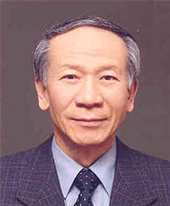
◆ Dr. Kim In-ho
Current Professor Emeritus at Hanyang University, Former Outside Auditor at Samsung, Former Outside Director at Korea Housing Bank

 Iranian Foreign Ministry: "Continuing Message Exchanges with the U.S. and Activities of Mediating Countries"
Esmaeil Baghaei, Spokesperson for the Iranian Ministry of Foreign Affairs [Xinhua, Yonhap News file photo]Esmaeil Baghaei, spokesperson for the Iranian Ministry of Foreign Affairs, stated on the 26th
Iranian Foreign Ministry: "Continuing Message Exchanges with the U.S. and Activities of Mediating Countries"
Esmaeil Baghaei, Spokesperson for the Iranian Ministry of Foreign Affairs [Xinhua, Yonhap News file photo]Esmaeil Baghaei, spokesperson for the Iranian Ministry of Foreign Affairs, stated on the 26th
 President Yoon: "Do You Think You Are Safe from the Special Counsel?"... Final Statement Video Released
President Yoon Suk Yeol rebuking the special prosecutor on the 24th. [Court video / @birds_justice X account subtitle GIF] A video of President Yoon Suk Yeol's closing statement at his trial rega
President Yoon: "Do You Think You Are Safe from the Special Counsel?"... Final Statement Video Released
President Yoon Suk Yeol rebuking the special prosecutor on the 24th. [Court video / @birds_justice X account subtitle GIF] A video of President Yoon Suk Yeol's closing statement at his trial rega
 President Yoon, regarding the first-instance ruling on the Public Official Election Act: “An excessive political verdict that distorts the facts… We will appeal immediately.”
The first-instance sentencing hearing for President Yoon Suk Yeol regarding violations of the Public Official Election Act is being broadcast live at Seoul Station on the 27th. [Photo=Yonhap News]Pres
President Yoon, regarding the first-instance ruling on the Public Official Election Act: “An excessive political verdict that distorts the facts… We will appeal immediately.”
The first-instance sentencing hearing for President Yoon Suk Yeol regarding violations of the Public Official Election Act is being broadcast live at Seoul Station on the 27th. [Photo=Yonhap News]Pres
 WSJ: "SK Hynix ADR Premium Is a Sign of AI Trading Overheat"
Advertisement for SK Hynix ADR listing in New York's Times Square [Reuters=Yonhap News file photo]The Wall Street Journal (WSJ) has pointed out that the price of SK Hynix’s American Depositary Recei
WSJ: "SK Hynix ADR Premium Is a Sign of AI Trading Overheat"
Advertisement for SK Hynix ADR listing in New York's Times Square [Reuters=Yonhap News file photo]The Wall Street Journal (WSJ) has pointed out that the price of SK Hynix’s American Depositary Recei
 'Godfather of Japanese Mystery Novels' Keigo Higashino Passes Away After Battle with Cancer at 68
Famous Japanese mystery novelist Keigo Higashino [AFP=Yonhap News]It has been belatedly reported that Keigo Higashino, the "godfather of Japanese mystery novels" and author of bestsellers such as "The
'Godfather of Japanese Mystery Novels' Keigo Higashino Passes Away After Battle with Cancer at 68
Famous Japanese mystery novelist Keigo Higashino [AFP=Yonhap News]It has been belatedly reported that Keigo Higashino, the "godfather of Japanese mystery novels" and author of bestsellers such as "The
 [Park Pil-kyu Security Column] To the Ignorant Trying to Clothe a Beast in Sheep's Clothing
Rep. Kim Byung-joo of the Democratic Party of Korea [Photo=Yonhap News]“The Air Force Academy doesn't teach you how to fly a plane!” “The Army, Navy, and Air Force academies are exactly the
[Park Pil-kyu Security Column] To the Ignorant Trying to Clothe a Beast in Sheep's Clothing
Rep. Kim Byung-joo of the Democratic Party of Korea [Photo=Yonhap News]“The Air Force Academy doesn't teach you how to fly a plane!” “The Army, Navy, and Air Force academies are exactly the
 [Issue Diagnosis] Two Effects of the Election Petition Review
 [Photo] Evidence of Election Fraud Flooding U.S. Media… Trump Had 2.7 Million Votes Stolen
 [Video] U.S. Semiquincentennial Air Show... 'Art in the Sky' streaks across New York
 [Editorial Cartoon] A Draconian Law That Undermines Freedom of Expression

 List
List









