 Supreme Prosecutors' Office in Seocho-gu, Seoul [Photo: Yonhap News]In the first half of this year, the number of cases returned by the prosecution to the police with requests for supplementary investigation exceeded 60,000.
During the same period, the number of cases registered as "unsolved" by the police rose to over 100,000, leading to growing criticism that public harm resulting from investigative vacuums is becoming increasingly severe.
According to data submitted by the National Police Agency to Representative Kim Jae-seob of the People Power Party on the 19th, the number of cases the prosecution returned to the police with requests for supplementary investigation between January and June of this year was 65,913.
The number of supplementary investigation requests is on an upward trend. Last year, it reached a record high of 110,623, a 27.2% increase over the four years since the system was first implemented in 2021.
The "right to request supplementary investigation," introduced during the 2021 adjustment of investigative powers between the prosecution and police to partially replace the prosecution’s investigative command authority, has recently come under intense scrutiny.
This is because if the Democratic Party of Korea proceeds with its plan to abolish the prosecution's remaining supplementary investigation rights ahead of the planned dissolution of the Supreme Prosecutors' Office, the "right to request supplementary investigation" will remain as one of the few mechanisms for checking the police.
Both the "supplementary investigation right" and the "right to request supplementary investigation" share the same objective: to address shortcomings in legal interpretation or lack of evidence that may arise during the initial police investigation stage.
However, while a "supplementary investigation" implies that the prosecution directly conducts the investigation of cases referred by the police, a "request for supplementary investigation" is a concept where the prosecution returns the case to the police without directly investigating it, requiring the police to perform the additional work themselves.
The primary reasons cited for the increase in these requests include the police's insufficient capacity—such as inadequate initial investigations—as well as excessive workloads and a lack of personnel and budget.
Although the adjustment of investigative powers granted the police greater authority and responsibility, including the power to terminate investigations at the primary stage, the personnel and budget required to support these duties have remained stagnant.
A lawyer who is a former deputy chief prosecutor noted, "For complex cases, there should be communication with the prosecution from the early stages to discuss applicable charges, but such communication has not been functioning properly since the 2021 reform."
The lawyer added, "Since the police emphasize that they are no longer under the command of the prosecution, there is a sentiment among some prosecutors that there is 'no reason to go out of their way to do favors for others.'"
From the police perspective, there is frustration that frequent requests for supplementary investigations from the prosecution only increase their heavy workload.
A police superintendent handling over 130 cases remarked, "There are cases where the prosecution reviews even simple matters, for which they could easily request a warrant immediately, for over a week only to return them with requests to 'cite more legal precedents.' With the impending dissolution of the prosecution, there is growing fatigue as instances of requesting supplementary investigations or declining to request warrants become more frequent."
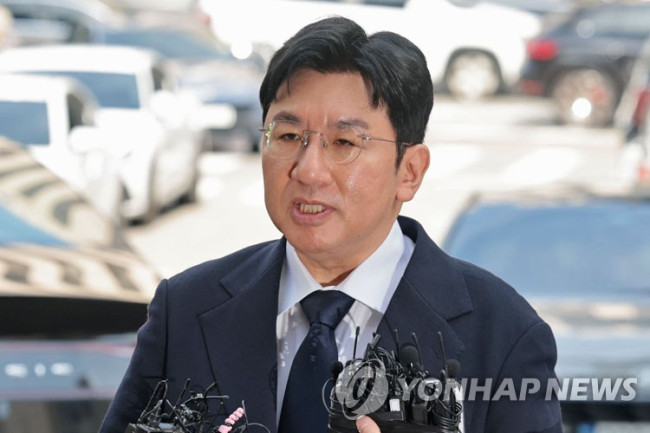 Bang Si-hyuk, Chairman of HYBEInstances of police investigations stalling due to the prosecution's requests for supplementary investigation are also increasing.
The Financial Crime Investigation Unit of the Seoul Metropolitan Police Agency, which has been investigating the case of HYBE Chairman Bang Si-hyuk—accused of gaining approximately 260 billion won in illicit profits (fraudulent unfair trade practices)—for over a year, has applied for an arrest warrant for Chairman Bang twice, but the prosecution has rejected or dismissed both requests.
The Seoul Southern District Prosecutors' Office pointed out that the police failed to comply with the requirements requested during the supplementary investigation.
The Seoul Metropolitan Police Agency's Financial Crime Investigation Unit also applied for arrest warrants twice for Cha Ga-won, CEO of One Hundred Label, an entertainment agency accused of 30 billion won in fraud, but both were rejected by the prosecution.
It is reported that the prosecution requested a supplementary investigation, citing the need to re-examine the applicable charges.
Meanwhile, the number of cases the police have registered as "unsolved" because they could not resolve them independently has exceeded 200,000 annually for four consecutive years.
Given that the police receive approximately 3 million cases per year, this means that about 7% of cases go unresolved annually.
The number of cases registered as unsolved, which stood at 135,431 in 2018, surged by 62.6% to 220,242 last year.
As of June this year, the figure has already reached 102,567, suggesting it is on track to exceed 200,000 again this year.
In particular, the number of unsolved fraud cases, which are often complex, has been rising annually, exceeding 80,000 last year—a more than tenfold increase compared to 2018 (7,093 cases).
A deputy chief prosecutor pointed out, "Due to frequent personnel rotations, it is common for police officers to focus their investigative efforts on newly assigned cases rather than unsolved ones. The atmosphere of being reluctant to take on unsolved cases left by predecessors is also a factor in the failure to reduce the backlog."
The official added, "We need realistic alternatives to fill the investigative vacuum that may occur during the process of abolishing the Supreme Prosecutors' Office and establishing the Major Crimes Investigation Agency."
 Police Unsolved Cases by Crime Type [Data provided by the office of Rep. Kim Jae-seob of the People Power Party]

 Iranian Foreign Ministry: "Continuing Message Exchanges with the U.S. and Activities of Mediating Countries"
Esmaeil Baghaei, Spokesperson for the Iranian Ministry of Foreign Affairs [Xinhua, Yonhap News file photo]Esmaeil Baghaei, spokesperson for the Iranian Ministry of Foreign Affairs, stated on the 26th
Iranian Foreign Ministry: "Continuing Message Exchanges with the U.S. and Activities of Mediating Countries"
Esmaeil Baghaei, Spokesperson for the Iranian Ministry of Foreign Affairs [Xinhua, Yonhap News file photo]Esmaeil Baghaei, spokesperson for the Iranian Ministry of Foreign Affairs, stated on the 26th
 President Yoon: "Do You Think You Are Safe from the Special Counsel?"... Final Statement Video Released
President Yoon Suk Yeol rebuking the special prosecutor on the 24th. [Court video / @birds_justice X account subtitle GIF] A video of President Yoon Suk Yeol's closing statement at his trial rega
President Yoon: "Do You Think You Are Safe from the Special Counsel?"... Final Statement Video Released
President Yoon Suk Yeol rebuking the special prosecutor on the 24th. [Court video / @birds_justice X account subtitle GIF] A video of President Yoon Suk Yeol's closing statement at his trial rega
 President Yoon, regarding the first-instance ruling on the Public Official Election Act: “An excessive political verdict that distorts the facts… We will appeal immediately.”
The first-instance sentencing hearing for President Yoon Suk Yeol regarding violations of the Public Official Election Act is being broadcast live at Seoul Station on the 27th. [Photo=Yonhap News]Pres
President Yoon, regarding the first-instance ruling on the Public Official Election Act: “An excessive political verdict that distorts the facts… We will appeal immediately.”
The first-instance sentencing hearing for President Yoon Suk Yeol regarding violations of the Public Official Election Act is being broadcast live at Seoul Station on the 27th. [Photo=Yonhap News]Pres
 WSJ: "SK Hynix ADR Premium Is a Sign of AI Trading Overheat"
Advertisement for SK Hynix ADR listing in New York's Times Square [Reuters=Yonhap News file photo]The Wall Street Journal (WSJ) has pointed out that the price of SK Hynix’s American Depositary Recei
WSJ: "SK Hynix ADR Premium Is a Sign of AI Trading Overheat"
Advertisement for SK Hynix ADR listing in New York's Times Square [Reuters=Yonhap News file photo]The Wall Street Journal (WSJ) has pointed out that the price of SK Hynix’s American Depositary Recei
 'Godfather of Japanese Mystery Novels' Keigo Higashino Passes Away After Battle with Cancer at 68
Famous Japanese mystery novelist Keigo Higashino [AFP=Yonhap News]It has been belatedly reported that Keigo Higashino, the "godfather of Japanese mystery novels" and author of bestsellers such as "The
'Godfather of Japanese Mystery Novels' Keigo Higashino Passes Away After Battle with Cancer at 68
Famous Japanese mystery novelist Keigo Higashino [AFP=Yonhap News]It has been belatedly reported that Keigo Higashino, the "godfather of Japanese mystery novels" and author of bestsellers such as "The
 [Park Pil-kyu Security Column] To the Ignorant Trying to Clothe a Beast in Sheep's Clothing
Rep. Kim Byung-joo of the Democratic Party of Korea [Photo=Yonhap News]“The Air Force Academy doesn't teach you how to fly a plane!” “The Army, Navy, and Air Force academies are exactly the
[Park Pil-kyu Security Column] To the Ignorant Trying to Clothe a Beast in Sheep's Clothing
Rep. Kim Byung-joo of the Democratic Party of Korea [Photo=Yonhap News]“The Air Force Academy doesn't teach you how to fly a plane!” “The Army, Navy, and Air Force academies are exactly the
 [Issue Diagnosis] Two Effects of the Election Petition Review
 [Photo] Evidence of Election Fraud Flooding U.S. Media… Trump Had 2.7 Million Votes Stolen
 [Video] U.S. Semiquincentennial Air Show... 'Art in the Sky' streaks across New York
 [Editorial Cartoon] A Draconian Law That Undermines Freedom of Expression

 List
List









