- By Shin Joong-sup, Kim Seung-ok, Hwang Seung-yeon, Hyun Jin-kwon, and Choi Jun-sun, Minerva Books, 17,000 won

South Korea’s inheritance tax rate is among the highest in the world. The issue is not merely the level of the tax rate. Inheritance is not simply a matter of transferring wealth; it is intrinsically linked to the succession of businesses, jobs, technology, and know-how. When the inheritance tax threatens the management rights of a company built over a lifetime—and even the very survival of the business itself—it is by no means a desirable outcome for the nation.
This book provides a multifaceted analysis of the inheritance tax issue from the perspectives of economics, philosophy, sociology, public finance, and law. Although the authors come from diverse academic backgrounds, they are united in the belief that the structural problems and resulting side effects of the current inheritance tax system can no longer be ignored.
The five authors differ in their fields of expertise and approaches. However, they share a single critical awareness: that South Korea’s current inheritance tax system can no longer be left as it is.
The protection of private property has become one of the fundamental duties of the state in a civilized society. Recognizing the protection of an individual's life, liberty, and property as the role of the state is essential, and among these, property serves as the source of both life and liberty. - Professor Shin Joong-sup
Human history is a record of how people have struggled to safely pass on the power and wealth they have cultivated to their descendants and preserve their family legacies. Despite challenges or pressures intended to block the intergenerational transfer of wealth, humanity has always devised strategies to realize the instinct to inherit that is inherent in human nature. - Professor Kim Seung-wook
Every other country has mechanisms in place to prevent the loss of management rights due to inheritance tax. In every country except South Korea, while there may be tax discounts to facilitate business succession, there are no surcharges intended to obstruct it. South Korea is the only country where companies and management rights are forfeited due to inheritance taxes. - Professor Hwang Seung-yeon
Abolishing the inheritance tax in Korea is by no means easy. This is primarily because the vast majority of the public is under the impression that "stricter inheritance taxes equal the realization of justice." Unless public perception changes, politicians will not adopt it as a policy proposal, as politicians are entities that survive on votes. - Director Hyun Jin-kwon
Currently, the regulation of public interest corporations in Korea is trapped in the negative perception that they are merely "means of maintaining control" for large business groups, which results in the side effect of stifling the positive functions of public interest activities. To expand the culture of corporate philanthropy and facilitate smooth business succession, a forward-looking shift in perspective toward guaranteeing voting rights for public interest corporations is necessary. - Professor Choi Joon-sun
Inheritance tax dismantles families and businesses. It stifles entrepreneurship and discourages long-term investment. It makes business succession impossible, distorts capital markets, and drives companies abroad. To pay the inheritance tax, owners must sell their stocks, and selling those stocks leads to the loss of management rights. When management rights are lost, a company's identity and long-term strategy collapse. Is this really a system worthy of a normal country?
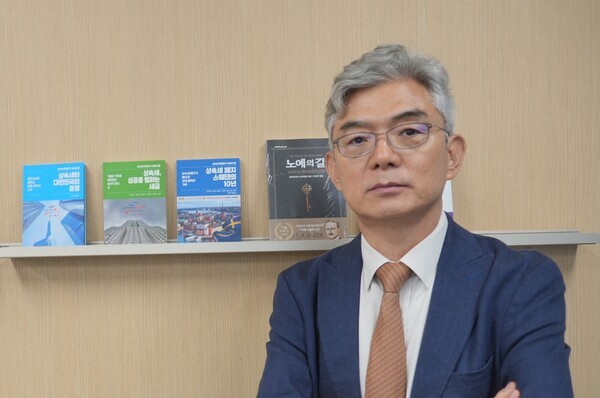 Professor Hwang Seung-yeon
What do you think of this article?

 [Statement by the Seo-beo-kka Korea Military Academy Save-the-Nation Comrades Association] ㉛ Recount the Votes Publicly, as the Previous Recount Concealed Election Fraud
Tongyeong Mayoral Election Recount [Photo=Yonhap News]South Korea's liberal democracy is dying. The National Election Commission (NEC) and the judiciary, which have plummeted into criminal syndicates
[Statement by the Seo-beo-kka Korea Military Academy Save-the-Nation Comrades Association] ㉛ Recount the Votes Publicly, as the Previous Recount Concealed Election Fraud
Tongyeong Mayoral Election Recount [Photo=Yonhap News]South Korea's liberal democracy is dying. The National Election Commission (NEC) and the judiciary, which have plummeted into criminal syndicates
 Trump's nominee for new U.S. intelligence chief confirmed by U.S. Senate
U.S. Attorney for the Southern District of New York Jay Clayton, who has been confirmed by the Senate to lead the U.S. intelligence community [AP=Yonhap News File Photo]The U.S. Senate confirmed the n
Trump's nominee for new U.S. intelligence chief confirmed by U.S. Senate
U.S. Attorney for the Southern District of New York Jay Clayton, who has been confirmed by the Senate to lead the U.S. intelligence community [AP=Yonhap News File Photo]The U.S. Senate confirmed the n
 PPP on Speaker Woo's Remarks About 'Lee Jae-myung's Consecutive Term and Constitutional Amendment': "A True Act of Insurrection"
People Power Party Representative Jang Dong-hyeok holds a press conference at the National Assembly on the 28th to express his stance regarding National Assembly Speaker Cho Jeong-sik's remarks on a c
PPP on Speaker Woo's Remarks About 'Lee Jae-myung's Consecutive Term and Constitutional Amendment': "A True Act of Insurrection"
People Power Party Representative Jang Dong-hyeok holds a press conference at the National Assembly on the 28th to express his stance regarding National Assembly Speaker Cho Jeong-sik's remarks on a c
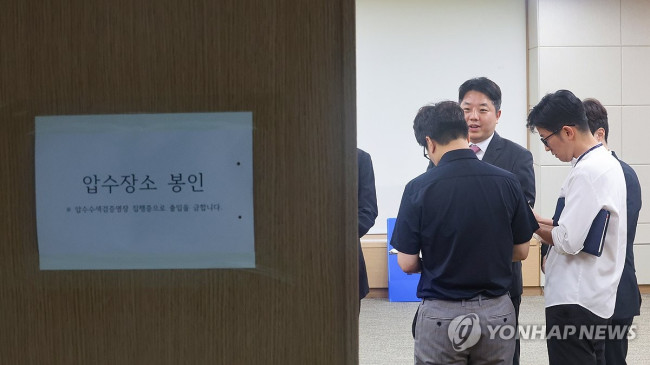 Prosecution Investigates Gyeonggi-do Election Commission Officials as Suspects in 'Statistical Manipulation' of Ballot Counting Records
'Circumstances of statistical manipulation following turnout errors': Joint Investigation Team conducts search and seizure at National Election Commission [Yonhap News file photo]The joint prosecution
Prosecution Investigates Gyeonggi-do Election Commission Officials as Suspects in 'Statistical Manipulation' of Ballot Counting Records
'Circumstances of statistical manipulation following turnout errors': Joint Investigation Team conducts search and seizure at National Election Commission [Yonhap News file photo]The joint prosecution
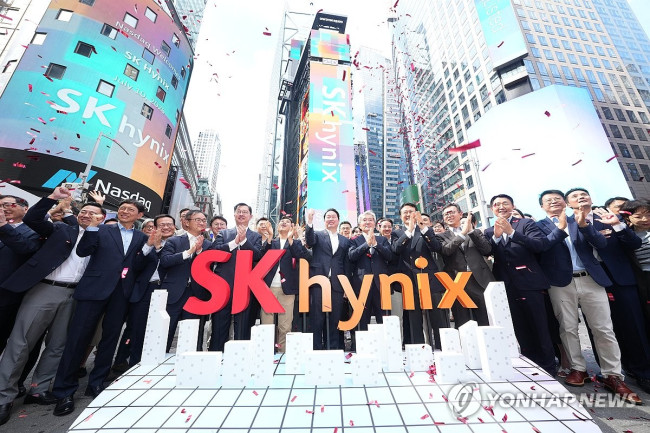 SK Hynix Posts Record-High 76% Operating Margin… Outpacing TSMC for Three Consecutive Quarters
In the second quarter of this year, SK hynix [000660] maintained top-tier profitability in the semiconductor industry, recording an operating profit margin of 76%, which surpassed that of Taiwan’s T
SK Hynix Posts Record-High 76% Operating Margin… Outpacing TSMC for Three Consecutive Quarters
In the second quarter of this year, SK hynix [000660] maintained top-tier profitability in the semiconductor industry, recording an operating profit margin of 76%, which surpassed that of Taiwan’s T
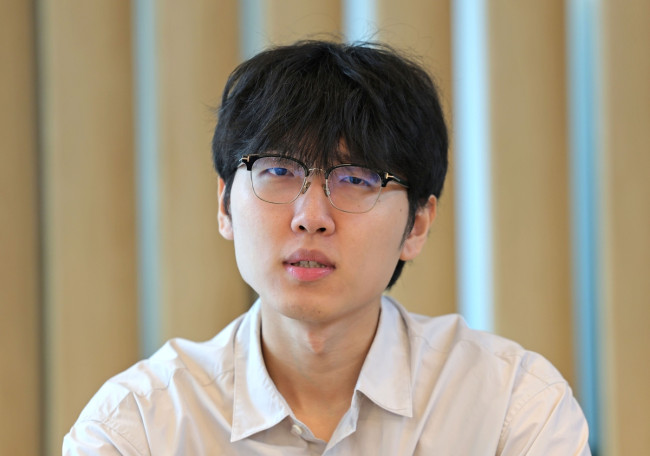 Shin Jin-seo: "AI is not the 'God of Go'… Human Go still holds its charm."
"I don't think AI is the 'God of Go.' I am confident that human Go, which involves making brilliant moves and high-stakes gambles depending on the situation, is still far more fascinating than AI, whi
Shin Jin-seo: "AI is not the 'God of Go'… Human Go still holds its charm."
"I don't think AI is the 'God of Go.' I am confident that human Go, which involves making brilliant moves and high-stakes gambles depending on the situation, is still far more fascinating than AI, whi
 [Park Pil-gyu's Security Column] If Carrying Out Orders Becomes a Crime, Neither the State Nor the Military Can Survive
"Can a military where following orders becomes a crime truly protect the nation and its people, contribute to maintaining the continuity of the state, and continue to survive and exist?" Soldiers stan
[Park Pil-gyu's Security Column] If Carrying Out Orders Becomes a Crime, Neither the State Nor the Military Can Survive
"Can a military where following orders becomes a crime truly protect the nation and its people, contribute to maintaining the continuity of the state, and continue to survive and exist?" Soldiers stan
 [Photo] Evidence of Election Fraud Flooding U.S. Media… Trump Had 2.7 Million Votes Stolen
 [Video] U.S. Semiquincentennial Air Show... 'Art in the Sky' streaks across New York
 [Editorial Cartoon] A Draconian Law That Undermines Freedom of Expression

 List
List