 A scene in Romania on December 22, 1989, when the Romanian Revolution took place. [AFP=Yonhap News]
Following the fall of the Berlin Wall on November 9, 1989, Eastern Europe became an entirely different world in just one year.
Communist countries that had been under the Soviet sphere of influence for over 40 years of the Cold War abandoned their one-party systems one after another, opting for free elections and market economies. This was not an isolated incident in one country, but a major historical transformation that occurred almost simultaneously across multiple nations.
A Major Historical Transformation That Occurred Simultaneously Across Multiple Countries
The change began first in Poland. In the partial free elections held on June 4, 1989, the independent labor union 'Solidarność' (Solidarity) won an overwhelming victory. On August 24 of the same year, Tadeusz Mazowiecki, a member of the Solidarity movement, was sworn in as Prime Minister, marking the launch of the first non-communist government in Eastern Europe since World War II. This was a decisive event that shook the entire communist bloc.
Hungary also changed its system rapidly. On October 23, 1989, it changed its official name from the 'People's Republic of Hungary' to the 'Republic of Hungary,' declared a multi-party democracy, and held free general elections in March and April of 1990. The communist one-party dictatorship came to a peaceful end.
In Czechoslovakia, the 'Velvet Revolution' began in November 1989. Following student protests, hundreds of thousands of citizens gathered in Wenceslas Square in Prague, and the Communist Party relinquished power rather than using force to suppress them. On December 29, 1989, dissident Václav Havel was elected president, and free general elections were held in June 1990 for the first time in 44 years.
In Bulgaria, long-time dictator Todor Zhivkov was ousted on November 10, 1989. Subsequently, the Communist Party accepted a multi-party system and held free elections in June 1990.
Romania's transition was the most dramatic. Citizen resistance that began in Timișoara in December 1989 spread nationwide. Eventually, on December 22, Nicolae Ceaușescu fled the capital of Bucharest but was arrested; on December 25, he and his wife, Elena Ceaușescu, were executed by firing squad following a special military tribunal. This was the only case in Eastern Europe where the communist regime collapsed through a bloody revolution.
As such, Poland, Hungary, East Germany, Czechoslovakia, Bulgaria, and Romania each had different histories, cultures, and economic levels. However, between 1989 and 1990, they moved in almost the same direction. They dismantled one-party communist dictatorships, held free elections, introduced market economies, and expanded freedom of the press and association. This was not a series of coincidental, sporadic events, but a phenomenon of world-historical significance that revealed the structural problems common to the communist system.
In historical research, such synchronicity holds significant meaning. If the same outcome is repeated in many countries during the same period, one must examine not only the specificities of individual nations but also the common characteristics of the system itself. The serial dissolution of the Eastern European communist bloc in 1990 was a representative case demonstrating the necessity of such comparative studies.
Ignoring the Collapse of the Cold War Itself (1989–1991)
By 1990, the communist bloc in Eastern Europe was effectively in the process of dissolution. In Poland, free elections began to take root, while Hungary accelerated its market economy reforms. Czechoslovakia held free general elections, and East Germany prepared for reunification with West Germany. Within just a year or two, most communist countries abandoned their systems of their own volition. In modern world history, it is very rare for a political system to collapse in a chain reaction over such a short period.
These changes caused a significant shock in South Korea at the time. The government and the media covered Eastern European democratization and German reunification as major news stories day after day. The reunification of Germany on October 3, 1990, graced the front pages of domestic newspapers, and the changes in the communist bloc were accepted as a new order in international politics. In academia, studies analyzing the limitations of socialist planned economies and the competitiveness of market economies also began to be actively published.
However, some pro-North Korean activist circles at the time, rather than taking these changes as an opportunity to fundamentally re-examine their own ideologies, tended to interpret them as specific situations unique to individual countries or placed more weight on the influence of international politics. While not all activists took the same stance, discussions linking the serial collapse of the communist bloc to the structural problems of the socialist system itself were limited.
In historiography, comparison is one of the most fundamental research methods. If different countries operated similar systems and faced similar results at almost the same time, it is natural to examine the common causes. Yet, if one avoids comparison, one cannot see the structure, and if one cannot see the structure, it is difficult to derive historical lessons.
It was not only East Germany that collapsed. Poland, Hungary, Czechoslovakia, Bulgaria, and Romania all moved in the same direction. Although their languages, histories, and economic levels differed, it is confirmed across many nations that common problems—inefficiency of planned economies, restrictions on political freedom, and fatigue regarding one-party dictatorship—had accumulated. If one ignores these commonalities and emphasizes only the specificities of each country, it is difficult to sufficiently explain the world-historical phenomenon of the collapse of the communist bloc.
Liberalism tests ideology based on reality. Conversely, if one sets an ideology first and begins to interpret reality to fit it, the conclusion remains unchanged no matter how much reality shifts. The dissolution of the Eastern European communist bloc in 1990 was a historical litmus test that demonstrated exactly this point.
If the same result is repeated in numerous countries and yet the common cause is ignored, it runs the risk of becoming a defense of belief rather than historical research.
The collapse of Eastern Europe was not the end. A far greater event followed shortly after. In December 1991, the Soviet Union, the suzerain state of socialism, vanished into history. Now, it was a situation that could no longer be explained as an exception for a few Eastern European countries.
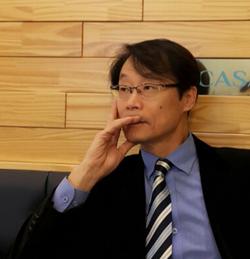
◆ Songsan Jeong Kwang-je
A poet and a researcher of history and philosophy. Former director of the Rhee Syngman Institute. Currently serving as a research advisor for the Korea Modern and Contemporary History Research Association and representative of the philosophy forum 'Lyceum'. He has published four volumes of poetry, co-translated 'Heroes of Hook Ridge', and authored the humanities books 'Joseon as a Myth', 'Humanities on the Tatami', and 'A Liberal Reading Gramsci'.

 Iranian Foreign Ministry: "Continuing Message Exchanges with the U.S. and Activities of Mediating Countries"
Esmaeil Baghaei, Spokesperson for the Iranian Ministry of Foreign Affairs [Xinhua, Yonhap News file photo]Esmaeil Baghaei, spokesperson for the Iranian Ministry of Foreign Affairs, stated on the 26th
Iranian Foreign Ministry: "Continuing Message Exchanges with the U.S. and Activities of Mediating Countries"
Esmaeil Baghaei, Spokesperson for the Iranian Ministry of Foreign Affairs [Xinhua, Yonhap News file photo]Esmaeil Baghaei, spokesperson for the Iranian Ministry of Foreign Affairs, stated on the 26th
 President Yoon: "Do You Think You Are Safe from the Special Counsel?"... Final Statement Video Released
President Yoon Suk Yeol rebuking the special prosecutor on the 24th. [Court video / @birds_justice X account subtitle GIF] A video of President Yoon Suk Yeol's closing statement at his trial rega
President Yoon: "Do You Think You Are Safe from the Special Counsel?"... Final Statement Video Released
President Yoon Suk Yeol rebuking the special prosecutor on the 24th. [Court video / @birds_justice X account subtitle GIF] A video of President Yoon Suk Yeol's closing statement at his trial rega
 President Yoon, regarding the first-instance ruling on the Public Official Election Act: “An excessive political verdict that distorts the facts… We will appeal immediately.”
The first-instance sentencing hearing for President Yoon Suk Yeol regarding violations of the Public Official Election Act is being broadcast live at Seoul Station on the 27th. [Photo=Yonhap News]Pres
President Yoon, regarding the first-instance ruling on the Public Official Election Act: “An excessive political verdict that distorts the facts… We will appeal immediately.”
The first-instance sentencing hearing for President Yoon Suk Yeol regarding violations of the Public Official Election Act is being broadcast live at Seoul Station on the 27th. [Photo=Yonhap News]Pres
 WSJ: "SK Hynix ADR Premium Is a Sign of AI Trading Overheat"
Advertisement for SK Hynix ADR listing in New York's Times Square [Reuters=Yonhap News file photo]The Wall Street Journal (WSJ) has pointed out that the price of SK Hynix’s American Depositary Recei
WSJ: "SK Hynix ADR Premium Is a Sign of AI Trading Overheat"
Advertisement for SK Hynix ADR listing in New York's Times Square [Reuters=Yonhap News file photo]The Wall Street Journal (WSJ) has pointed out that the price of SK Hynix’s American Depositary Recei
 'Godfather of Japanese Mystery Novels' Keigo Higashino Passes Away After Battle with Cancer at 68
Famous Japanese mystery novelist Keigo Higashino [AFP=Yonhap News]It has been belatedly reported that Keigo Higashino, the "godfather of Japanese mystery novels" and author of bestsellers such as "The
'Godfather of Japanese Mystery Novels' Keigo Higashino Passes Away After Battle with Cancer at 68
Famous Japanese mystery novelist Keigo Higashino [AFP=Yonhap News]It has been belatedly reported that Keigo Higashino, the "godfather of Japanese mystery novels" and author of bestsellers such as "The
 [Park Pil-kyu Security Column] To the Ignorant Trying to Clothe a Beast in Sheep's Clothing
Rep. Kim Byung-joo of the Democratic Party of Korea [Photo=Yonhap News]“The Air Force Academy doesn't teach you how to fly a plane!” “The Army, Navy, and Air Force academies are exactly the
[Park Pil-kyu Security Column] To the Ignorant Trying to Clothe a Beast in Sheep's Clothing
Rep. Kim Byung-joo of the Democratic Party of Korea [Photo=Yonhap News]“The Air Force Academy doesn't teach you how to fly a plane!” “The Army, Navy, and Air Force academies are exactly the
 [Issue Diagnosis] Two Effects of the Election Petition Review
 [Photo] Evidence of Election Fraud Flooding U.S. Media… Trump Had 2.7 Million Votes Stolen
 [Video] U.S. Semiquincentennial Air Show... 'Art in the Sky' streaks across New York
 [Editorial Cartoon] A Draconian Law That Undermines Freedom of Expression

 List
List









