 "Did Yun Dong-ju rise to this position solely based on his literary merit? Or is he a symbol created by the era of Japanese colonial rule combined with the history education that followed after liberation?"
Yun Dong-ju is considered one of the most representative poets of modern South Korea. He is a constant fixture in textbooks, and the titles "national poet" and "poet of resistance" naturally accompany his name.
However, it is worth asking at least once: Did the current status of Yun Dong-ju arise solely from his literary achievements? Or is he a symbol forged by the era of Japanese colonial rule and the subsequent historical education provided after liberation?
Yun Dong-ju was born in 1917 in Myeongdongchon, Northern Gando, and passed away at the age of 27 in 1945 at the Fukuoka Prison. He was unable to publish a single collection of poetry during his lifetime. An attempt to compile and publish his works under the title "Sky, Wind, Star, and Poem" in 1941 fell through, and the collection was first published posthumously on January 30, 1948, by Jeongeumsa. The first edition contained 31 poems, and with the subsequent discovery of manuscripts by his bereaved family and acquaintances, there are now 116 poems known to exist.
This fact alone shows that the Yun Dong-ju of today was shaped not by his fame during his lifetime, but by posthumous evaluation. He was not a poet who gained widespread popularity while alive; rather, he became a national poet through the consistent promotion of his work by the literary community, the publishing industry, and the education sector after liberation.
Even in literary studies, there is no single perspective on Yun Dong-ju. One perspective emphasizes "resistance" and "nation," while another highlights "pure lyricism" and "inwardness." In other words, the image of "Yun Dong-ju, the national poet" is a concept that encompasses not only his works themselves but also the interpretation of his era and historical memory.
Of course, it is true that poems such as "Prologue" and "Counting Stars at Night" are still loved by many readers. However, literary history includes many other poets whose originality and artistic world are highly regarded, such as Kim Sowol, Han Yong-un, Jeong Ji-yong, Baek Seok, and Yi Sang. Therefore, it is possible to view the assessment of Yun Dong-ju as the "greatest poet" as a result of considering his historical symbolism rather than a purely literary judgment.
In particular, since liberation, the state and the education system have actively promoted Yun Dong-ju as a figure who symbolizes the national conscience and the spirit of resistance. This symbolism was further solidified in 1990 when the South Korean government posthumously awarded him the Order of Merit for National Foundation, Independence Medal.
If Yun Dong-ju had not lived through the unique era of Japanese colonial rule, had not died in prison at a young age, and had lived out his life as an ordinary poet, would he have become the representative national poet of South Korea that he is today? There is no clear answer to this question.
However, it is difficult to deny that the Yun Dong-ju of today is not a figure who can be explained solely by literary merit, but a symbol created by the tragedy of his era, collective memory, state commemoration, and education. Historical symbolism and literary evaluation are not the same, and distinguishing between the two may be the path to a more objective understanding of the poet.
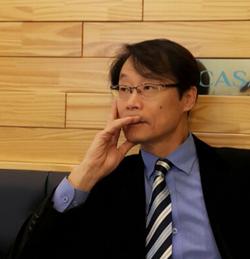
◆ Songsan Jeong Gwang-je
A poet and researcher of history and philosophy. Former director of the Rhee Syngman Institute. Currently serving as a research advisor for the Korea Modern and Contemporary History Research Association and representative of the philosophy forum Lyceum. He has published four volumes of poetry, co-translated "Heroes of Pork Chop Hill," and authored humanities books including "Joseon Become a Myth," "Humanities on the Tatami," and "A Liberal’s Reading of Gramsci."
What do you think of this article?

 Iranian Foreign Ministry: "Continuing Message Exchanges with the U.S. and Activities of Mediating Countries"
Esmaeil Baghaei, Spokesperson for the Iranian Ministry of Foreign Affairs [Xinhua, Yonhap News file photo]Esmaeil Baghaei, spokesperson for the Iranian Ministry of Foreign Affairs, stated on the 26th
Iranian Foreign Ministry: "Continuing Message Exchanges with the U.S. and Activities of Mediating Countries"
Esmaeil Baghaei, Spokesperson for the Iranian Ministry of Foreign Affairs [Xinhua, Yonhap News file photo]Esmaeil Baghaei, spokesperson for the Iranian Ministry of Foreign Affairs, stated on the 26th
 President Yoon: "Do You Think You Are Safe from the Special Counsel?"... Final Statement Video Released
President Yoon Suk Yeol rebuking the special prosecutor on the 24th. [Court video / @birds_justice X account subtitle GIF] A video of President Yoon Suk Yeol's closing statement at his trial rega
President Yoon: "Do You Think You Are Safe from the Special Counsel?"... Final Statement Video Released
President Yoon Suk Yeol rebuking the special prosecutor on the 24th. [Court video / @birds_justice X account subtitle GIF] A video of President Yoon Suk Yeol's closing statement at his trial rega
 President Yoon, regarding the first-instance ruling on the Public Official Election Act: “An excessive political verdict that distorts the facts… We will appeal immediately.”
The first-instance sentencing hearing for President Yoon Suk Yeol regarding violations of the Public Official Election Act is being broadcast live at Seoul Station on the 27th. [Photo=Yonhap News]Pres
President Yoon, regarding the first-instance ruling on the Public Official Election Act: “An excessive political verdict that distorts the facts… We will appeal immediately.”
The first-instance sentencing hearing for President Yoon Suk Yeol regarding violations of the Public Official Election Act is being broadcast live at Seoul Station on the 27th. [Photo=Yonhap News]Pres
 WSJ: "SK Hynix ADR Premium Is a Sign of AI Trading Overheat"
Advertisement for SK Hynix ADR listing in New York's Times Square [Reuters=Yonhap News file photo]The Wall Street Journal (WSJ) has pointed out that the price of SK Hynix’s American Depositary Recei
WSJ: "SK Hynix ADR Premium Is a Sign of AI Trading Overheat"
Advertisement for SK Hynix ADR listing in New York's Times Square [Reuters=Yonhap News file photo]The Wall Street Journal (WSJ) has pointed out that the price of SK Hynix’s American Depositary Recei
 'Godfather of Japanese Mystery Novels' Keigo Higashino Passes Away After Battle with Cancer at 68
Famous Japanese mystery novelist Keigo Higashino [AFP=Yonhap News]It has been belatedly reported that Keigo Higashino, the "godfather of Japanese mystery novels" and author of bestsellers such as "The
'Godfather of Japanese Mystery Novels' Keigo Higashino Passes Away After Battle with Cancer at 68
Famous Japanese mystery novelist Keigo Higashino [AFP=Yonhap News]It has been belatedly reported that Keigo Higashino, the "godfather of Japanese mystery novels" and author of bestsellers such as "The
 [Park Pil-kyu Security Column] To the Ignorant Trying to Clothe a Beast in Sheep's Clothing
Rep. Kim Byung-joo of the Democratic Party of Korea [Photo=Yonhap News]“The Air Force Academy doesn't teach you how to fly a plane!” “The Army, Navy, and Air Force academies are exactly the
[Park Pil-kyu Security Column] To the Ignorant Trying to Clothe a Beast in Sheep's Clothing
Rep. Kim Byung-joo of the Democratic Party of Korea [Photo=Yonhap News]“The Air Force Academy doesn't teach you how to fly a plane!” “The Army, Navy, and Air Force academies are exactly the
 [Issue Diagnosis] Two Effects of the Election Petition Review
 [Photo] Evidence of Election Fraud Flooding U.S. Media… Trump Had 2.7 Million Votes Stolen
 [Video] U.S. Semiquincentennial Air Show... 'Art in the Sky' streaks across New York
 [Editorial Cartoon] A Draconian Law That Undermines Freedom of Expression

 List
List










