 A young Syngman Rhee during his time in Honolulu, Hawaii (left), and President Rhee shortly after being elected as the first president in 1948. [Yonhap News archive photo]
Today, one of the most common labels attached to Syngman Rhee is that of an "anti-Japanese extremist." This is due to his rejection of the Korea-Japan talks, his proclamation of the Peace Line, and his hardline stance toward Japan.
However, defining Rhee as an anti-Japanese extremist based solely on a few political events is a gross oversimplification of his ideology and diplomatic strategy.
On the contrary, Rhee was a realist politician who prioritized national interest over emotion, and he perceived Japan not as an object of hatred, but as a rival nation that the Republic of Korea had to eventually surpass. To understand Rhee, one must move beyond the framework of "anti-Japanese" sentiment and examine his view of the state and his understanding of international politics.
First and foremost, Rhee did not hate the Japanese people as a nation. He frequently distinguished between the Japanese public and the Japanese government, clearly stating that his objective was not to hate Japan, but to secure independence for Korea.
He once remarked to the effect of, "I do not hate Japan." His concern was the survival of the nation, not vengeance. The starting point of his politics was not a hatred of Japan, but rather the question of how to ensure the survival of the Republic of Korea.
Many people assume that Rhee was against imperialism itself. However, an examination of his writings and speeches suggests otherwise. He did not view all imperialism in the same light. What mattered to him was how a powerful nation treated a weaker one.
He strongly criticized Japan’s colonial rule, which annexed Korea without fostering its development. Conversely, he showed considerable interest in the process by which the United States developed Hawaii, expanded education, and granted greater autonomy. In other words, he prioritized the question of "what kind of governance and what kind of civilization was brought" over the simple classification of "empire versus non-empire."
These thoughts were deeply intertwined with his Christian worldview. Rhee did not equate the development of a civilization with mere economic growth. He believed that true progress only occurs when freedom, the rule of law, democracy, Christian ethics, and individual rights grow in tandem.
His high regard for the United States was not merely because of its military strength. He believed that the liberal democratic system and Christian civilization were the driving forces behind national development. Therefore, he criticized Japan for its failure to lead Korea in such a direction, rather than rejecting the very existence of Japan itself.
This realism was also evident in his early independence movement. Today, we are prone to assume that the independence movement pursued nothing less than absolute independence from the start. However, the international order at the time was not so simple.
The Korean Empire had already lost its national power, and the Great Powers were competitively expanding their colonial holdings. Amidst this reality, Rhee analyzed the international situation with a cool head.
He even explored a plan in which Korea would receive support from the United States to secure a level of autonomy similar to that of Hawaii, moving toward independence gradually. This was not due to a lack of will for independence, but a diplomatic strategy aimed at finding a path that was realistically feasible.
It is in this regard that Rhee was more of a diplomat than a revolutionary. He was not a politician who shouted only about ideals. He constantly calculated how the Republic of Korea could survive within the international order. He valued diplomacy that leveraged international relations more than a nationalism that ignored reality. His independence movement was a politics of power, not a politics of emotion.
Even after the liberation in 1945, this realism did not change. If anything, it grew stronger. After the end of World War II, the United States began cultivating Japan as a key ally in East Asia. This trend became even more evident after the Korean War.
From the U.S. perspective, Japan was the center of industrial production and military logistics, while the Republic of Korea was the frontline against communism. Rhee understood this configuration more accurately than anyone else.
Therefore, he did not approach his relationship with Japan through an emotional lens. He concluded that the Republic of Korea should not easily concede in negotiations with Japan until it had attained sufficient national power.
He feared that if the U.S. focused only on Japan and neglected the Republic of Korea, Korea could fall into economic vassalage to Japan. Thus, his hardline policy toward Japan was a strategic choice to secure negotiating leverage for the nation, rather than a manifestation of anti-Japanese sentiment.
The Peace Line should also be understood in this context. While it is often described as a hostile policy toward Japan, for Rhee, it was a national strategy to secure maritime sovereignty and protect the foundations of the Republic of Korea’s survival.
At the time, the fishing industry was crucial to the South Korean economy. He believed that the sea, which was directly linked to the survival of the nation, had to be secured first. This was a matter of national interest, not emotion.
More importantly, this reflected Rhee’s ultimate goal. He did not seek to make Japan an eternal enemy. Rather, his goal was for the Republic of Korea to become a stronger nation than Japan. In other words, his path was not "anti-Japanese" but "overcoming Japan" (Geukil). He believed it was far more important to spend time building a nation that surpassed Japan than to spend time hating it.
This mindset is also confirmed in his educational policy. He made the eradication of illiteracy and the expansion of compulsory education the nation's top priority. He believed that only when the people were educated, industries grew, and democracy took root could Korea compete with Japan. He knew better than anyone that a nation could not become strong on emotion alone.
Rhee’s view on unification follows the same logic. Because the division has lasted so long today, we tend to think that people at the time must have accepted it as a given. However, Rhee was different. He believed that the communist system could not endure indefinitely. He was convinced that the free world would eventually triumph and that unification centered on the Republic of Korea would be achieved.
From today's perspective, this might appear overly optimistic. However, many leaders of that era held similar beliefs. There were not a few who anticipated the collapse of communism, and in fact, the Soviet Union and the communist bloc in Eastern Europe did eventually dissolve. Rhee’s view on unification was not a delusion that ignored reality, but an extension of the historical conviction that the liberal camp would prevail.
For him, unification was not merely the recovery of territory. It was the expansion of the liberal democratic system across the entire Korean Peninsula. This is why he did not compromise easily on the issue of unification. He believed that accepting division as a permanent state was no different from abandoning the future of the nation.
We often think that politics is about choosing between reality and ideals. However, Rhee pursued both simultaneously. In diplomacy, he was a cooler realist than anyone else, and regarding the future of the nation, he was a stronger idealist than anyone else. He calculated in the present, but never gave up hope for the future. This is the key to understanding his politics.
Therefore, labeling Syngman Rhee simply as an "anti-Japanese extremist" is to trap his political philosophy within a framework of emotion. He was not a politician who hated Japan, but a politician who sought to make the Republic of Korea strong. His policy toward Japan was one of national interest, not hatred; his diplomacy was one of strategy, not emotion.
Even when viewing Korea-Japan relations today, it is inappropriate to remember Rhee as a politician of emotion. The greatest lesson he left behind is that relations between nations are not a matter of likes and dislikes, but a strategy for the survival and future of the nation. Rhee did not make anti-Japanese sentiment a national goal.
His goal was always a free and prosperous Republic of Korea. A nation that surpasses Japan, a nation that defends liberal democracy, and a nation that eventually achieves free unification. That was the national vision that Syngman Rhee pursued his entire life.
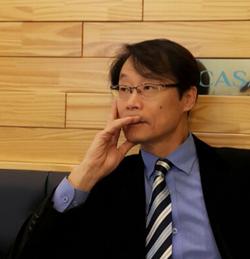
◆ Songsan Jeong Kwang-je
A poet and researcher of history and philosophy. Former board member of the Syngman Rhee Academy. Currently serving as a research advisor for the Korea Modern and Contemporary History Research Association and as the representative of the philosophy forum Lyceum. He has published four volumes of poetry, co-translated "Heroes of Heartbreak Ridge," and authored the humanities books "Joseon, Turned into Myth," "Humanities on the Tatami," and "A Liberal’s Reading of Gramsci."

 Iranian Foreign Ministry: "Continuing Message Exchanges with the U.S. and Activities of Mediating Countries"
Esmaeil Baghaei, Spokesperson for the Iranian Ministry of Foreign Affairs [Xinhua, Yonhap News file photo]Esmaeil Baghaei, spokesperson for the Iranian Ministry of Foreign Affairs, stated on the 26th
Iranian Foreign Ministry: "Continuing Message Exchanges with the U.S. and Activities of Mediating Countries"
Esmaeil Baghaei, Spokesperson for the Iranian Ministry of Foreign Affairs [Xinhua, Yonhap News file photo]Esmaeil Baghaei, spokesperson for the Iranian Ministry of Foreign Affairs, stated on the 26th
 President Yoon: "Do You Think You Are Safe from the Special Counsel?"... Final Statement Video Released
President Yoon Suk Yeol rebuking the special prosecutor on the 24th. [Court video / @birds_justice X account subtitle GIF] A video of President Yoon Suk Yeol's closing statement at his trial rega
President Yoon: "Do You Think You Are Safe from the Special Counsel?"... Final Statement Video Released
President Yoon Suk Yeol rebuking the special prosecutor on the 24th. [Court video / @birds_justice X account subtitle GIF] A video of President Yoon Suk Yeol's closing statement at his trial rega
 President Yoon, regarding the first-instance ruling on the Public Official Election Act: “An excessive political verdict that distorts the facts… We will appeal immediately.”
The first-instance sentencing hearing for President Yoon Suk Yeol regarding violations of the Public Official Election Act is being broadcast live at Seoul Station on the 27th. [Photo=Yonhap News]Pres
President Yoon, regarding the first-instance ruling on the Public Official Election Act: “An excessive political verdict that distorts the facts… We will appeal immediately.”
The first-instance sentencing hearing for President Yoon Suk Yeol regarding violations of the Public Official Election Act is being broadcast live at Seoul Station on the 27th. [Photo=Yonhap News]Pres
 WSJ: "SK Hynix ADR Premium Is a Sign of AI Trading Overheat"
Advertisement for SK Hynix ADR listing in New York's Times Square [Reuters=Yonhap News file photo]The Wall Street Journal (WSJ) has pointed out that the price of SK Hynix’s American Depositary Recei
WSJ: "SK Hynix ADR Premium Is a Sign of AI Trading Overheat"
Advertisement for SK Hynix ADR listing in New York's Times Square [Reuters=Yonhap News file photo]The Wall Street Journal (WSJ) has pointed out that the price of SK Hynix’s American Depositary Recei
 'Godfather of Japanese Mystery Novels' Keigo Higashino Passes Away After Battle with Cancer at 68
Famous Japanese mystery novelist Keigo Higashino [AFP=Yonhap News]It has been belatedly reported that Keigo Higashino, the "godfather of Japanese mystery novels" and author of bestsellers such as "The
'Godfather of Japanese Mystery Novels' Keigo Higashino Passes Away After Battle with Cancer at 68
Famous Japanese mystery novelist Keigo Higashino [AFP=Yonhap News]It has been belatedly reported that Keigo Higashino, the "godfather of Japanese mystery novels" and author of bestsellers such as "The
 [Park Pil-kyu Security Column] To the Ignorant Trying to Clothe a Beast in Sheep's Clothing
Rep. Kim Byung-joo of the Democratic Party of Korea [Photo=Yonhap News]“The Air Force Academy doesn't teach you how to fly a plane!” “The Army, Navy, and Air Force academies are exactly the
[Park Pil-kyu Security Column] To the Ignorant Trying to Clothe a Beast in Sheep's Clothing
Rep. Kim Byung-joo of the Democratic Party of Korea [Photo=Yonhap News]“The Air Force Academy doesn't teach you how to fly a plane!” “The Army, Navy, and Air Force academies are exactly the
 [Issue Diagnosis] Two Effects of the Election Petition Review
 [Photo] Evidence of Election Fraud Flooding U.S. Media… Trump Had 2.7 Million Votes Stolen
 [Video] U.S. Semiquincentennial Air Show... 'Art in the Sky' streaks across New York
 [Editorial Cartoon] A Draconian Law That Undermines Freedom of Expression

 List
List










