 "Why are smaller, thinner Koreans more susceptible to diabetes than Westerners?"
Sometimes, when traveling abroad or walking through airports, we encounter Westerners who are so morbidly obese that it is startling. By Korean standards, one might expect them to collapse from diabetes or metabolic disease at any moment, yet surprisingly, many of them do not suffer from diabetes. In fact, statistics show that in most Western countries where obesity is a social issue, the prevalence of diabetes is less than 10%.
Conversely, according to data released by the Korean Diabetes Association and the Korea Disease Control and Prevention Agency between 2024 and 2025, one in seven adults over the age of 30 in Korea (approximately 14.8%) suffers from diabetes, and the prevalence is even higher among those over 65, affecting three in ten (28.0%). If you include the pre-diabetic population, one in two adults over 30 falls into this category. Why are smaller, thinner Koreans more susceptible to diabetes than Westerners?
Differences in Pancreatic Insulin Secretion
To start with the conclusion, the reason lies in the "difference in pancreatic insulin secretion." Statistically, Westerners have pancreatic function approximately 1.7 to 2 times stronger than that of East Asians. Stronger pancreatic function means a superior ability to store excess carbohydrates and sugar consumed into the body as "adipose tissue."
Even when Westerners consume massive amounts of refined carbohydrates (sugar, flour, giant soft drinks, etc.), their powerful pancreases quickly convert them into fat for storage. As a result, while their bodies may become morbidly obese, their blood glucose levels are kept below a certain threshold, delaying the progression to diabetes.
In contrast, East Asians (Koreans) are born with a weaker capacity for insulin secretion. Consequently, when carbohydrates exceeding their physical activity levels are consumed, they reach their "limit" for storing fat much faster.
Ultimately, before Koreans can reach the level of morbid obesity seen in Westerners, their pancreatic function reaches its limit, blood sugar spikes rapidly, and the symptoms of diabetes—such as glucose appearing in the urine—appear much sooner.
‘Complex Meals’ Are More Dangerous Than Overeating or Late-Night Snacking
It is common knowledge that to avoid diabetes, one must steer clear of heavy drinking and overeating, especially refined carbohydrates like white sugar and white flour. However, there is an eating habit we should be even more wary of: the "complex meal." In short, it is the principle that a "buffet-style" meal becomes a "putrefaction-style" meal inside the intestines.
The pancreas not only secretes insulin to regulate blood sugar but also serves as an organ that secretes digestive enzymes such as amylase, protease, and lipase. If you consume too many types of food simultaneously, the pancreas is forced to work without rest to chemically break them all down.
This leads to an overload, causing "incomplete digestion." Undigested food putrefies in the intestines, producing toxins. These toxins widen the dense gaps between the villi of the small intestine, causing "Leaky Gut Syndrome," and metabolic waste begins to contaminate the blood.
Insulin Receptor Malfunction Due to Blood Contamination
When contaminated blood circulates throughout the body, waste accumulates in cells and capillaries. When the body's narrow passages are blocked by waste, the doors that allow essential nutrients (glucose) into the cells cannot open. These doors are "insulin receptors." The phenomenon where these receptors malfunction and cells cannot accept glucose is called insulin resistance.
At this stage, hospitals often prescribe insulin secretagogues. However, this is merely hiring more delivery drivers rather than providing a fundamental cure. Without clearing away the waste (toxins), simply increasing the number of delivery drivers to force-feed low-quality materials only creates a vicious cycle where the cells continue to produce defective products. Eventually, the pancreatic factory that produces insulin becomes completely exhausted, and the ability to regulate blood sugar is lost for good.
Diabetes is not just a problem of blood sugar levels. Once diabetes begins, it is often accompanied by high blood pressure, Parkinson's disease, and chronic constipation. In severe cases, it leads to a decline in brain cell function, potentially progressing to dementia (cognitive impairment), often referred to as "Type 3 diabetes."
Therefore, it is crucial for Koreans, who have weaker pancreases, to accurately understand their physical condition. First, one must determine whether their diabetes is "pancreatic damage type" or "non-pancreatic damage type," where the pancreas maintains function but metabolic issues have arisen due to other factors.
While the pancreatic damage type requires medical assistance, the priority for the non-damage type is to ① let the pancreas rest and ② prevent intestinal toxins. (Please refer to previous columns for "Lifestyle Pancreas-Rest Management Methods.") Only when we evaluate our own pancreatic health and find the right management methods can we finally escape the vast swamp of diabetes.
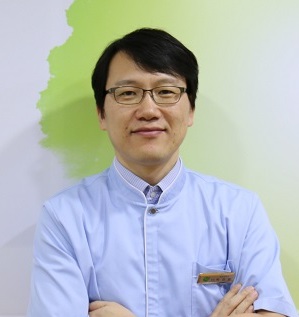
◆ Director Park Chan-young
Director of Eoseongcho Oriental Medicine Clinic in Sadang-dong, Seoul. Holds a Doctorate in Oriental Medicine from Dongguk University. He sparked a detoxification sensation in Korea by appearing on TV health programs such as MBN's 'King of Thumb.' Author of books including "Curing Atopy and Acne with Eoseongcho," "Seasoning is Medicine," and "The Miracle of Detox."

 Iranian Foreign Ministry: "Continuing Message Exchanges with the U.S. and Activities of Mediating Countries"
Esmaeil Baghaei, Spokesperson for the Iranian Ministry of Foreign Affairs [Xinhua, Yonhap News file photo]Esmaeil Baghaei, spokesperson for the Iranian Ministry of Foreign Affairs, stated on the 26th
Iranian Foreign Ministry: "Continuing Message Exchanges with the U.S. and Activities of Mediating Countries"
Esmaeil Baghaei, Spokesperson for the Iranian Ministry of Foreign Affairs [Xinhua, Yonhap News file photo]Esmaeil Baghaei, spokesperson for the Iranian Ministry of Foreign Affairs, stated on the 26th
 President Yoon: "Do You Think You Are Safe from the Special Counsel?"... Final Statement Video Released
President Yoon Suk Yeol rebuking the special prosecutor on the 24th. [Court video / @birds_justice X account subtitle GIF] A video of President Yoon Suk Yeol's closing statement at his trial rega
President Yoon: "Do You Think You Are Safe from the Special Counsel?"... Final Statement Video Released
President Yoon Suk Yeol rebuking the special prosecutor on the 24th. [Court video / @birds_justice X account subtitle GIF] A video of President Yoon Suk Yeol's closing statement at his trial rega
 President Yoon, regarding the first-instance ruling on the Public Official Election Act: “An excessive political verdict that distorts the facts… We will appeal immediately.”
The first-instance sentencing hearing for President Yoon Suk Yeol regarding violations of the Public Official Election Act is being broadcast live at Seoul Station on the 27th. [Photo=Yonhap News]Pres
President Yoon, regarding the first-instance ruling on the Public Official Election Act: “An excessive political verdict that distorts the facts… We will appeal immediately.”
The first-instance sentencing hearing for President Yoon Suk Yeol regarding violations of the Public Official Election Act is being broadcast live at Seoul Station on the 27th. [Photo=Yonhap News]Pres
 WSJ: "SK Hynix ADR Premium Is a Sign of AI Trading Overheat"
Advertisement for SK Hynix ADR listing in New York's Times Square [Reuters=Yonhap News file photo]The Wall Street Journal (WSJ) has pointed out that the price of SK Hynix’s American Depositary Recei
WSJ: "SK Hynix ADR Premium Is a Sign of AI Trading Overheat"
Advertisement for SK Hynix ADR listing in New York's Times Square [Reuters=Yonhap News file photo]The Wall Street Journal (WSJ) has pointed out that the price of SK Hynix’s American Depositary Recei
 'Godfather of Japanese Mystery Novels' Keigo Higashino Passes Away After Battle with Cancer at 68
Famous Japanese mystery novelist Keigo Higashino [AFP=Yonhap News]It has been belatedly reported that Keigo Higashino, the "godfather of Japanese mystery novels" and author of bestsellers such as "The
'Godfather of Japanese Mystery Novels' Keigo Higashino Passes Away After Battle with Cancer at 68
Famous Japanese mystery novelist Keigo Higashino [AFP=Yonhap News]It has been belatedly reported that Keigo Higashino, the "godfather of Japanese mystery novels" and author of bestsellers such as "The
 [Park Pil-kyu Security Column] To the Ignorant Trying to Clothe a Beast in Sheep's Clothing
Rep. Kim Byung-joo of the Democratic Party of Korea [Photo=Yonhap News]“The Air Force Academy doesn't teach you how to fly a plane!” “The Army, Navy, and Air Force academies are exactly the
[Park Pil-kyu Security Column] To the Ignorant Trying to Clothe a Beast in Sheep's Clothing
Rep. Kim Byung-joo of the Democratic Party of Korea [Photo=Yonhap News]“The Air Force Academy doesn't teach you how to fly a plane!” “The Army, Navy, and Air Force academies are exactly the
 [Issue Diagnosis] Two Effects of the Election Petition Review
 [Photo] Evidence of Election Fraud Flooding U.S. Media… Trump Had 2.7 Million Votes Stolen
 [Video] U.S. Semiquincentennial Air Show... 'Art in the Sky' streaks across New York
 [Editorial Cartoon] A Draconian Law That Undermines Freedom of Expression

 List
List









