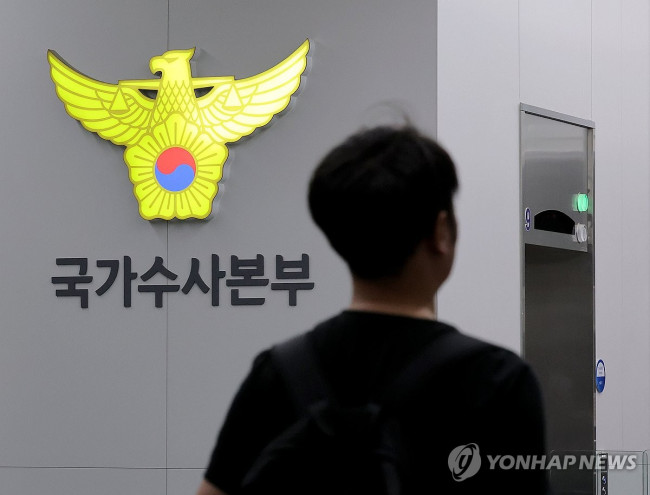
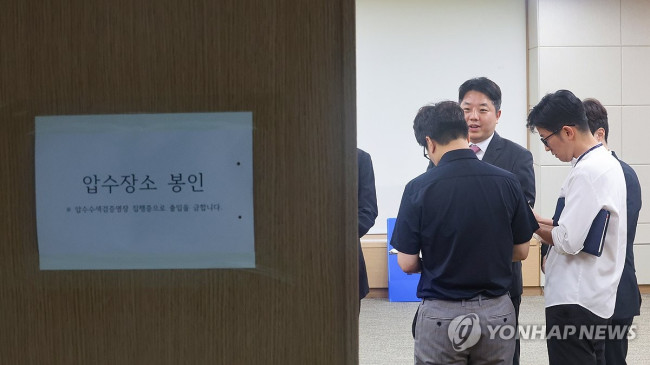
 Police officials walk past the lobby of the National Office of Investigation (NOI) as the special investigation team looking into the Jang Yoon-gi case conducts a raid at the National Police Agency headquarters in Seodaemun-gu, Seoul, on the 21st to verify the reporting and chain of command during the investigation process. [Yonhap News]
Data shows that the number of "objections" filed by complainants dissatisfied with the police's decision to drop charges has more than doubled over the past four years.
According to data submitted by the National Police Agency to People Power Party lawmaker Kim Jae-seob on the 26th, the number of objections filed by complainants against police decisions not to send cases for prosecution reached 56,165 last year, a 2.1-fold increase from 27,262 in 2021.
As of June of this year, the number of objections recorded was 34,001. If this trend continues, the figure could reach approximately 70,000 by the end of the year.
An objection is a procedure initiated by a complainant who disagrees with the police's decision not to forward a case to the prosecution. Once a complainant files an objection, the police are required to immediately transfer the case to the prosecution.
Analysts suggest that the rise in objections is driven by an overall increase in police decisions not to refer cases. Such decisions rose by 49%, from 389,179 in 2021 to 580,774 last year.
The issue is that the rate of objections relative to non-referral decisions has also increased, from 7% in 2021 to 9.7% last year. As of the first half of this year, the rate stands at 11.3%, meaning one in every 10 cases is being challenged.
Cases where the prosecution has overturned police decisions not to refer following an objection have also increased.
The number of cases in which the prosecution conducted supplementary investigations directly or demanded them from the police before eventually indicting rose to 1,130 last year, a 2.1-fold increase from 528 in 2021.
Since the adjustment of investigative powers between the police and prosecution in 2021, the number of "investigation reviews"—a mechanism designed to oversee police investigations alongside the objection process—has tripled, from 2,131 in 2021 to 6,223 last year.
An investigation review is a procedure in which involved parties, such as complainants or accusers, raise concerns about unfairness or illegality in the investigation process or its outcomes.
If a request for an investigation review is deemed appropriate, an Investigation Review Committee, composed of external experts such as lawyers and legal scholars, is convened.
Following its deliberation, the committee issues directives to the investigating agency, such as "supplementary or reinvestigation," "expedited processing," "transfer or reassignment of department/office," or "on-site correction and training." While these directives are not legally binding, they are difficult to reject without valid justification.
The number of instances where committees were convened after finding actual issues in the investigative process through review requests increased by 57.7%, from 156 in 2021 to 246 last year.
In the first half of this year, 140 such committees were held, and the annual total is expected to set a new record.
The number of cases where the committee ordered "supplementary or reinvestigation" due to deficiencies in the initial investigation surged 8.9-fold, from 80 in 2021 to 711 last year.
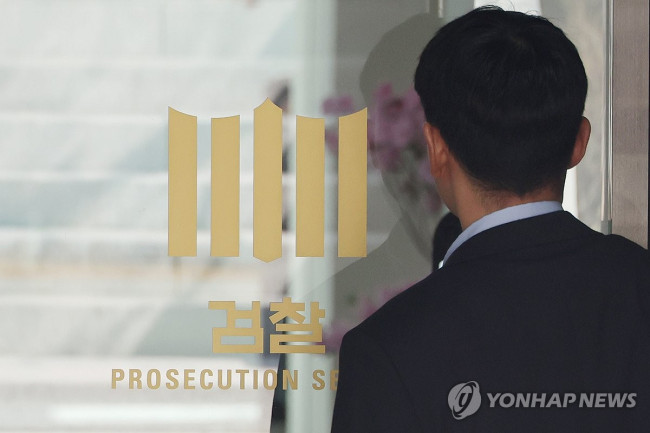 Prosecution Office [Yonhap News]
Inside and outside the police force, analysts suggest that since the police were granted "primary authority to close cases" in 2021, public distrust in police investigative capabilities and the need for oversight have led to the surge in objections and requests for investigation reviews.
A former police officer turned lawyer who recently handled a client's objection pointed out, "Since police have moved away from the prosecution's chain of command following the power adjustment, they tend to be passive in investigations involving complex matters or difficult-to-prove cases like fraud or financial crimes."
The lawyer added, "There are even cases where police suggest to the complainant, 'The case is too complex, so hire a lawyer, organize the evidence yourself, and bring it to us.'"
Against this backdrop, some argue that there is still a need for oversight by the prosecution.
A deputy chief prosecutor remarked, "The rise in the number of objections reflects the demand for the prosecution's oversight of the police," adding, "This is why the necessity of reverting to the system where all cases are forwarded to the prosecution is being discussed."
The system where all cases were sent to the prosecution was abolished during the 2021 reform of investigative powers.
Lawmaker Kim Jae-seob argued, "The fact that the public cannot accept the results of police investigations means the investigations were shoddy," adding, "In a climate where distrust in the police is growing, it is the wrong order of priority to strip away the supplementary investigative powers that serve as a filter for such issues."

 [Statement by the Seo-beo-kka Korea Military Academy Save-the-Nation Comrades Association] ㉛ Recount the Votes Publicly, as the Previous Recount Concealed Election Fraud
Tongyeong Mayoral Election Recount [Photo=Yonhap News]South Korea's liberal democracy is dying. The National Election Commission (NEC) and the judiciary, which have plummeted into criminal syndicates
[Statement by the Seo-beo-kka Korea Military Academy Save-the-Nation Comrades Association] ㉛ Recount the Votes Publicly, as the Previous Recount Concealed Election Fraud
Tongyeong Mayoral Election Recount [Photo=Yonhap News]South Korea's liberal democracy is dying. The National Election Commission (NEC) and the judiciary, which have plummeted into criminal syndicates
 Trump's nominee for new U.S. intelligence chief confirmed by U.S. Senate
U.S. Attorney for the Southern District of New York Jay Clayton, who has been confirmed by the Senate to lead the U.S. intelligence community [AP=Yonhap News File Photo]The U.S. Senate confirmed the n
Trump's nominee for new U.S. intelligence chief confirmed by U.S. Senate
U.S. Attorney for the Southern District of New York Jay Clayton, who has been confirmed by the Senate to lead the U.S. intelligence community [AP=Yonhap News File Photo]The U.S. Senate confirmed the n
 PPP on Speaker Woo's Remarks About 'Lee Jae-myung's Consecutive Term and Constitutional Amendment': "A True Act of Insurrection"
People Power Party Representative Jang Dong-hyeok holds a press conference at the National Assembly on the 28th to express his stance regarding National Assembly Speaker Cho Jeong-sik's remarks on a c
PPP on Speaker Woo's Remarks About 'Lee Jae-myung's Consecutive Term and Constitutional Amendment': "A True Act of Insurrection"
People Power Party Representative Jang Dong-hyeok holds a press conference at the National Assembly on the 28th to express his stance regarding National Assembly Speaker Cho Jeong-sik's remarks on a c
 Prosecution Investigates Gyeonggi-do Election Commission Officials as Suspects in 'Statistical Manipulation' of Ballot Counting Records
'Circumstances of statistical manipulation following turnout errors': Joint Investigation Team conducts search and seizure at National Election Commission [Yonhap News file photo]The joint prosecution
Prosecution Investigates Gyeonggi-do Election Commission Officials as Suspects in 'Statistical Manipulation' of Ballot Counting Records
'Circumstances of statistical manipulation following turnout errors': Joint Investigation Team conducts search and seizure at National Election Commission [Yonhap News file photo]The joint prosecution
 SK Hynix Posts Record-High 76% Operating Margin… Outpacing TSMC for Three Consecutive Quarters
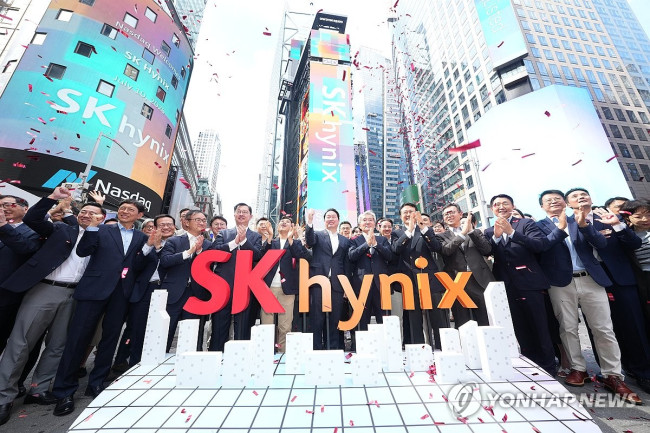
In the second quarter of this year, SK hynix [000660] maintained top-tier profitability in the semiconductor industry, recording an operating profit margin of 76%, which surpassed that of Taiwan’s T
SK Hynix Posts Record-High 76% Operating Margin… Outpacing TSMC for Three Consecutive Quarters
In the second quarter of this year, SK hynix [000660] maintained top-tier profitability in the semiconductor industry, recording an operating profit margin of 76%, which surpassed that of Taiwan’s T
 Shin Jin-seo: "AI is not the 'God of Go'… Human Go still holds its charm."
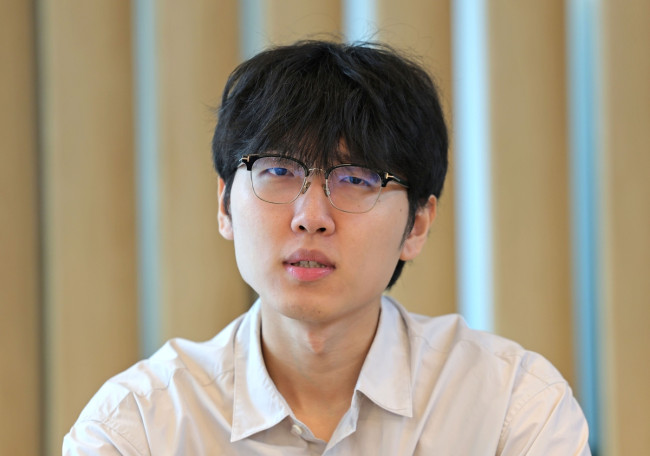
"I don't think AI is the 'God of Go.' I am confident that human Go, which involves making brilliant moves and high-stakes gambles depending on the situation, is still far more fascinating than AI, whi
Shin Jin-seo: "AI is not the 'God of Go'… Human Go still holds its charm."
"I don't think AI is the 'God of Go.' I am confident that human Go, which involves making brilliant moves and high-stakes gambles depending on the situation, is still far more fascinating than AI, whi
 [Park Pil-gyu's Security Column] If Carrying Out Orders Becomes a Crime, Neither the State Nor the Military Can Survive
"Can a military where following orders becomes a crime truly protect the nation and its people, contribute to maintaining the continuity of the state, and continue to survive and exist?" Soldiers stan
[Park Pil-gyu's Security Column] If Carrying Out Orders Becomes a Crime, Neither the State Nor the Military Can Survive
"Can a military where following orders becomes a crime truly protect the nation and its people, contribute to maintaining the continuity of the state, and continue to survive and exist?" Soldiers stan
 [Photo] Evidence of Election Fraud Flooding U.S. Media… Trump Had 2.7 Million Votes Stolen
 [Video] U.S. Semiquincentennial Air Show... 'Art in the Sky' streaks across New York
 [Editorial Cartoon] A Draconian Law That Undermines Freedom of Expression

 List
List