On the 24th, when both the KOSPI and KOSDAQ plummeted, employees at the Hana Bank headquarters in Jung-gu, Seoul, monitor the stock market and exchange rates. On this day, the KOSPI closed down 5.72% at 2690.62, while foreign investors net sold 3.2828 trillion won worth of stocks. [Photo = Yonhap News]
Capital shifted from AI to defensive stocks
Capital flowing out of tech stocks did not exit the market entirely. In the U.S., energy, industrials, materials, real estate, and some defense and biotech stocks showed relative strength. In contrast, in Korea, rapid changes in foreign investor flows and semiconductor large-cap stocks shook the market more severely than any sector rotation.
The U.S. energy sector rose 3.8% over the week, while the Nasdaq fell 2.1%. Approximately $890 billion in market capitalization was wiped out from major AI-related companies such as Tesla, Amazon, Alphabet, and Meta. Gains in the industrials, materials, and real estate sectors helped absorb some of the weakness in tech stocks.
This suggests that investors did not sell off all risky assets, but rather reduced their exposure to AI-heavyweights facing valuation pressures, shifting instead to sectors that could benefit from rising oil prices, geopolitical risks, and increased investment in physical assets.
However, it is difficult to classify energy and defense solely as traditional defensive stocks. Energy is a direct beneficiary of rising oil prices, while the defense sector reflects the potential for long-term orders driven by security anxieties in the Middle East and Europe. This movement is more of a selective rotation toward areas with higher earnings visibility rather than a simple flight to safety amid an economic downturn.
In Korea, foreign investors engaged in bargain hunting for large-cap semiconductor stocks that had plummeted mid-week. However, as tensions in the Middle East, rising oil prices, and climbing U.S. long-term interest rates resurfaced on the 24th, they net sold 3.2828 trillion won in a single day. Institutions also sold 1.9513 trillion won, while individual investors absorbed 5.1783 trillion won.
Foreign investors had shown a buying trend for four consecutive trading days prior to the 24th, but reduced their positions immediately as risk indicators deteriorated. This suggests that their activity was characterized more by short-term trading sensitive to price and global risks rather than a long-term reassessment of the Korean stock market.
The high concentration of semiconductors in the Korean market also makes a U.S.-style sector rotation difficult.
In the U.S., even if tech stocks fall, sectors like energy, industrials, materials, and healthcare can partially buffer the index. In Korea, the market capitalization of Samsung Electronics and SK Hynix is so large that when foreign selling is concentrated in these two, it is difficult to prevent a decline in the index through gains in other sectors alone.
The fact that individual investors net bought over 5 trillion won in a single day should not necessarily be viewed as a safety net. While it is true that individual funds absorbed the sell-off from foreign investors and institutions, it is difficult to defend the index trend with retail spot buying alone if foreign selling continues for an extended period.
There is still insufficient evidence to interpret this capital movement as a total exodus from risky assets. In the U.S., capital moved from overvalued tech stocks to energy and industrials. In Korea, foreign investors did not unilaterally leave the market throughout the week but instead alternated between bargain hunting and risk mitigation.
Results of last week's checkpoints
• Did the price gap between SK Hynix's U.S. Depository Shares (ADS) and domestic common shares narrow: Pending
A weekly comparison using identical standards for trading hours, exchange rates, and ADS conversion ratios between the U.S. and Korea is necessary. It is difficult to judge the narrowing of the price gap based solely on simple closing price comparisons.
• Was foreign buying merely a one-day bargain hunt: Partially confirmed
While buying continued throughout the week, the turnover to a 3.2828 trillion won net sale on the 24th indicates that a sustained expansion in Korean stock exposure was not confirmed.
• Which was dominant: individual buying or margin liquidation: Individual spot buying was dominant
On the 24th, individuals net bought 5.1783 trillion won. However, the scale of margin loan liquidation and individual stock-specific leverage product liquidations must be verified separately.
Next week's checkpoints
• Will foreign investors return to bargain hunting for semiconductors after the massive sell-off on the 24th?
• Will the strength in energy and industrials be maintained even when oil prices fall?
• Will the capital that exited tech stocks exit as cash, or continue to rotate into other sectors?
• Will individual buying remain in spot assets, or expand into margin loans and leveraged products?
• Will the price gap between SK Hynix ADS and domestic common shares narrow following the earnings release?
Points to avoid overstating
It is premature to interpret this capital shift as a full-scale exit from risky assets. So far, it bears more of the character of a sector rotation—moving from overvalued growth stocks to energy and industrials—rather than a complete withdrawal of funds from the market.
However, if the U.S. 10-year Treasury yield exceeds 4.75% and oil prices remain above $100 for an extended period, this selective rotation could turn into a reduction of exposure across all risky assets.
※ This article analyzes financial markets and industry trends based on public market data and does not recommend the purchase or sale of any specific financial investment product or stock. Investment decisions and the subsequent consequences rest solely with the investor.

 [Statement by the Seo-beo-kka Korea Military Academy Save-the-Nation Comrades Association] ㉛ Recount the Votes Publicly, as the Previous Recount Concealed Election Fraud
Tongyeong Mayoral Election Recount [Photo=Yonhap News]South Korea's liberal democracy is dying. The National Election Commission (NEC) and the judiciary, which have plummeted into criminal syndicates
[Statement by the Seo-beo-kka Korea Military Academy Save-the-Nation Comrades Association] ㉛ Recount the Votes Publicly, as the Previous Recount Concealed Election Fraud
Tongyeong Mayoral Election Recount [Photo=Yonhap News]South Korea's liberal democracy is dying. The National Election Commission (NEC) and the judiciary, which have plummeted into criminal syndicates
 Trump's nominee for new U.S. intelligence chief confirmed by U.S. Senate
U.S. Attorney for the Southern District of New York Jay Clayton, who has been confirmed by the Senate to lead the U.S. intelligence community [AP=Yonhap News File Photo]The U.S. Senate confirmed the n
Trump's nominee for new U.S. intelligence chief confirmed by U.S. Senate
U.S. Attorney for the Southern District of New York Jay Clayton, who has been confirmed by the Senate to lead the U.S. intelligence community [AP=Yonhap News File Photo]The U.S. Senate confirmed the n
 PPP on Speaker Woo's Remarks About 'Lee Jae-myung's Consecutive Term and Constitutional Amendment': "A True Act of Insurrection"
People Power Party Representative Jang Dong-hyeok holds a press conference at the National Assembly on the 28th to express his stance regarding National Assembly Speaker Cho Jeong-sik's remarks on a c
PPP on Speaker Woo's Remarks About 'Lee Jae-myung's Consecutive Term and Constitutional Amendment': "A True Act of Insurrection"
People Power Party Representative Jang Dong-hyeok holds a press conference at the National Assembly on the 28th to express his stance regarding National Assembly Speaker Cho Jeong-sik's remarks on a c
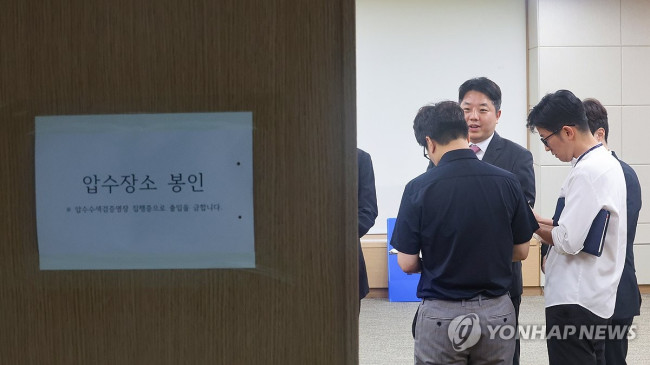 Prosecution Investigates Gyeonggi-do Election Commission Officials as Suspects in 'Statistical Manipulation' of Ballot Counting Records
'Circumstances of statistical manipulation following turnout errors': Joint Investigation Team conducts search and seizure at National Election Commission [Yonhap News file photo]The joint prosecution
Prosecution Investigates Gyeonggi-do Election Commission Officials as Suspects in 'Statistical Manipulation' of Ballot Counting Records
'Circumstances of statistical manipulation following turnout errors': Joint Investigation Team conducts search and seizure at National Election Commission [Yonhap News file photo]The joint prosecution
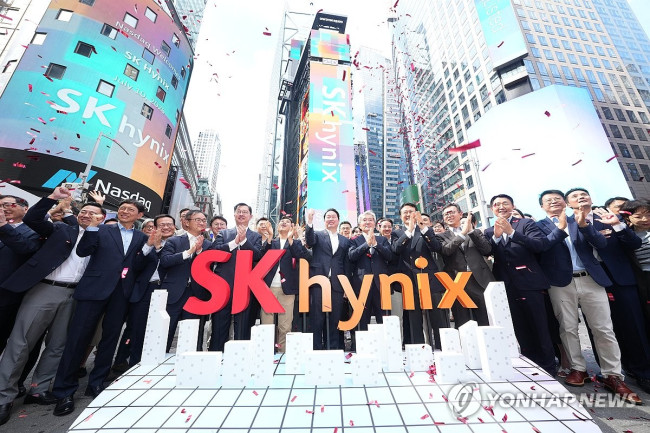 SK Hynix Posts Record-High 76% Operating Margin… Outpacing TSMC for Three Consecutive Quarters
In the second quarter of this year, SK hynix [000660] maintained top-tier profitability in the semiconductor industry, recording an operating profit margin of 76%, which surpassed that of Taiwan’s T
SK Hynix Posts Record-High 76% Operating Margin… Outpacing TSMC for Three Consecutive Quarters
In the second quarter of this year, SK hynix [000660] maintained top-tier profitability in the semiconductor industry, recording an operating profit margin of 76%, which surpassed that of Taiwan’s T
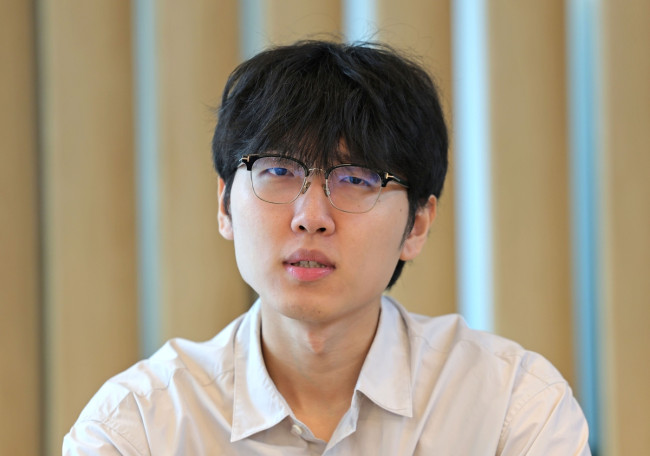 Shin Jin-seo: "AI is not the 'God of Go'… Human Go still holds its charm."
"I don't think AI is the 'God of Go.' I am confident that human Go, which involves making brilliant moves and high-stakes gambles depending on the situation, is still far more fascinating than AI, whi
Shin Jin-seo: "AI is not the 'God of Go'… Human Go still holds its charm."
"I don't think AI is the 'God of Go.' I am confident that human Go, which involves making brilliant moves and high-stakes gambles depending on the situation, is still far more fascinating than AI, whi
 [Park Pil-gyu's Security Column] If Carrying Out Orders Becomes a Crime, Neither the State Nor the Military Can Survive
"Can a military where following orders becomes a crime truly protect the nation and its people, contribute to maintaining the continuity of the state, and continue to survive and exist?" Soldiers stan
[Park Pil-gyu's Security Column] If Carrying Out Orders Becomes a Crime, Neither the State Nor the Military Can Survive
"Can a military where following orders becomes a crime truly protect the nation and its people, contribute to maintaining the continuity of the state, and continue to survive and exist?" Soldiers stan
 [Photo] Evidence of Election Fraud Flooding U.S. Media… Trump Had 2.7 Million Votes Stolen
 [Video] U.S. Semiquincentennial Air Show... 'Art in the Sky' streaks across New York
 [Editorial Cartoon] A Draconian Law That Undermines Freedom of Expression

 List
List