
The moment people are diagnosed with diabetes at a hospital, they often fall into deep despair. It is common to resign oneself, thinking, "I have to take medication for the rest of my life," or "My days of enjoying delicious food are over." However, it is too early to be discouraged.
Instead of relying on the complicated and abstract medical terms we are accustomed to—such as Type 1, Type 1.5, and Type 2 diabetes—if we look at it through the intuitive criteria of "whether the pancreas is damaged or not," we can see a clear path to overcoming diabetes.
Do I have the type of diabetes that requires medication, or is it manageable without it?
Surprisingly, 85% of all diabetic patients have a type where the pancreas is not damaged, meaning that it is entirely possible to fully recover without medication simply by changing one's lifestyle. So, where do you fall? Let’s look at how to self-diagnose.
First, "pancreas-damaged" diabetes, which accounts for 15% of all cases, occurs when there is a problem with the pancreatic cells that secrete insulin. This is clearly indicated by the "3-poly, 1-loss" symptoms: polyphagia (excessive eating), polydipsia (excessive thirst), polyuria (excessive urination), and rapid weight loss.
Because insulin secretion is impaired, patients experience severe fatigue, and sugar levels in the urine are typically very high. The pancreas-damaged type is primarily represented by congenital pancreatic damage (Type 1 diabetes) and childhood diabetes, which manifests before the age of 10.
In other words, the pancreas’s insulin-secreting function was inherently inefficient from birth. In terms of proportions, less than 1% are cases of congenital pancreatic deformity, and about 1.5% are diabetes caused by autoimmune diseases. This type should be approached not as a "cure," but as a matter of "lifelong management."
You must artificially supplement insulin (via injections, insulin pumps, etc.) from the outside to prevent complications and maintain a healthy life. This is an area where one must actively utilize the assistance of modern medicine. However, in the case of autoimmune-related diabetes, there is hope for recovery if you address issues like leaky gut syndrome and undergo consistent detoxification treatment.
85% of diabetic patients have a type where the pancreas is not damaged
The second type is acquired pancreatic damage (Type 1.5 diabetes), which accounts for 12.8% of diabetic patients. This occurs when the pancreas becomes damaged later in life due to extreme, unmanageable stress (such as business failure or the death of a family member) or excessive alcohol consumption. You might suddenly lose weight, feel thirsty, and notice foamy urine; upon visiting a hospital, you find your fasting blood glucose levels have spiked to 200–300 mg/dL or higher.
However, pancreatic cells are among the most difficult cells in the human body to regenerate, alongside those in the brain and kidneys. Because it takes a long time to recover once they are damaged, you must avoid being impatient. Younger individuals need at least 6 months to a year, while older individuals may need 1.5 to 2 years of long-term intensive treatment combined with lifestyle management to see gradual recovery.
Finally, there is the pancreas-undamaged type, which accounts for 85% of all cases. Often called "obesity-linked diabetes," the majority of diabetic patients fall into this "Type 2 diabetes" category.
This type shows the exact opposite pattern of the pancreas-damaged type. Before or after a diagnosis, there are almost no subjective symptoms like extreme thirst, overeating, polyuria, or weight loss; in fact, there is often a tendency to continue gaining weight. In many cases, sugar is not even detected in the urine.
Usually, these individuals are diagnosed with diabetes by chance during a general check-up after being told, "Your blood test shows high sugar levels, so you need to take diabetes medication." In essence, this type does not mean the pancreas is broken.
Insulin is being produced adequately by the pancreas, but the body is in a state of "insulin resistance," where cells cannot accept the insulin due to poor dietary habits and obesity. In this case, since the pancreas is perfectly functional, you can fully return to normal blood sugar levels without medication simply by reverting your poor lifestyle habits.
Just as the fog lifts and the sun rises when you understand the cause, the path to treatment becomes clear. In the next part, I will reveal specific treatments for pancreas-undamaged diabetes.
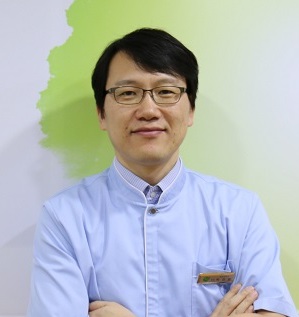
◆ Director Park Chan-young
Director of Eoseongcho Korean Medicine Clinic in Sadang-dong, Seoul. Holds a Doctorate in Korean Medicine from Dongguk University. He created a "detox sensation" in South Korea through appearances on TV health programs such as MBN’s "The King of Thumbs." He is the author of books including "Curing Atopy and Acne with Eoseongcho," "Seasoning is Medicine," and "The Miracle of Detox."

 Iranian Foreign Ministry: "Continuing Message Exchanges with the U.S. and Activities of Mediating Countries"
Esmaeil Baghaei, Spokesperson for the Iranian Ministry of Foreign Affairs [Xinhua, Yonhap News file photo]Esmaeil Baghaei, spokesperson for the Iranian Ministry of Foreign Affairs, stated on the 26th
Iranian Foreign Ministry: "Continuing Message Exchanges with the U.S. and Activities of Mediating Countries"
Esmaeil Baghaei, Spokesperson for the Iranian Ministry of Foreign Affairs [Xinhua, Yonhap News file photo]Esmaeil Baghaei, spokesperson for the Iranian Ministry of Foreign Affairs, stated on the 26th
 President Yoon: "Do You Think You Are Safe from the Special Counsel?"... Final Statement Video Released
President Yoon Suk Yeol rebuking the special prosecutor on the 24th. [Court video / @birds_justice X account subtitle GIF] A video of President Yoon Suk Yeol's closing statement at his trial rega
President Yoon: "Do You Think You Are Safe from the Special Counsel?"... Final Statement Video Released
President Yoon Suk Yeol rebuking the special prosecutor on the 24th. [Court video / @birds_justice X account subtitle GIF] A video of President Yoon Suk Yeol's closing statement at his trial rega
 President Yoon, regarding the first-instance ruling on the Public Official Election Act: “An excessive political verdict that distorts the facts… We will appeal immediately.”
The first-instance sentencing hearing for President Yoon Suk Yeol regarding violations of the Public Official Election Act is being broadcast live at Seoul Station on the 27th. [Photo=Yonhap News]Pres
President Yoon, regarding the first-instance ruling on the Public Official Election Act: “An excessive political verdict that distorts the facts… We will appeal immediately.”
The first-instance sentencing hearing for President Yoon Suk Yeol regarding violations of the Public Official Election Act is being broadcast live at Seoul Station on the 27th. [Photo=Yonhap News]Pres
 WSJ: "SK Hynix ADR Premium Is a Sign of AI Trading Overheat"
Advertisement for SK Hynix ADR listing in New York's Times Square [Reuters=Yonhap News file photo]The Wall Street Journal (WSJ) has pointed out that the price of SK Hynix’s American Depositary Recei
WSJ: "SK Hynix ADR Premium Is a Sign of AI Trading Overheat"
Advertisement for SK Hynix ADR listing in New York's Times Square [Reuters=Yonhap News file photo]The Wall Street Journal (WSJ) has pointed out that the price of SK Hynix’s American Depositary Recei
 'Godfather of Japanese Mystery Novels' Keigo Higashino Passes Away After Battle with Cancer at 68
Famous Japanese mystery novelist Keigo Higashino [AFP=Yonhap News]It has been belatedly reported that Keigo Higashino, the "godfather of Japanese mystery novels" and author of bestsellers such as "The
'Godfather of Japanese Mystery Novels' Keigo Higashino Passes Away After Battle with Cancer at 68
Famous Japanese mystery novelist Keigo Higashino [AFP=Yonhap News]It has been belatedly reported that Keigo Higashino, the "godfather of Japanese mystery novels" and author of bestsellers such as "The
 [Park Pil-kyu Security Column] To the Ignorant Trying to Clothe a Beast in Sheep's Clothing
Rep. Kim Byung-joo of the Democratic Party of Korea [Photo=Yonhap News]“The Air Force Academy doesn't teach you how to fly a plane!” “The Army, Navy, and Air Force academies are exactly the
[Park Pil-kyu Security Column] To the Ignorant Trying to Clothe a Beast in Sheep's Clothing
Rep. Kim Byung-joo of the Democratic Party of Korea [Photo=Yonhap News]“The Air Force Academy doesn't teach you how to fly a plane!” “The Army, Navy, and Air Force academies are exactly the
 [Issue Diagnosis] Two Effects of the Election Petition Review
 [Photo] Evidence of Election Fraud Flooding U.S. Media… Trump Had 2.7 Million Votes Stolen
 [Video] U.S. Semiquincentennial Air Show... 'Art in the Sky' streaks across New York
 [Editorial Cartoon] A Draconian Law That Undermines Freedom of Expression

 List
List









