 U.S. Ambassador to South Korea Michelle Steel speaks at the opening ceremony of the Korea-U.S. Shipbuilding Cooperation Center held at the Mayflower Hotel in Washington, D.C., on the 23rd (local time). [Yonhap News]
The post of U.S. Ambassador to South Korea, which has been vacant for a year and a half since the start of the second Donald Trump administration, will be filled this week with the Ambassador's arrival in Korea.
With a multitude of significant security and economic issues currently pending between Seoul and Washington—including nuclear cooperation, the transition of wartime operational control, investment in the U.S., and tariffs—as well as potential flashpoints such as the Coupang issue, the role of the new U.S. Ambassador is drawing heightened attention.
According to diplomatic sources on the 28th, U.S. Ambassador Michelle Steel is scheduled to arrive in South Korea on the 30th to take up her post.
Ambassador Steel is expected to focus on ensuring the swift implementation of Korean investment in the U.S., a key interest for Washington among the issues agreed upon by the leaders of the two countries.
The U.S. has been urging the South Korean government through various channels to expedite its investments. If the U.S. determines that these investments are not meeting its expectations, it could exert pressure by delaying security consultations, such as nuclear cooperation, or by reinstating tariffs.
There is also keen interest in how Ambassador Steel will navigate potential friction points in the Korea-U.S. relationship, including matters related to Coupang, the Information and Communications Network Act, and religious issues involving the Unification Church and Pastor Son Hyun-bo.
However, government officials who have engaged with Ambassador Steel report that she is fully aware of the importance of the Korea-U.S. alliance and possesses a strong willingness to cooperate with the South Korean government rather than engage in confrontation.
At the opening ceremony of the Korea-U.S. Shipbuilding Cooperation Center in Washington, D.C., on the 23rd, Ambassador Steel stated that strengthening the Korea-U.S. alliance would be her "top priority."
There is also an expectation that the arrival of Ambassador Steel will facilitate regular, face-to-face communication channels between the two countries, providing momentum for discussions on the South Korean government's key agenda items, such as the North Korean nuclear issue, the acquisition of nuclear-powered submarines, and nuclear energy negotiations.
New foreign ambassadors to Korea must submit a copy of their credentials to the Chief of Protocol of the Ministry of Foreign Affairs before beginning official duties, and in the case of the U.S. Ambassador, this usually serves as an occasion to pay a courtesy call on the Minister of Foreign Affairs.
As both the Foreign Minister and the Chief of Protocol are currently accompanying President Lee Jae-myung on his state visit to South America, the submission of credentials is expected to take place as early as next week following their return.
 U.S. Ambassador to South Korea Mark Lippert visiting Jamsil Baseball Stadium in 2017 [Yonhap News file photo]
An ambassador serves as a crucial bridge between their home country and the host government.
While their primary duty is to work toward strengthening bilateral relations and advocating for their home government's stance, an individual ambassador's temperament and capability can significantly influence the course of Korea-U.S. relations.
In particular, given President Trump's tendency to decide major diplomatic and security policies in a somewhat impromptu manner without traditional inter-agency consultation, the arrival of a so-called "powerful" ambassador—one with a direct line to the President—could potentially lead to smoother communication between Seoul and Washington.
U.S. Ambassador to Japan George Glass, who built his relationship with President Trump through long-term support, is often cited as such a figure, and there is a sentiment within diplomatic circles that they expect a similar role from Ambassador Steel.
Among past U.S. ambassadors, former Ambassador Mark Lippert (2014–2017) is cited as a positive example; as a core aide to former President Barack Obama, he built a friendly image through active communication with the South Korean public.
Conversely, some U.S. ambassadors have become sources of friction in Korea-U.S. relations by engaging in public conflict with the South Korean government.
During the first Trump administration, former Ambassador Harry Harris (2018–2021) faced backlash from South Korean ruling party officials for his un-diplomatic, blunt rhetoric while advocating for U.S. positions on contentious issues such as defense cost-sharing negotiations and North Korea policy.
Some in the progressive camp even targeted the Japanese-American heritage of former Ambassador Harris, comparing his mustache to that of a colonial-era Japanese Governor-General—a personal attack that contributed to the formation of a negative image of him.
In the case of Ambassador Steel, some progressive civic groups have expressed criticism of her nomination, citing her strong conservative stance.
During her time as a lawmaker, she advocated for strengthening U.S. containment of China and improving human rights for North Korean defectors, and she also opposed the end-of-war declaration pushed by the Moon Jae-in administration.
Ambassador Steel, a Korean-American politician from the Republican Party, was born in Seoul in 1955, immigrated to the U.S. in the mid-1970s, and served two terms as a member of the U.S. House of Representatives in California (2020–2024).
She is the second Korean-American to serve as U.S. Ambassador to South Korea, following former Ambassador Sung Kim (2011–2014).
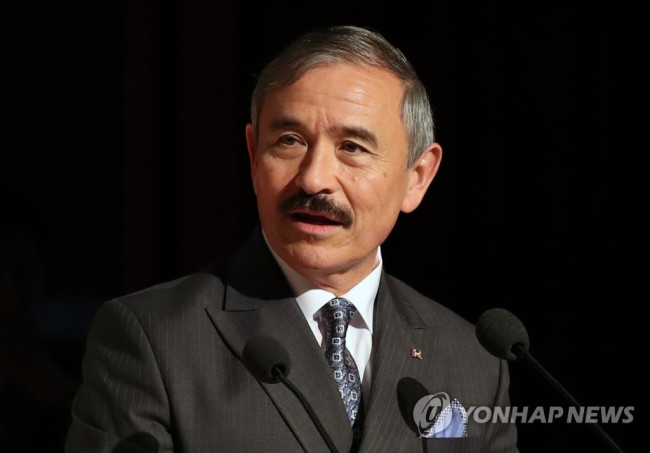 U.S. Ambassador to South Korea Harry Harris giving a lecture at the Far East Forum in 2018 [Yonhap News file photo]

 [Statement by the Seo-beo-kka Korea Military Academy Save-the-Nation Comrades Association] ㉛ Recount the Votes Publicly, as the Previous Recount Concealed Election Fraud
Tongyeong Mayoral Election Recount [Photo=Yonhap News]South Korea's liberal democracy is dying. The National Election Commission (NEC) and the judiciary, which have plummeted into criminal syndicates
[Statement by the Seo-beo-kka Korea Military Academy Save-the-Nation Comrades Association] ㉛ Recount the Votes Publicly, as the Previous Recount Concealed Election Fraud
Tongyeong Mayoral Election Recount [Photo=Yonhap News]South Korea's liberal democracy is dying. The National Election Commission (NEC) and the judiciary, which have plummeted into criminal syndicates
 Trump's nominee for new U.S. intelligence chief confirmed by U.S. Senate
U.S. Attorney for the Southern District of New York Jay Clayton, who has been confirmed by the Senate to lead the U.S. intelligence community [AP=Yonhap News File Photo]The U.S. Senate confirmed the n
Trump's nominee for new U.S. intelligence chief confirmed by U.S. Senate
U.S. Attorney for the Southern District of New York Jay Clayton, who has been confirmed by the Senate to lead the U.S. intelligence community [AP=Yonhap News File Photo]The U.S. Senate confirmed the n
 PPP on Speaker Woo's Remarks About 'Lee Jae-myung's Consecutive Term and Constitutional Amendment': "A True Act of Insurrection"
People Power Party Representative Jang Dong-hyeok holds a press conference at the National Assembly on the 28th to express his stance regarding National Assembly Speaker Cho Jeong-sik's remarks on a c
PPP on Speaker Woo's Remarks About 'Lee Jae-myung's Consecutive Term and Constitutional Amendment': "A True Act of Insurrection"
People Power Party Representative Jang Dong-hyeok holds a press conference at the National Assembly on the 28th to express his stance regarding National Assembly Speaker Cho Jeong-sik's remarks on a c
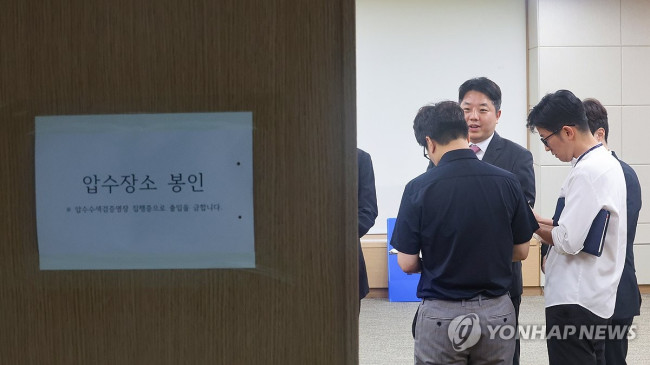 Prosecution Investigates Gyeonggi-do Election Commission Officials as Suspects in 'Statistical Manipulation' of Ballot Counting Records
'Circumstances of statistical manipulation following turnout errors': Joint Investigation Team conducts search and seizure at National Election Commission [Yonhap News file photo]The joint prosecution
Prosecution Investigates Gyeonggi-do Election Commission Officials as Suspects in 'Statistical Manipulation' of Ballot Counting Records
'Circumstances of statistical manipulation following turnout errors': Joint Investigation Team conducts search and seizure at National Election Commission [Yonhap News file photo]The joint prosecution
 SK Hynix Posts Record-High 76% Operating Margin… Outpacing TSMC for Three Consecutive Quarters
In the second quarter of this year, SK hynix [000660] maintained top-tier profitability in the semiconductor industry, recording an operating profit margin of 76%, which surpassed that of Taiwan’s T
SK Hynix Posts Record-High 76% Operating Margin… Outpacing TSMC for Three Consecutive Quarters
In the second quarter of this year, SK hynix [000660] maintained top-tier profitability in the semiconductor industry, recording an operating profit margin of 76%, which surpassed that of Taiwan’s T
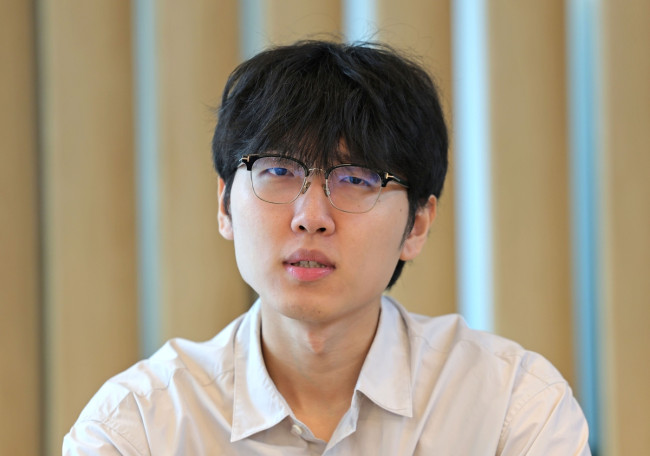 Shin Jin-seo: "AI is not the 'God of Go'… Human Go still holds its charm."
"I don't think AI is the 'God of Go.' I am confident that human Go, which involves making brilliant moves and high-stakes gambles depending on the situation, is still far more fascinating than AI, whi
Shin Jin-seo: "AI is not the 'God of Go'… Human Go still holds its charm."
"I don't think AI is the 'God of Go.' I am confident that human Go, which involves making brilliant moves and high-stakes gambles depending on the situation, is still far more fascinating than AI, whi
 [Park Pil-gyu's Security Column] If Carrying Out Orders Becomes a Crime, Neither the State Nor the Military Can Survive
"Can a military where following orders becomes a crime truly protect the nation and its people, contribute to maintaining the continuity of the state, and continue to survive and exist?" Soldiers stan
[Park Pil-gyu's Security Column] If Carrying Out Orders Becomes a Crime, Neither the State Nor the Military Can Survive
"Can a military where following orders becomes a crime truly protect the nation and its people, contribute to maintaining the continuity of the state, and continue to survive and exist?" Soldiers stan
 [Photo] Evidence of Election Fraud Flooding U.S. Media… Trump Had 2.7 Million Votes Stolen
 [Video] U.S. Semiquincentennial Air Show... 'Art in the Sky' streaks across New York
 [Editorial Cartoon] A Draconian Law That Undermines Freedom of Expression

 List
List