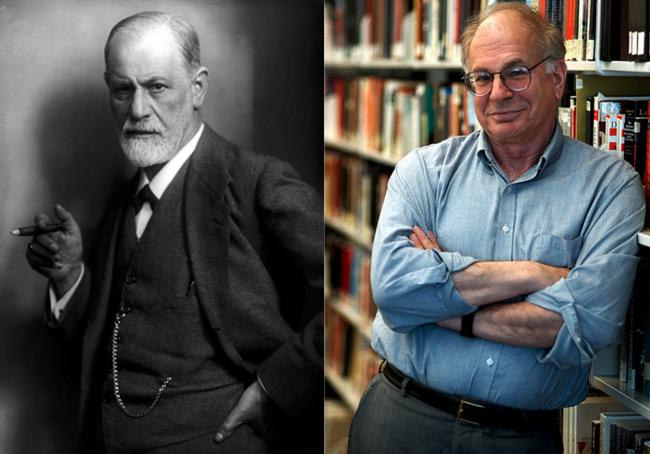
 Sigmund Freud (left), who first systematized the world of the ‘unconscious’ as an invisible driving force determining human behavior and psychology, and Daniel Kahneman, a Princeton University professor who established the ‘decision-making theory’ that became the root of behavioral economics. [Photo=Public Domain & Yonhap News]
“I decided after giving it enough thought.”
People often say this. They believe that buying a product, supporting a specific politician, or liking or disliking someone are all matters of their own rational judgment.
However, over the past 100 years, psychology and neuroscience have revealed that human decision-making is far more complex than we think. Modern academic research shows that the unconscious already exerts a strong influence even before a person makes a conscious judgment.
The first person to systematically study the unconscious was the Austrian psychoanalyst Sigmund Freud. In his book ‘The Interpretation of Dreams,’ published in 1900, he argued that human behavior is influenced by desires, memories, and repressed experiences that one is not even aware of.
Subsequently, in ‘The Psychopathology of Everyday Life,’ he suggested that slips of the tongue and forgetfulness could also be explained as operations of the unconscious. Today, not all of Freud’s theories are accepted as they were originally proposed. However, his academic contribution remains highly regarded for elevating the unconscious to a central subject of study in the human psyche.
Research on the unconscious subsequently moved beyond psychoanalysis and developed into cognitive psychology and neuroscience.
Psychologist Daniel Kahneman, who received the Nobel Prize in Economic Sciences in 2002, explained human thinking in two systems in his book ‘Thinking, Fast and Slow.’ One is System 1, which operates fast and automatically, and the other is System 2, which thinks slowly and deliberately.
Recognizing faces, walking on familiar paths, and sensing danger are mostly handled by System 1. Conversely, complex calculations or logical reasoning are performed by System 2. Kahneman explained that humans do not always act after deep thought; rather, we often judge automatically first, and then our consciousness reviews that judgment.
American social psychologist Jonathan Haidt also presented a similar conclusion in ‘The Righteous Mind.’ He argued that human moral judgment is often made intuitively first, and reason serves primarily to explain or justify that judgment.
He explained this with the metaphor of the ‘elephant and the rider.’ The massive elephant represents intuition and emotion, while the rider represents reason. This means that while the rider can suggest a direction, the real power lies with the elephant.
Neuroscience has also produced research results that support this explanation. In a 1983 experiment, American neurophysiologist Benjamin Libet asked participants to move their fingers.
The results showed that a ‘Readiness Potential’ already appeared in the brain hundreds of milliseconds before the participants consciously felt “I am going to move now.” This research demonstrates that the brain can prepare for action before a conscious decision is made.
However, this experiment does not prove that humans lack free will. Libet himself suggested the possibility of a ‘veto’ power to stop an action at the final moment, and debates surrounding the interpretation of this experiment continue to this day.
In ‘Descartes’ Error,’ Portuguese neuroscientist Antonio Damasio suggested that emotions and the unconscious are essential for rational judgment. He studied patients with damage to the parts of the brain responsible for emotion.
While they had no significant issues with logic, they could not make sound everyday decisions. This is a case demonstrating that humans do not judge more rationally as they remove emotions; rather, effective judgment requires the unconscious signals known as emotions.
These research findings are easily observed in daily life. Advertising companies do not simply explain the performance of a product. They place a successful businessman next to a car, feature a happy family in beverage commercials, and cast famous actors in perfume ads.
This is because repeatedly associating a product with a positive image forms a favorable impression in the consumer’s unconscious. Consumer psychology studies have repeatedly reported that the same product is evaluated more highly when it carries a famous brand name.
The same applies to politics. Although voters think they cast their ballots by comparing policies, a candidate’s face, tone of voice, and repeatedly encountered images and symbols also influence their judgment. Of course, political choices are influenced by various factors such as policy, economic conditions, personal values, and social experience.
Therefore, not all political choices can be explained by the unconscious alone. However, research in political psychology consistently confirms that the unconscious is a significant variable.
Historical perception is no exception. People repeatedly encounter specific historical views through school education, media, movies, dramas, and the social atmosphere. Such experiences accumulate in the unconscious, making it difficult to easily change existing perceptions even when encountering new historical materials.
This is why historical studies prioritize critical analysis of sources and self-reflection as important research methods. If researchers do not examine their own prejudices and premises, objective historical research can become difficult.
So, are humans beings governed by the unconscious? Modern psychology and neuroscience answer no. The unconscious has a strong influence on consciousness, but consciousness can also change the unconscious through learning and reflection.
Repeatedly learning new knowledge, reflecting on one’s own biases, and accumulating diverse experiences can also change the brain’s connective structure. This is called neuroplasticity. Today’s learning is the process of shaping tomorrow’s unconscious.
Ultimately, humans are beings in which the unconscious and consciousness constantly interact. The unconscious provides fast judgment and efficiency but simultaneously creates biases and errors. Consciousness serves the function of examining and correcting these automatic responses.
Therefore, the expression “the unconscious determines consciousness” does not sufficiently reflect the achievements of modern academic research. A more accurate expression is as follows:
The unconscious has a strong influence on consciousness. However, humans are beings who can understand and modify that influence through reflection and learning.
◆ Songsan Jeong Kwang-je
A poet and researcher of history and philosophy. Former director of the Rhee Syngman Institute. Currently serves as a research advisor for the Korea Modern & Contemporary History Research Association and representative of the philosophy forum Lyceum. He has published four volumes of poetry, co-translated ‘Heroes of Pork Chop Hill,’ and authored humanities books such as ‘Joseon Become Myth,’ ‘Humanities on Tatami,’ and ‘A Liberal’s Reading of Gramsci.’

 [Statement by the Seo-beo-kka Korea Military Academy Save-the-Nation Comrades Association] ㉛ Recount the Votes Publicly, as the Previous Recount Concealed Election Fraud
Tongyeong Mayoral Election Recount [Photo=Yonhap News]South Korea's liberal democracy is dying. The National Election Commission (NEC) and the judiciary, which have plummeted into criminal syndicates
[Statement by the Seo-beo-kka Korea Military Academy Save-the-Nation Comrades Association] ㉛ Recount the Votes Publicly, as the Previous Recount Concealed Election Fraud
Tongyeong Mayoral Election Recount [Photo=Yonhap News]South Korea's liberal democracy is dying. The National Election Commission (NEC) and the judiciary, which have plummeted into criminal syndicates
 Trump's nominee for new U.S. intelligence chief confirmed by U.S. Senate
U.S. Attorney for the Southern District of New York Jay Clayton, who has been confirmed by the Senate to lead the U.S. intelligence community [AP=Yonhap News File Photo]The U.S. Senate confirmed the n
Trump's nominee for new U.S. intelligence chief confirmed by U.S. Senate
U.S. Attorney for the Southern District of New York Jay Clayton, who has been confirmed by the Senate to lead the U.S. intelligence community [AP=Yonhap News File Photo]The U.S. Senate confirmed the n
 PPP on Speaker Woo's Remarks About 'Lee Jae-myung's Consecutive Term and Constitutional Amendment': "A True Act of Insurrection"
People Power Party Representative Jang Dong-hyeok holds a press conference at the National Assembly on the 28th to express his stance regarding National Assembly Speaker Cho Jeong-sik's remarks on a c
PPP on Speaker Woo's Remarks About 'Lee Jae-myung's Consecutive Term and Constitutional Amendment': "A True Act of Insurrection"
People Power Party Representative Jang Dong-hyeok holds a press conference at the National Assembly on the 28th to express his stance regarding National Assembly Speaker Cho Jeong-sik's remarks on a c
 Prosecution Investigates Gyeonggi-do Election Commission Officials as Suspects in 'Statistical Manipulation' of Ballot Counting Records
'Circumstances of statistical manipulation following turnout errors': Joint Investigation Team conducts search and seizure at National Election Commission [Yonhap News file photo]The joint prosecution
Prosecution Investigates Gyeonggi-do Election Commission Officials as Suspects in 'Statistical Manipulation' of Ballot Counting Records
'Circumstances of statistical manipulation following turnout errors': Joint Investigation Team conducts search and seizure at National Election Commission [Yonhap News file photo]The joint prosecution
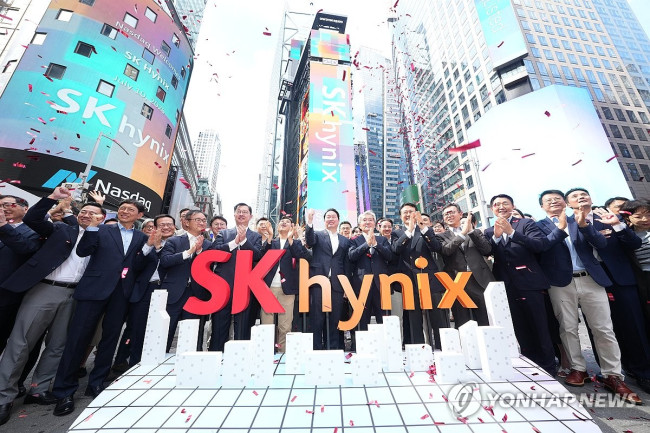 SK Hynix Posts Record-High 76% Operating Margin… Outpacing TSMC for Three Consecutive Quarters
In the second quarter of this year, SK hynix [000660] maintained top-tier profitability in the semiconductor industry, recording an operating profit margin of 76%, which surpassed that of Taiwan’s T
SK Hynix Posts Record-High 76% Operating Margin… Outpacing TSMC for Three Consecutive Quarters
In the second quarter of this year, SK hynix [000660] maintained top-tier profitability in the semiconductor industry, recording an operating profit margin of 76%, which surpassed that of Taiwan’s T
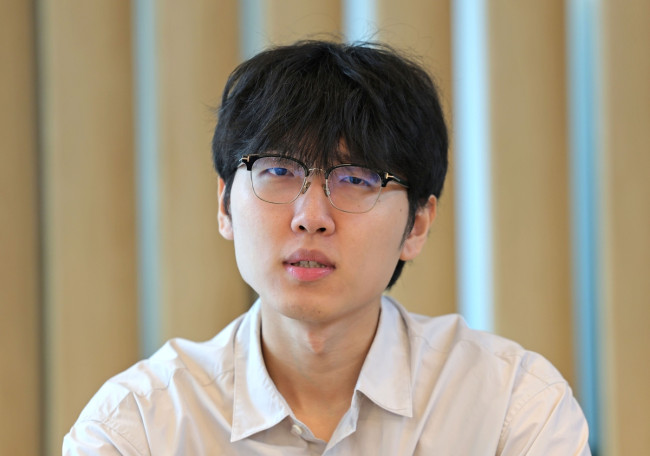 Shin Jin-seo: "AI is not the 'God of Go'… Human Go still holds its charm."
"I don't think AI is the 'God of Go.' I am confident that human Go, which involves making brilliant moves and high-stakes gambles depending on the situation, is still far more fascinating than AI, whi
Shin Jin-seo: "AI is not the 'God of Go'… Human Go still holds its charm."
"I don't think AI is the 'God of Go.' I am confident that human Go, which involves making brilliant moves and high-stakes gambles depending on the situation, is still far more fascinating than AI, whi
 [Park Pil-gyu's Security Column] If Carrying Out Orders Becomes a Crime, Neither the State Nor the Military Can Survive
"Can a military where following orders becomes a crime truly protect the nation and its people, contribute to maintaining the continuity of the state, and continue to survive and exist?" Soldiers stan
[Park Pil-gyu's Security Column] If Carrying Out Orders Becomes a Crime, Neither the State Nor the Military Can Survive
"Can a military where following orders becomes a crime truly protect the nation and its people, contribute to maintaining the continuity of the state, and continue to survive and exist?" Soldiers stan
 [Photo] Evidence of Election Fraud Flooding U.S. Media… Trump Had 2.7 Million Votes Stolen
 [Video] U.S. Semiquincentennial Air Show... 'Art in the Sky' streaks across New York
 [Editorial Cartoon] A Draconian Law That Undermines Freedom of Expression

 List
List