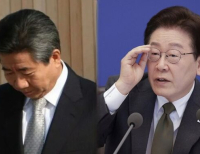
"Can an army where obeying orders is considered a crime protect the nation and its people, contribute to maintaining the continuity of the state, and survive and endure?" Soldiers standing trial regarding the December 3rd emergency martial law. [Photo = Yonhap News]Since the December 3rd emergency martial law, the Republic of Korea Armed Forces have suffered unprecedentedly deep trauma and have been plunged into chaos. Recently, a special investigation team into the insurrection demanded heavy prison sentences ranging from 10 to 18 years for seven officers, including a former commander of the 1st Airborne Special Forces Brigade, who were involved in deploying martial law troops to the National Assembly and operating arrest teams for politicians. The shock felt within the military must be profound.
While the special investigation team pointed out that these individuals "participated in the insurrection through their own independent judgment, not through mechanical measures," the voices of the defendants in court were desperate. There were vehement arguments that "martial law was justified," and pleas that "we considered the President’s command to be the nation’s command, and we could not even imagine it was an illegal directive."
Here, we face a terrifying question that shakes the very foundation of South Korea's security: Can an army where obeying orders is considered a crime truly protect the nation and its people, contribute to maintaining state continuity, and continue to exist and survive?
1. For Soldiers, ‘Obeying Orders’ is Familiar, while ‘Refusing Unconstitutional Acts’ is Distant
Military organizations are fundamentally different from general social organizations. Whether in wartime or peacetime, soldiers are educated and trained from their time as cadets to immediately follow the legitimate commands and directives of their superiors.
For soldiers, obedience to orders is a daily routine, as natural as breathing. In the emergency situation of the nation’s commander-in-chief declaring martial law, when frontline commanders and working-level officers were faced with directives and mobilization orders, anyone would have had no choice but to follow those orders.
Of course, this does not mean that one should unconditionally obey clearly and significantly illegal directives that fall outside the bounds of the Constitution and the law.
However, in a rapidly unfolding national crisis, it is theoretically impossible for martial law commanders to immediately recognize, judge, define, and refuse the directives of the President and martial law leadership as "unconstitutional acts of insurrection." For a soldier conditioned to obey orders, the options when receiving a directive are inevitably extremely limited.
As in the defendants' final statements, refusing the commander-in-chief's order in that situation would have been a terrifying moment, where it could be perceived not just as simple insubordination, but as "treason" that denies their very reason for existing as soldiers.
2. Is Punishment Driven by Political Strife Justifiable for Soldiers in Uniform?
In modern democratic nations, the political neutrality of soldiers and civilian control are absolute, unwritten rules and fundamental principles that the military must uphold. The military exists for the people and the nation, not for specific political factions or power holders, and must obey the Constitution and legitimate democratic control systems. However, the December 3rd martial law was a tragic event that showed that the principles of civilian control and hierarchy can be distorted by those at the pinnacle of power.
It is realistically impossible for frontline soldiers to judge and refuse the constitutionality of orders that have passed through the commander-in-chief's directive and the official chain of command of the martial law leadership in real-time.
When the national system itself is paralyzed or malfunctioning, placing all responsibility on those at the bottom who performed their duties mechanically or out of loyalty to the state is both politically motivated and contrary to the original intent of civilian control.
If we treat legitimate operations against an enemy's preceding drone provocations as acts of aiding the enemy, and link the execution of martial law orders—a matter of hierarchy—to insurrection, how could any soldier ever perform their duties with conviction or respond to the nation’s orders in the future?
I hope the court that will issue the verdict will consider the situation from the perspective of soldiers who had no choice but to follow orders in a desperate situation and exercise mercy.
3. Even War Crimes Tribunals Exempted and Showed Leniency to ‘Simple Order-Followers’
Since the Nuremberg International Military Tribunal in October 1946, which judged atrocious war crimes in human history, modern rule-of-law states and international criminal justice systems have developed profound legal reflections on actions taken under the orders of superiors.
Although the defense of "just following superior orders" cannot be an absolute justification, modern criminal justice systems have maintained an attitude of caution and leniency in cases where individuals had no choice within the nation's massive command structure or where it was difficult to clearly perceive the illegality of the directive. They did not impose severe punishments that made soldiers who followed orders take the full blame.
Given the special physiological nature of the military organization, which cannot easily recognize or refuse the directives of the supreme authority as national orders in extreme situations like a state of emergency, it is inequitable to demand the same level of responsibility from soldiers and police who simply carried out orders as from the designers who planned the policy and led the situation from the pinnacle of power.
Imposing heavy burdens on soldiers and police who followed orders is a ruthless form of political retaliation, an act of violence committed in the name of public power, and an assassination of their honor.
4. Uniform Labeling and Defamation for Political Strife Must Be Corrected
Many retired generals who were under investigation, including former Chief of Naval Operations Kang Dong-gil and former JCS Director of Operations Lee Seung-o, were cleared of charges or found to have no legal responsibility during the investigation into the December 3rd martial law. Yet, they remain left in the cold under unfair labels and have been unable to restore their honor.
It is wrong to turn those who performed their duties with a single mind of obedience within the state's command system into scapegoats for political vortexes, or to shift responsibility onto the innocent. I hope the court will deeply understand the urgent situation they were in, the unique hierarchy of the military organization, and the fact that there was no political motive, and grant them a generous and lenient judgment.
The Ministry of National Defense should also respect true military discipline and the spirit of the Constitution by actively exercising its authority to cancel disadvantages and restore the honor of those affected by the martial law probe. Unilaterally condemning and driving out soldiers, whose very existence must remain pure, could lead to yet another tragedy.
It is time to soothe the shaken morale of the military and restore its honor through a cool-headed application of the law, warm-hearted reason, and a stance of resolving the issues we created ourselves, for the soldiers who suffered unjust scars, defamation, and human rights violations after being caught in a political whirlwind for following orders.
Now is the time to watch the footsteps of the enemy that has reached the Military Demarcation Line. This is not the time to destroy the nation by killing innocent soldiers who followed orders.
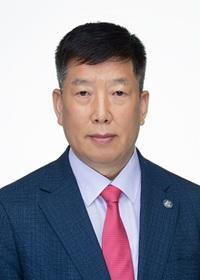
◆ Commissioner Park Pil-gyu
Editorial Writer, Korea-US Daily News
Korea Military Academy, 40th Class

 [Statement by the Seo-beo-kka Korea Military Academy Save-the-Nation Comrades Association] ㉛ Recount the Votes Publicly, as the Previous Recount Concealed Election Fraud
Tongyeong Mayoral Election Recount [Photo=Yonhap News]South Korea's liberal democracy is dying. The National Election Commission (NEC) and the judiciary, which have plummeted into criminal syndicates
[Statement by the Seo-beo-kka Korea Military Academy Save-the-Nation Comrades Association] ㉛ Recount the Votes Publicly, as the Previous Recount Concealed Election Fraud
Tongyeong Mayoral Election Recount [Photo=Yonhap News]South Korea's liberal democracy is dying. The National Election Commission (NEC) and the judiciary, which have plummeted into criminal syndicates
 US Brewery That Posted “Free Beer If Trump Dies” Has Liquor License Revoked
An American brewery that sparked controversy for social media posts promising free beer to customers upon the death of Donald Trump has had its liquor license revoked by the state government. [Getty I
US Brewery That Posted “Free Beer If Trump Dies” Has Liquor License Revoked
An American brewery that sparked controversy for social media posts promising free beer to customers upon the death of Donald Trump has had its liquor license revoked by the state government. [Getty I
 PPP on Speaker Woo's Remarks About 'Lee Jae-myung's Consecutive Term and Constitutional Amendment': "A True Act of Insurrection"
People Power Party Representative Jang Dong-hyeok holds a press conference at the National Assembly on the 28th to express his stance regarding National Assembly Speaker Cho Jeong-sik's remarks on a c
PPP on Speaker Woo's Remarks About 'Lee Jae-myung's Consecutive Term and Constitutional Amendment': "A True Act of Insurrection"
People Power Party Representative Jang Dong-hyeok holds a press conference at the National Assembly on the 28th to express his stance regarding National Assembly Speaker Cho Jeong-sik's remarks on a c
 Joint Investigation Headquarters Secures NEC Data for 2025 Presidential Election and 2024 General Election
It has been determined that the search and seizure warrant executed by the joint investigation headquarters on the 23rd—covering the National Election Commission (NEC), local election commissions in
Joint Investigation Headquarters Secures NEC Data for 2025 Presidential Election and 2024 General Election
It has been determined that the search and seizure warrant executed by the joint investigation headquarters on the 23rd—covering the National Election Commission (NEC), local election commissions in
 SK Hynix Posts Record-High 76% Operating Margin… Outpacing TSMC for Three Consecutive Quarters
In the second quarter of this year, SK hynix [000660] maintained top-tier profitability in the semiconductor industry, recording an operating profit margin of 76%, which surpassed that of Taiwan’s T
SK Hynix Posts Record-High 76% Operating Margin… Outpacing TSMC for Three Consecutive Quarters
In the second quarter of this year, SK hynix [000660] maintained top-tier profitability in the semiconductor industry, recording an operating profit margin of 76%, which surpassed that of Taiwan’s T
 Jogye Order faces internal turmoil ahead of the administrative chief election over allegations regarding Venerable Jinwoo's academic credentials and monastic registration.
Ven. Jinwoo, the current President of the Jogye Order. The Order is experiencing turmoil following recent allegations regarding his educational background and monastic credentials. [Photo=Yonhap News]
Jogye Order faces internal turmoil ahead of the administrative chief election over allegations regarding Venerable Jinwoo's academic credentials and monastic registration.
Ven. Jinwoo, the current President of the Jogye Order. The Order is experiencing turmoil following recent allegations regarding his educational background and monastic credentials. [Photo=Yonhap News]
 [Column by Writer Park Joo-hyun] “It’s All Because of Roh Moo-hyun”
Roh Moo-hyun (left) bowing his head, saying, "I am ashamed before the people. I am sorry for disappointing you." (April 2009). The first party to directly file a complaint with the Supreme Prosecutors
[Column by Writer Park Joo-hyun] “It’s All Because of Roh Moo-hyun”
Roh Moo-hyun (left) bowing his head, saying, "I am ashamed before the people. I am sorry for disappointing you." (April 2009). The first party to directly file a complaint with the Supreme Prosecutors
 [Photo] Evidence of Election Fraud Flooding U.S. Media… Trump Had 2.7 Million Votes Stolen
 [Video] U.S. Semiquincentennial Air Show... 'Art in the Sky' streaks across New York
 [Editorial Cartoon] A Draconian Law That Undermines Freedom of Expression

 List
List