- By Ahn Gi-jeong, Miraesa, 30,000 won
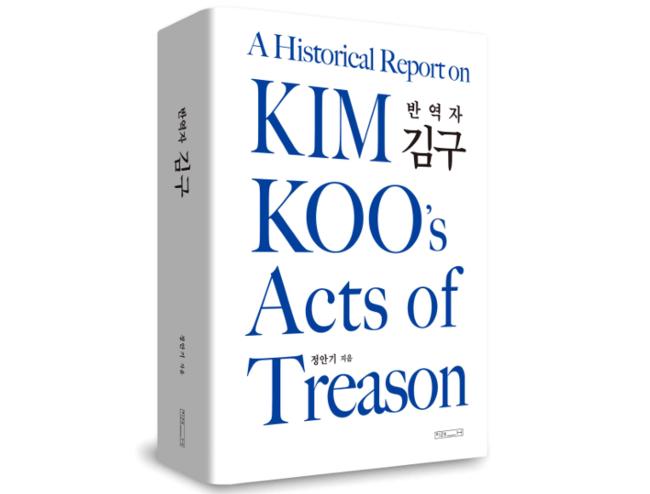
Two years after challenging the myth of Baekbeom Kim Koo with "Terrorist Kim Koo" in 2024, Dr. Jeong An-gi once again deconstructs the "national hero" in his new book, "Traitor Kim Koo."
UNESCO officially designated 2026 as the "150th anniversary of the birth of Kim Koo," noting that "Baekbeom Kim Koo sought to bring happiness to all of humanity after liberation, not through military or economic power, but through the 'power of high culture.'" Even 70 years after his death, Kim Koo continues to hold the status of a "teacher of the nation."
However, the author of this book questions whether Kim Koo truly possessed the political qualifications and ethics worthy of someone dedicated to national independence and autonomy, whether he was a leader with the political reason and character to handle the consequences of his convictions, and whether his inter-Korean negotiations were truly agonizing decisions made for the cause of national unification.
The author reconstructs the "inter-Korean negotiations" that took place after Kim Koo’s return to Korea, not as an isolated event, but within the broader political context, and critically examines his political qualifications and ethics by applying Max Weber's "Politics as a Vocation."
“The inter-Korean negotiations of April 1948 have been remembered as an event born from Kim Koo's historical resolution and national aspirations. However, behind the scenes, there existed what was known as the 'authoritative line' of Seong Si-baek, the chief of the North Korean Workers' Party in South Korea. He co-opted centrist factions, expanded his network, and brought the negotiations into the public eye.”
Following the inter-Korean negotiations, Kim Koo aligned with the North and South Korean Workers' Parties to form the "National Committee for the Struggle Against the Separate Election in South Korea" and launched a campaign to crush the May 10 general election. Disregarding accusations that he was a "communist fifth column," he focused on anti-government campaigns that denied the legitimacy of the Republic of Korea, such as calling for the withdrawal of U.S. and Soviet troops, the invalidation of the general election, inter-Korean general elections, and the establishment of a unified government. Furthermore, the book argues that he used the rhetoric of "peaceful unification" to conceal the deceptive nature of the united front with communists, and sought to block UN recognition of the government and incite or collaborate with the Yeosu-Suncheon Rebellion.
While Kim Koo’s actions have previously been interpreted either as efforts toward unification or as a rejection of the founding of the Republic of Korea, there have been few studies that analyze these two perspectives in an integrated manner. Instead of the emotional and ideological narratives that have characterized previous discourse—ranging from ideological praise to one-sided criticism—this book provides an empirical analysis of Kim Koo’s inter-Korean negotiations through a multi-layered, complex, and value-neutral lens using the "Weberian framework."
What do you think of this article?

 [Statement by the Seo-beo-kka Korea Military Academy Save-the-Nation Comrades Association] ㉛ Recount the Votes Publicly, as the Previous Recount Concealed Election Fraud
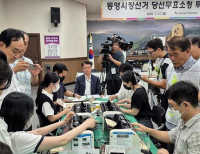
Tongyeong Mayoral Election Recount [Photo=Yonhap News]South Korea's liberal democracy is dying. The National Election Commission (NEC) and the judiciary, which have plummeted into criminal syndicates
[Statement by the Seo-beo-kka Korea Military Academy Save-the-Nation Comrades Association] ㉛ Recount the Votes Publicly, as the Previous Recount Concealed Election Fraud
Tongyeong Mayoral Election Recount [Photo=Yonhap News]South Korea's liberal democracy is dying. The National Election Commission (NEC) and the judiciary, which have plummeted into criminal syndicates
 Trump's nominee for new U.S. intelligence chief confirmed by U.S. Senate
U.S. Attorney for the Southern District of New York Jay Clayton, who has been confirmed by the Senate to lead the U.S. intelligence community [AP=Yonhap News File Photo]The U.S. Senate confirmed the n
Trump's nominee for new U.S. intelligence chief confirmed by U.S. Senate
U.S. Attorney for the Southern District of New York Jay Clayton, who has been confirmed by the Senate to lead the U.S. intelligence community [AP=Yonhap News File Photo]The U.S. Senate confirmed the n
 PPP on Speaker Woo's Remarks About 'Lee Jae-myung's Consecutive Term and Constitutional Amendment': "A True Act of Insurrection"
People Power Party Representative Jang Dong-hyeok holds a press conference at the National Assembly on the 28th to express his stance regarding National Assembly Speaker Cho Jeong-sik's remarks on a c
PPP on Speaker Woo's Remarks About 'Lee Jae-myung's Consecutive Term and Constitutional Amendment': "A True Act of Insurrection"
People Power Party Representative Jang Dong-hyeok holds a press conference at the National Assembly on the 28th to express his stance regarding National Assembly Speaker Cho Jeong-sik's remarks on a c
 Prosecution Investigates Gyeonggi-do Election Commission Officials as Suspects in 'Statistical Manipulation' of Ballot Counting Records
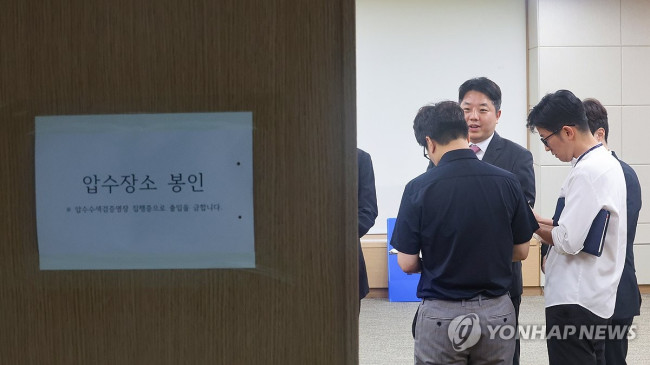
'Circumstances of statistical manipulation following turnout errors': Joint Investigation Team conducts search and seizure at National Election Commission [Yonhap News file photo]The joint prosecution
Prosecution Investigates Gyeonggi-do Election Commission Officials as Suspects in 'Statistical Manipulation' of Ballot Counting Records
'Circumstances of statistical manipulation following turnout errors': Joint Investigation Team conducts search and seizure at National Election Commission [Yonhap News file photo]The joint prosecution
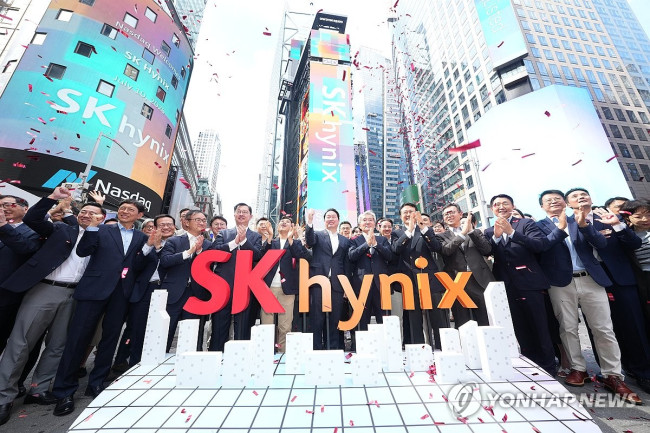 SK Hynix Posts Record-High 76% Operating Margin… Outpacing TSMC for Three Consecutive Quarters
In the second quarter of this year, SK hynix [000660] maintained top-tier profitability in the semiconductor industry, recording an operating profit margin of 76%, which surpassed that of Taiwan’s T
SK Hynix Posts Record-High 76% Operating Margin… Outpacing TSMC for Three Consecutive Quarters
In the second quarter of this year, SK hynix [000660] maintained top-tier profitability in the semiconductor industry, recording an operating profit margin of 76%, which surpassed that of Taiwan’s T
 [Park Pil-gyu's Security Column] If Carrying Out Orders Becomes a Crime, the State and the Military Cannot Survive
"Can an army where obeying orders is considered a crime protect the nation and its people, contribute to maintaining the continuity of the state, and survive and endure?" Soldiers standing trial regar
[Park Pil-gyu's Security Column] If Carrying Out Orders Becomes a Crime, the State and the Military Cannot Survive
"Can an army where obeying orders is considered a crime protect the nation and its people, contribute to maintaining the continuity of the state, and survive and endure?" Soldiers standing trial regar
 [Photo] Evidence of Election Fraud Flooding U.S. Media… Trump Had 2.7 Million Votes Stolen
 [Video] U.S. Semiquincentennial Air Show... 'Art in the Sky' streaks across New York
 [Editorial Cartoon] A Draconian Law That Undermines Freedom of Expression

 List
List