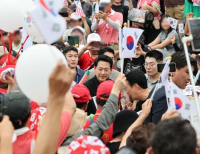
"Can a military where following orders becomes a crime truly protect the nation and its people, contribute to maintaining the continuity of the state, and continue to survive and exist?" Soldiers standing trial regarding the December 3rd emergency martial law. [Photo = Yonhap News]Since the December 3rd emergency martial law, the Republic of Korea Armed Forces have suffered unprecedentedly deep internal wounds and have fallen into chaos. Recently, a special prosecutor's team for the insurrection case demanded heavy sentences of 10 to 18 years in prison for seven officials, including a former commander of the 1st Airborne Brigade, who were involved in deploying martial law troops to the National Assembly and operating arrest teams for politicians. The shock felt within the military must be profound.
The special prosecutor pointed out that these individuals "did not act mechanically, but participated in the insurrection through their own independent judgment," yet the voices of the defendants in court were desperate. There were adamant arguments that "the martial law was legitimate," and pleas that "they merely regarded the President's order as the nation's command and could not even imagine it was an illegal directive."
Here, we are confronted with a terrifying question that shakes the foundation of South Korea's national security. Can a military where following orders becomes a crime truly protect the nation and its people, contribute to maintaining the continuity of the state, and continue to survive and exist?
1. To a soldier, 'obeying orders' is close, while 'refusing unconstitutional acts' is distant
The military organization is fundamentally different from ordinary social organizations. Whether in war or peacetime, soldiers are educated and trained from their time as cadets to immediately follow the legitimate commands and instructions of their superiors.
For a soldier, obeying orders is daily routine and as essential as breathing. Faced with instructions and mobilization orders issued by frontline commanders and staff officers amidst the emergency of the nation's highest commander declaring martial law, anyone would have had no choice but to follow those orders.
Of course, this does not mean that one should unconditionally obey even clear and major illegal directives that fall outside the boundaries of the Constitution and the law.
However, in a rapidly unfolding national crisis, it is theoretically impossible for a martial law commander to immediately recognize, judge, define, and reject the instructions of the President and the martial law leadership as an "unconstitutional act of insurrection." For a soldier conditioned to obey orders, the options upon receiving an instruction are inevitably extremely limited.
As the defendants stated in their final testimonies, refusing the commander-in-chief's order in that situation must have been a terrifying moment, where it could be perceived not just as simple insubordination, but as "treason" that denies their reason for existence as soldiers.
2. Is punishment at the level of political warfare justified for uniformed soldiers?
In a modern democratic state, the political neutrality of soldiers and civilian control are absolute, unwritten rules and fundamental principles that the military must uphold. The military exists for the people and the nation, not for a specific political faction or power holder, and it must obey the Constitution and legal democratic control systems. However, the December 3rd martial law was a tragic event showing that the principles of civilian control and hierarchical obedience can be distorted by those at the pinnacle of power.
It is realistically impossible for frontline soldiers to judge the constitutionality of, and subsequently reject, orders that have passed through the commander-in-chief and the official chain of command of the martial law leadership in real-time.
When the national system itself is paralyzed or malfunctions, holding those at the lower levels—who performed their duties mechanically or out of loyalty to the state—fully responsible is both politically motivated and contrary to the original intent of civilian control.
If a legitimate operation against an enemy's preemptive drone provocation is branded as aiding the enemy, and the implementation of martial law orders based on hierarchy is linked to insurrection, what soldier in the future will be able to carry out operations with conviction or respond to the nation's orders?
I hope the court delivering the verdict will consider this with compassion from the perspective of soldiers who had no choice but to follow orders in a desperate situation.
3. Even the War Crimes Tribunals exonerated and showed leniency to 'those who merely followed orders'
Since the Nuremberg International Military Tribunal in October 1946, which judged horrific war crimes in human history, the modern legal state and international criminal justice system have developed deep legal reflection regarding acts committed under the orders of superiors.
Although the defense argument of "only following the superior's orders" cannot be an absolute reason for exemption, the modern criminal justice system has adopted an attitude of caution and leniency in cases where there was no choice within the state's massive command structure, or where the illegality of the instruction was difficult to clearly recognize. It did not impose punishments that scapegoated soldiers who merely followed orders.
Considering the special nature of the military organization, where the commander-in-chief's instructions in an extreme national emergency can be mistaken for the state's command and cannot be rejected, it violates the fairness of the law to demand the same weight of responsibility from those who planned the policy and led the situation from the apex of power, as from the soldiers and police who merely implemented the orders.
Holding soldiers and police who followed orders solely responsible is a ruthless political retaliation, an act of violence perpetrated in the name of public authority, and a massacre of their honor.
4. The uniform stigmatization and defamation for the sake of political warfare must be rectified
Many retired generals who were under investigation at the time, including former Chief of Naval Operations Kang Dong-gil and former JCS Operations Director Lee Seung-o, were cleared of charges or found not legally liable during the investigation by the relevant authorities regarding the December 3rd martial law. Yet, they remain neglected under unfair stigmas and have not had their honor restored.
It is not right to make those who performed their duties with a mindset of obedience within the state's chain of command, only to become victims of political whirlpools, or to shift blame onto innocent people. I hope the court will deeply consider the urgent situation they faced, the unique structure of military obedience, and the fact that there was no political motive, and show them generous leniency.
The Ministry of National Defense should also rightfully take active measures for the ex officio cancellation of penalties and the restoration of honor for those who suffered disadvantages related to martial law, in order to respect true military discipline and the spirit of the Constitution. Unilaterally denouncing and cornering soldiers, whose existence should be kept pure, can lead to another tragedy.
It is time to soothe the shaken military morale and restore the honor of the military by treating the soldiers—who have suffered unjust wounds, defamation, and human rights violations because they were caught in a political vortex for following orders—with a cold standard of law, warm reason, and a posture of resolving the issues at hand.
Now is the time to watch the feet of the enemy that has advanced to the Military Demarcation Line. It is not the time to destroy the nation by killing pure soldiers who followed orders.

◆ Commissioner Park Pil-gyu
Editorial Commissioner, Hanmi Ilbo
Korea Military Academy, 40th Class

 [Statement by the Seo-beo-kka Korea Military Academy Save-the-Nation Comrades Association] ㉛ Recount the Votes Publicly, as the Previous Recount Concealed Election Fraud
Tongyeong Mayoral Election Recount [Photo=Yonhap News]South Korea's liberal democracy is dying. The National Election Commission (NEC) and the judiciary, which have plummeted into criminal syndicates
[Statement by the Seo-beo-kka Korea Military Academy Save-the-Nation Comrades Association] ㉛ Recount the Votes Publicly, as the Previous Recount Concealed Election Fraud
Tongyeong Mayoral Election Recount [Photo=Yonhap News]South Korea's liberal democracy is dying. The National Election Commission (NEC) and the judiciary, which have plummeted into criminal syndicates
 Trump's nominee for new U.S. intelligence chief confirmed by U.S. Senate
U.S. Attorney for the Southern District of New York Jay Clayton, who has been confirmed by the Senate to lead the U.S. intelligence community [AP=Yonhap News File Photo]The U.S. Senate confirmed the n
Trump's nominee for new U.S. intelligence chief confirmed by U.S. Senate
U.S. Attorney for the Southern District of New York Jay Clayton, who has been confirmed by the Senate to lead the U.S. intelligence community [AP=Yonhap News File Photo]The U.S. Senate confirmed the n
 PPP on Speaker Woo's Remarks About 'Lee Jae-myung's Consecutive Term and Constitutional Amendment': "A True Act of Insurrection"
People Power Party Representative Jang Dong-hyeok holds a press conference at the National Assembly on the 28th to express his stance regarding National Assembly Speaker Cho Jeong-sik's remarks on a c
PPP on Speaker Woo's Remarks About 'Lee Jae-myung's Consecutive Term and Constitutional Amendment': "A True Act of Insurrection"
People Power Party Representative Jang Dong-hyeok holds a press conference at the National Assembly on the 28th to express his stance regarding National Assembly Speaker Cho Jeong-sik's remarks on a c
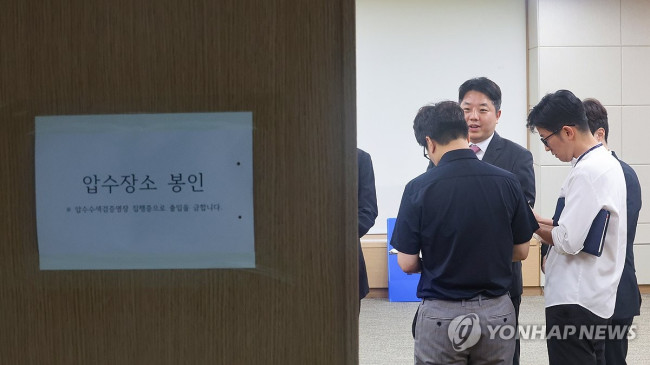 Prosecution Investigates Gyeonggi-do Election Commission Officials as Suspects in 'Statistical Manipulation' of Ballot Counting Records
'Circumstances of statistical manipulation following turnout errors': Joint Investigation Team conducts search and seizure at National Election Commission [Yonhap News file photo]The joint prosecution
Prosecution Investigates Gyeonggi-do Election Commission Officials as Suspects in 'Statistical Manipulation' of Ballot Counting Records
'Circumstances of statistical manipulation following turnout errors': Joint Investigation Team conducts search and seizure at National Election Commission [Yonhap News file photo]The joint prosecution
 SK Hynix Posts Record-High 76% Operating Margin… Outpacing TSMC for Three Consecutive Quarters
In the second quarter of this year, SK hynix [000660] maintained top-tier profitability in the semiconductor industry, recording an operating profit margin of 76%, which surpassed that of Taiwan’s T
SK Hynix Posts Record-High 76% Operating Margin… Outpacing TSMC for Three Consecutive Quarters
In the second quarter of this year, SK hynix [000660] maintained top-tier profitability in the semiconductor industry, recording an operating profit margin of 76%, which surpassed that of Taiwan’s T
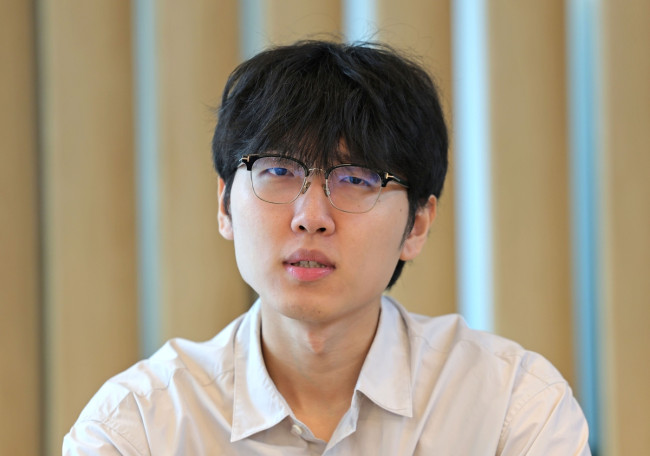 Shin Jin-seo: "AI is not the 'God of Go'… Human Go still holds its charm."
"I don't think AI is the 'God of Go.' I am confident that human Go, which involves making brilliant moves and high-stakes gambles depending on the situation, is still far more fascinating than AI, whi
Shin Jin-seo: "AI is not the 'God of Go'… Human Go still holds its charm."
"I don't think AI is the 'God of Go.' I am confident that human Go, which involves making brilliant moves and high-stakes gambles depending on the situation, is still far more fascinating than AI, whi
 [Shin Dong-chun Column] The Ongoing Battle Between Good and Evil in the 21st Century
"The Divine Comedy" is an epic poem that the Italian writer Dante Alighieri began writing in 1308 and completed in 1321. It is divided into Inferno, Purgatorio, and Paradiso, with Inferno being the mo
[Shin Dong-chun Column] The Ongoing Battle Between Good and Evil in the 21st Century
"The Divine Comedy" is an epic poem that the Italian writer Dante Alighieri began writing in 1308 and completed in 1321. It is divided into Inferno, Purgatorio, and Paradiso, with Inferno being the mo
 [Photo] Evidence of Election Fraud Flooding U.S. Media… Trump Had 2.7 Million Votes Stolen
 [Video] U.S. Semiquincentennial Air Show... 'Art in the Sky' streaks across New York
 [Editorial Cartoon] A Draconian Law That Undermines Freedom of Expression

 List
List