- By Ahn Gi-jeong, Miraesa, 30,000 KRW
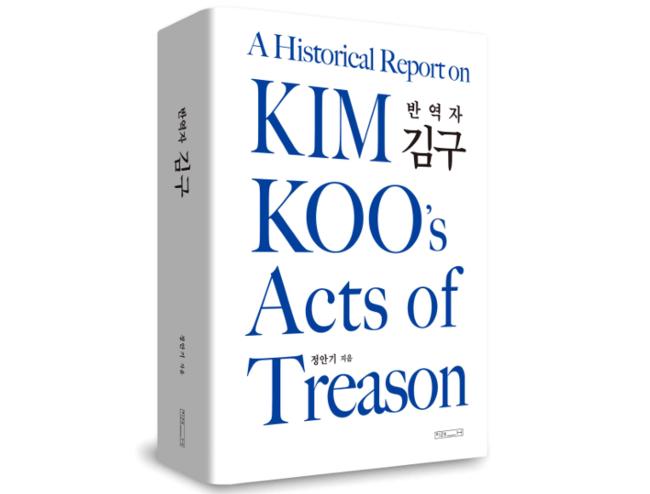
After challenging the myth of Baekbeom Kim Koo in 2024 with his work 'Terrorist Kim Koo,' Dr. Jeong An-gi returns two years later to deconstruct the 'national hero' once again in his new book, 'Traitor Kim Koo.'
UNESCO has officially designated 2026 as the '150th anniversary of the birth of Kim Koo,' stating that "Baekbeom Kim Koo sought to bring happiness to all of humanity not through military or economic power, but through the 'power of high culture' after liberation." Even more than 70 years after his death, Kim Koo continues to hold the status of a 'teacher of the nation.'
However, the author of this book questions whether Kim Koo truly possessed the political qualifications and ethics worthy of dedication to the nation's independence and autonomy, whether he was a leader with the political reason and character to bear the consequences of his beliefs, and whether his North-South negotiations were truly a tortured decision made in the interest of national reunification.
The author reconstructs the 'North-South negotiations' that took place after Kim Koo's return to Korea, not as an isolated event, but within the political context before and after. By applying Max Weber’s 'Politics as a Vocation,' the author critically examines Kim Koo’s political aptitude and ethics.
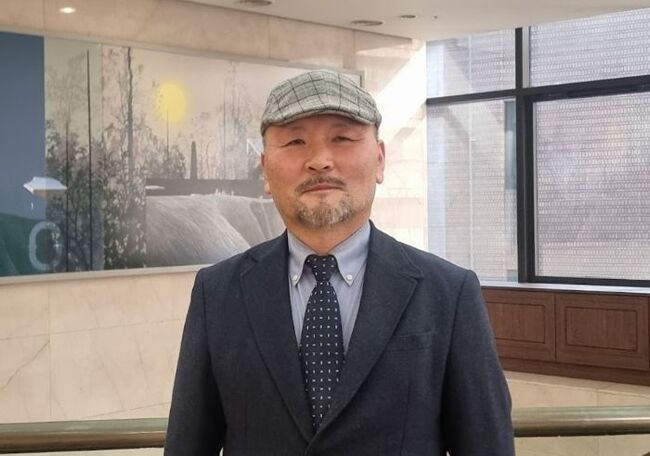 Dr. Jeong An-gi [Photo by Reporter Lim Yo-hee]
"The North-South negotiations of April 1948 have been remembered as an event born of Kim Koo's historical resolution and national aspiration. However, behind it existed Seong Si-baek, the chief of the North Korean Workers' Party in South Korea—the so-called 'authoritative line.' He co-opted the centrists, expanded his network of connections, and brought the negotiations into the public sphere."
Following the North-South negotiations, Kim Koo joined forces with the North and South Korean Workers' Parties to form the 'National Committee for the Anti-South Korean Separate Election Struggle' and engaged in a campaign to crush the May 10 general election. Disregarding accusations that he was a 'fifth column for the Communist Party,' he immersed himself in an anti-government campaign that denied the legitimacy of the Republic of Korea, calling for the withdrawal of U.S. and Soviet troops, the invalidation of the general election, nationwide elections, and the establishment of a unified government. Furthermore, the book argues that he used the rhetoric of "peaceful unification" to conceal the deceptive nature of the collaboration with the Communists, and sought to block UN recognition of the government while instigating and collaborating in the Yeosu-Suncheon rebellion.
While Kim Koo's actions have previously been interpreted either as a pursuit of unification or as a denial of the founding of the Republic of Korea, there has been little research that analyzes these two perspectives in an integrated manner. Instead of relying on the existing emotional and ideological narratives that either praise or unilaterally condemn his actions, this book provides an empirical analysis of Kim Koo’s North-South negotiations through a 'Weberian frame,' offering a multi-layered, complex, and value-neutral perspective.
What do you think of this article?

 [Statement by the Seo-beo-kka Korea Military Academy Save-the-Nation Comrades Association] ㉛ Recount the Votes Publicly, as the Previous Recount Concealed Election Fraud
Tongyeong Mayoral Election Recount [Photo=Yonhap News]South Korea's liberal democracy is dying. The National Election Commission (NEC) and the judiciary, which have plummeted into criminal syndicates
[Statement by the Seo-beo-kka Korea Military Academy Save-the-Nation Comrades Association] ㉛ Recount the Votes Publicly, as the Previous Recount Concealed Election Fraud
Tongyeong Mayoral Election Recount [Photo=Yonhap News]South Korea's liberal democracy is dying. The National Election Commission (NEC) and the judiciary, which have plummeted into criminal syndicates
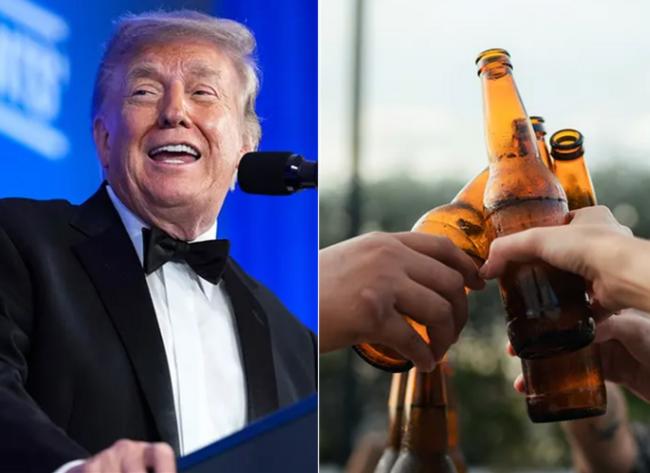 US Brewery That Posted “Free Beer If Trump Dies” Has Liquor License Revoked
An American brewery that sparked controversy for social media posts promising free beer to customers upon the death of Donald Trump has had its liquor license revoked by the state government. [Getty I
US Brewery That Posted “Free Beer If Trump Dies” Has Liquor License Revoked
An American brewery that sparked controversy for social media posts promising free beer to customers upon the death of Donald Trump has had its liquor license revoked by the state government. [Getty I
 PPP on Speaker Woo's Remarks About 'Lee Jae-myung's Consecutive Term and Constitutional Amendment': "A True Act of Insurrection"
People Power Party Representative Jang Dong-hyeok holds a press conference at the National Assembly on the 28th to express his stance regarding National Assembly Speaker Cho Jeong-sik's remarks on a c
PPP on Speaker Woo's Remarks About 'Lee Jae-myung's Consecutive Term and Constitutional Amendment': "A True Act of Insurrection"
People Power Party Representative Jang Dong-hyeok holds a press conference at the National Assembly on the 28th to express his stance regarding National Assembly Speaker Cho Jeong-sik's remarks on a c
 Joint Investigation Headquarters Secures NEC Data for 2025 Presidential Election and 2024 General Election
It has been determined that the search and seizure warrant executed by the joint investigation headquarters on the 23rd—covering the National Election Commission (NEC), local election commissions in
Joint Investigation Headquarters Secures NEC Data for 2025 Presidential Election and 2024 General Election
It has been determined that the search and seizure warrant executed by the joint investigation headquarters on the 23rd—covering the National Election Commission (NEC), local election commissions in
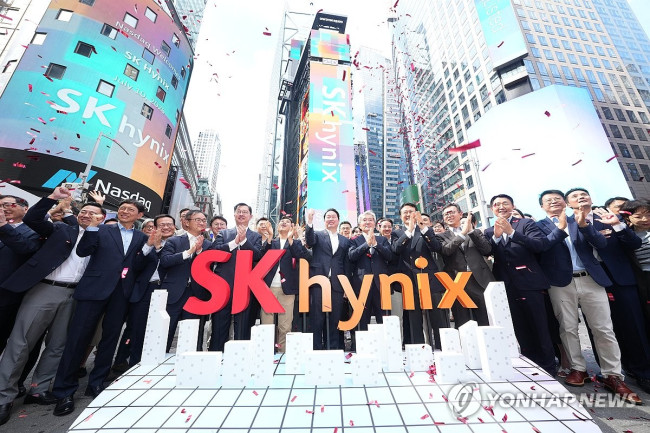 SK Hynix Posts Record-High 76% Operating Margin… Outpacing TSMC for Three Consecutive Quarters
In the second quarter of this year, SK hynix [000660] maintained top-tier profitability in the semiconductor industry, recording an operating profit margin of 76%, which surpassed that of Taiwan’s T
SK Hynix Posts Record-High 76% Operating Margin… Outpacing TSMC for Three Consecutive Quarters
In the second quarter of this year, SK hynix [000660] maintained top-tier profitability in the semiconductor industry, recording an operating profit margin of 76%, which surpassed that of Taiwan’s T
 Jogye Order faces internal turmoil ahead of the administrative chief election over allegations regarding Venerable Jinwoo's academic credentials and monastic registration.
Ven. Jinwoo, the current President of the Jogye Order. The Order is experiencing turmoil following recent allegations regarding his educational background and monastic credentials. [Photo=Yonhap News]
Jogye Order faces internal turmoil ahead of the administrative chief election over allegations regarding Venerable Jinwoo's academic credentials and monastic registration.
Ven. Jinwoo, the current President of the Jogye Order. The Order is experiencing turmoil following recent allegations regarding his educational background and monastic credentials. [Photo=Yonhap News]
 [Column by Writer Park Joo-hyun] “It’s All Because of Roh Moo-hyun”
Roh Moo-hyun (left) bowing his head, saying, "I am ashamed before the people. I am sorry for disappointing you." (April 2009). The first party to directly file a complaint with the Supreme Prosecutors
[Column by Writer Park Joo-hyun] “It’s All Because of Roh Moo-hyun”
Roh Moo-hyun (left) bowing his head, saying, "I am ashamed before the people. I am sorry for disappointing you." (April 2009). The first party to directly file a complaint with the Supreme Prosecutors
 [Photo] Evidence of Election Fraud Flooding U.S. Media… Trump Had 2.7 Million Votes Stolen
 [Video] U.S. Semiquincentennial Air Show... 'Art in the Sky' streaks across New York
 [Editorial Cartoon] A Draconian Law That Undermines Freedom of Expression

 List
List