 A scene from the movie ‘The President’s Last Bang’.
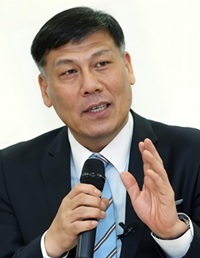 Hwang Geun, Professor of Media Studies at Sun Moon University. There is a movie called ‘The President’s Last Bang’ that was released a few years ago. It is a film that deals with the power struggles and conflicts within the regime that occurred before and after the assassination of President Park Chung-hee on December 26, 1979. Regardless of the factual accuracy of the content or the film's quality, audiences were likely further intrigued by the feeling of being able to peer into the absolute power that had been secretly concealed.
However, the effect this movie had on the many citizens, or at least on those who watched it, was that they became aware that the starting point of the Yushin regime's downfall was related to the so-called ‘Koreagate’ incident in the United States and the testimony of Kim Hyong-wook, former Director of the Korean Central Intelligence Agency, at a U.S. Congressional Ethics Committee hearing.
Of course, the fact that the downfall of the Yushin regime was deeply related to the deterioration of ROK-U.S. relations had been revealed through some dramas and memoirs. However, at that time, very few Koreans were aware of the series of events unfolding in American politics. While it might have been vaguely understood that there were conflicts between the South Korean government and the U.S. due to issues like the withdrawal of U.S. troops or human rights, the majority of people knew almost nothing about the specific details of these events.
This was because all media outlets were thoroughly controlled by the regime. In reality, not only broadcast media but even newspapers, which were under the strong control of the regime, were unable to report news from abroad or about "matters detrimental to national interests." While some newspapers might have reported them in brief dispatches or metaphorically, almost all citizens failed to understand the meanings behind the articles.
The direct cause of this "darkness" in the political landscape was the regime's strong media control. However, it is also true that media outlets themselves became mired in self-censorship, pressured by the regime's intimidation. Moreover, it was a time before the internet or global media that transcended borders existed. Those who wished to know the truth had to obtain and read Time or Newsweek magazines that circulated among the U.S. forces stationed in Korea.
However, looking at the media reports these days, I cannot help but be reminded of the atmosphere of 50 years ago. It feels as though almost all media outlets are mired in "copycat reporting," relying solely on press releases distributed by the government or superficial announcements. It is unclear whether this is due to a honeymoon period with the new government or a voluntary restraint out of fear of being branded as "accomplices to sedition(?)."
Even if we generously overlook the sycophantic praise, the deliberate ignoring of facts, especially those related to national interests, cannot go uncriticized. The skirmish on the Demilitarized Zone between North and South Korea was reported very briefly a few days later. Most importantly, the details of the tariff negotiations President [Yoon Suk-yeol] engaged in during his visit to the U.S. have still not been revealed at all. All we know is that a "perfectly agreed-upon, bizarre negotiation outcome" was reached, with no joint announcements or agreements.
Despite this, no Korean media outlet has made any effort to disclose the contents of the agreement, let alone the negotiation process. If it cannot be disclosed because negotiations are ongoing, it is natural to at least investigate how the negotiations are proceeding. Furthermore, given the starkly different positions of South Korea and the U.S., no media outlet is reporting anything beyond the South Korean government's self-congratulatory announcements, remaining silent. This is typical media behavior in totalitarian countries, where reporting is done only at the time and in the manner desired by the government.
The citizens of the Republic of Korea are currently experiencing not a "dark media era never before experienced," but rather a return to an "authoritarian media era that existed long ago and has even faded from memory." In fact, the ruling party, after amending the Broadcasting Act, which could stifle the reporting autonomy of public broadcasters, is also attempting to push for amendments to the Press Arbitration Act, which would pressure the media's watchdog function with punitive damages.
Perhaps the citizens of the Republic of Korea will learn about the details of the ROK-U.S. security and tariff negotiations in 2025 through a movie like "The President's Last Bang 2," decades from now. However, it is unlikely to happen. Unlike the 1970s and 80s, we are now in the digital media era, with countless internet media outlets and cutting-edge network systems operating in real-time. The idea of maintaining a regime through ironclad information control is itself a very outdated, or perhaps even naive and childish(?), concept.
What do you think of this article?

 Iranian Foreign Ministry: "Continuing Message Exchanges with the U.S. and Activities of Mediating Countries"
Esmaeil Baghaei, Spokesperson for the Iranian Ministry of Foreign Affairs [Xinhua, Yonhap News file photo]Esmaeil Baghaei, spokesperson for the Iranian Ministry of Foreign Affairs, stated on the 26th
Iranian Foreign Ministry: "Continuing Message Exchanges with the U.S. and Activities of Mediating Countries"
Esmaeil Baghaei, Spokesperson for the Iranian Ministry of Foreign Affairs [Xinhua, Yonhap News file photo]Esmaeil Baghaei, spokesperson for the Iranian Ministry of Foreign Affairs, stated on the 26th
 President Yoon: "Do You Think You Are Safe from the Special Counsel?"... Final Statement Video Released
President Yoon Suk Yeol rebuking the special prosecutor on the 24th. [Court video / @birds_justice X account subtitle GIF] A video of President Yoon Suk Yeol's closing statement at his trial rega
President Yoon: "Do You Think You Are Safe from the Special Counsel?"... Final Statement Video Released
President Yoon Suk Yeol rebuking the special prosecutor on the 24th. [Court video / @birds_justice X account subtitle GIF] A video of President Yoon Suk Yeol's closing statement at his trial rega
 President Yoon, regarding the first-instance ruling on the Public Official Election Act: “An excessive political verdict that distorts the facts… We will appeal immediately.”
The first-instance sentencing hearing for President Yoon Suk Yeol regarding violations of the Public Official Election Act is being broadcast live at Seoul Station on the 27th. [Photo=Yonhap News]Pres
President Yoon, regarding the first-instance ruling on the Public Official Election Act: “An excessive political verdict that distorts the facts… We will appeal immediately.”
The first-instance sentencing hearing for President Yoon Suk Yeol regarding violations of the Public Official Election Act is being broadcast live at Seoul Station on the 27th. [Photo=Yonhap News]Pres
 WSJ: "SK Hynix ADR Premium Is a Sign of AI Trading Overheat"
Advertisement for SK Hynix ADR listing in New York's Times Square [Reuters=Yonhap News file photo]The Wall Street Journal (WSJ) has pointed out that the price of SK Hynix’s American Depositary Recei
WSJ: "SK Hynix ADR Premium Is a Sign of AI Trading Overheat"
Advertisement for SK Hynix ADR listing in New York's Times Square [Reuters=Yonhap News file photo]The Wall Street Journal (WSJ) has pointed out that the price of SK Hynix’s American Depositary Recei
 'Godfather of Japanese Mystery Novels' Keigo Higashino Passes Away After Battle with Cancer at 68
Famous Japanese mystery novelist Keigo Higashino [AFP=Yonhap News]It has been belatedly reported that Keigo Higashino, the "godfather of Japanese mystery novels" and author of bestsellers such as "The
'Godfather of Japanese Mystery Novels' Keigo Higashino Passes Away After Battle with Cancer at 68
Famous Japanese mystery novelist Keigo Higashino [AFP=Yonhap News]It has been belatedly reported that Keigo Higashino, the "godfather of Japanese mystery novels" and author of bestsellers such as "The
 [Park Pil-kyu Security Column] To the Ignorant Trying to Clothe a Beast in Sheep's Clothing
Rep. Kim Byung-joo of the Democratic Party of Korea [Photo=Yonhap News]“The Air Force Academy doesn't teach you how to fly a plane!” “The Army, Navy, and Air Force academies are exactly the
[Park Pil-kyu Security Column] To the Ignorant Trying to Clothe a Beast in Sheep's Clothing
Rep. Kim Byung-joo of the Democratic Party of Korea [Photo=Yonhap News]“The Air Force Academy doesn't teach you how to fly a plane!” “The Army, Navy, and Air Force academies are exactly the
 [Issue Diagnosis] Two Effects of the Election Petition Review
 [Photo] Evidence of Election Fraud Flooding U.S. Media… Trump Had 2.7 Million Votes Stolen
 [Video] U.S. Semiquincentennial Air Show... 'Art in the Sky' streaks across New York
 [Editorial Cartoon] A Draconian Law That Undermines Freedom of Expression

 List
List









