 US immigration authorities' crackdown at Hyundai-LG Energy Solution construction site [ICE capture]
As it is anticipated that approximately 300 Korean nationals detained at a US immigration detention facility in Georgia will be released early, attention is focused on the remaining협상 (negotiations) between South Korea and the US, including potential disadvantages such as restrictions on entering the US.
Furthermore, there are growing calls for fundamental system improvements, such as a dedicated quota for Korean companies or special visas and work permits, spurred by this incident.
Kang Hoon-sik, Presidential Secretary for Political Affairs, announced on the 7th that the negotiations for release have been concluded, stating, "As soon as administrative procedures are finalized, a chartered flight will depart to bring our citizens home."
This marks a turning point towards an early resolution, following the arrest and detention of 475 individuals, including about 300 Koreans, at the Hyundai-LG Energy Solution joint battery plant construction site in Georgia on the 4th (local time), which had raised concerns about the prolonged detention of Korean nationals.
The approximately 300 Korean nationals have been detained for four days at an Immigration and Customs Enforcement (ICE) detention facility in Folkston, two hours by car from the plant.
Local immigration lawyers have assessed that the situation, which avoided the worst-case scenario of over 300 Koreans being detained long-term, was the "best option" for both South Korea and the US.
Typically, individuals detained due to immigration crackdowns either opt for expedited removal or must have their residency status and legality of their stay determined by an immigration court.
Experts judge that it was a diplomatic resolution, given that immigration court proceedings can take months to years, and over 90% of cases result in deportation.
Lee Jong-won, an attorney specializing in US immigration law who is well-informed about the matter, stated in a phone call on the same day, "For President Donald Trump, he can claim to have protected jobs while deporting them in accordance with his immigration policy, and for us, it's an achievement to bring our citizens back home as quickly as possible."
Attorney Lee added, "It would be difficult for Korean nationals without a settled life in the US to engage in prolonged legal battles in immigration court," and "The decision to quickly arrange a chartered flight before they are dispersed to other detention facilities was also the best choice."
Additionally, attorney Choi Young-don commented, "It appears that the government has swiftly intervened and is bringing this to a successful conclusion."
However, if this early return is conducted in the form of 'deportation,' it could entail disadvantages for the individuals involved, such as a ban on entering the US for several years. Even if not banned, the record could create restrictions during future visa application interviews.
In fact, employees at the Folkston detention facility were reportedly offered choices by immigration authorities, such as immediate deportation with a 5-year entry ban, or undergoing trial within months while remaining in detention.
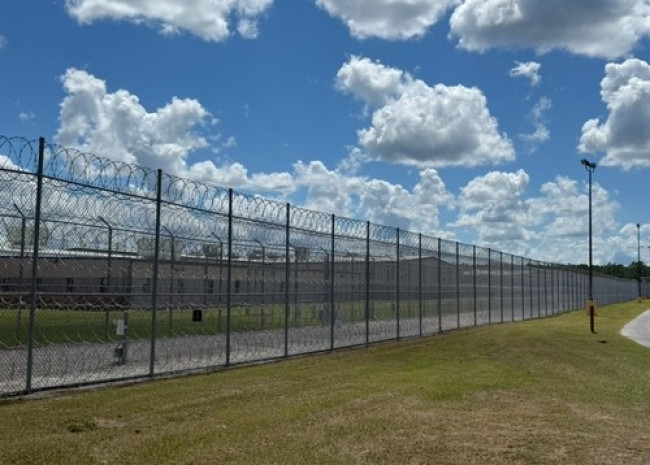 The Immigration and Customs Enforcement (ICE) detention facility in Folkston, Georgia, where employees of the Hyundai-LG Energy Solution battery plant construction site, arrested in a US immigration crackdown, are being held as of the 6th (local time).
An official from an LG partner company in the US stated to Yonhap News, "Employees with ESTA (Electronic System for Travel Authorization, a type of visa waiver program) were presented with two options: 'deportation, immigration court,' and those with B1/B2 (short-term visitor visa) were presented with three options: 'voluntary departure, deportation, immigration court.'" He added, "In the case of deportation, an entry ban of at least 5 years was mentioned."
Due to these potential disadvantages, some employees expressed their intention to pursue immigration court proceedings rather than agreeing to forced deportation, according to the official.
Attorney Choi stated, "Some individuals who came on B1 visas were performing work in accordance with the purpose of their visa. If they are all repatriated to Korea, US authorities might perceive it as an implicit admission of illegal work," adding, "Measures to prevent disadvantages should also be included in the negotiations."
The South Korean government is engaged in final follow-up negotiations.
The on-site task force established by the Ministry of Foreign Affairs, led by Consul General Cho Ki-seok in Atlanta, resumed interviews with the employees at the detention facility starting at 9 AM today, following the previous day.
Consul General Cho said in a phone call, "We are doing our best to ensure our citizens can return home as quickly as possible."
A spokesperson from the South Korean Embassy in the US commented on the possibility of disadvantageous measures from US authorities after the detained Korean employees return, stating in a phone call, "There could be various complex situations, but it is not at a stage to discuss at this moment."
With the chartered flight repatriation, there is a possibility of some disruption to the Hyundai-LG Energy Solution plant construction schedule, as it will be difficult to immediately procure replacement personnel once the site staff depart. It remains uncertain whether the repatriated employees will be able to re-enter the US in the near future.
Fundamentally, there are growing calls for systemic improvements, such as special visas and work permit programs, to enable companies operating in the US to conduct business smoothly while meeting US standards.
A company official said in a phone call, "Given the practical limitations of finding essential personnel for plant construction and business operations locally, we ultimately need something like a 'dedicated quota for Korean companies'," adding, "Companies are making such recommendations to the government."
The Korean American Association of Georgia also urged in a statement yesterday, "Institutional mechanisms must be promptly established to ensure that skilled personnel can work stably to enable Korean companies to successfully complete their plants in the United States."
Presidential Secretary Kang Hoon-sang announced today that measures to review and improve the visa system would be pursued to prevent similar incidents.
Yonhap News

 Iranian Foreign Ministry: "Continuing Message Exchanges with the U.S. and Activities of Mediating Countries"
Esmaeil Baghaei, Spokesperson for the Iranian Ministry of Foreign Affairs [Xinhua, Yonhap News file photo]Esmaeil Baghaei, spokesperson for the Iranian Ministry of Foreign Affairs, stated on the 26th
Iranian Foreign Ministry: "Continuing Message Exchanges with the U.S. and Activities of Mediating Countries"
Esmaeil Baghaei, Spokesperson for the Iranian Ministry of Foreign Affairs [Xinhua, Yonhap News file photo]Esmaeil Baghaei, spokesperson for the Iranian Ministry of Foreign Affairs, stated on the 26th
 President Yoon: "Do You Think You Are Safe from the Special Counsel?"... Final Statement Video Released
President Yoon Suk Yeol rebuking the special prosecutor on the 24th. [Court video / @birds_justice X account subtitle GIF] A video of President Yoon Suk Yeol's closing statement at his trial rega
President Yoon: "Do You Think You Are Safe from the Special Counsel?"... Final Statement Video Released
President Yoon Suk Yeol rebuking the special prosecutor on the 24th. [Court video / @birds_justice X account subtitle GIF] A video of President Yoon Suk Yeol's closing statement at his trial rega
 President Yoon, regarding the first-instance ruling on the Public Official Election Act: “An excessive political verdict that distorts the facts… We will appeal immediately.”
The first-instance sentencing hearing for President Yoon Suk Yeol regarding violations of the Public Official Election Act is being broadcast live at Seoul Station on the 27th. [Photo=Yonhap News]Pres
President Yoon, regarding the first-instance ruling on the Public Official Election Act: “An excessive political verdict that distorts the facts… We will appeal immediately.”
The first-instance sentencing hearing for President Yoon Suk Yeol regarding violations of the Public Official Election Act is being broadcast live at Seoul Station on the 27th. [Photo=Yonhap News]Pres
 WSJ: "SK Hynix ADR Premium Is a Sign of AI Trading Overheat"
Advertisement for SK Hynix ADR listing in New York's Times Square [Reuters=Yonhap News file photo]The Wall Street Journal (WSJ) has pointed out that the price of SK Hynix’s American Depositary Recei
WSJ: "SK Hynix ADR Premium Is a Sign of AI Trading Overheat"
Advertisement for SK Hynix ADR listing in New York's Times Square [Reuters=Yonhap News file photo]The Wall Street Journal (WSJ) has pointed out that the price of SK Hynix’s American Depositary Recei
 'Godfather of Japanese Mystery Novels' Keigo Higashino Passes Away After Battle with Cancer at 68
Famous Japanese mystery novelist Keigo Higashino [AFP=Yonhap News]It has been belatedly reported that Keigo Higashino, the "godfather of Japanese mystery novels" and author of bestsellers such as "The
'Godfather of Japanese Mystery Novels' Keigo Higashino Passes Away After Battle with Cancer at 68
Famous Japanese mystery novelist Keigo Higashino [AFP=Yonhap News]It has been belatedly reported that Keigo Higashino, the "godfather of Japanese mystery novels" and author of bestsellers such as "The
 [Park Pil-kyu Security Column] To the Ignorant Trying to Clothe a Beast in Sheep's Clothing
Rep. Kim Byung-joo of the Democratic Party of Korea [Photo=Yonhap News]“The Air Force Academy doesn't teach you how to fly a plane!” “The Army, Navy, and Air Force academies are exactly the
[Park Pil-kyu Security Column] To the Ignorant Trying to Clothe a Beast in Sheep's Clothing
Rep. Kim Byung-joo of the Democratic Party of Korea [Photo=Yonhap News]“The Air Force Academy doesn't teach you how to fly a plane!” “The Army, Navy, and Air Force academies are exactly the
 [Issue Diagnosis] Two Effects of the Election Petition Review
 [Photo] Evidence of Election Fraud Flooding U.S. Media… Trump Had 2.7 Million Votes Stolen
 [Video] U.S. Semiquincentennial Air Show... 'Art in the Sky' streaks across New York
 [Editorial Cartoon] A Draconian Law That Undermines Freedom of Expression

 List
List









