이번 기사는 대통령과 여야 대표 회동 이후 드러난 정권 리더십의 공백을 다룬다. 협치의 악수는 있었지만, 특검과 사법 리스크 앞에서는 손을 거둔 대통령. 민생은 위기인데 국회에서는 민생 악법이 밀려오고 있다. 민주당 내부는 친명·친문 갈등이 재연되고, 조국–정청래의 힘겨루기는 지방선거를 앞둔 균열을 더욱 선명히 했다. 여기에 전직 대통령 인권 논란과 트럼프 변수까지 겹치면서 “이재명 위기설”은 단순한 정쟁의 언어가 아니라 정권의 현실을 보여준다. 본지는 이재명 정권에 대한 냉정한 분석을 통해 그들에게 다가올 위기가 곧 국가적 위기가 될 수 있음을 지적하고자 한다. <편집자 주>
 A quadruple wave of crises is hitting the administration, compounded by domestic political and economic conflicts, judicial instability, and diplomatic variables. Hanmi Ilbo Graphics
The rumors of a crisis surrounding the Lee Jae-myung administration are becoming a reality, no longer just whispers within and outside the political sphere.
The meeting between the ruling and opposition party leaders on September 8th concluded with merely a handshake for cooperation, resulting in an agreement to form a consultative body for the economy and livelihoods, but sidestepped core issues like independent counsel investigations and judicial risks. The unproductive meeting drew criticism from the opposition, calling it a "sideshow for the president's performance," leaving only emptiness in its wake.
Meanwhile, the National Assembly is abuzz with controversies over legislation deemed detrimental to livelihoods, such as the "Yellow Envelope Act," revisions to working hour systems, and strengthening the Serious Accidents Punishment Act, exacerbating the crisis felt by the public. Within the Democratic Party, conflicts between pro-Lee and pro-Moon factions, and clashes between Cho Kuk and Chung Jin-sang, are deepening divisions ahead of the local elections next year.
The controversy over viewing the detention center CCTV footage of a former president and attempts to establish a special tribunal have sparked debates about human rights violations and the erosion of judicial independence, revealing the administration's haste. Furthermore, external shocks from President Trump's pressure regarding agricultural imports, defense cost sharing, and trade are destabilizing South Korea's foreign relations and economy.
The four-layered crisis, consisting of detrimental legislation, internal divisions, judicial risks, and the Trump variable, is simultaneously materializing and shaking the administration.
Empty-Handed Meeting, Hollow Handshake
On September 8th, President Lee Jae-myung met with Jang Dong-hyuk, the leader of the People Power Party, and Chung Jin-sang, the leader of the Democratic Party. The President initiated the meeting, even accepting the opposition's request for a one-on-one session, but the outcome was limited to an agreement to form a consultative body for the economy and livelihoods.
Key issues such as independent counsel investigations and special tribunals were only briefly mentioned. Despite concerns from senior party members, Representative Jang Dong-hyuk attended the meeting. However, the unproductive meeting led to criticism from some in the opposition, stating it was merely a "sideshow for the president's performance." The ruling party is facing similar criticism, suggesting the meeting was an appearance of cooperation that ultimately revealed the administration's emptiness.
A commentator well-versed in Yeouido's political landscape pointed out, "The opposition, which agreed to the meeting but failed to achieve results, is at a disadvantage, while the President, who secured the appearance of cooperation, left the public with a sense of emptiness." He added, "Such meetings could instead serve to highlight the administration's vulnerabilities."
This is seen as the presidential office revealing its own sense of urgency.
Livelihood Crisis, Only Harmful Laws Abound
The 'Yellow Envelope Act' pending in the National Assembly aims to significantly reduce union liability by restricting claims for damages from illegal strikes. The business community worries that "labor disputes will become prolonged, the line between legal and illegal will blur, and investment uncertainty will increase."
Furthermore, the proposed revision to the working hour system, which aims to reduce the scope of selective and flexible working hours, is expected to limit companies' use of flexible work arrangements, potentially diminishing the employment capacity of small and medium-sized enterprises and startups. The move to strengthen the Serious Accidents Punishment Act also carries a high probability of stifling new investment by imposing excessive burdens on SMEs that lack personnel and resources.
Professor Lee, a labor economist, explained, "These bills could exacerbate rigidity in the labor market, leading to difficulties in youth employment and a weakening of corporate competitiveness." He added, "The justification of serving livelihoods could paradoxically lead to a livelihood crisis."
Democratic Party Divisions, Pro-Lee vs. Pro-Moon
Another factor fueling the administration's crisis narrative is the internal division within the ruling party. Ahead of the local elections next June, conflicts between the pro-Lee and pro-Moon factions are re-emerging.
A prime example is the power struggle between Cho Kuk and Chung Jin-sang. The Democratic Party's unusually critical statement regarding a sexual misconduct case involving an individual from the Cho Kuk Innovation Party is interpreted not just as a moral controversy but as a signal of internal power realignment. Analysts suggest that Chung Jin-sang's pressure to maintain party leadership and the pro-Lee faction's intention to check the Cho Kuk faction are operating simultaneously.
Professor Park, a political scientist, pointed out, "Political parties reveal their biggest divisions during the nomination process leading up to an election." He added, "In parties with distinct factional structures like the Democratic Party, clashes between pro-Lee and pro-Moon factions are inevitable as the nomination phase approaches."
Judicial Risks and an Impatient Administration
Even though the President avoided discussions on independent counsel investigations and tribunals during the meeting, judicial risks have not disappeared. Instead, they are a growing shadow. The recent controversy over viewing the detention center CCTV footage of a former president has expanded beyond mere legal issues to human rights violations.
The ruling party's proposal to establish a special tribunal is also facing considerable criticism for revealing the administration's haste. The very attempt to force a separate system, rather than resolving issues through existing judicial procedures, can be perceived as a 'political judgment.'
A former judge, now a lawyer, stated, "Special tribunals not only face continuous debates about their constitutionality but also symbolize the administration's impatience to rush towards desired conclusions." He added, "The moment the principle of judicial independence is undermined, the legitimacy of the administration will reveal a fatal weakness." A representative from a human rights organization also pointed out, "The viewing of detention center CCTV footage has clear potential for human rights violations."
The Trump Variable, Ripple Effects of Stalemate
Domestic factors are not the sole cause of the crisis rumors. The return of former U.S. President Trump presents a new pressure for the South Korean administration. Trump's stance, demanding increased defense cost-sharing, the possibility of trade retaliation, and framing the alliance in conditional terms, could directly impact the South Korean economy and foreign policy.
In particular, if the South Korea-U.S. summit concludes without agreement, the shock will be unavoidable. Facing pressure on both defense costs and trade simultaneously, the South Korean economy could be confronted with the double burden of reduced investment and currency instability. In contrast, Japan and the European Union, despite having less favorable negotiation conditions than South Korea, have already reached agreements with the Trump administration. This disparity highlights the South Korean administration's lack of negotiation power and its failure to implement strategic responses.
The Minister of Foreign Affairs also recently fueled controversy by publicly stating, "We could not sign the direct investment clause requested by the U.S. side." The Foreign Minister's remarks suggest that negotiations between South Korea and the U.S. are effectively at an impasse, indicating that external pressure, combined with domestic instability, could make the crisis scenario even more realistic.
Dr. Choi, a foreign policy and national security expert, analyzed, "If the South Korea-U.S. summit ends without results, South Korea will be unable to avoid political and economic isolation." He added, "If Trump-style transactional diplomacy fully escalates, South Korea could be pushed to the brink on issues of defense costs and trade."
The Outcome of the Four-Layered Crisis
The contradiction of pushing harmful legislation in the name of caring for livelihoods, internal divisions within the ruling party split between pro-Lee and pro-Moon factions, the haste surrounding human rights controversies and special tribunals, and external shocks from the Trump variable – these four layers of crisis have simultaneously settled upon the administration's shoulders.
The "Lee Jae-myung crisis theory" circulating in political circles is no longer just a rumor. The emptiness hidden behind the handshake of cooperation, legislation that squeezes citizens' wallets, internal conflicts and judicial instability, and international pressure – President Lee Jae-myung stands amidst the reality of this four-layered crisis.
"The problem is that this is just the beginning."
#LeeJaeMyungCrisis #EmptyHandedMeeting #HarmfulLivelihoodLegislation #LivelihoodCrisis #ProLeeFaction #ProMoonFaction #ChoKukChungJinSang #DetentionCenterCCTV #SpecialTribunal #TrumpVariable

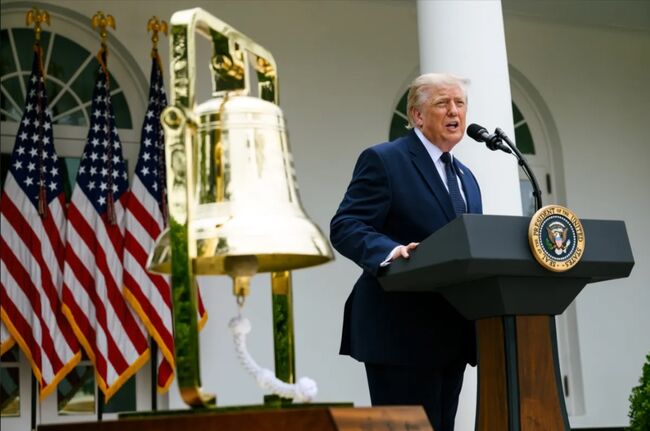 Trump pressures for rate cut again ahead of FOMC... "Should be the lowest in the world"
U.S. President Donald Trump. [Photo = The White House] U.S. President Donald Trump once again pressured the Federal Reserve, the U.S. central bank, to lower interest rates on the 27th (local time
Trump pressures for rate cut again ahead of FOMC... "Should be the lowest in the world"
U.S. President Donald Trump. [Photo = The White House] U.S. President Donald Trump once again pressured the Federal Reserve, the U.S. central bank, to lower interest rates on the 27th (local time
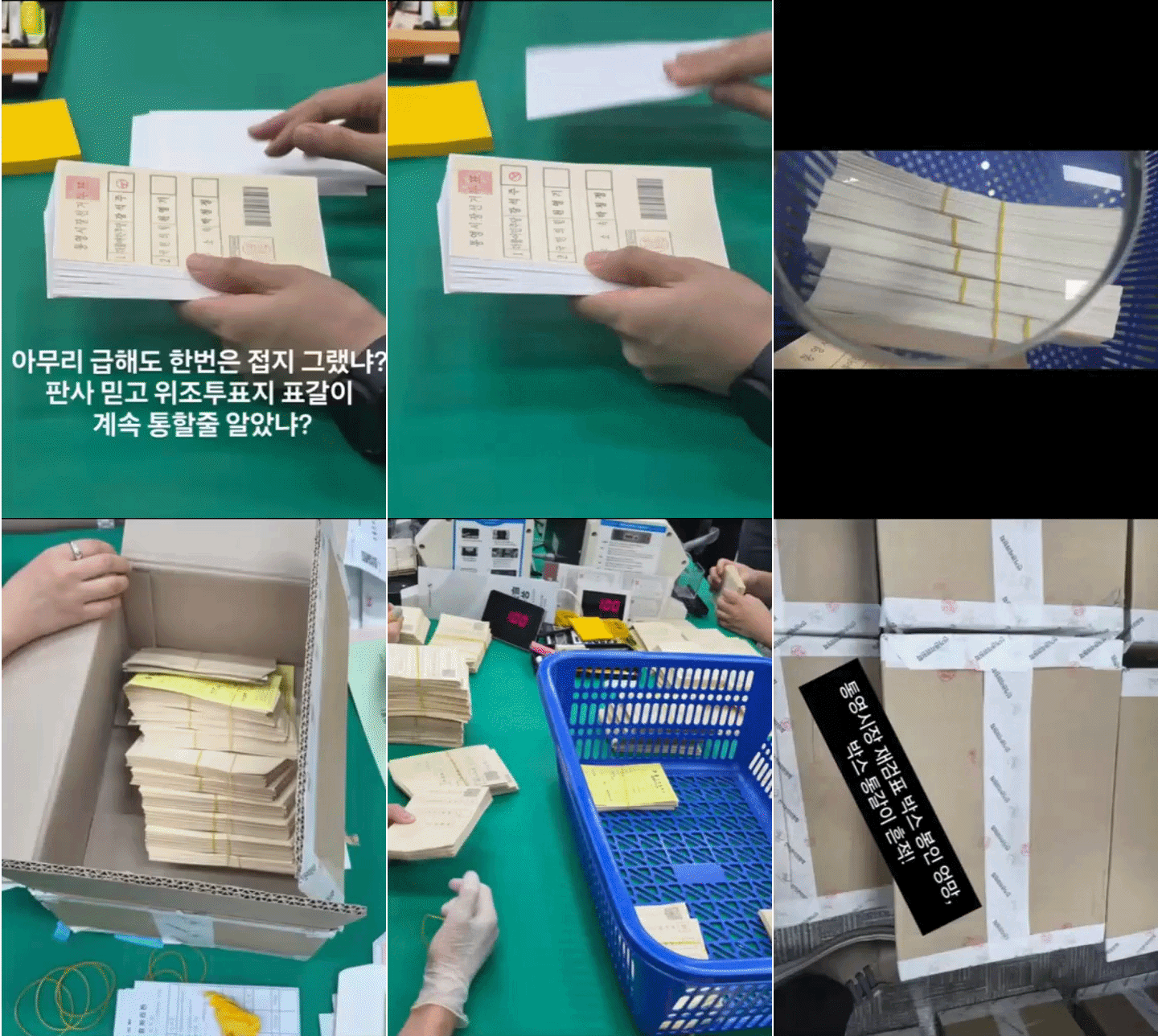 “Ignoring crisp ballots and damaged seals”… Tongyeong mayoral recount concludes with ‘no change in outcome,’ leaving suspicions and public outrage behind
Suspected counterfeit ballots discovered in Tongyeong [GIF from social media of Representative Hwang Kyo-ahn / Attorney Park Joo-hyun]During a recount of the Tongyeong mayoral election in South Gyeong
“Ignoring crisp ballots and damaged seals”… Tongyeong mayoral recount concludes with ‘no change in outcome,’ leaving suspicions and public outrage behind
Suspected counterfeit ballots discovered in Tongyeong [GIF from social media of Representative Hwang Kyo-ahn / Attorney Park Joo-hyun]During a recount of the Tongyeong mayoral election in South Gyeong
 President Yoon, regarding the first-instance ruling on the Public Official Election Act: “An excessive political verdict that distorts the facts… We will appeal immediately.”
The first-instance sentencing hearing for President Yoon Suk Yeol regarding violations of the Public Official Election Act is being broadcast live at Seoul Station on the 27th. [Photo=Yonhap News]Pres
President Yoon, regarding the first-instance ruling on the Public Official Election Act: “An excessive political verdict that distorts the facts… We will appeal immediately.”
The first-instance sentencing hearing for President Yoon Suk Yeol regarding violations of the Public Official Election Act is being broadcast live at Seoul Station on the 27th. [Photo=Yonhap News]Pres
 WSJ: "SK Hynix ADR Premium Is a Sign of AI Trading Overheat"
Advertisement for SK Hynix ADR listing in New York's Times Square [Reuters=Yonhap News file photo]The Wall Street Journal (WSJ) has pointed out that the price of SK Hynix’s American Depositary Recei
WSJ: "SK Hynix ADR Premium Is a Sign of AI Trading Overheat"
Advertisement for SK Hynix ADR listing in New York's Times Square [Reuters=Yonhap News file photo]The Wall Street Journal (WSJ) has pointed out that the price of SK Hynix’s American Depositary Recei
 'Godfather of Japanese Mystery Novels' Keigo Higashino Passes Away After Battle with Cancer at 68
Famous Japanese mystery novelist Keigo Higashino [AFP=Yonhap News]It has been belatedly reported that Keigo Higashino, the "godfather of Japanese mystery novels" and author of bestsellers such as "The
'Godfather of Japanese Mystery Novels' Keigo Higashino Passes Away After Battle with Cancer at 68
Famous Japanese mystery novelist Keigo Higashino [AFP=Yonhap News]It has been belatedly reported that Keigo Higashino, the "godfather of Japanese mystery novels" and author of bestsellers such as "The
 [Park Pil-kyu Security Column] To the Ignorant Trying to Clothe a Beast in Sheep's Clothing
Rep. Kim Byung-joo of the Democratic Party of Korea [Photo=Yonhap News]“The Air Force Academy doesn't teach you how to fly a plane!” “The Army, Navy, and Air Force academies are exactly the
[Park Pil-kyu Security Column] To the Ignorant Trying to Clothe a Beast in Sheep's Clothing
Rep. Kim Byung-joo of the Democratic Party of Korea [Photo=Yonhap News]“The Air Force Academy doesn't teach you how to fly a plane!” “The Army, Navy, and Air Force academies are exactly the
 [Issue Diagnosis] Two Effects of the Election Petition Review
 [Photo] Evidence of Election Fraud Flooding U.S. Media… Trump Had 2.7 Million Votes Stolen
 [Video] U.S. Semiquincentennial Air Show... 'Art in the Sky' streaks across New York
 [Editorial Cartoon] A Draconian Law That Undermines Freedom of Expression

 List
List