- "There are no private individuals acting against national interests"... Signal blocking cash demands
- Japan and EU reach agreement with concessions on investment and systems; will South Korea follow suit?
- If prolonged, Korea will be at a disadvantage... Sensitive to Trump's retaliatory cards
11일 이재명 대통령이 “국익에 반하는 사인은 하지 않았다”고 밝히며 한미 간 관세 협상이 새로운 국면을 맞았다. 일본과 유럽연합은 현금 대신 제도적·산업적 양보로 타결했지만, 한국에는 3,500억 달러 현금 투자 요구가 제기됐다. 본 기사는 일본·EU 사례와 비교해 한국 협상의 향방을 짚고, 트럼프 대통령의 후속 압박 가능성과 국내 정치·경제적 파장을 분석한다. <편집자 주>
 President Lee Jae-myung speaks at the 100-day inauguration press conference, "100 Days for Recovery, Growth for the Future," held at the Blue House Guest House on September 11. 2025.9.11. Yonhap NewsPresident Lee Jae-myung stated at a press conference held at the Yongsan Presidential Office on the 11th that he "did not sign anything against national interest" and revealed that he rejected excessive demands from the U.S. This statement comes as discussions about potential similar compromises for South Korea emerge following the recent release of the Japan-U.S. agreement.
In early September, Japan agreed to lower automotive tariffs from the existing 25% to 15% through negotiations with President Trump, in exchange for a commitment to invest approximately $550 billion in the U.S. According to the agreement document released by Japan's Ministry of Economy, Trade and Industry, this investment included financial support through loans and guarantees from the Japan Bank for International Cooperation (JBIC), as well as expansion of local factories and increased employment by private companies such as Toyota and Honda. Furthermore, by simultaneously increasing imports of U.S. agricultural products, an exchange structure of "agriculture/investment ↔ automotive tariff deferral" was established.
In contrast, reports have followed indicating that South Korea was asked for a one-time cash payment of $350 billion during the negotiation process. Without denying this, the President effectively formalized his refusal by stating, "There is nothing signed against national interest." This clarified that the South Korean government could not accept the terms, which were far more aggressive compared to those imposed on Japan and the EU.
Foreign policy experts point to several factors behind the U.S.'s strong cash demand specifically from South Korea: △ the structure of South Korea's trade surplus with the U.S. △ South Korea's concentration in advanced industries such as semiconductors and batteries △ and Trump's unique negotiation style. A former Deputy Minister for Trade stated, "This is Trump's brinkmanship tactic, exploiting South Korea's reliance on specific industries," and predicted, "In actual negotiations, it is highly likely to result in measures for increased investment and employment, similar to Japan."
Indeed, Hyundai Motor, LG Energy Solution, Samsung SDI, and SK On are already undertaking battery and automotive investments worth tens to hundreds of billions of dollars in the U.S., and Samsung Electronics has invested heavily in its Texas foundry. These investment plans can be put on the negotiation table as a "basis for tariff reduction."
However, President Trump's future pressure tactics are also considerable. He has repeatedly stated, "There will be no deals that cheat America," and may resort to retaliatory measures if necessary, including △ re-imposing automotive tariffs △ reducing tax credits for semiconductors and batteries △ and withdrawing investment incentives. A diplomatic source warned, "Given that the President has directly rejected the MAGA strategy, there is significant room for Trump to exert further pressure."
Domestic political and economic repercussions are also unavoidable. The ruling party welcomed the President's "national interest first" message, but the business community expressed concerns that prolonged negotiations could increase investment uncertainty. The opposition party criticized, "Ultimately, there is no choice but to reach a compromise on par with Japan and the EU, and the President has unnecessarily invited a head-on confrontation."
The diplomatic community commented, "Considering the precedent of Japan and the EU concluding agreements with institutional and industrial concessions instead of cash, it is highly likely that South Korea will reach a similar conclusion," and assessed, "The President's remarks are a signal to block unreasonable cash demands and move towards a rational compromise." However, at the same time, there is a growing sense of tension, with expectations that "Trump's next move will determine the course of negotiations."
#KoreaUS tariffnegotiations #PresidentLeeJae-myung #Trump #NationalInterestFirst #CashInvestmentDemand #JapanUSagreement #EUnégociations #Automotivetariffs #HyundaiSamsungInvestment #MAGApressure
- 관련기사
-
What do you think of this article?

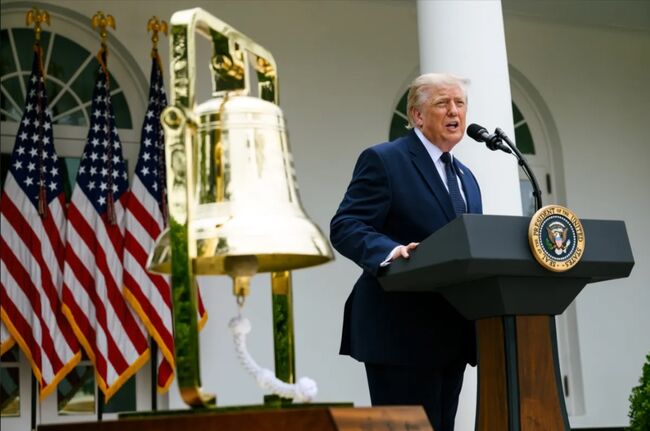 Trump pressures for rate cut again ahead of FOMC... "Should be the lowest in the world"
U.S. President Donald Trump. [Photo = The White House] U.S. President Donald Trump once again pressured the Federal Reserve, the U.S. central bank, to lower interest rates on the 27th (local time
Trump pressures for rate cut again ahead of FOMC... "Should be the lowest in the world"
U.S. President Donald Trump. [Photo = The White House] U.S. President Donald Trump once again pressured the Federal Reserve, the U.S. central bank, to lower interest rates on the 27th (local time
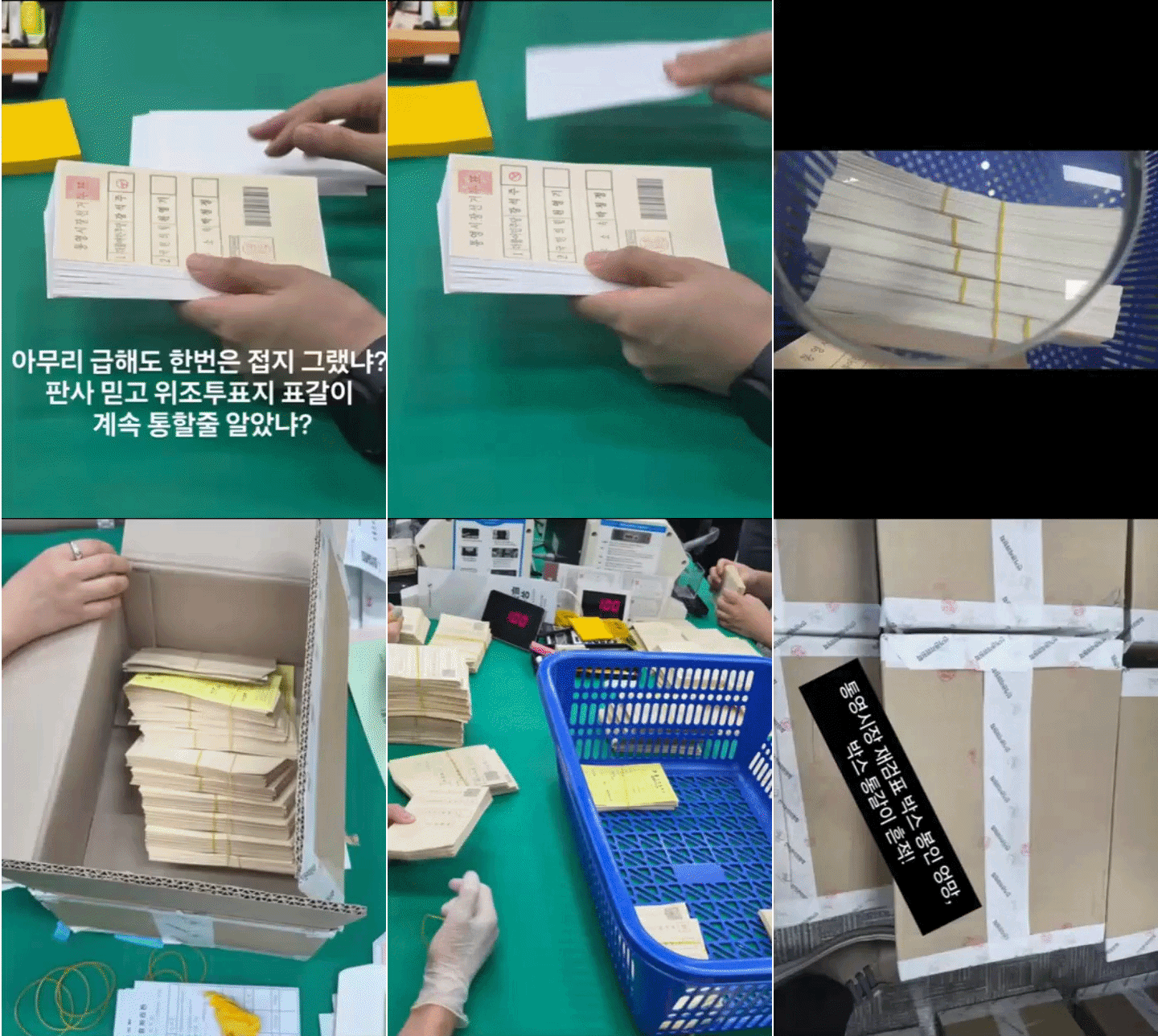 “Ignoring crisp ballots and damaged seals”… Tongyeong mayoral recount concludes with ‘no change in outcome,’ leaving suspicions and public outrage behind
Suspected counterfeit ballots discovered in Tongyeong [GIF from social media of Representative Hwang Kyo-ahn / Attorney Park Joo-hyun]During a recount of the Tongyeong mayoral election in South Gyeong
“Ignoring crisp ballots and damaged seals”… Tongyeong mayoral recount concludes with ‘no change in outcome,’ leaving suspicions and public outrage behind
Suspected counterfeit ballots discovered in Tongyeong [GIF from social media of Representative Hwang Kyo-ahn / Attorney Park Joo-hyun]During a recount of the Tongyeong mayoral election in South Gyeong
 President Yoon, regarding the first-instance ruling on the Public Official Election Act: “An excessive political verdict that distorts the facts… We will appeal immediately.”
The first-instance sentencing hearing for President Yoon Suk Yeol regarding violations of the Public Official Election Act is being broadcast live at Seoul Station on the 27th. [Photo=Yonhap News]Pres
President Yoon, regarding the first-instance ruling on the Public Official Election Act: “An excessive political verdict that distorts the facts… We will appeal immediately.”
The first-instance sentencing hearing for President Yoon Suk Yeol regarding violations of the Public Official Election Act is being broadcast live at Seoul Station on the 27th. [Photo=Yonhap News]Pres
 WSJ: "SK Hynix ADR Premium Is a Sign of AI Trading Overheat"
Advertisement for SK Hynix ADR listing in New York's Times Square [Reuters=Yonhap News file photo]The Wall Street Journal (WSJ) has pointed out that the price of SK Hynix’s American Depositary Recei
WSJ: "SK Hynix ADR Premium Is a Sign of AI Trading Overheat"
Advertisement for SK Hynix ADR listing in New York's Times Square [Reuters=Yonhap News file photo]The Wall Street Journal (WSJ) has pointed out that the price of SK Hynix’s American Depositary Recei
 'Godfather of Japanese Mystery Novels' Keigo Higashino Passes Away After Battle with Cancer at 68
Famous Japanese mystery novelist Keigo Higashino [AFP=Yonhap News]It has been belatedly reported that Keigo Higashino, the "godfather of Japanese mystery novels" and author of bestsellers such as "The
'Godfather of Japanese Mystery Novels' Keigo Higashino Passes Away After Battle with Cancer at 68
Famous Japanese mystery novelist Keigo Higashino [AFP=Yonhap News]It has been belatedly reported that Keigo Higashino, the "godfather of Japanese mystery novels" and author of bestsellers such as "The
 [Park Pil-kyu Security Column] To the Ignorant Trying to Clothe a Beast in Sheep's Clothing
Rep. Kim Byung-joo of the Democratic Party of Korea [Photo=Yonhap News]“The Air Force Academy doesn't teach you how to fly a plane!” “The Army, Navy, and Air Force academies are exactly the
[Park Pil-kyu Security Column] To the Ignorant Trying to Clothe a Beast in Sheep's Clothing
Rep. Kim Byung-joo of the Democratic Party of Korea [Photo=Yonhap News]“The Air Force Academy doesn't teach you how to fly a plane!” “The Army, Navy, and Air Force academies are exactly the
 [Issue Diagnosis] Two Effects of the Election Petition Review
 [Photo] Evidence of Election Fraud Flooding U.S. Media… Trump Had 2.7 Million Votes Stolen
 [Video] U.S. Semiquincentennial Air Show... 'Art in the Sky' streaks across New York
 [Editorial Cartoon] A Draconian Law That Undermines Freedom of Expression

 List
List









