더불어민주당이 추진 중인 ‘내란특별재판부’ 논의는 단순한 제도 개혁이 아니다. 헌법이 규정한 삼권분립과 사법 독립의 원리를 흔들 수 있는 위험한 시도로, 대통령 발언에서 출발해 정치적 구호로 포장되고 있다. 학계·법조계·변호사단체는 물론 대법원까지 위헌성을 지적하는 가운데, 역사적 사례가 보여주는 경고음은 더욱 무겁다. <편집자 주>
 People's Court and Troika, judicial tools of totalitarianism; the return of a system banned in democratic countries. Hankyoreh graphic
The discussion surrounding the establishment of a 'Special Treason Court' being pursued by the Democratic Party of Korea is escalating into controversy over constitutional violations.
The origin of the controversy was President Lee Jae-myung's remarks.
He recently stated at a Cabinet meeting and a press conference, "There is a clear hierarchy of power in the Republic of Korea. The supreme power is the people, popular sovereignty, and directly elected power, followed by indirectly elected power. The power that best reflects the will of the people is the power directly elected by the people, and appointing power is secondarily granted authority from elected power."
Such remarks from a president who passed the bar exam immediately caused repercussions. This is because they contained a nuance that seemed to undermine the checks and balances principle of the separation of powers as designed by the Constitution.
In particular, by spreading the perception that the judiciary is a subordinate power to the legislature and executive branches, the Democratic Party is using this as grounds to insist on the necessity of establishing a special court, citing the "will of the people."
Constitutional scholars are strongly protesting.
Moon Hyung-bae, former acting chief justice of the Constitutional Court, directly refuted the President's claims during a radio appearance, stating, "Please read the Constitution of the Republic of Korea. That is my answer."
Professor Jang Young-soo of Korea University pointed out, "The composition of a court targeting specific cases infringes upon the principle of equality before the law," while Professor Cha Jin-ah of Korea University criticized, "It is an infringement of judicial power for the National Assembly to determine the subject of a trial." Lee Ho-sun, former chairman of the Korean Constitutional Law Society at Kookmin University, also stated, "A special court directly contradicts constitutional principles."
Professor Lee In-ho of Chung-Ang University retorted, "The constitutional provision that the organization of courts at all levels shall be determined by law refers to a general and abstract system, not to determining a court for a specific case," adding, "Changing the name to a dedicated court does not alter its essence."
Lawyer associations are also protesting.
The People Who Make Good Laws argued, "The establishment of a Special Treason Court has no constitutional basis, and it infringes upon the right to a fair trial by allowing external forces to intervene in the judge appointment process."
The Lawyers for Human Rights and Unification of the Korean Peninsula (HanByun) urged the suspension of its establishment, calling it an "act of constitutional destruction that directly denies the separation of powers and judicial independence."
The constitutional basis is clear.
Article 101 of the Constitution stipulates, "Judicial power belongs to the courts," and Article 103 states, "Judges shall judge independently according to their conscience, in accordance with the Constitution and the law." Furthermore, Article 110 allows only military courts as exceptional special courts. There is no constitutional basis for the establishment of any other special courts. The Supreme Court's regulations also stipulate that case assignment and court composition are internal matters of court office distribution, and external intervention constitutes an infringement of judicial independence.
In this context, the Supreme Court's Office of Court Administration stated in its official opinion submitted to the National Assembly on August 29, "A Special Treason Court infringes upon judicial independence and has a high risk of being unconstitutional."
Many constitutional scholars also warned of unconstitutionality, stating, "Reassigning cases and artificially composing courts violates the principle of equality and the rule of law."
Constitutions of democratic countries overseas fundamentally prohibit special courts.
Article 101 of the German Basic Law states, "Extraordinary courts may not be established," and Article 76, paragraph 2 of the Japanese Constitution unequivocally states, "Special courts may not be established."
Article 3 of the U.S. Constitution also grants judicial power solely to the Supreme Court and lower courts, and precedents have established that the establishment of temporary courts for specific cases is beyond the authority of Congress.
These provisions reflect the historical lesson that special courts were misused as tools of political oppression in Nazi Germany and the Stalinist regime.
The People's Court (Volksgerichtshof), established by Hitler in 1934, degenerated into a political tribunal for executing dissidents. Six students and professors of the White Rose group were also sentenced to death by this court and beheaded.
Stalin also operated a 'Troika' (three-person special tribunal), executing thousands without trial or sending them to forced labor camps. Both regimes claimed to represent the "will of the nation" and the "will of the proletariat," but popular sovereignty was trampled, and the rule of law collapsed.
Academia and the legal community are warning that the Democratic Party's push for special courts is following the same path as these totalitarian regimes.
Ultimately, the essence of the controversy is the distortion of 'popular sovereignty'.
Article 1, paragraph 2 of the Constitution declares, "All sovereignty of the Republic of Korea shall reside in the people." However, this does not simply mean exercising state power through the majority party's seats or momentary public opinion. Popular sovereignty can only be realized within the institutional framework of the separation of powers and the rule of law.
As Professor Lee In-ho pointed out, "It is a violation of the Constitution for the legislature to determine a court for a specific case," which is tantamount to transforming the constitutional meaning of popular sovereignty into a political slogan of "the will of the people."
Experts warn that "to undermine judicial independence in the name of popular sovereignty is a self-contradiction that destroys popular sovereignty itself."
The voices calling for blocking legislative dictatorship and judicial takeover, hidden behind the sweet slogan of "the will of the people," are growing louder, asserting that this is the way to uphold the Constitution.
#WhiteRose #SpecialCourt #ConstitutionalViolation #PopularSovereignty #SeparationOfPowers #JudicialIndependence #LegislativeDictatorship #LeeJae-myung #DemocraticParty #HistoricalLessons

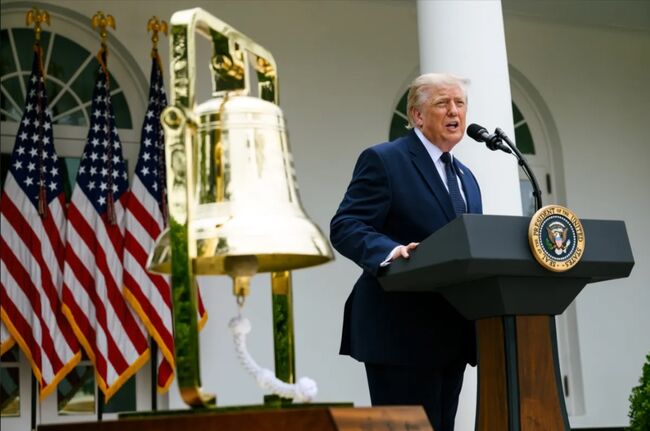 Trump pressures for rate cut again ahead of FOMC... "Should be the lowest in the world"
U.S. President Donald Trump. [Photo = The White House] U.S. President Donald Trump once again pressured the Federal Reserve, the U.S. central bank, to lower interest rates on the 27th (local time
Trump pressures for rate cut again ahead of FOMC... "Should be the lowest in the world"
U.S. President Donald Trump. [Photo = The White House] U.S. President Donald Trump once again pressured the Federal Reserve, the U.S. central bank, to lower interest rates on the 27th (local time
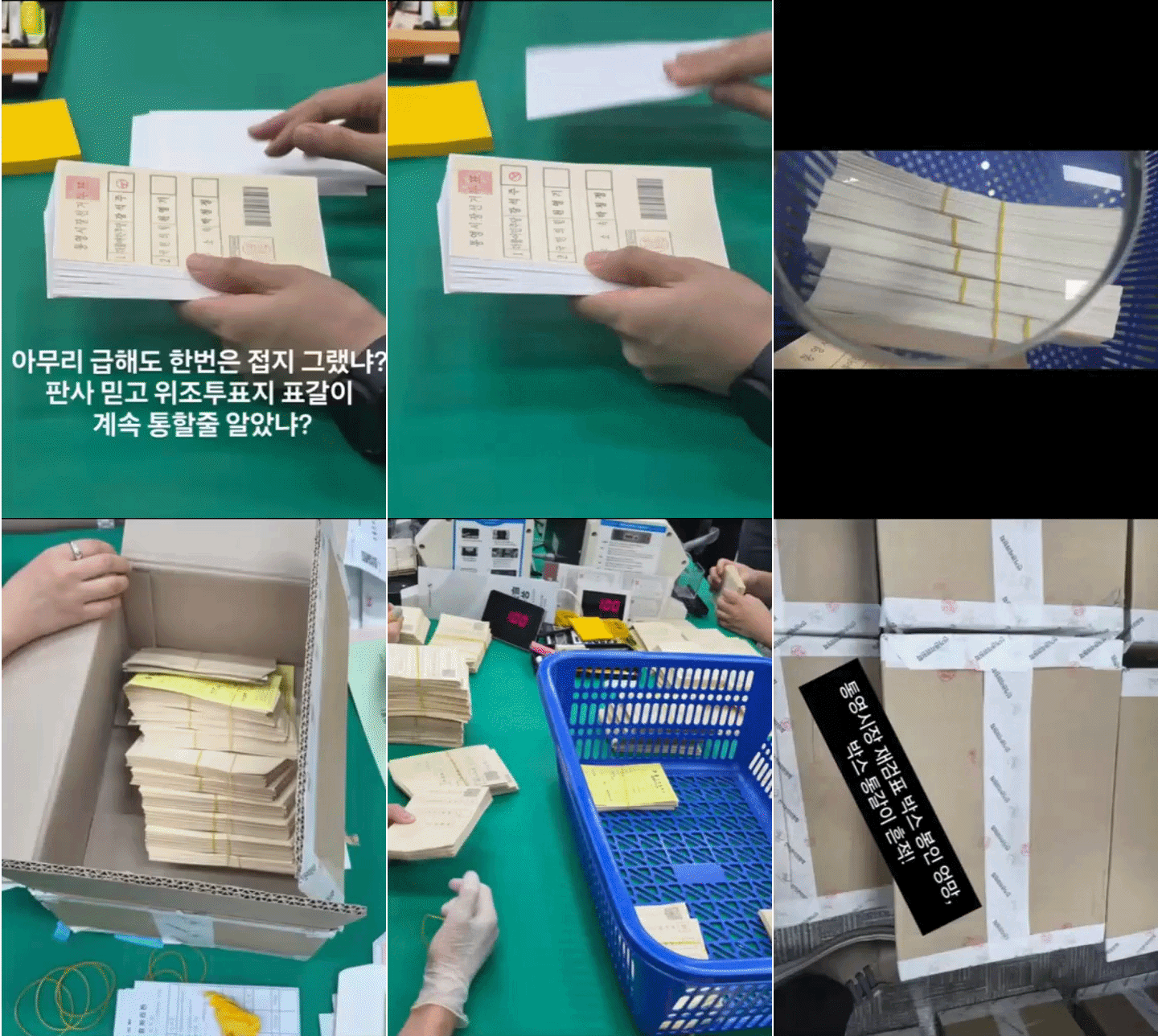 “Ignoring crisp ballots and damaged seals”… Tongyeong mayoral recount concludes with ‘no change in outcome,’ leaving suspicions and public outrage behind
Suspected counterfeit ballots discovered in Tongyeong [GIF from social media of Representative Hwang Kyo-ahn / Attorney Park Joo-hyun]During a recount of the Tongyeong mayoral election in South Gyeong
“Ignoring crisp ballots and damaged seals”… Tongyeong mayoral recount concludes with ‘no change in outcome,’ leaving suspicions and public outrage behind
Suspected counterfeit ballots discovered in Tongyeong [GIF from social media of Representative Hwang Kyo-ahn / Attorney Park Joo-hyun]During a recount of the Tongyeong mayoral election in South Gyeong
 President Yoon, regarding the first-instance ruling on the Public Official Election Act: “An excessive political verdict that distorts the facts… We will appeal immediately.”
The first-instance sentencing hearing for President Yoon Suk Yeol regarding violations of the Public Official Election Act is being broadcast live at Seoul Station on the 27th. [Photo=Yonhap News]Pres
President Yoon, regarding the first-instance ruling on the Public Official Election Act: “An excessive political verdict that distorts the facts… We will appeal immediately.”
The first-instance sentencing hearing for President Yoon Suk Yeol regarding violations of the Public Official Election Act is being broadcast live at Seoul Station on the 27th. [Photo=Yonhap News]Pres
 WSJ: "SK Hynix ADR Premium Is a Sign of AI Trading Overheat"
Advertisement for SK Hynix ADR listing in New York's Times Square [Reuters=Yonhap News file photo]The Wall Street Journal (WSJ) has pointed out that the price of SK Hynix’s American Depositary Recei
WSJ: "SK Hynix ADR Premium Is a Sign of AI Trading Overheat"
Advertisement for SK Hynix ADR listing in New York's Times Square [Reuters=Yonhap News file photo]The Wall Street Journal (WSJ) has pointed out that the price of SK Hynix’s American Depositary Recei
 'Godfather of Japanese Mystery Novels' Keigo Higashino Passes Away After Battle with Cancer at 68
Famous Japanese mystery novelist Keigo Higashino [AFP=Yonhap News]It has been belatedly reported that Keigo Higashino, the "godfather of Japanese mystery novels" and author of bestsellers such as "The
'Godfather of Japanese Mystery Novels' Keigo Higashino Passes Away After Battle with Cancer at 68
Famous Japanese mystery novelist Keigo Higashino [AFP=Yonhap News]It has been belatedly reported that Keigo Higashino, the "godfather of Japanese mystery novels" and author of bestsellers such as "The
 [Park Pil-kyu Security Column] To the Ignorant Trying to Clothe a Beast in Sheep's Clothing
Rep. Kim Byung-joo of the Democratic Party of Korea [Photo=Yonhap News]“The Air Force Academy doesn't teach you how to fly a plane!” “The Army, Navy, and Air Force academies are exactly the
[Park Pil-kyu Security Column] To the Ignorant Trying to Clothe a Beast in Sheep's Clothing
Rep. Kim Byung-joo of the Democratic Party of Korea [Photo=Yonhap News]“The Air Force Academy doesn't teach you how to fly a plane!” “The Army, Navy, and Air Force academies are exactly the
 [Issue Diagnosis] Two Effects of the Election Petition Review
 [Photo] Evidence of Election Fraud Flooding U.S. Media… Trump Had 2.7 Million Votes Stolen
 [Video] U.S. Semiquincentennial Air Show... 'Art in the Sky' streaks across New York
 [Editorial Cartoon] A Draconian Law That Undermines Freedom of Expression

 List
List