이번 칼럼은 강한 제목을 달았다. 최근 한국 사회를 뒤흔드는 ‘현금 출자 요구’와 ‘무제한 스와프’ 논란은 사실관계보다 정치적 프레임과 언론의 과장 보도에서 비롯된 측면이 크다. 국민이 여기에 휘말린다면 국익은 물론 민주주의의 기반마저 흔들릴 수 있다. 강한 제목은 바로 그 위험에 경종을 울리기 위한 것이다. <편집자 주>
 Gambling, not negotiation. The future of our people cannot be staked on a roulette wheel. Han-Mi-Il Report Graphics
“The U.S. has demanded a $350 billion cash contribution from South Korea.”
This statement, which has spread through domestic media, is consumed as fact, but a fact check reveals that it lacks a solid foundation.
U.S. Secretary of Commerce Lutnick stated clearly in a CNBC interview regarding Japan’s $550 billion investment that “the funding is up to them (Japan) to figure out.”
This means the U.S. does not interfere with the method of financing, leaving it to Japan to source the funds—whether through cash, loans, or guarantees.
A key concept here is the "capital call."
Through an agreement with the U.S., Japan makes a promise to invest a total amount, but the actual payment is made in stages whenever a project is executed. When the U.S. proposes a specific industrial project, Japan provides the necessary funds at that moment. The method of payment is determined by Japan.
Ultimately, it is Japan's responsibility to determine how to raise the money, while the U.S. holds the authority to select and execute the projects.
Logically, the same structure must apply to South Korea. It is difficult to believe that while the U.S. tells Japan, “figure out the funding yourself,” it would exclusively force “cash contributions” upon South Korea.
Nevertheless, such claims have been propagated by the South Korean media. Reports from Reuters also cited articles originating from Korean media, and the sources were mostly vague references to “officials in Korea.” The U.S. has never officially confirmed a demand for cash contributions from South Korea, and the South Korean government has also drawn a line, stating, “We were not asked for cash contributions alone.”
Even more noteworthy is the attitude of the government.
The Han-Mi-Il Report previously broke the story on the contents of the Memorandum of Understanding for the U.S.-Japan trade agreement via a Hudson Institute report. However, in his 100-day press conference, President Lee Jae-myung responded, “I am not aware of such details.”
If true, this implies a grave issue within the reporting system regarding foreign and trade affairs; if he was aware but feigned ignorance, the response is insufficient to convince the public. Either way, it is clear that the statement undermined trust in state administration.
The subsequent reports on a “demand for an unlimited currency swap” follow the same context.
Ambiguous wording from South Korean government officials was amplified and reproduced by the media, while the U.S. response effectively remained at the level of “What is this?” However, domestic media reported on it extensively, and even scholars and insiders poured out speculations based on these media reports, fueling public opinion.
Ultimately, the picture that South Korean society currently believes in is a narrative where “the U.S. is making exorbitant demands, and the Lee Jae-myung administration is struggling through negotiations.”
However, when looked at with calm common sense, this is far from the truth. From the U.S. perspective, what matters is not whether it is ‘cash or guarantees,’ but the fact that the investment itself enters U.S. soil to create industries and jobs. The core is the political achievement of securing the investment, rather than the profit and loss.
Then let us examine why this tactic of confusion is uniquely effective in South Korea.
The first interpretation is that it is a ploy to buy time. The tariffs imposed by President Trump are currently under review at the Supreme Court, and the view within the U.S. legal community is that there is a high possibility of him losing. A ruling could come later this year, or as late as the first half of next year. If South Korea signs the agreement before then, the agreement remains valid even if Trump loses in court. It is Trump who is impatient. One could calculate that if the current government holds its ground, it could secure better terms than Japan.
However, we must not overlook the fact that even if Trump loses at the Supreme Court, he still has many cards to play against South Korea. Betting on this is more like gambling than negotiation.
The second factor is domestic public opinion management.
There is a political motive to cultivate anti-American sentiment to dissipate the strength of the anti-Lee Jae-myung factions. In fact, some public opinion is already shifting. However, this is a double-edged sword. If anti-American sentiment grows excessively at home, it becomes a burden on the Trump administration as well. Furthermore, if the negotiation process is fully exposed, the Lee Jae-myung administration could suffer a fatal blow. Perhaps the U.S. is simply waiting for the right moment.
In its attempt to maintain power, the Lee Jae-myung administration is proceeding with highly controversial measures, such as special investigations, the creation of special judicial panels, and the seizure of opposition party member lists. However, it is unlikely that the U.S. is unaware of this administration’s schemes. Manipulating the media and distorting public opinion through political trickery may work temporarily, but in the international community, the truth eventually comes to light.
What is needed now is not hysteria, but common sense.
The controversy over “demands for cash contributions” and “unlimited swaps” is a political frame, not a fact. If the public allows itself to be swayed by this, it threatens not only the national interest but the very foundation of our democracy. It is time to regain our focus.
#CashContributionFrame #CurrencySwapControversy #LeeJaeMyungAdministration #USKoreaNegotiations #TrumpStrategy #GamblingNegotiation #MediaIllusion #NationalInterestCrisis #ViewWithCommonSense

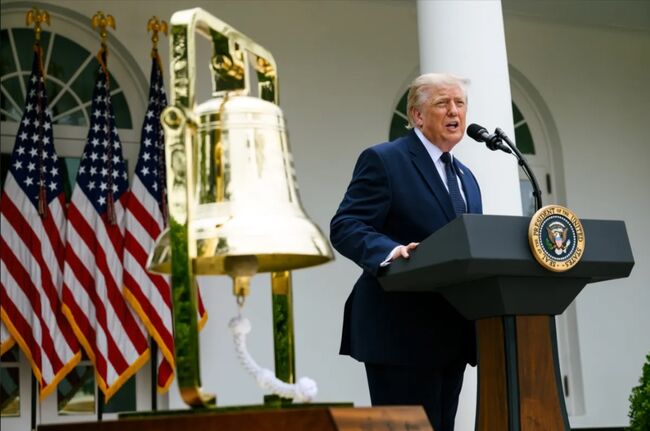 Trump pressures for rate cut again ahead of FOMC... "Should be the lowest in the world"
U.S. President Donald Trump. [Photo = The White House] U.S. President Donald Trump once again pressured the Federal Reserve, the U.S. central bank, to lower interest rates on the 27th (local time
Trump pressures for rate cut again ahead of FOMC... "Should be the lowest in the world"
U.S. President Donald Trump. [Photo = The White House] U.S. President Donald Trump once again pressured the Federal Reserve, the U.S. central bank, to lower interest rates on the 27th (local time
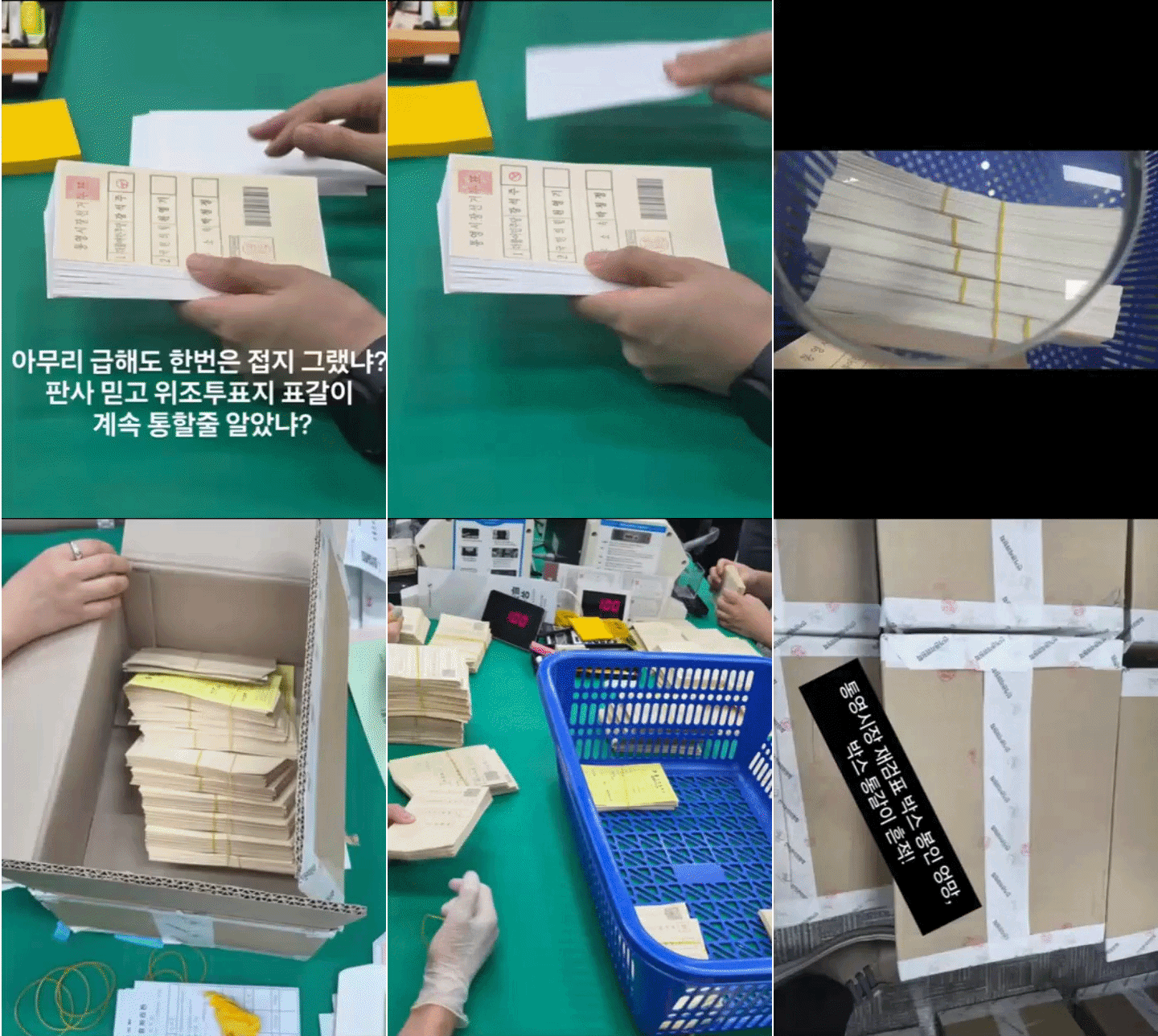 “Ignoring crisp ballots and damaged seals”… Tongyeong mayoral recount concludes with ‘no change in outcome,’ leaving suspicions and public outrage behind
Suspected counterfeit ballots discovered in Tongyeong [GIF from social media of Representative Hwang Kyo-ahn / Attorney Park Joo-hyun]During a recount of the Tongyeong mayoral election in South Gyeong
“Ignoring crisp ballots and damaged seals”… Tongyeong mayoral recount concludes with ‘no change in outcome,’ leaving suspicions and public outrage behind
Suspected counterfeit ballots discovered in Tongyeong [GIF from social media of Representative Hwang Kyo-ahn / Attorney Park Joo-hyun]During a recount of the Tongyeong mayoral election in South Gyeong
 President Yoon, regarding the first-instance ruling on the Public Official Election Act: “An excessive political verdict that distorts the facts… We will appeal immediately.”
The first-instance sentencing hearing for President Yoon Suk Yeol regarding violations of the Public Official Election Act is being broadcast live at Seoul Station on the 27th. [Photo=Yonhap News]Pres
President Yoon, regarding the first-instance ruling on the Public Official Election Act: “An excessive political verdict that distorts the facts… We will appeal immediately.”
The first-instance sentencing hearing for President Yoon Suk Yeol regarding violations of the Public Official Election Act is being broadcast live at Seoul Station on the 27th. [Photo=Yonhap News]Pres
 WSJ: "SK Hynix ADR Premium Is a Sign of AI Trading Overheat"
Advertisement for SK Hynix ADR listing in New York's Times Square [Reuters=Yonhap News file photo]The Wall Street Journal (WSJ) has pointed out that the price of SK Hynix’s American Depositary Recei
WSJ: "SK Hynix ADR Premium Is a Sign of AI Trading Overheat"
Advertisement for SK Hynix ADR listing in New York's Times Square [Reuters=Yonhap News file photo]The Wall Street Journal (WSJ) has pointed out that the price of SK Hynix’s American Depositary Recei
 'Godfather of Japanese Mystery Novels' Keigo Higashino Passes Away After Battle with Cancer at 68
Famous Japanese mystery novelist Keigo Higashino [AFP=Yonhap News]It has been belatedly reported that Keigo Higashino, the "godfather of Japanese mystery novels" and author of bestsellers such as "The
'Godfather of Japanese Mystery Novels' Keigo Higashino Passes Away After Battle with Cancer at 68
Famous Japanese mystery novelist Keigo Higashino [AFP=Yonhap News]It has been belatedly reported that Keigo Higashino, the "godfather of Japanese mystery novels" and author of bestsellers such as "The
 [Park Pil-kyu Security Column] To the Ignorant Trying to Clothe a Beast in Sheep's Clothing
Rep. Kim Byung-joo of the Democratic Party of Korea [Photo=Yonhap News]“The Air Force Academy doesn't teach you how to fly a plane!” “The Army, Navy, and Air Force academies are exactly the
[Park Pil-kyu Security Column] To the Ignorant Trying to Clothe a Beast in Sheep's Clothing
Rep. Kim Byung-joo of the Democratic Party of Korea [Photo=Yonhap News]“The Air Force Academy doesn't teach you how to fly a plane!” “The Army, Navy, and Air Force academies are exactly the
 [Issue Diagnosis] Two Effects of the Election Petition Review
 [Photo] Evidence of Election Fraud Flooding U.S. Media… Trump Had 2.7 Million Votes Stolen
 [Video] U.S. Semiquincentennial Air Show... 'Art in the Sky' streaks across New York
 [Editorial Cartoon] A Draconian Law That Undermines Freedom of Expression

 List
List