Bidding Heats Up for 1 Trillion Won ESS Battery Orders; Domestic Production Key to Victory
Weighting for Non-Price Evaluation Factors Under Review…LG Energy Solution & SK On Vying to Restore Pride
A fierce bidding war has begun among South Korea's top three battery manufacturers for the second government-led Energy Storage System (ESS) project, valued at approximately 1 trillion won.
With the evaluation criteria for "non-price indicators" such as industrial and economic contributions expected to be weighted higher than in the first project, domestic production capacity is likely to be the deciding factor in securing these orders.
 Samsung SDI Energy Storage System (ESS) Battery [Provided by Samsung SDI. Reproduction and database prohibited]
According to industry sources on the 21st, the Korea Power Exchange (KPX) shared the direction of the second ESS Central Contract Market project at a meeting held on the 19th at COEX in Gangnam-gu, Seoul.
The total supply capacity for the second project is expected to be 540MW (megawatts), with an estimated value of around 1 trillion won. The supply is scheduled for December 2027.
At the meeting, the KPX announced that the weighting for non-price indicators, which accounted for 40% of the evaluation in the first project, could be adjusted up to 50% for the second project.
Non-price indicators will primarily assess contributions to industry and economy, fire and equipment safety, public acceptance, and project readiness.
In the previous first project, Samsung SDI surprised many by securing 76% of the total volume, which industry analysts attribute to its higher scores in non-price indicators compared to its competitors.
Although Samsung SDI was set to supply ternary (NCA) batteries, which are relatively more expensive than the lithium iron phosphate (LFP) batteries offered by LG Energy Solution and SK On, it is speculated that the company gained an advantage in the industrial and economic contribution category by emphasizing that most of its ESS battery cells are produced at its Ulsan plant in Korea.
SK On, which failed to secure any orders in the first project, and LG Energy Solution, which desperately needs to restore its reputation as a traditional powerhouse in government projects, are reportedly developing strategies that include utilizing their domestic production facilities.
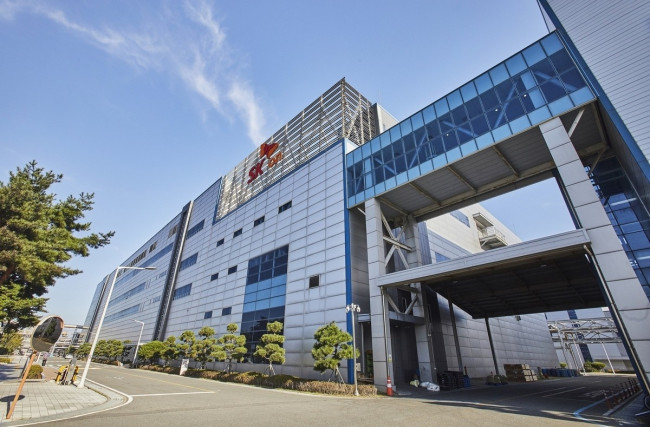 SK On Seosan Plant [Provided by SK On. Reproduction and database prohibited]
According to industry sources, SK On is planning to convert the electric vehicle-dedicated production line at its Seosan plant into an ESS line to respond to the second project.
It is understood that they believe there is sufficient time to build the production line, given that the supply for the second project is scheduled for December 2027.
SK On recently signed a large-scale ESS project order contract with "Flatiron Energy Development," a US renewable energy company. The company is expected to gain mass production experience by supplying container-type ESS products equipped with LFP batteries next year, which will then be leveraged for stabilizing domestic production.
LG Energy Solution is also reportedly considering shifting its LFP battery production, currently conducted at its Nanjing plant in China, to domestic production.
Currently, a proposal to convert the NCM battery line for ESS at its Ochang plant to an LFP production line is being discussed.
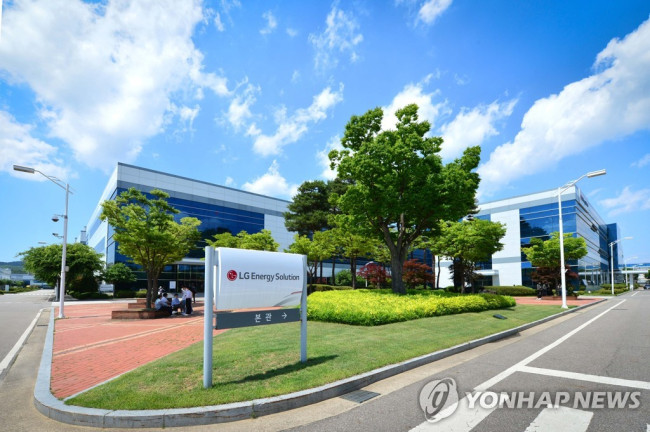 Exterior view of LG Energy Solution's Ochang Plant [Provided by LG Energy Solution. Reproduction and database prohibited]
Samsung SDI, which achieved a decisive victory in the first project, is expected to emphasize its industrial contributions again, including domestic production of NCA batteries, for this project as well.
Some voices suggest that the second project could be even more favorable to Samsung SDI if the weighting of non-price indicators increases further. This is because, unlike LFP batteries that require Chinese materials, NCA batteries utilize domestic Korean materials.
The KPX plans to announce the second ESS Central Contract Market tender in October, after refining the evaluation system for the second project.
An industry official commented, "The three Korean battery manufacturers are actively targeting the ESS market, which is dominated by China with LFP batteries," adding, "Domestic ESS projects will be a crucial growth engine for Korean companies facing a slowdown in electric vehicle demand and seeking alternative avenues for business." Yonhap News

 Iranian Foreign Ministry: "Continuing Message Exchanges with the U.S. and Activities of Mediating Countries"
Esmaeil Baghaei, Spokesperson for the Iranian Ministry of Foreign Affairs [Xinhua, Yonhap News file photo]Esmaeil Baghaei, spokesperson for the Iranian Ministry of Foreign Affairs, stated on the 26th
Iranian Foreign Ministry: "Continuing Message Exchanges with the U.S. and Activities of Mediating Countries"
Esmaeil Baghaei, Spokesperson for the Iranian Ministry of Foreign Affairs [Xinhua, Yonhap News file photo]Esmaeil Baghaei, spokesperson for the Iranian Ministry of Foreign Affairs, stated on the 26th
 President Yoon: "Do You Think You Are Safe from the Special Counsel?"... Final Statement Video Released
President Yoon Suk Yeol rebuking the special prosecutor on the 24th. [Court video / @birds_justice X account subtitle GIF] A video of President Yoon Suk Yeol's closing statement at his trial rega
President Yoon: "Do You Think You Are Safe from the Special Counsel?"... Final Statement Video Released
President Yoon Suk Yeol rebuking the special prosecutor on the 24th. [Court video / @birds_justice X account subtitle GIF] A video of President Yoon Suk Yeol's closing statement at his trial rega
 President Yoon, regarding the first-instance ruling on the Public Official Election Act: “An excessive political verdict that distorts the facts… We will appeal immediately.”
The first-instance sentencing hearing for President Yoon Suk Yeol regarding violations of the Public Official Election Act is being broadcast live at Seoul Station on the 27th. [Photo=Yonhap News]Pres
President Yoon, regarding the first-instance ruling on the Public Official Election Act: “An excessive political verdict that distorts the facts… We will appeal immediately.”
The first-instance sentencing hearing for President Yoon Suk Yeol regarding violations of the Public Official Election Act is being broadcast live at Seoul Station on the 27th. [Photo=Yonhap News]Pres
 WSJ: "SK Hynix ADR Premium Is a Sign of AI Trading Overheat"
Advertisement for SK Hynix ADR listing in New York's Times Square [Reuters=Yonhap News file photo]The Wall Street Journal (WSJ) has pointed out that the price of SK Hynix’s American Depositary Recei
WSJ: "SK Hynix ADR Premium Is a Sign of AI Trading Overheat"
Advertisement for SK Hynix ADR listing in New York's Times Square [Reuters=Yonhap News file photo]The Wall Street Journal (WSJ) has pointed out that the price of SK Hynix’s American Depositary Recei
 'Godfather of Japanese Mystery Novels' Keigo Higashino Passes Away After Battle with Cancer at 68
Famous Japanese mystery novelist Keigo Higashino [AFP=Yonhap News]It has been belatedly reported that Keigo Higashino, the "godfather of Japanese mystery novels" and author of bestsellers such as "The
'Godfather of Japanese Mystery Novels' Keigo Higashino Passes Away After Battle with Cancer at 68
Famous Japanese mystery novelist Keigo Higashino [AFP=Yonhap News]It has been belatedly reported that Keigo Higashino, the "godfather of Japanese mystery novels" and author of bestsellers such as "The
 [Park Pil-kyu Security Column] To the Ignorant Trying to Clothe a Beast in Sheep's Clothing
Rep. Kim Byung-joo of the Democratic Party of Korea [Photo=Yonhap News]“The Air Force Academy doesn't teach you how to fly a plane!” “The Army, Navy, and Air Force academies are exactly the
[Park Pil-kyu Security Column] To the Ignorant Trying to Clothe a Beast in Sheep's Clothing
Rep. Kim Byung-joo of the Democratic Party of Korea [Photo=Yonhap News]“The Air Force Academy doesn't teach you how to fly a plane!” “The Army, Navy, and Air Force academies are exactly the
 [Issue Diagnosis] Two Effects of the Election Petition Review
 [Photo] Evidence of Election Fraud Flooding U.S. Media… Trump Had 2.7 Million Votes Stolen
 [Video] U.S. Semiquincentennial Air Show... 'Art in the Sky' streaks across New York
 [Editorial Cartoon] A Draconian Law That Undermines Freedom of Expression

 List
List









