"Feeling Sleepy After Lunch? It Might Be 'Carbohydrate Fatigue'... You Need to Change Your Lifestyle Immediately"
New Book 'Carbohydrate Revolution' by the Director of the Diabetes Center at Kitasato University Hospital in Japan
 Office workers eating lunch in a company cafeteria [Yonhap News Photo]
Lunch is important. To exaggerate a bit, lunch break is sometimes the only pleasure in office life. It's a time to shake off the morning tension, chat with colleagues, and relieve stress. In the stark reality of making a living, lunchtime is a 'gap' that brings joy to daily life. For those in their 20s and early 30s, who are full of energy, it's also a time to recharge, allowing them to work with renewed vigor after lunch and a cup of coffee. However, many managers in their 40s and 50s, as they age, find themselves nodding off due to the overwhelming sleepiness after a meal.
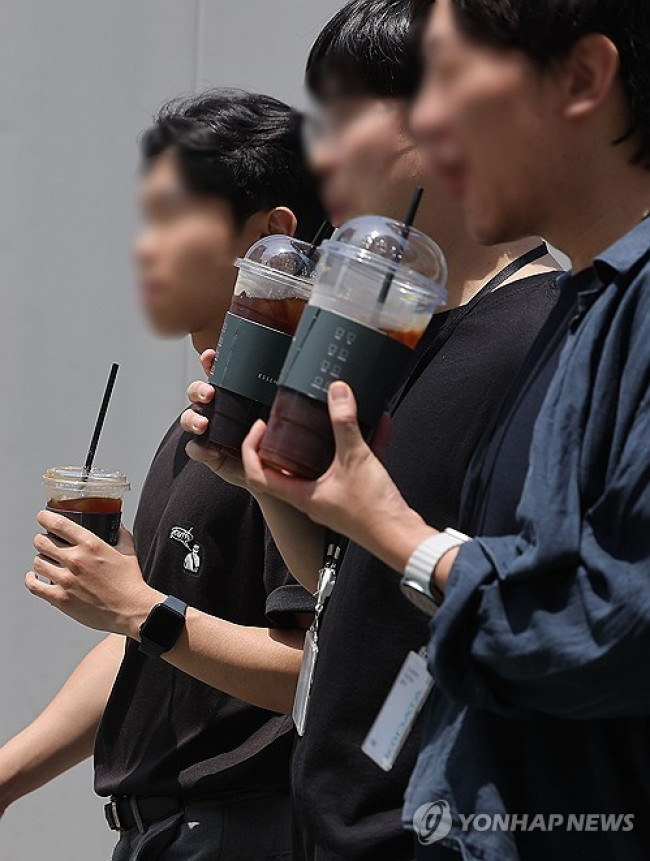 Americano after a meal [Yonhap News Photo]
However, not all managers are like that. Many in their 40s and 50s are actively working. Satoru Yamada, Director of the Diabetes Center at Kitasato University Kitasato Institute Hospital in Japan, explains in his new book 'Carbohydrate Revolution' (published by Iaso) that these differences, even among people of similar age, are related to the presence or absence of 'carbohydrate fatigue'.
"If you experience drowsiness or lethargy shortly after eating, feel hungry again despite having eaten a full meal, have reduced concentration, feel restless, or have a stiff and heavy feeling at the back of your neck, it is likely carbohydrate fatigue."
The author names these uncomfortable symptoms 'carbohydrate fatigue'. Specifically, it refers to a state where post-meal blood glucose levels are above 140 mg/dl. He explains that the various symptoms of carbohydrate fatigue occur due to the effects of post-meal hyperglycemia and blood sugar spikes, emphasizing, "If you confirm that you have carbohydrate fatigue, you must change your lifestyle."
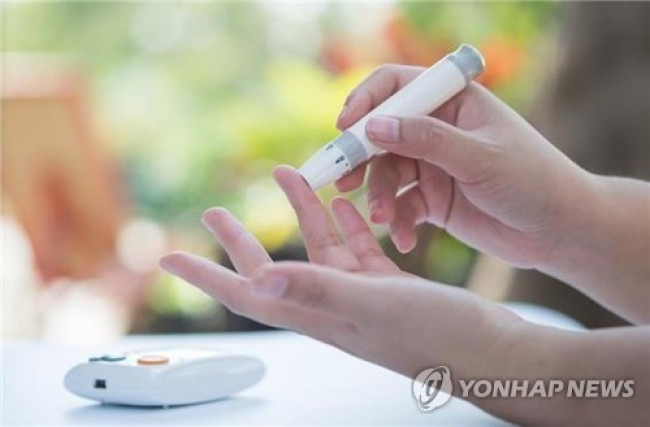 Blood glucose check [Provided by Getty Images Bank]
According to the book, post-meal hyperglycemia occurs 10 years before fasting hyperglycemia. While carbohydrate fatigue is not yet a disease, if left untreated, it can lead to diabetes, obesity, hypertension, and dyslipidemia, like a row of falling dominoes. Notably, at some point, it becomes an 'irreversible' state from which there is no return.
Above all, it is essential to manage it to prevent it from developing into diabetes. While they say an apple in the morning is golden, the author recommends forbidding it or eating only about a quarter of a slice, as it contains a lot of fructose, which raises blood sugar levels.
The author recommends eating three balanced meals a day, not in excessive amounts. Skipping even one meal causes a sharp rise in blood sugar levels after the subsequent meal. It is advisable to avoid foods high in sugar, such as fried foods, curry rice, and tonkatsu sauce.
The order of eating also matters. It is better to eat vegetables, meat, or fish first and then rice. The author suggests eating carbohydrates like rice and bread, which directly raise blood sugar significantly, 20 minutes after starting the meal.
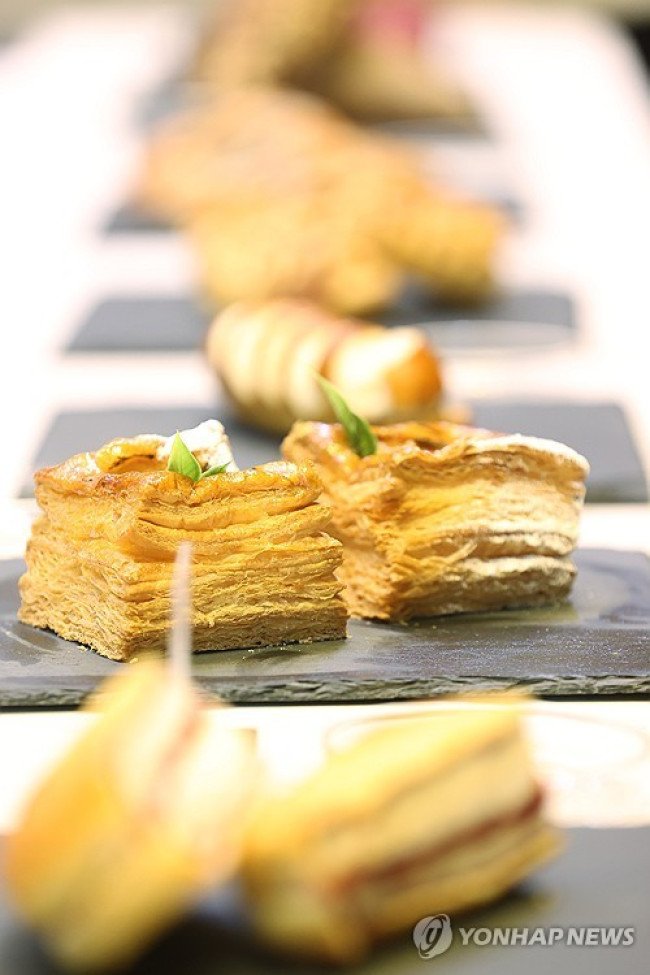 Bread, the embodiment of carbohydrates [Yonhap News Photo]
The author advises eating more protein and fat than carbohydrates. Contrary to common belief, foods like mayonnaise are not bad from a blood sugar perspective.
According to an experiment cited in the book, researchers compared and analyzed the blood sugar rise order for meals of 300 kcal with only white rice, 400 kcal with white rice plus tofu and eggs, 500 kcal with white rice, tofu, eggs, and mayonnaise, and 600 kcal with white rice, tofu, eggs, mayonnaise, and spinach.
As a result, the meal that caused the highest blood sugar increase was the 300 kcal meal with only white rice, while the meal with the lowest sugar level was the 500 kcal meal with rice, tofu, eggs, and mayonnaise. The researchers explained that "the intake of fat (mayonnaise) increased the secretion of glucose-dependent insulinotropic polypeptide (GIP)."
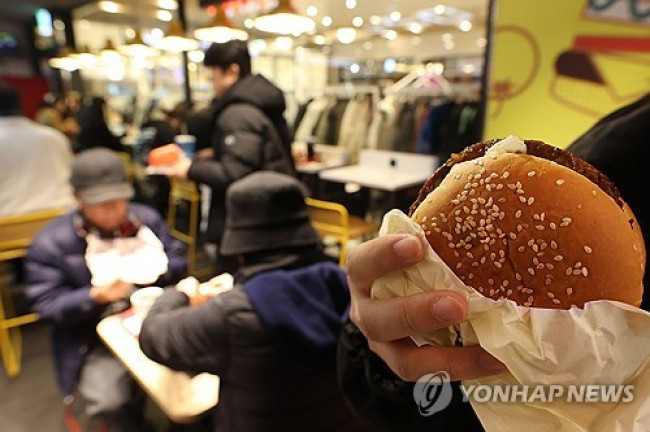 Burger [Yonhap News Photo]
The author argues that even junk food like burgers can be eaten in moderation if consumed strategically.
For example, he suggests eating just one burger but adding two patties and two slices of cheese to feel sufficiently full. He also states that while artificial sweeteners like aspartame are sufficiently sweet, they do not raise blood sugar levels, so it is acceptable to drink sugar-free carbonated beverages containing aspartame instead of regular cola with sugar. Additionally, it is recommended to opt for chicken nuggets, which are high in protein and fat, instead of sugary french fries.
The author concludes, "By reducing carbohydrate intake, eating plenty of protein and fat instead, and paying attention to the order of eating," one can overcome carbohydrate fatigue. Yonhap News
Translated by Oh Hyun-sook. 192 pages.
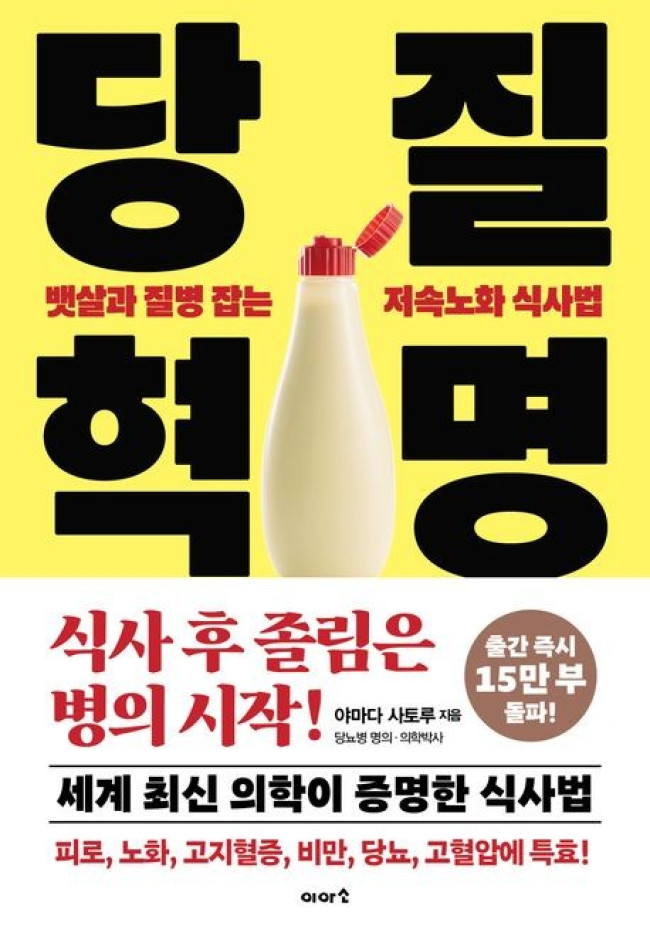 Book cover image [Provided by Iaso. Reproduction and database prohibited]

 Iranian Foreign Ministry: "Continuing Message Exchanges with the U.S. and Activities of Mediating Countries"
Esmaeil Baghaei, Spokesperson for the Iranian Ministry of Foreign Affairs [Xinhua, Yonhap News file photo]Esmaeil Baghaei, spokesperson for the Iranian Ministry of Foreign Affairs, stated on the 26th
Iranian Foreign Ministry: "Continuing Message Exchanges with the U.S. and Activities of Mediating Countries"
Esmaeil Baghaei, Spokesperson for the Iranian Ministry of Foreign Affairs [Xinhua, Yonhap News file photo]Esmaeil Baghaei, spokesperson for the Iranian Ministry of Foreign Affairs, stated on the 26th
 President Yoon: "Do You Think You Are Safe from the Special Counsel?"... Final Statement Video Released
President Yoon Suk Yeol rebuking the special prosecutor on the 24th. [Court video / @birds_justice X account subtitle GIF] A video of President Yoon Suk Yeol's closing statement at his trial rega
President Yoon: "Do You Think You Are Safe from the Special Counsel?"... Final Statement Video Released
President Yoon Suk Yeol rebuking the special prosecutor on the 24th. [Court video / @birds_justice X account subtitle GIF] A video of President Yoon Suk Yeol's closing statement at his trial rega
 President Yoon, regarding the first-instance ruling on the Public Official Election Act: “An excessive political verdict that distorts the facts… We will appeal immediately.”
The first-instance sentencing hearing for President Yoon Suk Yeol regarding violations of the Public Official Election Act is being broadcast live at Seoul Station on the 27th. [Photo=Yonhap News]Pres
President Yoon, regarding the first-instance ruling on the Public Official Election Act: “An excessive political verdict that distorts the facts… We will appeal immediately.”
The first-instance sentencing hearing for President Yoon Suk Yeol regarding violations of the Public Official Election Act is being broadcast live at Seoul Station on the 27th. [Photo=Yonhap News]Pres
 WSJ: "SK Hynix ADR Premium Is a Sign of AI Trading Overheat"
Advertisement for SK Hynix ADR listing in New York's Times Square [Reuters=Yonhap News file photo]The Wall Street Journal (WSJ) has pointed out that the price of SK Hynix’s American Depositary Recei
WSJ: "SK Hynix ADR Premium Is a Sign of AI Trading Overheat"
Advertisement for SK Hynix ADR listing in New York's Times Square [Reuters=Yonhap News file photo]The Wall Street Journal (WSJ) has pointed out that the price of SK Hynix’s American Depositary Recei
 'Godfather of Japanese Mystery Novels' Keigo Higashino Passes Away After Battle with Cancer at 68
Famous Japanese mystery novelist Keigo Higashino [AFP=Yonhap News]It has been belatedly reported that Keigo Higashino, the "godfather of Japanese mystery novels" and author of bestsellers such as "The
'Godfather of Japanese Mystery Novels' Keigo Higashino Passes Away After Battle with Cancer at 68
Famous Japanese mystery novelist Keigo Higashino [AFP=Yonhap News]It has been belatedly reported that Keigo Higashino, the "godfather of Japanese mystery novels" and author of bestsellers such as "The
 [Park Pil-kyu Security Column] To the Ignorant Trying to Clothe a Beast in Sheep's Clothing
Rep. Kim Byung-joo of the Democratic Party of Korea [Photo=Yonhap News]“The Air Force Academy doesn't teach you how to fly a plane!” “The Army, Navy, and Air Force academies are exactly the
[Park Pil-kyu Security Column] To the Ignorant Trying to Clothe a Beast in Sheep's Clothing
Rep. Kim Byung-joo of the Democratic Party of Korea [Photo=Yonhap News]“The Air Force Academy doesn't teach you how to fly a plane!” “The Army, Navy, and Air Force academies are exactly the
 [Issue Diagnosis] Two Effects of the Election Petition Review
 [Photo] Evidence of Election Fraud Flooding U.S. Media… Trump Had 2.7 Million Votes Stolen
 [Video] U.S. Semiquincentennial Air Show... 'Art in the Sky' streaks across New York
 [Editorial Cartoon] A Draconian Law That Undermines Freedom of Expression

 List
List









